On this page
Key takeaways
- What goshuin (御朱印) are, what they cost, how to ask for one politely, and where to start collecting Japan's handbrushed temple and shrine stamps.
- A goshuin (御朱印, "honorable vermilion seal") is a page of handbrushed calligraphy and red seals that a temple or shrine gives you as proof you worshipped there. Offering amounts vary by site and design.
- A goshuin is a handwritten page you receive at Buddhist temples and Shinto shrines across Japan.
A goshuin (御朱印, "honorable vermilion seal") is a page of hand-brushed calligraphy and red seals that a temple or shrine gives you as proof you worshipped there. Offering amounts vary by site and design. Some cost ¥1,000 or more. Below: the book you need, the money etiquette nobody explains properly, the queue systems at famous sites. You will also find guidance on where to get your first one.
What is Goshuin?
A goshuin is a hand-written page you receive at Buddhist temples and Shinto shrines across Japan. The site's name and deity are brushed in black ink alongside the date of your visit, with one or more vermilion seals pressed over the calligraphy. A monk, priest, or shrine staff member writes each one directly into your book while you wait. The writing is done by hand, in person. That makes it the opposite of the free commemorative stamps (kinen stamps) at train stations and tourist spots, which you press yourself. A goshuin records an act of worship, and that is exactly why the etiquette around it matters.
A goshuin from Todai-ji, Nara, from our own collection
The Meaning of Goshuin
The word breaks down into go (御), an honorific; shu (朱), vermilion; in (印), a seal. At shrines the payment box is often labeled 初穂料 (hatsuho-ryo, "first-fruits offering"); at temples you may see 納経料 (nokyo-ryo, "sutra-offering fee"). Both labels point at the same idea: you are making an offering, not buying a product. Japanese speakers say the money is "offered" (納める) rather than "paid", and that framing quietly shapes all the etiquette that follows.
History of Goshuin
The paper trail starts with nokyo (納経): pilgrims hand-copied a sutra and offered it at a temple, then received a written receipt. The organized form is usually dated to Japan's medieval period, when rokujurokubu pilgrims carried 66 copies of the Lotus Sutra to 66 provinces; some trace pilgrimage-stamp customs back further, though the documentation is thin. By the Edo period the sutra had become optional and pilgrims carried nokyocho, receipt books that were inscribed and, increasingly, stamped. Surviving examples date to 1727, and many early books had no red seal at all. The word goshuin itself only spread in the 1930s during a collecting boom; today's wave took off around the 2010s.
How to Read a Goshuin
Most goshuin combine five elements: the temple or shrine name; the date of your visit written in kanji; the name of the enshrined deity or principal Buddha; one or more vermilion seals; and often a small notation such as 奉拝 (hohai, "worshipped respectfully"). Once you can pick out the date and the site name, an old page stops being decoration and becomes a diary entry you can actually read.
Site name, date, seals: once you can read them, the book becomes a diary
Goshuincho: Your Stamp Book
A goshuincho (御朱印帳) is an accordion-fold book of thick washi paper, typically about 16 by 11 cm, with larger 18 by 12 cm versions common at temples. Expect ¥1,000 to ¥3,000. Many temples and shrines sell originals (Meiji Jingu's is ¥1,000), and a book bought at a shrine often comes with that shrine's goshuin already inscribed. Stationery shops like Loft and Hands carry hundreds of designs, as does Itoya. A regular notebook will not do: the ink bleeds, and many offices politely refuse anything that is not a proper goshuincho.
Choosing one? Our full goshuincho guide goes deeper →
How to Collect Goshuin
- 1Buy a goshuincho first, at a temple, a stationery shop, or online. A plain notebook will usually be turned away
- 2Worship first: bow, offer a coin, take a quiet moment. Some busy sites post signs asking for your book before you worship; when they do, follow the signs
- 3Find the office. Look for signs reading 御朱印所, 納経所, 授与所 or 社務所. At a small shrine, ring the doorbell by the window and wait
- 4Hand over your book: open it to the page you want written, take off the cover and ribbon, and pass it with both hands
- 5Wait quietly while the brushwork happens. If your book comes back within seconds, you received a kakioki (pre-written sheet) and that is perfectly normal
- 6Offer the amount posted by the temple or shrine. Carry cash, receive the book with both hands, and let the ink dry before closing it
What a Goshuin Costs
There is no universal goshuin price range: the offering varies by site and design. Some cost ¥1,000 or more. Todai-ji lists ¥300 per stamp and Meiji Jingu ¥500 on their official pages, while elaborate and limited designs can cost more. Check the posted amount or the site's official page and carry cash.
The money etiquette is simple once someone spells it out. Cash only, coins if you can. Big sites keep change on hand; a one-person shrine office often cannot break a ¥5,000 note. And if the answer to "how much?" is okimochi de, as you feel, ¥500 is the amount that never reads as stingy or showy.
Finding the Office and Asking
| Sign | Reading | Meaning |
|---|---|---|
| 御朱印所 | goshuin-jo | goshuin office |
| 納経所 | nokyo-jo | sutra/goshuin office (temples) |
| 授与所 | juyo-jo | amulet and goshuin counter (shrines) |
| 社務所 | shamu-sho | shrine office (ask here at small shrines) |
One phrase covers the whole transaction: "Goshuin o onegai shimasu" (御朱印をお願いします), a goshuin, please. Add "Kakioki wa arimasu ka?" if you want to ask for a pre-written sheet. No Japanese at all? Holding out your open book says everything it needs to.
Goshuin Etiquette
The real rules are few: worship first, handle the book with care. Most other collector worries are customs, not rules.
Do
- ✓Worship at the main hall before asking for a goshuin
- ✓Remove the book's cover and ribbon before handing it over
- ✓Carry coins: offices are cash only, and small shrines cannot always make change
- ✓Arrive at least 30 minutes before the office closes
- ✓Receive the finished book with both hands and thank the writer
Don't
- ✗Treat it as a stamp rally: no worship, no goshuin
- ✗Ask for a specific calligrapher or a custom design
- ✗Photograph the writer without asking first
- ✗Paste kakioki in with tape or liquid glue (a glue stick works; tape yellows, wet glue wrinkles the washi)
- ✗Give goshuin away or resell them; each page is proof of your own worship
One reassurance, because travelers worry about invisible rules: mixing shrines and temples in one book is fine. Starting on the "wrong" page is also fine. The custom of reserving page one for Ise Jingu is exactly that, a custom, not a rule. The genuinely firm rules are the short list above.
Types of Goshuin
- Regular: Available year-round: the site's standard calligraphy and seals. The offering amount varies by site and design
- Seasonal: Cherry blossoms, autumn leaves, New Year motifs. Many shrines announce these on social media, and their offering amounts vary by site and design
- Limited: Event and anniversary editions can be capped. Kinkaku-ji has limited a special goshuin to 300 per day, one per person
- Kakioki: Pre-written sheets handed out when offices are busy, unstaffed, or protecting an elaborate design. Paste them in with a glue stick, never tape
A small digital frontier exists too: Shinnyo-ji in Osaka issues QR-code goshuin, and a handful of shops mail them. Convenient, but a goshuin is proof you stood there and worshipped, so treat the mailed kind as the exception that proves the rule.
A limited-edition example from Senso-ji; these can be capped by count or season
Shrine vs Temple Goshuin
Shrine pages carry the names of kami and the shrine itself; temple pages carry the principal Buddha and the temple name, often in denser calligraphy. Because Japan spent centuries blending the two traditions (shinbutsu-shugo), keeping them in one book is historically the norm, and separating them is a personal preference rather than a requirement.
The real exceptions are doctrinal. Jodo Shinshu temples, Higashi Hongan-ji and Tsukiji Hongan-ji among them, do not issue goshuin at all. Nichiren-shu temples may brush only 妙法 (myoho) unless you present a book dedicated to their school. Neither is a judgment on you or your book.
Famous Goshuin Destinations
Some sites are worth planning around. Todai-ji in Nara issues 13 different goshuin across 10 halls. Senso-ji in Tokyo writes two, plus a Seven Lucky Gods stamp next door at Asakusa Shrine. Fushimi Inari in Kyoto runs several offices up the mountain, each with its own design. The cards below link to their pages in the Goshuin Atlas database, which documents the goshuin each temple and shrine offers, with photos from real visits and details on office locations and fees.
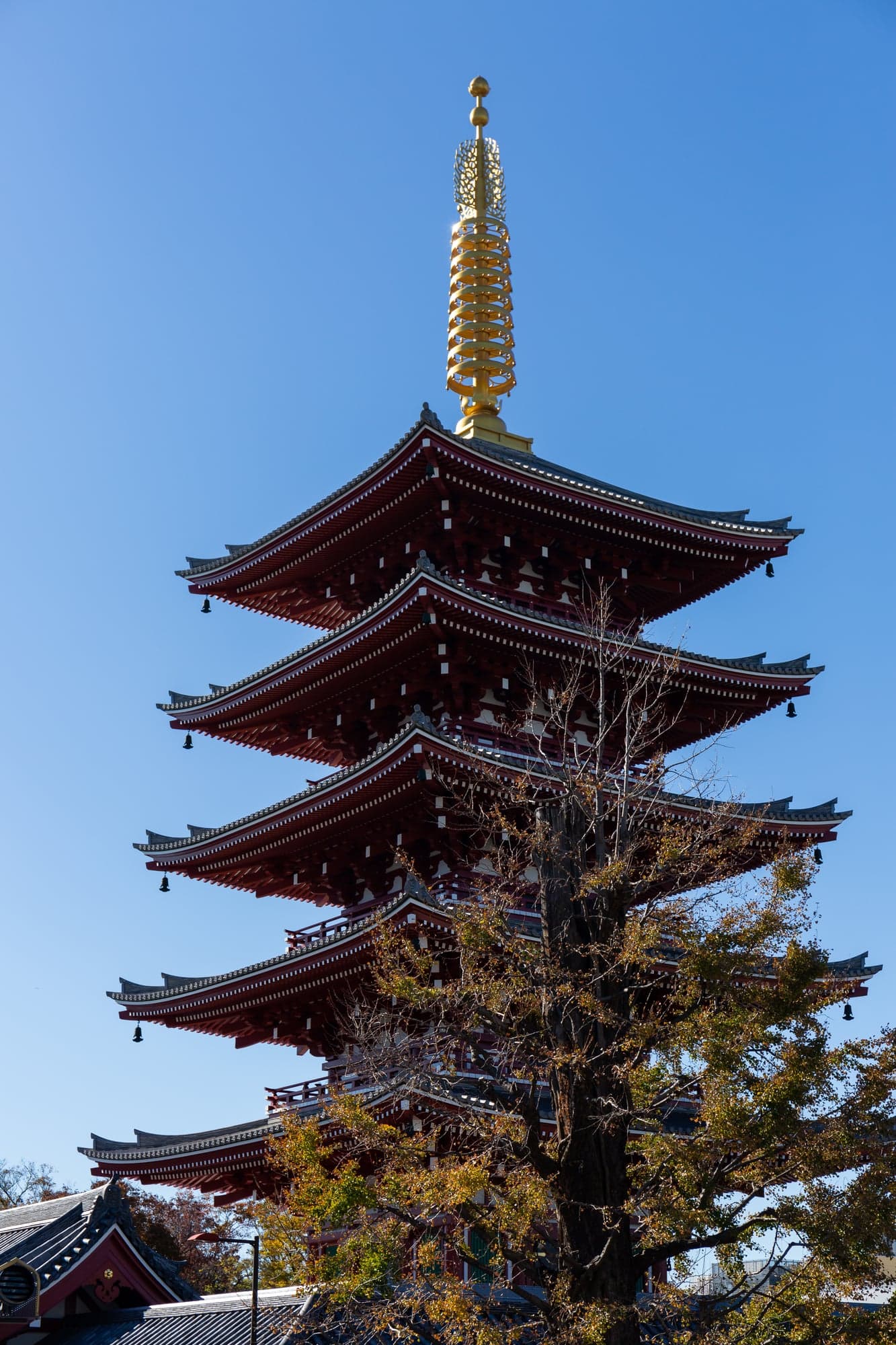
Two goshuin at the Yogodo hall (8:00-16:30), numbered batch queue on busy days
Sensōji is Tokyo’s oldest and most famous Buddhist temple, dedicated to Kannon, the bodhisattva of compassion. Located in Asakusa, it is known for Kaminarimon Gate, Nakamise shopping street, a fivestory pagoda, and millions of annual visitors.
View details
¥500, with calligraphers writing in the open; the original goshuincho is ¥1,000
Meiji Shrine is a Shinto shrine in Shibuya, Tokyo, that is dedicated to the deified spirits of Emperor Meiji and his wife, Empress Shōken. The shrine does not contain the emperor's grave, which is located at Fushimimomoyama, south of Kyoto.
View details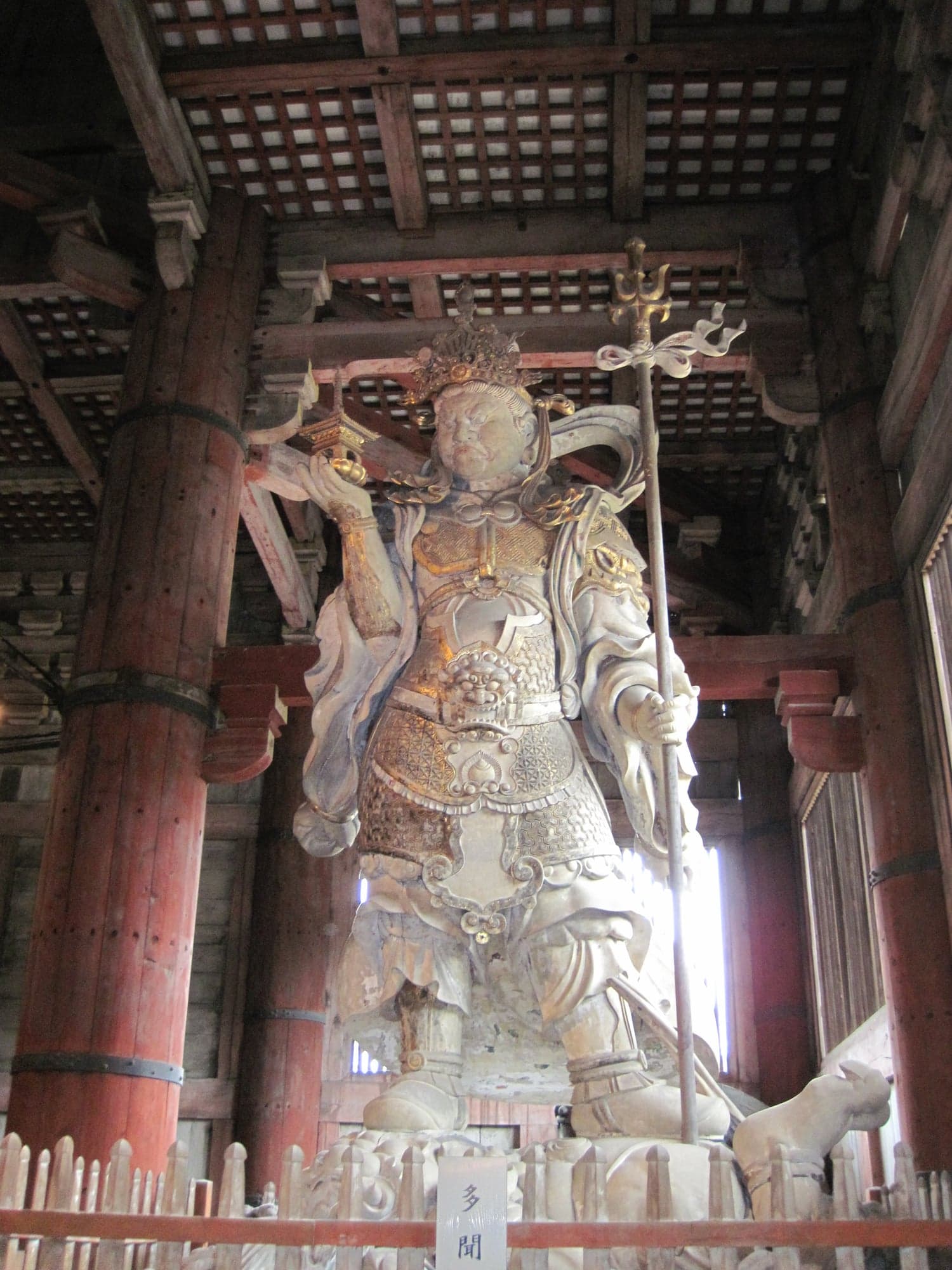
13 different goshuin across 10 halls at ¥300 each, a full afternoon on its own
Tōdaiji is a Buddhist temple complex in Nara, Japan, once one of the Seven Great Temples. Founded in 738 and opened in 752, it was built to emulate Tang dynasty temples and has undergone multiple reconstructions.
View details
Pilgrimages and Goshuin Meguri
Pilgrimage is where goshuin began, and it is still the deep end of collecting. On the Shikoku 88 circuit the book is called a nokyocho; offices run 8:00 to 17:00; and the fee has been ¥500 per temple since April 2024. Kumano Kodo walkers collect along the ancient routes and the Bando 33 Kannon circuit crosses eastern Japan. City-scale Seven Lucky Gods loops fit in a single New Year's morning. Pick a circuit and the collection stops being random pages and starts telling a story.
Caring for Your Collection
Let the ink dry before closing the book, and leave the little blotting sheet where the writer placed it: ink can transfer to the facing page weeks later. Kakioki go in with a glue stick or starch glue, never tape (it yellows) or liquid glue (it warps the washi). Store the book away from direct sun and humidity; the traditional homes for finished books are the household kamidana or butsudan altar. A vinyl cover, about ¥400 at any stationery shop, saves the corners in your daypack. When you are ready to digitize, the scanning walkthrough shows how it works.
When a book fills up, you simply start the next one. And if you want the long view of what these pages mean: there is an old custom of placing a person's filled goshuincho in their coffin, a lifetime of worship travelling with them.
Frequently Asked Questions
Can temple and shrine goshuin share one book?▼
How much does a goshuin cost?▼
Can I get goshuin if I'm not Buddhist or Shinto?▼
What are goshuin office hours?▼
Can I use a regular notebook for goshuin?▼
What is kakioki goshuin?▼
Which way does the goshuincho open?▼
Can one book serve the whole family?▼
Do some temples refuse goshuin entirely?▼
How long are the lines?▼
Is an anime or character goshuincho disrespectful?▼
Is buying or reselling goshuin acceptable?▼
Sources
- Todai-ji: Sutra and Goshuin (official)
- Meiji Jingu: Goshuin and Goshuincho (official)
- Senso-ji: Goshuin and Juyohin (official, Japanese)
- Kokon Goshuin Research Institute: history of nokyo and goshuin (Japanese)
Fees and hours reflect official information as of 2026; check each site before a special trip.