Visit the Otowa Waterfall where three streams flow into metal cups for ritual drinking, but choose only one stream as tradition holds that drinking from all three is considered greedy (each stream represents longevity, academic success, or love).
At a Glance
Perched dramatically on the forested slopes of Otowa-san (Mount Otowa) in eastern Kyoto, Kiyomizu-dera has been drawing pilgrims, poets, and seekers of the sacred for more than twelve centuries. The moment its iconic wooden stage comes into view above the treetops, it becomes clear why. This is not merely a temple. It is one of Japan's most direct encounters with faith, nature, and architectural nerve, where the ancient and the living sit together so closely that even first-time visitors feel they have arrived somewhere familiar.
The story of Kiyomizu-dera begins in 778 CE, predating the very city it has come to define. This places the temple among an unusually small group, alongside Kōryū-ji and Kurama-dera, of Kyoto institutions that existed before Heian-kyō was established as the imperial capital in 794 CE. The founding therefore comes before the city's own imperial foundations, giving it a spiritual weight later construction could not create. Over more than 1,250 years, the complex has been shaped by fire, reconstruction, patronage, and devotion, building up layer after layer across its broad hillside precinct. Today, the grounds include 15 structures, among them designated National Treasures and Important Cultural Properties, each one a physical record of the centuries that have passed over these slopes.
The architectural achievement that defines Kiyomizu-dera is its celebrated main hall (hondō), which projects outward from the mountainside on a platform supported by 139 pillars of keyaki (Japanese zelkova) timber, assembled entirely without a single nail. This steep, wooden stage projects over the valley below, and it rewards close inspection. The construction technique, known as "kakezukuri" or hanging-style architecture, is among the most sophisticated examples of traditional Japanese carpentry. It is engineered to flex and absorb the stresses of the steep terrain while supporting the hall's weight and the thousands of visitors who have walked its boards across the centuries. The complex is formally known as Otowa-san Kiyomizu-dera, and its 15 structures spread across the precinct of Higashiyama offer a broad survey of classical Japanese religious architecture across multiple historical periods, from the
Kiyomizu-dera's Main Hall features a wooden stage built entirely without nails, using an intricate framework of interlocked pillars. This design has supported the structure since its 1633 reconstruction under the Tokugawa shogunate.
Kiyomizu-dera is actually older than Kyoto itself, having been founded in 778, sixteen years before the city became Japan's imperial capital in 794.
This temple offers 4 different goshuin designs
Same as opening hours
Regular
Regular
¥500
Regular
Regular
Visit the Otowa Waterfall where three streams flow into metal cups for ritual drinking, but choose only one stream as tradition holds that drinking from all three is considered greedy (each stream represents longevity, academic success, or love).
The temple's 11-headed Kannon statue is a hidden image and not on display, so explore the accessible halls and ritual spaces instead.
The Main Hall's famous wooden stage extends over the hillside on interlocking pillars built without nails, so take time to walk around to the viewing platform below to fully appreciate this architectural marvel from underneath.
Plan extra time to explore Jishu Shrine dedicated to matchmaking located within the temple grounds, which is particularly popular with couples and those seeking romantic fortune.
The temple sits on Kyoto's eastern hills with terraced grounds, so wear comfortable walking shoes suitable for climbing stairs and navigating sloped pathways between the various halls and pagodas.
The divine spirits venerated at this sacred place
Related places on the same temple or shrine grounds.
17 structures on the grounds
Seasonal celebrations and special occasions
New Year popular festival period
The shrine is particularly popular during New Year, when additional booths fill the grounds with holiday foodstuffs and souvenirs.
Obon popular festival period
The shrine is particularly popular during Obon in summer, when additional booths fill the grounds with holiday foodstuffs and souvenirs.
Typical Crowds
Bustling
Visit Duration
90+ minutes
Higashiyama, Kyoto Prefecture
More ways to continue from this place.
What this place is believed to grant
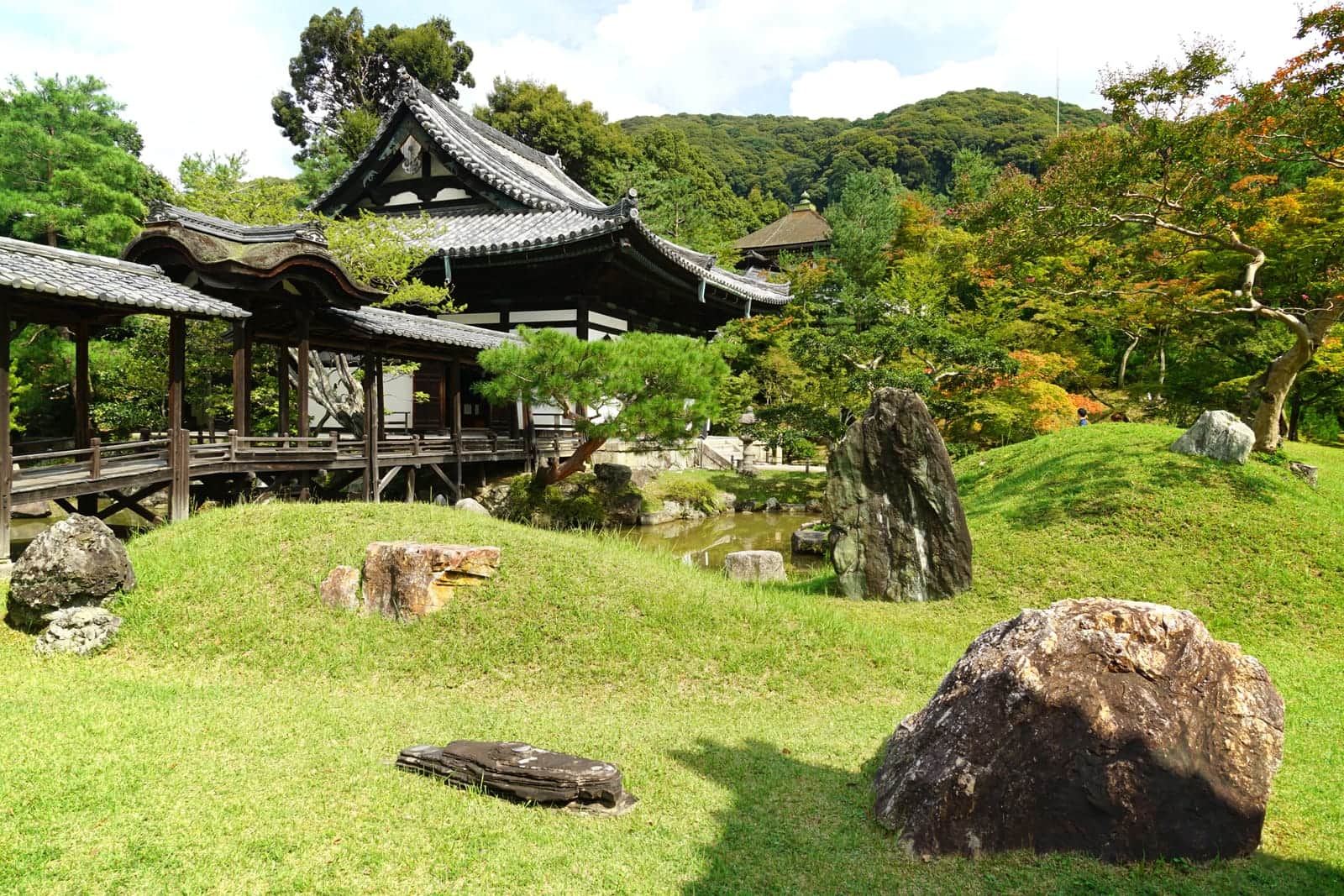
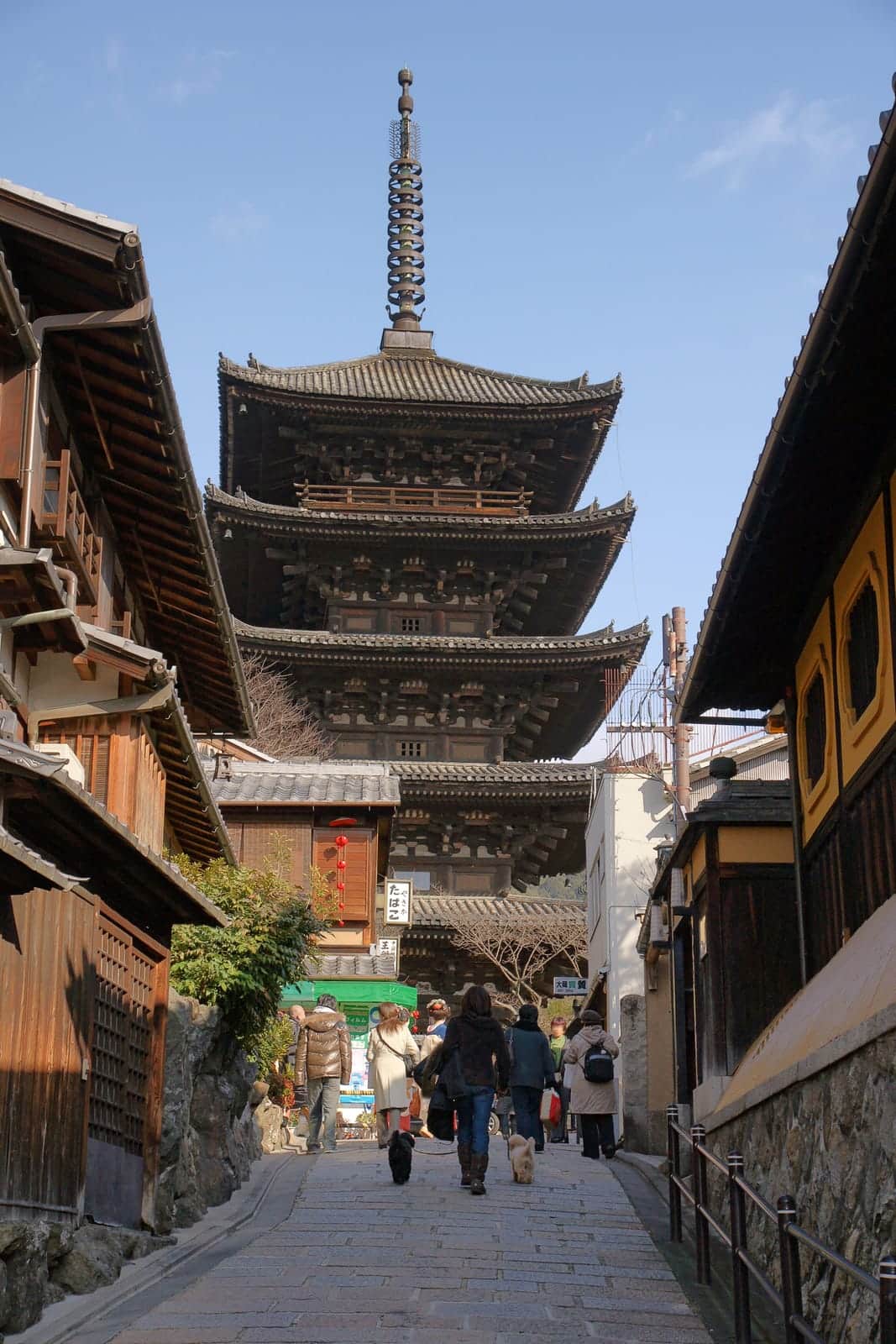
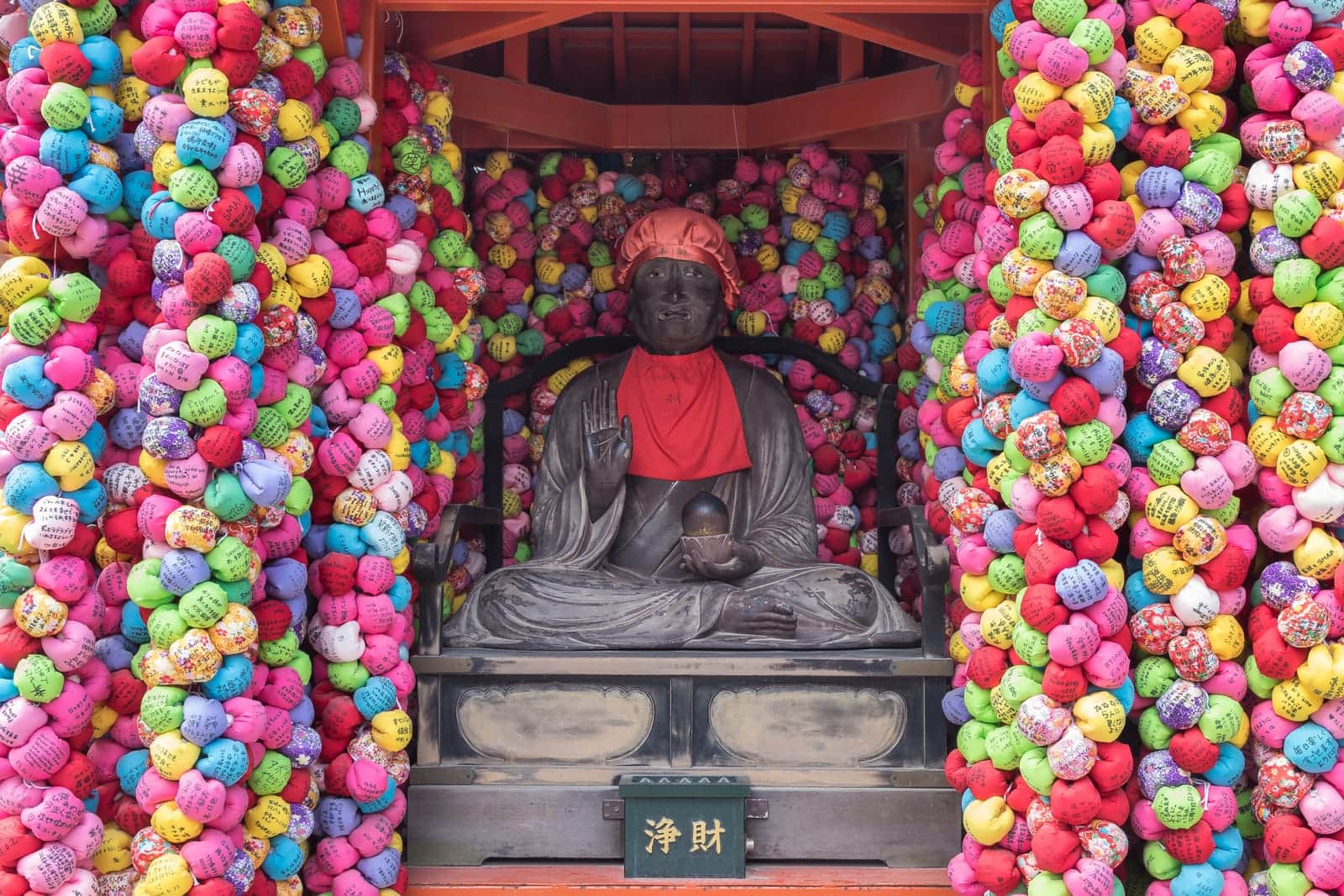
Within 300 m Within 600 m Distance unavailable
Renting needs the operator's app and a Japanese phone number. docomo day passes are sold at convenience stores. Data sources
49 recent posts
4.8
12 reviews
Kiyomizudera sits on Kyoto's eastern hills, so wear comfortable shoes. The grounds are terraced, with stairs and sloped paths connecting the various halls and pagodas. Come early if you can, as the site draws large crowds through the day.
The Main Hall's wooden stage juts out over the hillside on interlocking pillars fitted without nails. Walk down to the viewing platform below to see the structure from underneath. At the Otowa Waterfall, three streams flow into cups for ritual drinking. Pick only one: tradition says choosing all three is greedy.
Haik HakopyanPro checked inLocation matched
Kiyomizu-dera
Higashiyama, Kyoto