
Hondo
Architecture本堂 ・ Reading: ほんどう
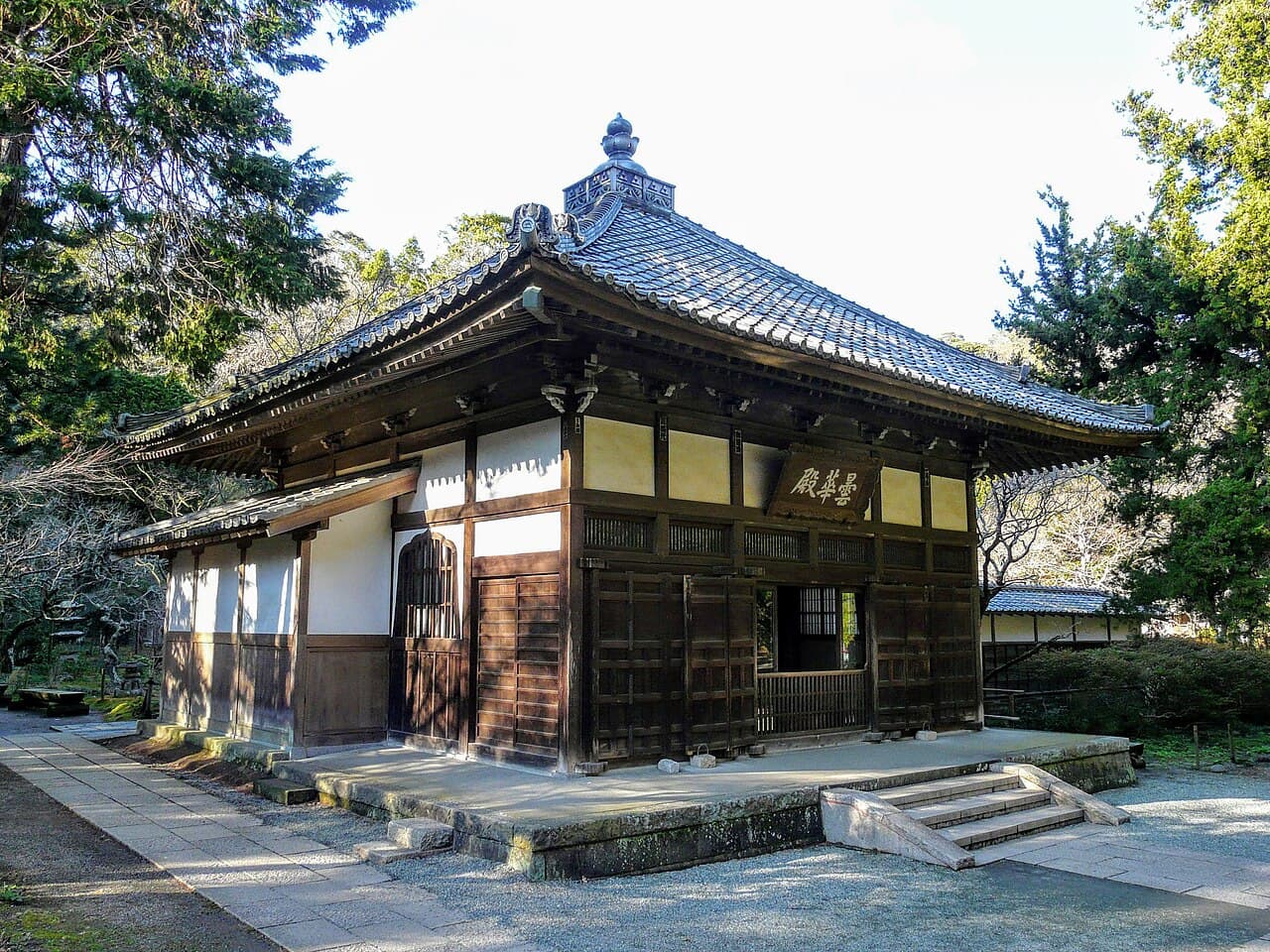
Definition
The hondo is the main hall of a Buddhist temple, housing the principal object of worship (the honzon). It is the central building where ceremonies and prayers take place.
What it is
The hondo is the main hall of a Buddhist temple, the building around which the whole compound is arranged. Its name simply means "main hall", and inside it sits the honzon, the principal object of worship. This might be a statue of a Buddha such as Shaka or Amida, a bodhisattva like Kannon, or another figure central to that temple's school. Daily services, memorial rites and personal prayers all take place here, which is why the hondo tends to be the largest and most carefully maintained structure on the grounds.
What to look for
You can usually recognise the hondo by its scale and its central position along the main approach, often facing a large incense burner where visitors waft smoke towards themselves. Step inside if you are permitted, and you will see the honzon enshrined in a raised inner sanctuary, frequently framed by altar fittings, hanging lanterns and offerings.
How to visit
Etiquette is gentle. Remove your shoes if a rack or genkan step suggests it, keep your voice low, and put a coin in the offering box before pressing your palms together in quiet prayer. Photography is often restricted inside, so look for posted signs. Note that a hall dedicated to a specific deity may instead be called by that deity's name, such as a Kannon-do.
Common questions
- What is a hondo at a Japanese temple?
A hondo is the main hall of a Buddhist temple, the central building where the principal image of worship, called the honzon, is enshrined. It is where prayers and ceremonies take place, and it is usually the main place visitors go to pay their respects.
- What is the difference between a hondo and a haiden?
- Can visitors go inside the hondo?
At many Buddhist temples you can approach the hondo to make an offering and pray, and at some you may step inside after removing your shoes. Access varies by temple, and the innermost area around the honzon is often reserved or only partly visible to the public.
Related articles
- Best Goshuin in Tokyo: Ten Temple and Shrine StopsPlan respectful Tokyo goshuin routes through Asakusa, Harajuku, Setagaya, Shiba, Kanda, and Bunkyo with official verification guidance.
- How to Read Buddhist Temple ArchitectureRead a Japanese Buddhist temple through its gates, main hall, pagoda, study spaces, working buildings, dates, and local plan.
- How to Visit a Buddhist Temple in JapanFollow Buddhist temple etiquette from the gate through incense, prayer, hall entry, photography, and receiving a goshuin.
- How to Visit a Shinto Shrine in JapanA practical shrine etiquette guide covering torii, temizu, offerings, prayer, goshuin, photography, accessibility, and local exceptions.
- Photography at Japanese Shrines and Temples: A Respectful GuideHow to photograph sacred sites respectfully, from changing no-photo zones and ceremony privacy to tripods, drones, and sacred objects.
- Planning an Accessible Shrine or Temple Visit in JapanA route-based approach to mobility, toilets, surfaces, staff-assisted access, sensory load, and dignified trip planning.
- Shoes, Thresholds, and Sacred Interiors in JapanA practical guide to removing shoes, crossing raised thresholds, using slippers, entering tatami rooms, and protecting historic interiors.
- Shrines and Temples in Japan: How to Tell Them ApartRecognize Shinto shrines and Buddhist temples using names, buildings, worship methods, and local guidance without relying on misleading visual shortcuts.
- Shukubo: How to Plan a Temple Stay in JapanPlan a respectful temple stay in Japan, from choosing a shukubo and understanding meals to joining services and checking current house rules.
- Why Japan Rebuilds Sacred Sites: Renewal, Reconstruction, and Living HeritageHow ritual renewal, disaster reconstruction, conservation, and craft transmission create different layers of authenticity.