
Sanmon
Architecture山門 ・ Reading: さんもん
Definition
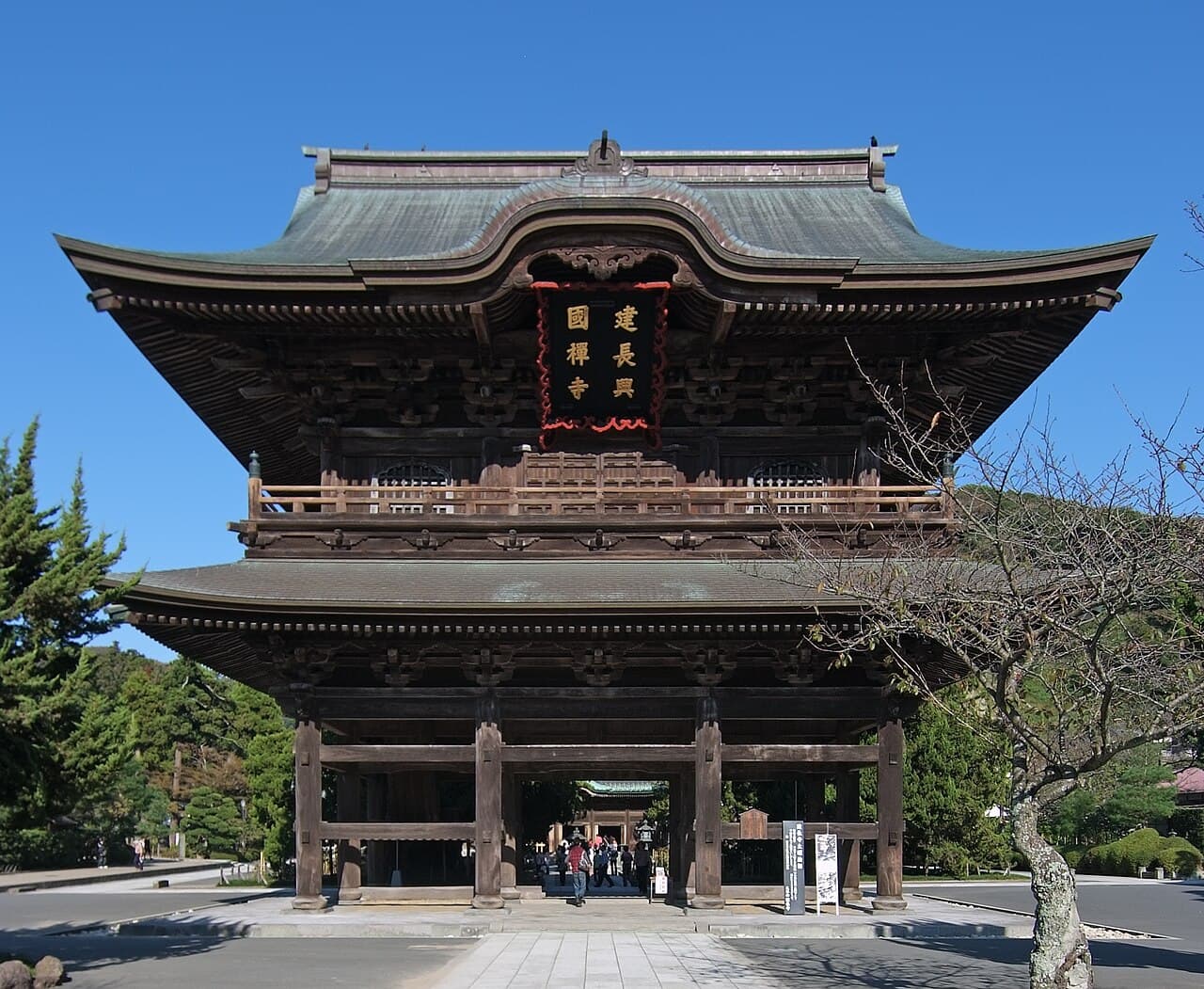
The sanmon is the main gate of a Buddhist temple, marking the entrance to the sacred precinct. Larger temples often have an imposing two-storey sanmon guarded by Nio statues.
What it marks
A sanmon is the main gate of a Buddhist temple, standing at the boundary between the everyday world and the sacred precinct within. As you pass beneath it you are meant to leave ordinary concerns behind, and many visitors pause to give a small bow before stepping through. The name is often linked to a gate of three openings, a symbolism tied to release from worldly attachments, though in everyday use "sanmon" simply means the temple's principal entrance.
What to look for
Larger temples often have an imposing two-storey sanmon built of dark timber, sometimes with a balcony or an upper hall reserved for statues of the Buddha and his disciples. Look to either side of the passage: many sanmon shelter a pair of fierce Nio guardian kings), their muscular bodies caught mid-motion to ward off evil. Smaller temples may have a plainer single-storey gate instead.
Telling it apart from a torii
A sanmon marks a Buddhist temple, while a torii marks a Shinto shrine. If the gate is solid, roofed, and often flanked by guardian statues, you are at a temple. If it is a simple open frame of two uprights and a crossbar, you are entering a shrine. For a fuller look at how temples and shrines differ, see our guide.
Common questions
- What is the difference between a torii and a sanmon?
- Why do some sanmon have statues inside them?
Many sanmon shelter a pair of Nio guardian kings, fierce muscular figures placed on either side of the passage to protect the temple and drive away evil. Larger two-storey sanmon may also house statues of the Buddha and his disciples in the upper level.
- Do I need to do anything when walking through a sanmon?
There is no strict rule, but many visitors pause and give a small bow before passing through a sanmon, since the gate marks the entry into a temple's sacred precinct. It is also polite to keep to the side rather than walking straight up the centre of the path.
Related articles
- Best Goshuin in Kyoto: Practical Area RoutesBuild respectful Kyoto goshuin days by district with Goshuin Atlas place records, access planning, and clear last-minute caveats.
- Best Goshuin in Tokyo: Ten Temple and Shrine StopsPlan respectful Tokyo goshuin routes through Asakusa, Harajuku, Setagaya, Shiba, Kanda, and Bunkyo with official verification guidance.
- How to Read Buddhist Temple ArchitectureRead a Japanese Buddhist temple through its gates, main hall, pagoda, study spaces, working buildings, dates, and local plan.
- How to Visit a Buddhist Temple in JapanFollow Buddhist temple etiquette from the gate through incense, prayer, hall entry, photography, and receiving a goshuin.
- Shrines and Temples in Japan: How to Tell Them ApartRecognize Shinto shrines and Buddhist temples using names, buildings, worship methods, and local guidance without relying on misleading visual shortcuts.