
Torii
Architecture鳥居 ・ Reading: とりい
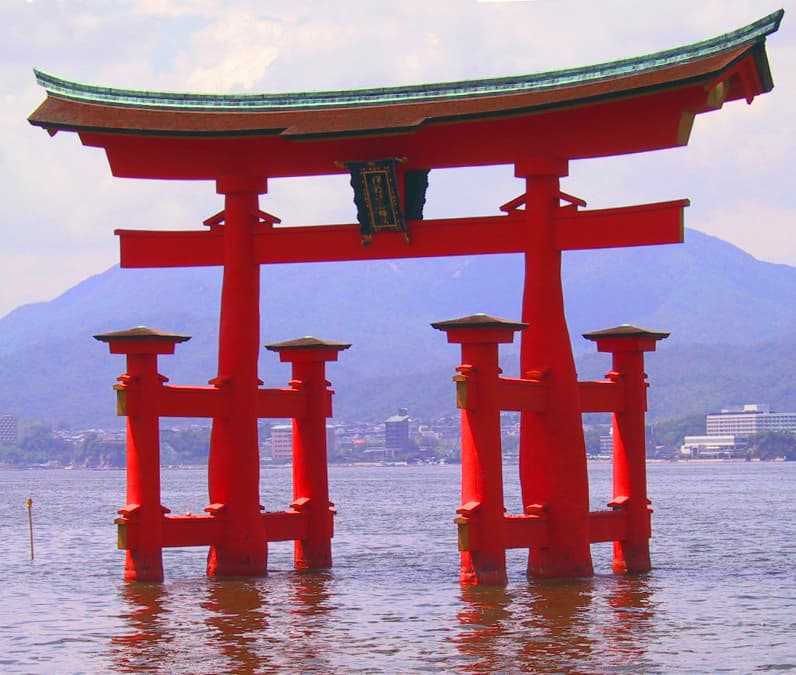
Definition
A torii is the gateway at the entrance to a Shinto shrine, marking the boundary between the everyday world and the sacred grounds. It usually has two upright posts joined by two horizontal beams, and is often painted vermillion.
What it marks
A torii stands at the entrance to a shrine, and sometimes along the approach path. Passing under it signals that you are leaving everyday space and entering the home of the kami. By custom you bow slightly before walking through, and you keep to the side rather than the centre, which is left open for the deity.
What they look like
Most torii share the same basic shape of two uprights crossed by two beams, but the materials vary widely, from weathered wood to bright vermillion lacquer to stone and bronze. Some shrines, such as Fushimi Inari in Kyoto, line their paths with thousands of them.
A quick way to tell shrine from temple
A torii almost always means a shrine rather than a Buddhist temple, so spotting one is the fastest way to tell the two apart at a glance.
Common questions
- What is the difference between a torii and a temple gate?
A torii is the gateway to a Shinto shrine and usually consists of two upright posts joined by two horizontal beams, often painted vermilion. A temple gate, such as a sanmon, belongs to a Buddhist temple and is typically a larger roofed structure, so spotting a torii almost always tells you that you are entering a shrine rather than a temple.
- Why are torii often painted red?
Many torii are painted a bright vermilion because the colour is traditionally believed to ward off evil and misfortune, and the pigment also helped protect the wood. Not all torii are red, however, as some are left as plain weathered wood and others are made of stone or bronze.
- How should you walk through a torii?
When passing through a torii, it is customary to bow slightly before stepping under it to show respect as you enter the sacred grounds. Many visitors also keep to the side rather than walking straight down the centre, which is traditionally regarded as the path of the kami.
Related articles
- Best Goshuin in Kyoto: Practical Area RoutesBuild respectful Kyoto goshuin days by district with Goshuin Atlas place records, access planning, and clear last-minute caveats.
- Best Goshuin in Tokyo: Ten Temple and Shrine StopsPlan respectful Tokyo goshuin routes through Asakusa, Harajuku, Setagaya, Shiba, Kanda, and Bunkyo with official verification guidance.
- Goshuin Book Guide: Where to Buy and How to Use a GoshuinchoChoose a goshuin book, find where to buy one in Japan, and learn how to present it at temples and shrines, carry loose sheets, and protect fresh ink.
- How to Visit a Buddhist Temple in JapanFollow Buddhist temple etiquette from the gate through incense, prayer, hall entry, photography, and receiving a goshuin.
- How to Visit a Shinto Shrine in JapanA practical shrine etiquette guide covering torii, temizu, offerings, prayer, goshuin, photography, accessibility, and local exceptions.
- Sacred Items at Japan’s ShrinesLearn how ofuda, omamori, ema, and omikuji differ, what visitors do with each one, and why not every sacred object is an offering.
- Shinbutsu Shugo: Why Shrines and Temples Share Japan’s Sacred LandscapesA history of the long relationship between kami and buddhas, Meiji separation, and the layered sacred landscapes visitors still encounter.
- Shrines and Temples in Japan: How to Tell Them ApartRecognize Shinto shrines and Buddhist temples using names, buildings, worship methods, and local guidance without relying on misleading visual shortcuts.
- Temizu: Water Purification Before WorshipUse temizu respectfully at Japanese shrines, including ladle, running-water, suspended, and flower-basin arrangements, while following current local instructions.