
Sando
Architecture参道 ・ Reading: さんどう
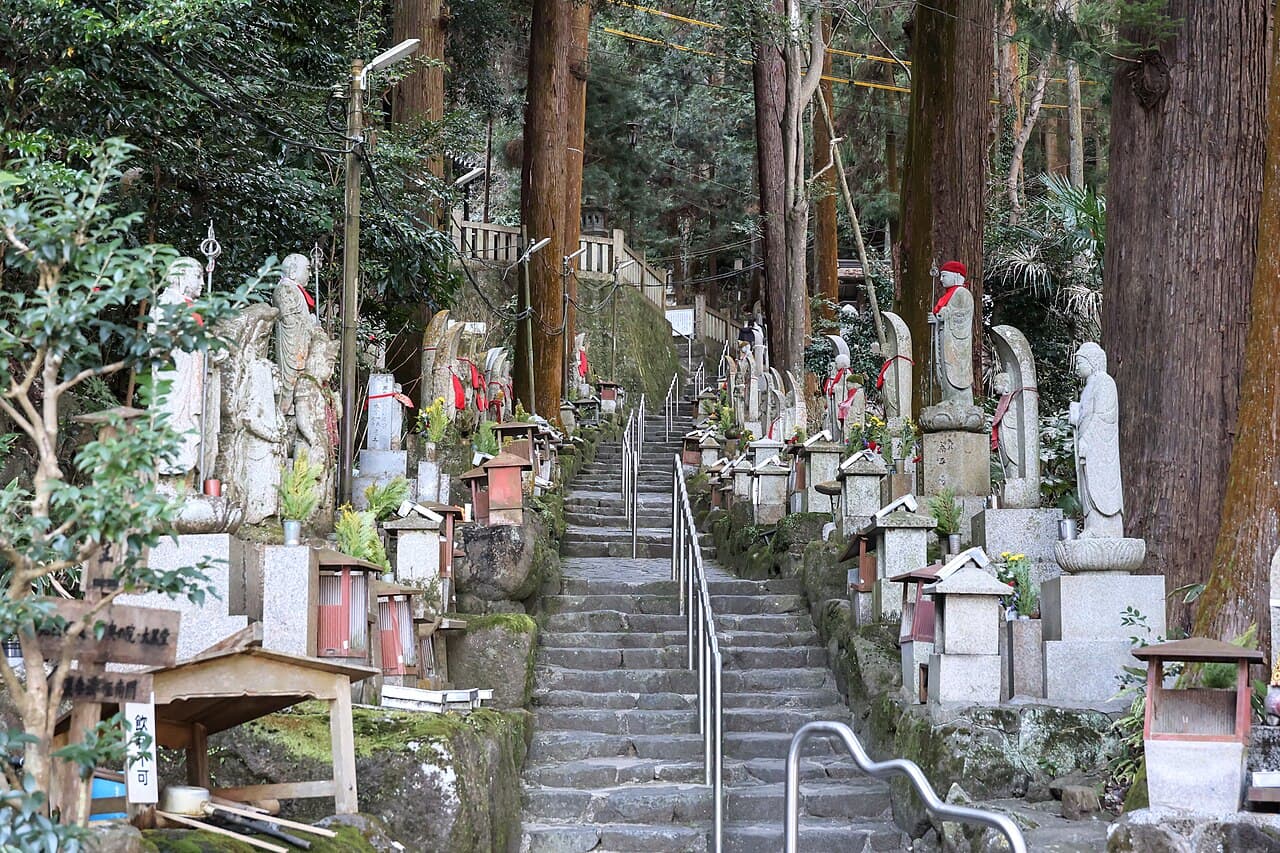
Definition
A sando is the approach used by worshippers to reach a shrine or temple, sometimes beginning well outside the formal precinct and passing through streets, gates, or rows of lanterns.
The approach is part of the visit
A sando is not defined by one paving material or length. It may be a forest path, broad avenue, staircase, shopping street, or short route across a precinct. Some famous approaches extend through a town before reaching the principal gate, while others begin at a torii or temple entrance.
Read the sequence
The approach often organizes a visitor's movement past gates, purification facilities, lanterns, subsidiary worship places, and finally the main hall. This makes it useful for understanding a sacred site's spatial order, but the sequence and accessible route differ by place.
Walk by local guidance
At many shrines, visitors avoid the exact center of the approach out of respect for the kami. Do not turn that courtesy into a universal traffic rule for every temple or path. Follow signs, staff guidance, accessibility routes, and crowd controls, especially during festivals and New Year visits.
Common questions
- Does a sando always begin at a torii?
No. Some approaches begin in a town or before the formal precinct, and temple approaches may begin at a gate rather than a torii.
- Must I always walk on the left side?
No universal side applies everywhere. At shrines, avoiding the exact center is a common courtesy; local signs and crowd routing take priority.
- Can a shopping street be part of a sando?
Yes. Some approaches pass through a monzenmachi, or settlement that developed before a shrine or temple, before reaching the sacred precinct.
Related articles
- Best Goshuin in Kyoto: Practical Area RoutesBuild respectful Kyoto goshuin days by district with Goshuin Atlas place records, access planning, and clear last-minute caveats.
- Best Goshuin in Tokyo: Ten Temple and Shrine StopsPlan respectful Tokyo goshuin routes through Asakusa, Harajuku, Setagaya, Shiba, Kanda, and Bunkyo with official verification guidance.
- Digital Goshuincho, Visit Photos and Richer MapsOur first update letter brought together Digital Goshuincho, visit photos, collection milestones, and more useful maps on goshuin.com.
- Golden Week 2026 Shrine and Temple GuideUse the official 2026 holiday calendar to plan shrine, temple, transport, accessibility, and goshuin visits during Golden Week crowds.
- How to Read Buddhist Temple ArchitectureRead a Japanese Buddhist temple through its gates, main hall, pagoda, study spaces, working buildings, dates, and local plan.
- How to Read Shinto Shrine ArchitectureLearn to read shrine architecture through building roles, roof structure, documented styles, and official case studies from Ise Jingu and Sumiyoshi Taisha.
- How to Visit a Shinto Shrine in JapanA practical shrine etiquette guide covering torii, temizu, offerings, prayer, goshuin, photography, accessibility, and local exceptions.
- Luggage, Restrooms, and Visitor Facilities at Japan’s Sacred SitesHow to plan storage, toilets, office hours, food, connectivity, and family facilities without assuming every sacred site offers them.
- Photography at Japanese Shrines and Temples: A Respectful GuideHow to photograph sacred sites respectfully, from changing no-photo zones and ceremony privacy to tripods, drones, and sacred objects.
- Sacred Items at Japan’s ShrinesLearn how ofuda, omamori, ema, and omikuji differ, what visitors do with each one, and why not every sacred object is an offering.
- Shinbutsu Shugo: Why Shrines and Temples Share Japan’s Sacred LandscapesA history of the long relationship between kami and buddhas, Meiji separation, and the layered sacred landscapes visitors still encounter.
- Shrines and Temples in Japan: How to Tell Them ApartRecognize Shinto shrines and Buddhist temples using names, buildings, worship methods, and local guidance without relying on misleading visual shortcuts.
- Temizu: Water Purification Before WorshipUse temizu respectfully at Japanese shrines, including ladle, running-water, suspended, and flower-basin arrangements, while following current local instructions.