On this page
Key takeaways
- A practical guide to removing shoes, crossing raised thresholds, using slippers, entering tatami rooms, and protecting historic interiors.
- Removing shoes is not a ritual required at every Japanese shrine or temple. It is a practical and respectful response to a particular interior.
- This guide begins where the general visit guides stop: at the threshold of a hall or residence, a temple lodging, or a historic room.
Shoes, Thresholds, and Sacred Interiors in Japan
Removing shoes is not a ritual required at every Japanese shrine or temple. It is a practical and respectful response to a particular interior. **Keep your shoes on outdoors, then follow the signs and physical cues at each building.A raised floor, shoe rack, or rows of footwear usually marks the change. Provided bags or a staff instruction can also signal it.
This guide begins where the general visit guides stop: at the threshold of a hall or residence, a temple lodging, or a historic room.
Use Goshuin Atlas place notes to understand the complex before arrival, then let the signs and staff at the exact doorway decide what happens to your footwear.
Recognize the moment to remove your shoes
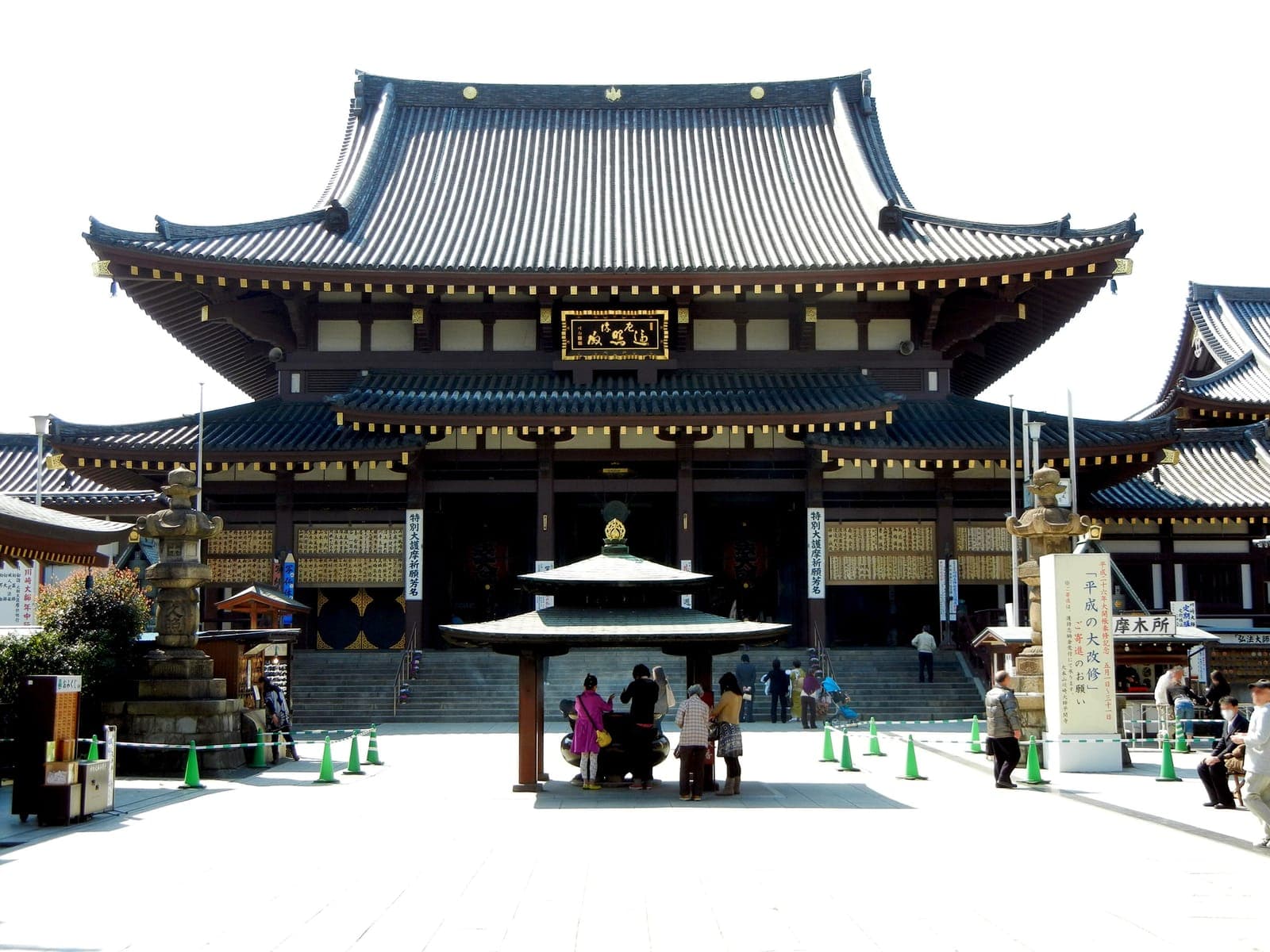
Stone paving, gravel, and earth normally belong to the shoe-wearing route. Exterior wooden walkways typically do as well. A raised timber platform or polished entrance floor usually signals that footwear comes off. A tatami room or a shelf filled with shoes serves the same purpose. Official Shikoku pilgrimage guidance identifies a raised floor or shoe box as a common cue at temples and inns. Clinics and homes follow the same pattern.
Do not copy one person without checking the space. They may be staff members, or they may be entering a private room or following a route that is closed to general visitors. Look for kutsu o nuide kudasai (靴を脱いでください, "Please remove your shoes") or doseoku genkin (土足厳禁, "Outdoor shoes strictly prohibited"). A simple shoe symbol may appear in place of written text.
At a busy entrance, step to the side before stopping. Untie difficult footwear without blocking the doorway. The Buddhist temple etiquette guide explains the wider worship sequence; here, the local threshold is the authority.
Cross the threshold cleanly
Many entrances have a lower area for outdoor shoes and a higher clean floor for socks or indoor slippers. Remove one shoe while standing on the lower area, place the socked foot on the raised floor, then repeat. Avoid stepping back onto the outdoor surface in socks.
Put shoes on the shelf in the direction requested, or carry them in the bag provided. A plastic bag is not rubbish and should be returned or disposed of only as instructed. In small halls, carrying shoes prevents a crowded doorway from becoming a pile.
Do not step on a wooden threshold beam. On the Shikoku pilgrimage, the official temple procedure specifically tells pilgrims to step over the gate threshold. More broadly, stepping over rather than standing on a boundary is a safe habit when entering a sacred or historic interior.
Understand slippers and tatami
Slippers are not universal. Use them only when they are provided or invited. They generally belong on wooden corridors, not tatami mats. Official Shikoku visitor guidance says that provided slippers should come off before entering a tatami room.
Place slippers neatly at the tatami edge, with attention to the route other visitors need. Never wear restroom slippers back into a hall. If a building provides separate slippers for toilets, return them to that restroom entrance.
Wear clean socks when you expect interior visits. Bare feet may be accepted in some settings, but socks are the more considerate default on shared historic floors. Wet socks and muddy hems can damage surfaces, and dripping umbrellas pose the same risk, so use umbrella stands and drying areas where supplied.
Treat interior access as permission, not an invitation to explore
An open door may provide ventilation or a view toward an altar without opening the room to entry. Follow ropes and floor arrows. Also observe tickets and staff directions. Do not slide open side doors or enter residential quarters. Climbing onto altar platforms or following a monk through a restricted passage is equally off-limits.
The principal worship building is often called a hondō, but not every hondō has a public interior route. Some temples invite visitors into a worship hall and others allow only a view from the veranda. Still others open only for special observances. A shrine’s inner sanctuary is generally more restricted than its worship hall.
Photography permission should be checked again after removing shoes. The photography etiquette guide explains why exterior permission does not automatically continue indoors.
Move carefully through historic rooms
Old timber can be uneven or polished. It can also be cold underfoot. Tatami edges can lift and staircases can be steep. Head beams can also be low. Walk rather than rush and keep bags close to your body. Use handrails where permitted. Avoid dragging hard suitcase wheels or metal tripod feet across floors.
Large backpacks are especially risky in narrow halls because they can brush screens and hanging objects. They can also make contact with other visitors. Carry the pack in front of you if staff allow it or use a locker when available. Leave large luggage at a station before the visit if neither option works. The visitor facilities guide covers storage planning.
Sit only where the route permits. If cushions are arranged for a service, do not move them for a photograph. Avoid pointing the soles of your feet toward an altar or sacred image when seated, and do not stretch across another visitor’s prayer space.
Plan for mobility, children, and weather
Removing shoes can be difficult for visitors with limited balance or braces. Those with prosthetics or small children face the same challenge. Contact the institution before visiting when assistance or an alternative entrance may be needed. Do not assume that a companion can carry a wheelchair up a historic staircase safely.
Choose shoes that can be removed without a long struggle, but never let etiquette override safety. Sit on a bench if one is provided and ask staff for time. Keep medically necessary footwear on if removal would cause harm unless an alternative can be arranged.
On rainy days, carry a spare pair of socks and a small bag for wet items. In winter, temple floors can be very cold. The best preparation is modest: clean socks and manageable shoes are essential. Light luggage and enough time not to turn the entrance into a hurried obstacle complete the picture.
A simple interior sequence
- Stop without blocking the entrance.
- Read the sign and observe the floor change.
- Remove shoes only where indicated.
- Keep outdoor soles off the clean floor.
- Use slippers only in the areas intended for them.
- Recheck photography and access rules inside.
- Return slippers, bags, and footwear neatly when leaving.
Respect at the threshold is not about performing a hidden rule perfectly. It is about protecting the place and making room for the people using it.
Sources
- JNTO: Shrine and Temple Traditions
- JNTO: Shrine and Temple Visits, Best Practices
- Shikoku Pilgrimage Information Center: Customs and Manners
Interior guidance was reviewed on July 29, 2026. Building access and footwear rules remain local.