Regular
¥1,500
At a Glance
Slip into the rhythmic hush of a corridor made of gates: an undulating passage where some 10,000 torii stand shoulder to shoulder, their repeated thresholds pulling you toward the wooded slopes of Mount Inari. This is Fushimi Inari-taisha in Fushimi-ku, Kyoto—the head shrine of the kami Inari, venerated for rice, agriculture, and business. Founded in 711 CE by the Hata clan, it rises from the base of Inariyama (233 m) and sends pilgrims along a 4 km mountainside circuit that takes about two hours to complete. As you walk beneath the famous Senbon Torii—about 800 tightly spaced gates forming a tunnel of thresholds—you enter not just a site, but the living axis of a faith that anchors some 32,000 sub-shrines (bunsha) across Japan.
The story begins in the Nara period with the Hata clan, a powerful immigrant lineage credited with founding Fushimi Inari-taisha in 711 CE. Their patronage positioned the shrine at the nexus of agricultural rites and community prosperity, aligning it with the kami Inari, whose sphere ranges from the fertility of paddies to the fortunes of merchants. Over subsequent centuries—through Heian, Kamakura, Muromachi, and into the Edo period—Fushimi Inari became a model of how a local mountain cult can scale into a national devotional network.
A crucial mechanism behind this growth is the practice of division and re-enshrinement: a sacred transfer of the deity’s presence from the head shrine to subsidiary sites. Through this process, Fushimi Inari-taisha inspired roughly 32,000 bunsha nationwide, weaving a religious web that reaches from city markets to rural fields. Each subsidiary shrine reaffirms the head shrine’s centrality, ensuring that the mountain in Kyoto remains the spiritual source for countless communities and businesses across Japan.
What defines Fushimi Inari’s built environment is not a single hall, but a sequence—a choreography of thresholds. The approach is lined with thousands of torii, culminating in the famed Senbon Torii, where about 800 gates stand so close that they create a tunnel-like path. This design is not accidental; it expresses devotion through repetition. Each gate marks a transition from the everyday to the sacred, while the cumulative effect creates an immersive, almost meditative cadence.
The scale is remarkable: roughly 10,000 torii donated by businesses line the routes that ascend the mountain. Their density intensifies along the 4 km trail, producing alternating bands of light and shadow. As the path climbs toward the inner precincts and smaller altars, the architecture loosens into clusters of minor shrines, each one a waypoint on the ascent. The gates publicly embody gratitude and petition—a visible ledger of vows fulfilled and prosperity sought—so that the architecture itself becomes a ledger of faith and enterprise.
Spatially, the shrine unfolds vertically. Starting at the base of Mount Inari (233 m), visitors move through successive precincts toward the summit, with the path organized by nodes of worship. The interval of gates accelerates and slows, opening onto clearings where smaller shrines punctuate the route. The result is a masterclass in processional design: a measured alternation of enclosure and view, silence and footfall, culminating in high-altitude places of prayer that feel both intimate and immense.
At the heart of this complex stands Inari, the deity whose protection spans the ancient lifeworld of rice and agriculture and the modern dynamism of business. Inari devotion is practical and aspirational, the throughline connecting a good harvest to a flourishing shop, a stable household to a thriving enterprise. The shrine’s torii tradition reflects this: companies and individuals donate gates to honor fulfilled wishes or to seek ongoing success, binding personal fortunes to the shrine’s enduring presence.
Crucially, Fushimi Inari’s role as the head shrine makes it both an origin and a destination. Through division and re-enshrinement, its spiritual authority radiates outward to the network of bunsha, while those same sub-shrines send worshipers and offerings back to the source. In this way, the shrine functions as a living institution of reciprocity, where spiritual and material economies intertwine.
Pilgrimage here is both horizontal and vertical: across Japan via the 32,000-strong lattice of affiliated shrines, and up the mountain via its 4 km route. Completing the circuit is a vow in motion, a ritualized walk that translates belief into breath and stride. The experience is accessible yet profound—rooted in the daily needs of livelihood and the timeless search for blessing.
The shrine’s genius loci is the mountain itself. Mount Inari, rising to 233 m, is less an obstacle than a partner in worship. Its forested slopes cradle the path, and the ever-shifting light under the gates turns the climb into a study of atmosphere and attention. Because the trail extends for 4 km, the ascent becomes a measured engagement with terrain—gentle inclines, stairways, and plateaus where smaller shrines nestle into glades and terraces.
The mountain’s modest height belies its symbolic power. The vertical journey performs a subtle expansion of perspective: what begins at the bustling base evolves into quieter precincts where wind and distant city sounds recede. The shrine’s architecture never tries to overpower the landscape; instead, it frames it—gate after gate presenting the next vista, the next pause, the next prayer.
What you see today is the active expression of a devotion that began in 711 CE and never paused. The immediate magnet is the Senbon Torii, with its approximately 800 gates forming a compressed, cinematic passageway. But the experience extends well beyond that photogenic stretch. Follow the 4 km loop, and you encounter the shrine’s true rhythm: torii-lined paths that thin and thicken, clusters of smaller altars, and resting points where the mountain’s presence is palpable. Most visitors plan about two hours for the ascent and descent, though lingering—letting the architecture and landscape do their unhurried work—reveals new layers.
Equally striking is the way the shrine makes devotion visible. The roughly 10,000 torii that line the routes are a public testament to vows and gratitude, a uniquely architectural form of offering in which the built environment becomes the archive of faith. Each gate is a threshold and a message; together they compose an environment where private wishes and communal identity share the same space.
Beyond the mountain, the shrine’s influence ripples nationwide. With approximately 32,000 bunsha established through division and re-enshrinement, Fushimi Inari-taisha is not only a destination but also a generator of sanctity. Wherever a sub-shrine stands—in cities, towns, and countryside—the head shrine’s authority and blessings remain the reference point. That network is one reason this site is perpetually animated by pilgrims and visitors: people come here to connect to the source, to place personal hopes within a centuries-deep tradition.
In the end, Fushimi Inari-taisha’s power lies in its cadence—of gates and steps, vows and vistas, past and present. From its Nara-period founding by the Hata clan to its role today as the head shrine of Inari in Kyoto’s Fushimi-ku, it has maintained a clear proposition: prosperity is not merely a private goal but a shared ritual, enacted here under thousands of thresholds on the slopes of a sacred mountain. Walk the path, and you participate in that ritual—moving through time, tradition, and space with every step beneath the gates.
Nintendo's creator Shigeru Miyamoto was inspired by Fushimi Inari to create the Star Fox video game series, as the shrine is within walking distance of Nintendo's Kyoto headquarters and visible from the mountain viewpoint.
The shrine has approximately 10,000 vermillion torii gates donated by businesses seeking prosperity, with prices ranging from ¥400,000 for small gates to over ¥1 million for large ones, each inscribed with the donor's name and date.
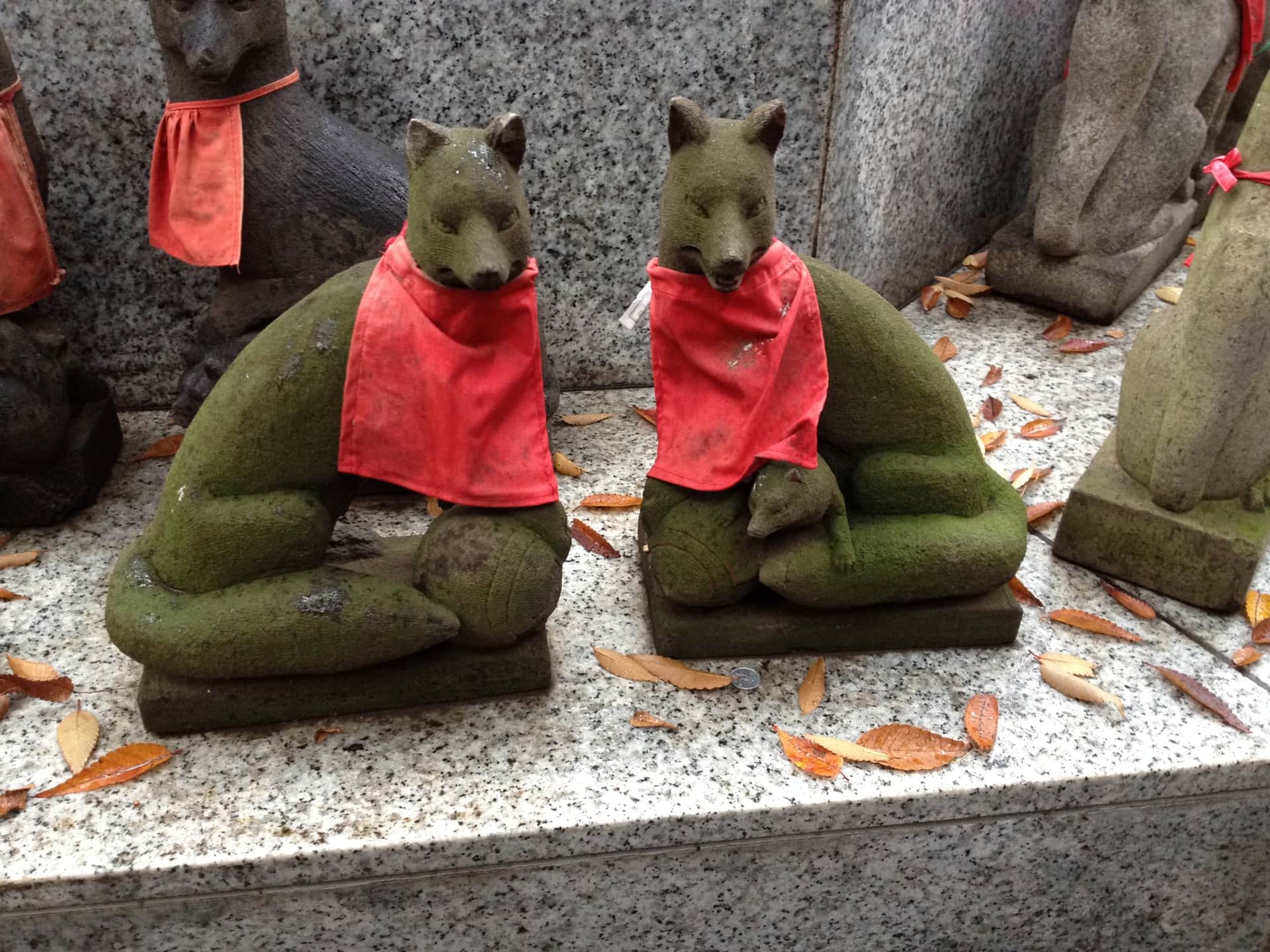
This shrine offers 6 different goshuin designs
Regular
¥1,500
Regular
¥500
Special
¥2,000
Regular
¥500
Regular
¥700
Monthly
Facilities
Lower shrine grounds are wheelchair accessible. Mountain trails are not. Accessible toilets available.
You can also purchase a mini torii gate at the top, where they will inscribe your name and a blessing in Japanese characters (cost 3,000 yen).
The full hike to the summit of Mount Inari takes 2-3 hours round trip with thousands of steps, so wear comfortable walking shoes and bring water as vending machines are limited beyond the halfway point at Yotsutsuji intersection.
Bring plenty of small coins (100 yen and smaller) as there are numerous offering boxes throughout the mountain trail at various shrines and sub-shrines where you can make donations.
Visit early in the morning (around sunrise, 5-7am depending on season) or after 6pm to experience the famous Senbon Torii gates with minimal crowds, as the shrine is open 24 hours with pathways illuminated at night.
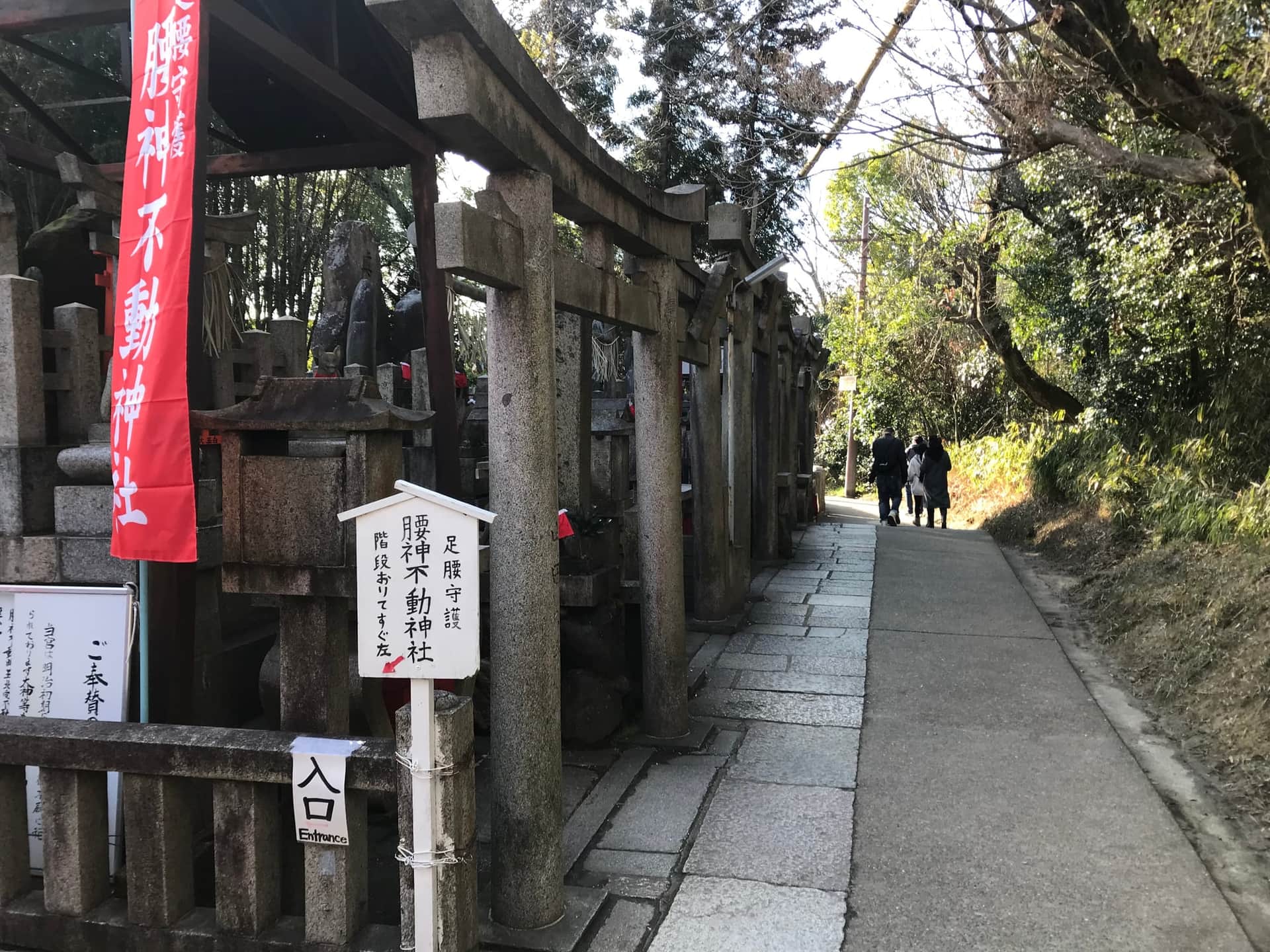
Most visitors stop at the Yotsutsuji viewpoint halfway up the mountain, where crowds thin out. Continue beyond this point to enjoy quieter trails, traditional teahouses, and numerous private worship altars (お塚) in a peaceful setting.
The divine spirits venerated at this sacred place
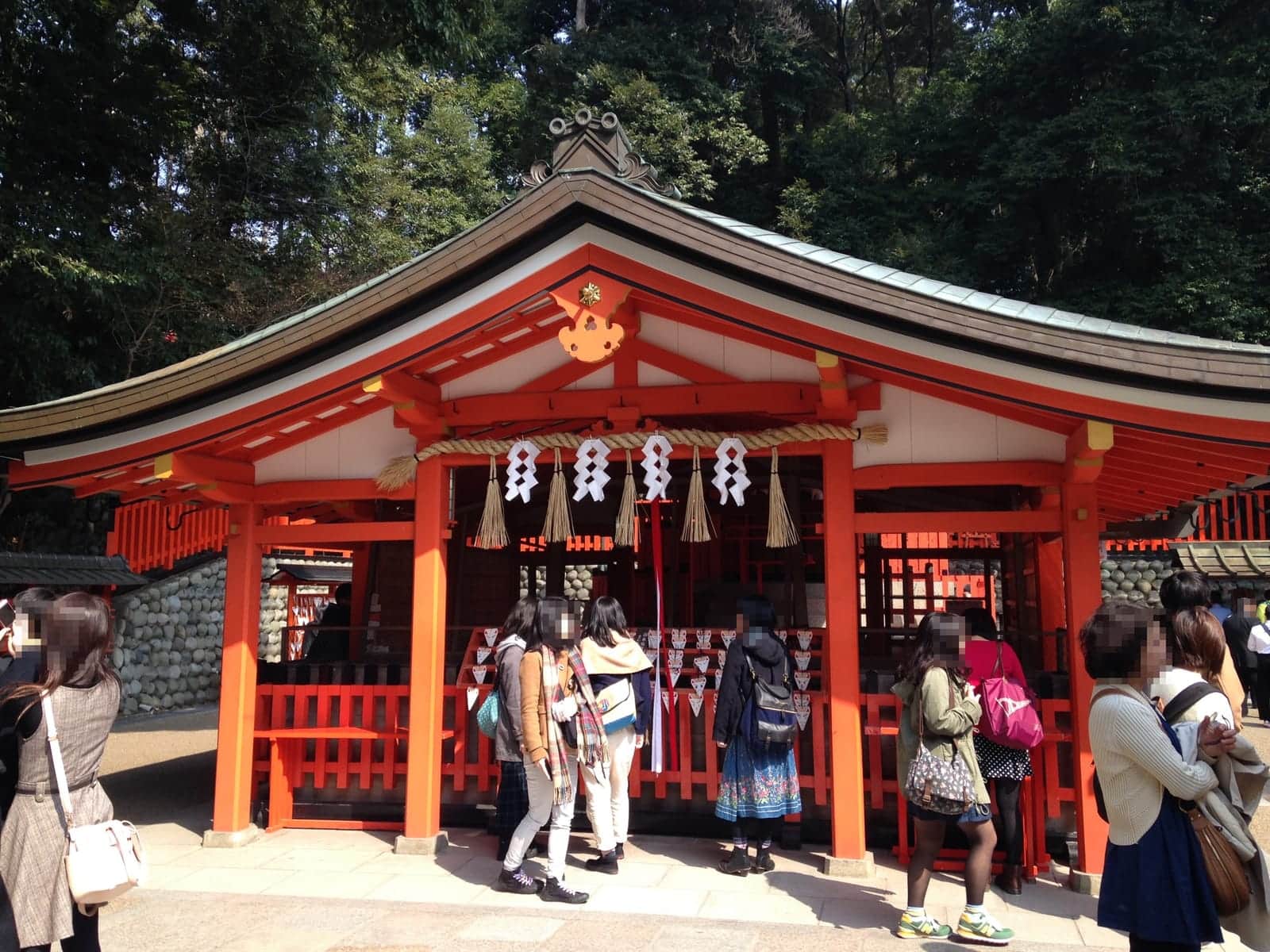
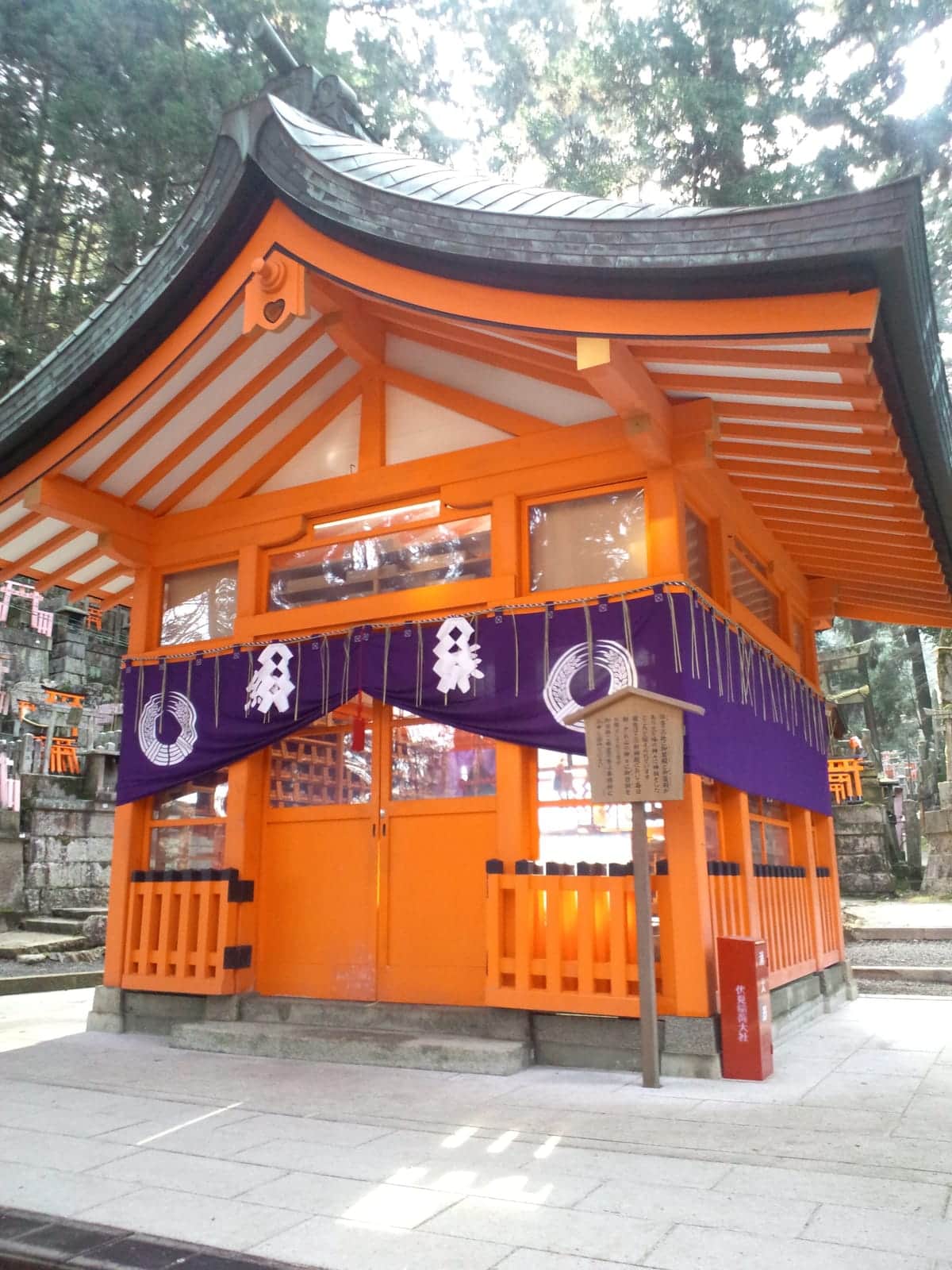
24 structures on the grounds
Seasonal celebrations and special occasions
Inari Matsuri
Festival of the rice deity Inari, praying for prosperity and abundant harvest.
Hongū-sai
Festival of the main shrine honouring its enshrined deity.
Ohitaki-sai (Fire-Kindling Festival)
Late-autumn rite burning wooden tablets to give thanks and purify.
Practical answers for planning this specific visit.
Plan about 2-3 hours for the full loop to Mount Inari and back. If you only want the lower shrine area and Senbon Torii, allow 30-45 minutes. Many visitors turn back at Yotsutsuji viewpoint after about 60-90 minutes round trip.
No. The summit route is worthwhile if you want the full mountain pilgrimage, but the best city view is around Yotsutsuji, not at the wooded summit. Turning back there is a good option if time, heat, or stairs are a concern.
The shrine grounds and mountain paths are free to enter and can be visited at any time. Shops, offices, and staffed areas keep their own daytime hours, so plan goshuin, purchases, and staffed help for the day.
Yes, the grounds can be visited at night and the lower paths are atmospheric after dark. Go with care: lighting is limited in higher forested sections, facilities are fewer, and the shrine asks visitors to avoid disruptive behavior, restricted areas, littering, and feeding wildlife.
Yes. Fushimi Inari Taisha offers goshuin, but collect them during staffed daytime hours rather than late-night visits. Bring your goshuincho and small yen notes or coins.
Go early in the morning, ideally before the tour-group rush, or later in the evening. The lower Senbon Torii area is the busiest photo section; crowds thin out noticeably as you climb beyond the first shrine areas.
The mountain route is a long stair climb, not a technical hike. Wear comfortable shoes and bring water if you plan to continue beyond the lower shrine area. Wheelchair and stroller access is limited once the route starts climbing, and unattended strollers are only allowed in marked areas.

Typical Crowds
Bustling
Visit Duration
90+ minutes
Fushimi, Kyoto Prefecture
More ways to continue from this place.
Within 300 m Within 600 m Distance unavailable
Renting needs the operator's app and a Japanese phone number. docomo day passes are sold at convenience stores. Data sources
What this place is believed to grant
60 recent posts
4.8
15 reviews
Fushimi Inari is open 24 hours, so arriving around sunrise or after 6pm lets you walk the famous torii gate tunnels with far fewer people around. The full circuit to the summit and back takes 2 to 3 hours and involves thousands of steps, so wear proper shoes and carry water. Vending machines are scarce past the Yotsutsuji intersection halfway up.
Most visitors turn back at Yotsutsuji, where there's a good viewpoint over the city. Push past it and the trail quiets down considerably, with traditional teahouses and private worship altars tucked along the path.
 MSPro member
massimo silvestrinPro shared 5 photos
MSPro membermassimo silvestrinPro checked in
Fushimi Inari Taisha
Fushimi, Kyoto