On this page
Key takeaways
- How ritual renewal, disaster reconstruction, conservation, and craft transmission create different layers of authenticity.
- A shrine or temple can be ancient even when the building in front of you is not. Fire and earthquake have repeatedly changed Japan's sacred architecture. War has done the same.
- Understanding those distinctions makes a visit richer. A rebuilt hall is not automatically a fake, and an old timber is not the only form of authenticity.
Why Japan Rebuilds Sacred Sites: Renewal, Reconstruction, and Living Heritage
A shrine or temple can be ancient even when the building in front of you is not. Fire and earthquake have repeatedly changed Japan's sacred architecture. War has done the same. So too have weather and ritual renewal, as well as planned conservation. The age of an institution and the age of a design are different facts. The age of its materials is a third distinct fact. The date of its latest reconstruction is yet another distinct fact.
Understanding those distinctions makes a visit richer. A rebuilt hall is not automatically a fake, and an old timber is not the only form of authenticity.
Sacred institutions can outlive individual buildings
A temple’s founding history may reach back centuries before its present main hall. Records and ritual continuity can survive even when structures do not. Images may survive as well. Site layout and patronage may also endure. Community memory often does too. Conversely, an old building may have been moved or altered, or given a new function.
Japan's wooden architecture is vulnerable to fire and moisture, as well as to insects and storms. Earthquakes pose an additional threat. Sacred complexes also participated in political conflict and suffered wartime destruction. Rebuilding has therefore been common, but its reasons and methods differ by place.
The Buddhist temple architecture guide helps identify buildings and functions. When it names a hall, always ask which historical layer that specific structure represents.
Ise makes rebuilding part of ritual
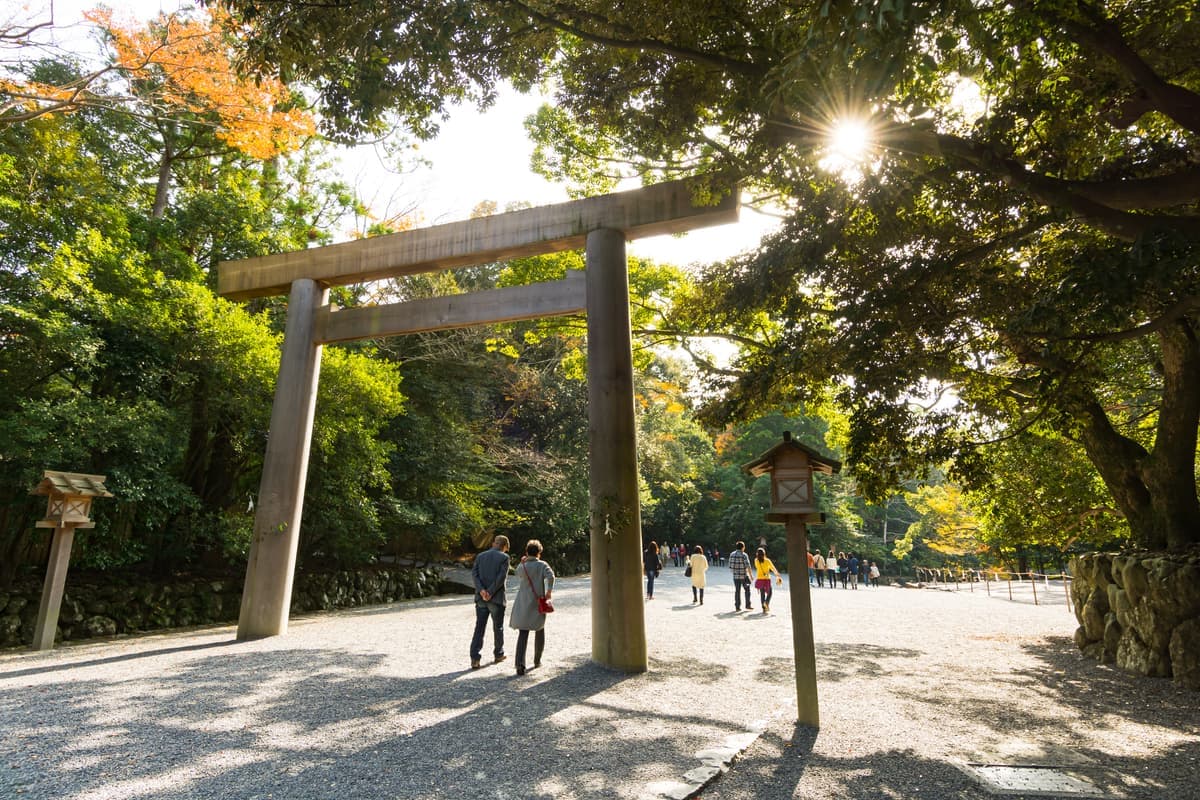
Ise Jingu offers the clearest example of planned renewal. In Shikinen Sengū (式年遷宮), a new sanctuary with the same dimensions is constructed on the alternate site; sacred furnishings and treasures are remade; and the divine symbol is transferred. Ise Jingu's official account says the cycle occurs every twenty years and involves about thirty rituals. It also takes years of preparation.
This is not emergency reconstruction after loss. Renewal is built into the institution’s ritual calendar. Materials are replaced, but knowledge must also be transmitted: selecting timber; preparing components; making sacred objects; and performing ceremonies.
The glossary entry for Shikinen Sengū explains the term, while the Shinto shrine architecture guide shows what to observe in sanctuary form and roof details.
Reconstruction after disaster carries a different meaning
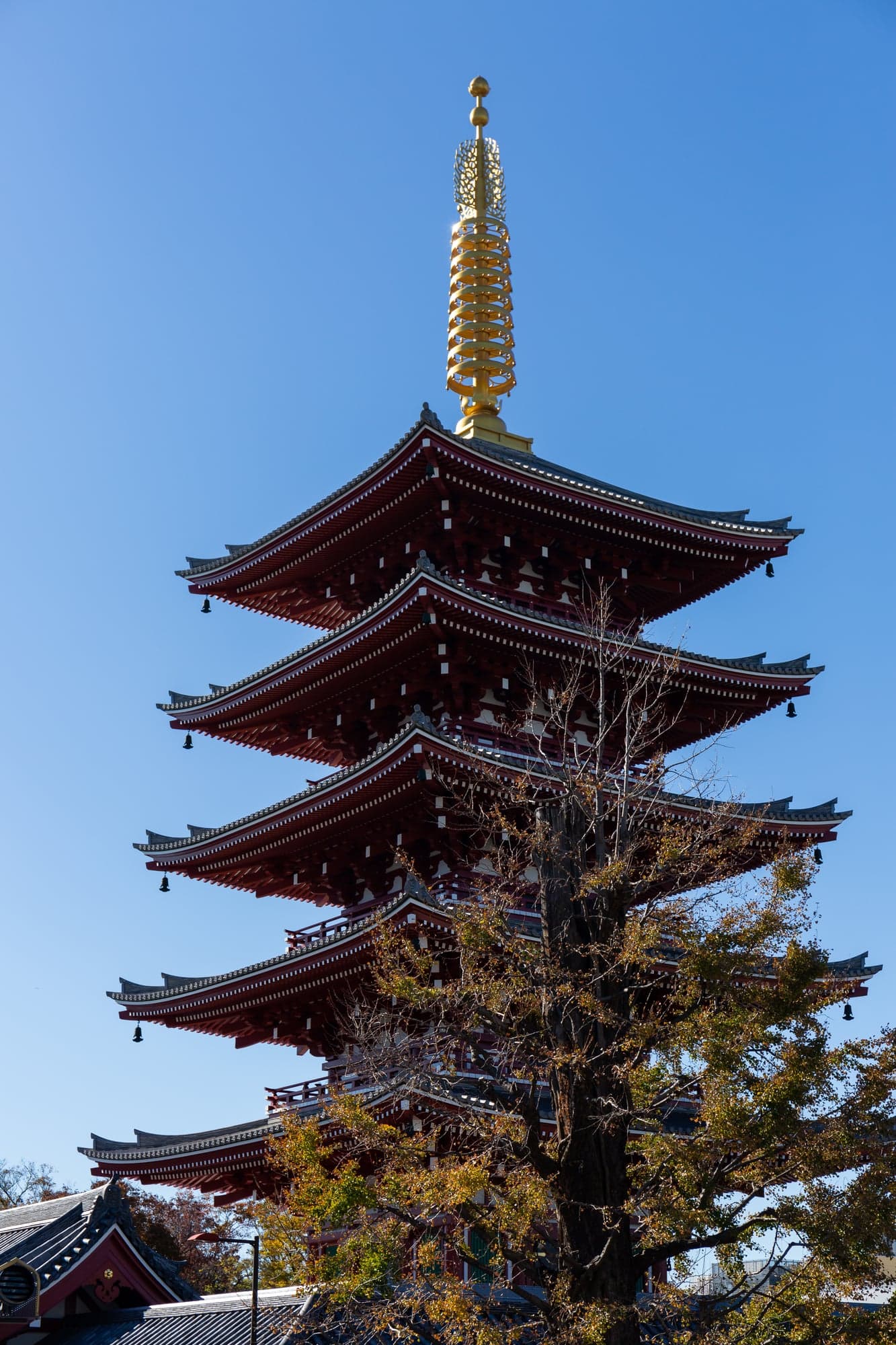
When fire or earthquake destroys a sacred building, reconstruction can restore worship and recover a skyline. War can prompt the same response. It can also become part of civic memory. Senso-ji’s main buildings were reconstructed after the wartime bombing of Tokyo. Kinkaku-ji’s pavilion was rebuilt after arson in 1950. These projects are not equivalent to Ise’s scheduled ritual, even though all involve making a familiar form new again.
Reconstruction decisions can draw on measured drawings and photographs, as well as surviving components. Archaeological evidence and craft knowledge may also inform the process. Institutional records are another resource. The result may reproduce a previous appearance while using hidden reinforcement or modern fire protection. Replacement materials may also be employed.
An article about a specific place should state what was lost and when the current structure was completed. It should also identify what evidence informed the reconstruction. Phrases such as “1,400-year-old building” are misleading when only the institution or tradition has that age.
Conservation tries to preserve material and technique
Not every intervention is a full rebuild. Roofs are rethatched and lacquer is renewed. Timber members are repaired as well. Painted surfaces are stabilized and structures are strengthened. The Agency for Cultural Affairs regulates changes to designated cultural properties and supports restoration and disaster protection. It also funds documentation and successor training.
Japan's system of Selected Conservation Techniques recognizes that heritage depends on people who can work with traditional roofs and walls. Skill with metal fittings is equally required. Skills in lacquer and paper are essential, as are skills in textiles and timber. Preserving a building without preserving those skills would leave future repairs impossible.
Conservation can temporarily hide a hall behind scaffolding or close an interior. That interruption is evidence of care, not a failed visit. Check the official institution or cultural-property notice before traveling when a particular structure is essential to your plan.
Authenticity has several layers
Visitors often ask whether a reconstructed building is “original.” A better set of questions is more precise:
- Is the institution continuous on this site?
- Is the current structure a repair, partial reconstruction, or complete rebuild?
- Does it reproduce an earlier design?
- Were original components reused?
- Is renewal itself part of ritual practice?
- Which craft traditions were transmitted through the work?
Different answers can all carry historical value. Material survival matters greatly, especially for designated cultural properties, but so do use and knowledge. Setting and ritual are equally important. Collective memory is as well.
The shrine and temple recognition guide can help identify the present complex. Official histories and cultural-property records then reveal how it became present.
Visit restoration without spreading bad history
Read construction panels and official notices. Stay outside fenced work areas and do not treat exposed material as a souvenir. If a hall is represented by a temporary image or a relocated object, describe that arrangement accurately in photographs and posts.
Avoid romantic claims that Japanese buildings are routinely destroyed because impermanence makes age irrelevant. Scheduled renewal at Ise is specific, while most temples and shrines repair and conserve their buildings according to their own circumstances. Buddhist ideas of impermanence may inform interpretation, but they do not substitute for documented construction history.
A rebuilt sacred site is best understood neither as an untouched relic nor as a replica without meaning. It is a place where material and technique have been negotiated across time. Worship and memory have been part of that negotiation as well.
Goshuin Atlas place records should therefore separate an institution's founding from a structure's construction date. Documented repairs should be listed separately as well, rather than compressed into a single age.
Sources
- Ise Jingu: Rituals and Ceremonies, including Shikinen Sengu
- Agency for Cultural Affairs: Measures for Cultural Properties
- Agency for Cultural Affairs: Introduction to Cultural Properties
- Japan Cultural Expo: Conservation Techniques for Cultural Properties
Conservation references were reviewed on July 29, 2026. Check institution-specific project notices before visiting.