Buddha of Infinite Light and Life
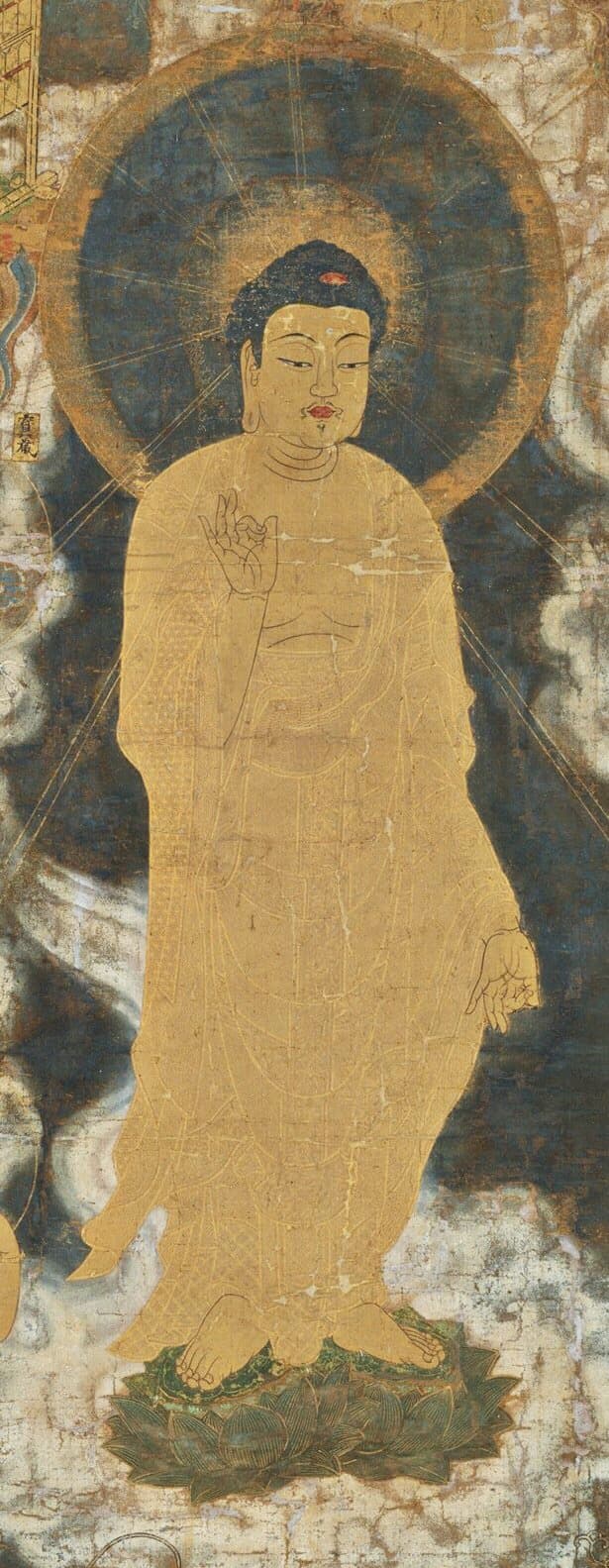
Amida Nyorai, known in Sanskrit as Amitābha, is one of the central Buddhas of Mahayana Buddhism and the most widely venerated Buddhist figure across East Asia. His name carries a dual meaning — Limitless Light and Immeasurable Life — reflecting his two fundamental qualities: a radiance said to illuminate the entire cosmos and a lifespan beyond all reckoning. These qualities are understood as expressions of his boundless compassion and wisdom.
Amida is the presiding figure of Pure Land Buddhism, a tradition in which practitioners seek rebirth in Sukhāvatī, his realm of perfect peace and bliss. This pure land is the fruit of vows Amida made long ago, and entry is open to all who call upon his name with sincere faith — a practice known in Japanese as nembutsu. His accessibility to ordinary people made him the most beloved Buddhist figure in East Asian devotional life, celebrated in temple art and ritual throughout Japan, China, and Korea.
In East Asian iconography, Amida is most commonly depicted in a triad alongside the bodhisattvas Avalokiteśvara and Mahāsthāmaprāpta, often shown radiating golden light as a symbol of his wisdom. In Tibetan Buddhism he is distinguished from his alter-ego Amitāyus, who is specifically associated with longevity practices and the transference of consciousness at death. Across all these traditions, Amida stands as a symbol of universal compassion and the promise of liberation for all sentient beings.
20 places