The Phoenix Hall (Hōōdō) interior requires a separate 300 yen fee and operates on a timed entry system with limited capacity, so expect to wait up to an hour on weekends.
At a Glance
Look closely at the hall that seems to hover over water like a bird about to take flight—the celebrated Phoenix Hall of Byōdō‑in in Uji, Kyoto Prefecture, and one of the most enduring images of Japan. Founded in 1052 at the threshold of what medieval Buddhists called the Latter Days of the Law (mappō), this temple crystallizes the Pure Land promise of salvation in architectural form. By the following year, 1053, the Phoenix Hall had been completed, enshrining a radiant Amitābha (Amida) Buddha that still gazes out across a mirror‑still pond. Today, Byōdō‑in is both a living temple and an icon—recognized on the Japanese ¥10 coin, echoed on the ¥10,000 banknote with its roof‑top phoenix, and inscribed since 1994 on the UNESCO World Heritage list as part of the Historic Monuments of Ancient Kyoto.
To understand why this place looks the way it does, you have to imagine the world of the Heian‑period aristocracy. This site began as a riverside villa of the powerful Fujiwara clan—traditionally associated with Fujiwara no Michinaga (d. 1028)—before his son, Fujiwara no Yorimichi, transformed it into a Buddhist temple in 1052. That date was not accidental. Many believed a degenerate age of the Dharma had begun, and devotees turned to Pure Land (Jōdo) belief, entrusting themselves to Amida’s compassion through the nembutsu chant. In 1053, Yorimichi inaugurated the Phoenix Hall (Hōō‑dō) to present Amida’s paradise as something a believer could quite literally behold.
The building plan is ingenious and symbolic. A compact central sanctuary, a pair of lateral corridors “winging” out to the north and south, and a short rear corridor “tail” together sketch the silhouette of a phoenix (hō‑ō) at rest. Its reflection doubles that image in the broad pond before you—an earthly rehearsal of the Western Paradise that Pure Land devotees sought to see at the moment of death. The central image, carved in 1053 by the revolutionary sculptor Jōchō, is the masterpiece that set the standard for Buddhist statuary for centuries. Using the yosegi‑zukuri or joined‑wood technique—assembling many precisely carved hinoki (Japanese cypress) blocks into one seamless figure—Jōchō achieved a refined, unearthly serenity. The sculpture’s surface once gleamed with gold leaf and delicate pigments; its proportions, governed by Jōchō’s newly codified canon, soften the body into ethereal calm rather than muscular force.
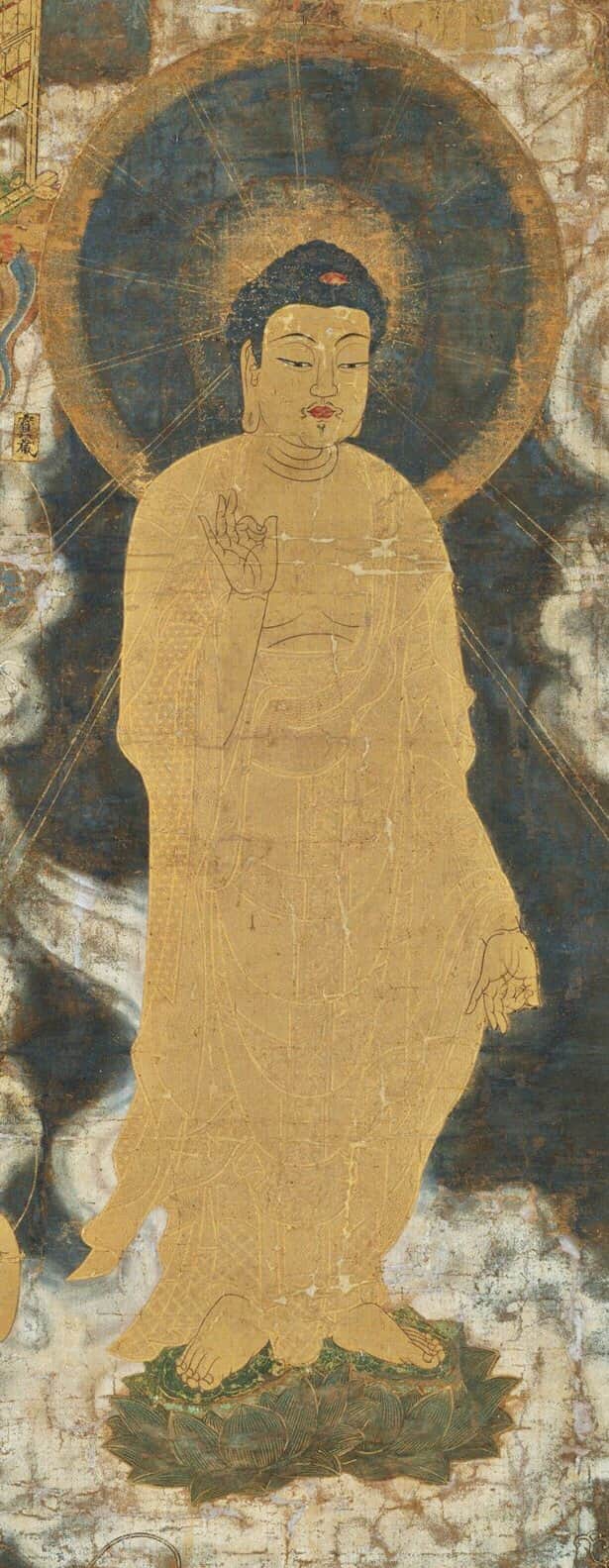
Look up, and you’ll discover a celestial orchestra in mid‑arrival: dozens of small Bodhisattvas on clouds (Unchū Kuryōbō) ride painted and carved clouds along the walls and rafters, blowing flutes, strumming biwa lutes, and scattering lotus petals. These figures, along with the hall itself and the seated Amida statue, are designated National Treasures. On the interior doors and panel paintings—works among the earliest surviving Raigō‑zu (“Arrival of Amida”) depictions—Amida descends to welcome the faithful, the horizon awash with gold and vermilion. The message is both tender and sophisticated: what Pure Land scripture promises, this hall visualizes.
The exterior has its own eloquence. Atop the roof perch two bronze phoenixes, symbols of virtuous rule and auspicious rebirth. The ones you see outside today are replicas; the originals, also National Treasures, are preserved nearby in the climate‑controlled Byōdō‑in Museum Hōmotsukan, opened in 2001. The roof’s rhythm of gray tiles and upward‑sweeping eaves catches light differently through the day; from dawn the building floats, by noon it anchors the water with clear lines, and by late afternoon it kindles into coppery warmth. This hall alone survived the wars and fires that claimed many of Byōdō‑in’s other medieval buildings; even so, the temple’s custodians have undertaken thoughtful restorations, including a major conservation in the early 2010s to refresh the hall’s lacquered surfaces and return its silhouette closer to the vivid appearance it would have had in the 11th century.
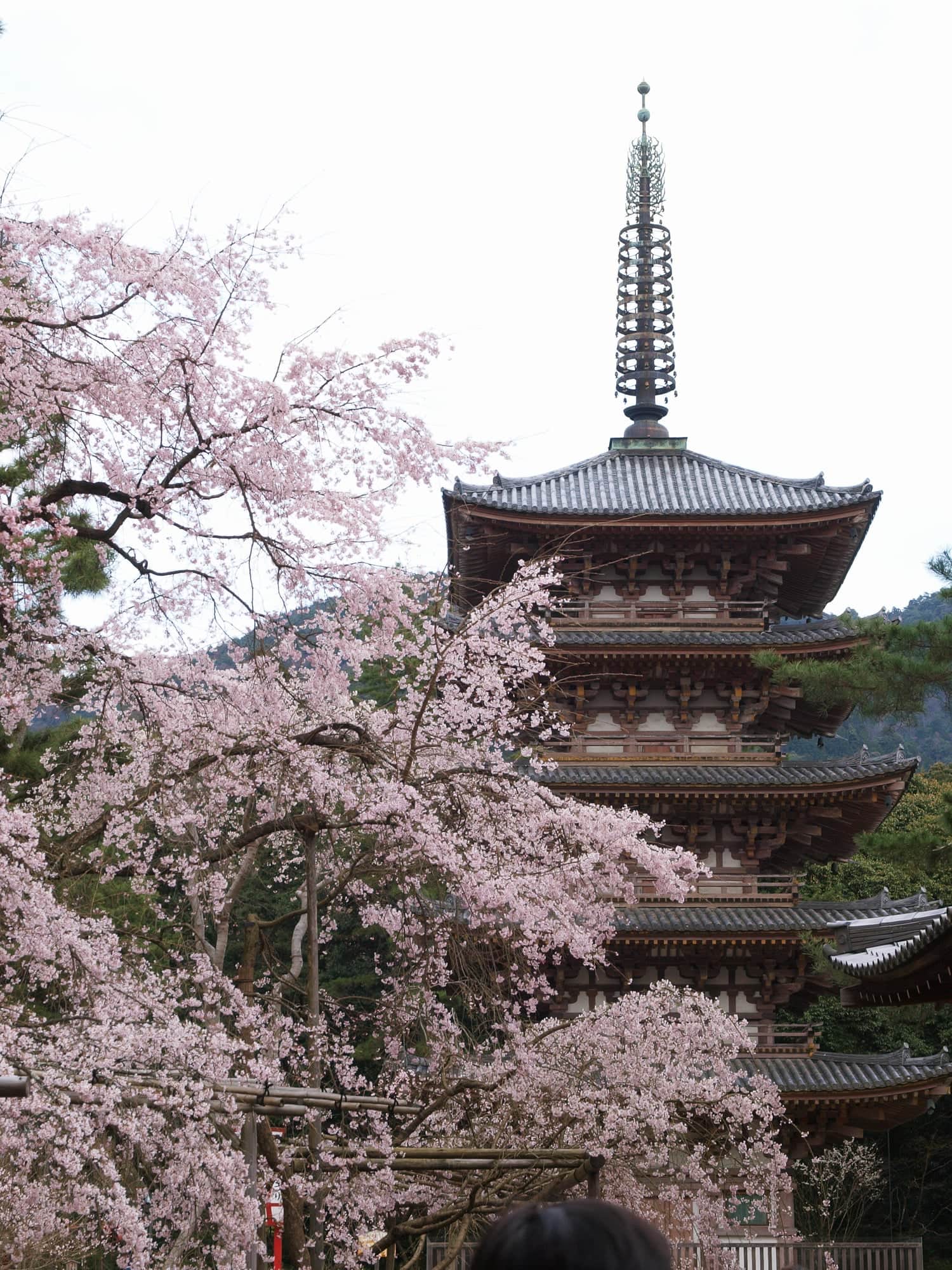
Step back to grasp the landscape design—the quintessential Pure Land garden (Jōdo teien). The broad pond, island placements, and carefully graded banks create a choreographed approach to Amida: you see the hall across water, as if gazing toward the Western Paradise itself. In spring, cherry blossoms veil the scene with soft pink; in early summer, Uji’s famed tea fields scent the air; in autumn, maples burn red, and in winter, a dusting of snow renders the hall even more otherworldly. The garden’s long vistas borrow the ridgelines of the Uji River valley, blending temple grounds with the surrounding hills in a technique known as shakkei (borrowed scenery). The effect is less theatrical than contemplative: the hall becomes a horizon you approach with your breath.
Inside the Hōmotsukan museum, several of Japan’s finest Buddhist artworks await you at close quarters. Along with the original bronze phoenixes, the Heian‑period temple bell (bonshō)—celebrated for its refined reliefs—rests in controlled light, and the delicate door paintings from the Phoenix Hall are displayed so that you can see pigments and brush rhythms up close. Many of the floating cloud‑riding bodhisattvas are shown at eye level; you can trace their instrument strings, the curve of a dancer’s sleeve, and the thin halos gilded around their heads. These objects carry the highest designations—National Treasure and Important Cultural Property—not as museum labels but as statements of irreplaceable cultural memory.
Religiously, Byōdō‑in remains a living center of Pure Land devotion, even as it welcomes visitors from around the world. Clergy lead services, the nembutsu is still intoned, and the hall’s iconography continues to teach: the faithful once envisioned Amida’s welcoming descent; today’s visitors, regardless of belief, can read the same message in carve marks, in the curve of a cloud, in the compassionate calm of Jōchō’s Amida. Culturally, the temple’s image has entered everyday life. Flip a ¥10 coin, and the Phoenix Hall appears on the reverse; look at a ¥10,000 banknote, and the phoenix from this roof spreads its wings in meticulous engraving. The temple’s inscription on the UNESCO list in 1994 recognizes not only its architecture but the way it condenses Japan’s Heian courtly spirit, religious imagination, and garden art into one coherent whole.
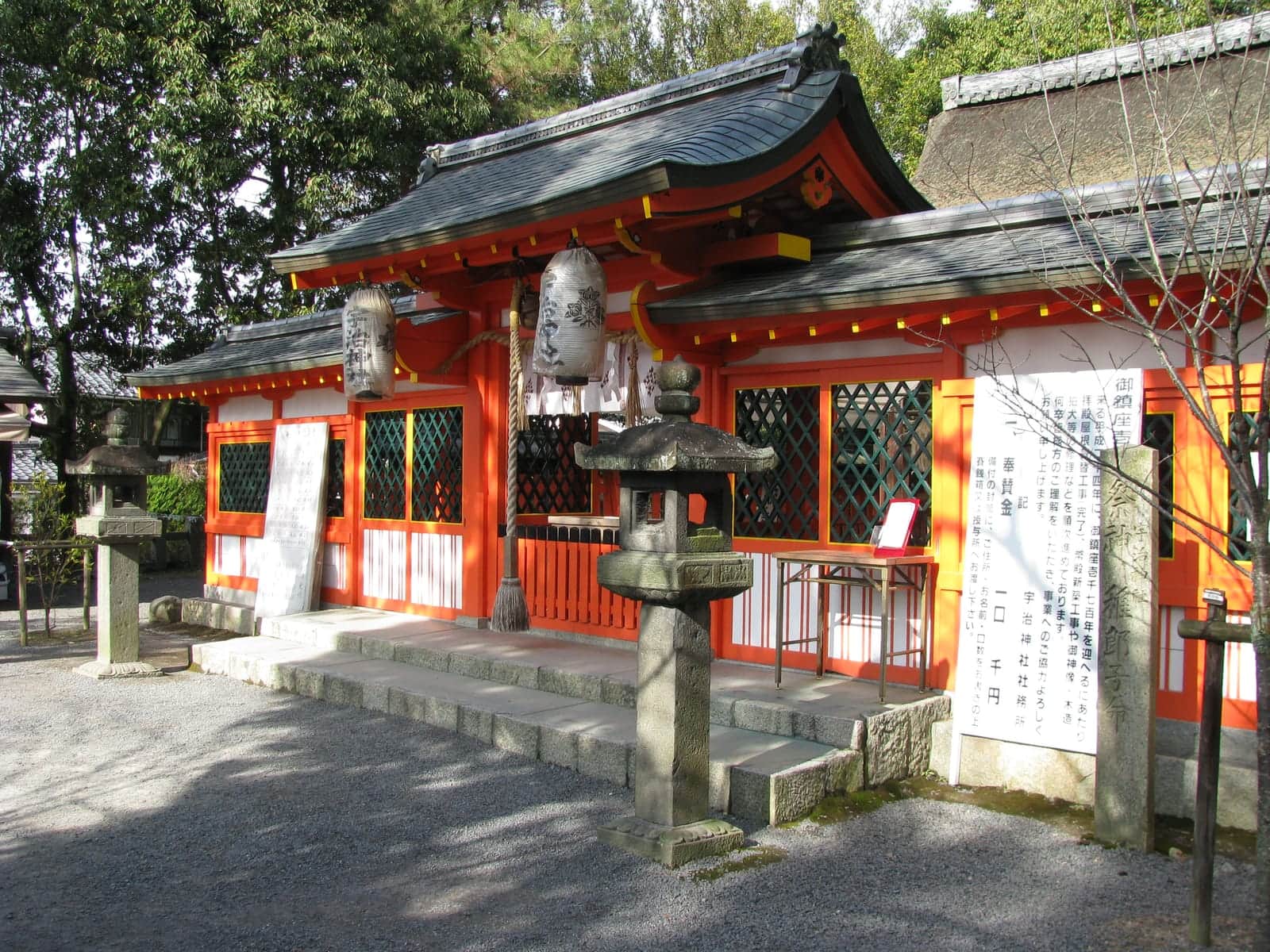
The city of Uji deepens the visit. It is home to some of Japan’s finest green tea, and the riverbanks and bridges here echo through classical literature, including the final chapters of “The Tale of Genji.” Across the river stands Ujigami Shrine, another World Heritage site; together, shrine and temple sketch the sacred geography of medieval Uji, where Shinto and Buddhist spaces converse across water and time.
As you explore the grounds, notice the careful staging of movement. Paths lead you to pause on axial points where the Phoenix Hall aligns perfectly with its reflection. Small bridges guide you across the pond to controlled vantage points; the building’s proportions and the water’s width keep you at a contemplative remove, just far enough for the architecture to read as a vision. The experience is curated but never forced, relying on proportion and light rather than spectacle. Many visitors find that the most powerful moment is simply standing still, watching breeze‑ruffled ripples dissolve the hall’s mirrored wings.
A final note for global travelers: the name Byodo‑In also refers to a modern temple in Hawaiʻi—a serene, scaled‑down homage built in 1968 on Oʻahu to honor Japanese immigrants. That beautiful site echoes the form, but the original Byōdō‑in in Uji, with its 1053 Phoenix Hall, is the source—an 11th‑century synthesis of faith, politics, and artistry that still lands, after a millennium, with breathtaking clarity. Stand before it, and you are not just seeing a building; you are seeing how a culture imagined salvation and made it visible in wood, water, and light.
Built in 1053, the Phoenix Hall was designed to represent the Pure Land paradise, with its reflection in the pond creating a perfect mirror image that symbolizes the gateway between our world and the afterlife.
Despite being nearly 1,000 years old, recent restoration work made the Phoenix Hall's vermillion walls and gilded phoenix statues look so pristine that some visitors mistake it for a movie set rather than an ancient treasure.
This temple offers 2 different goshuin designs
Regular
¥300
Regular
¥300
Facilities
Language support
Payment
Using the special wheelchair in the garden is highly recommended due to the rough gravel surface. Unfortunately, wheelchair access is not available inside Phoenix Hall, the garden area behind it, or at Saisho-in Temple because of significant level changes. We offer a special wheelchair designed to handle the uneven ground. Please inform the staff at the Main Gate or South Gate reception if you need one. While we don’t take reservations, we have several wheelchairs on hand for visitors.
The Phoenix Hall (Hōōdō) interior requires a separate 300 yen fee and operates on a timed entry system with limited capacity, so expect to wait up to an hour on weekends.
The autumn night illumination events showcase the Phoenix Hall dramatically lit against the darkness with its reflection in the pond, surrounded by illuminated fall foliage.
The Phoenix Hall appears on Japan's 10-yen coin, making it one of the most handled pieces of architecture in daily Japanese life, billions of times every day across the nation.
Two different types of goshuin (temple stamps) are available for 300 yen each at Byodo-in. If you collect temple stamps, bring your goshuin book or purchase commemorative papers for both varieties.
Arrive early on weekends as nearby parking lots fill up quickly, especially given the temple's proximity to both JR and Keihan Uji stations. The surrounding gate town area has many tea houses where you can enjoy authentic Uji tea before or after...
The divine spirits venerated at this sacred place
1 structures on the grounds

Typical Crowds
Lively
Visit Duration
90+ minutes
More ways to continue from this place.
Uji, Kyoto Prefecture
What this place is believed to grant
Within 300 m Within 600 m
9 recent posts
4.5
2 reviews
Arrive early on weekends, as parking fills fast. The temple sits close to both JR and Uji stations, so the train is often the easier choice. Tea houses in the surrounding gate town are good for a cup of Uji tea before or after your visit.
The Phoenix Hall (Hodo) is the centerpiece, and you'll recognize it instantly if you've ever handled a 10-yen coin. Entry to the interior costs an extra 300 yen and runs on timed slots with limited capacity, so a wait of up to an hour on busy days is normal.
 TFPro member
Tim FangonPro shared a goshuin
 MGPro member
Mason GeorgePro shared a goshuin
 CG
CGChristopher Gillespie left a review
Would come back. Striking main hall. Nice place to pause. Loved the goshuin