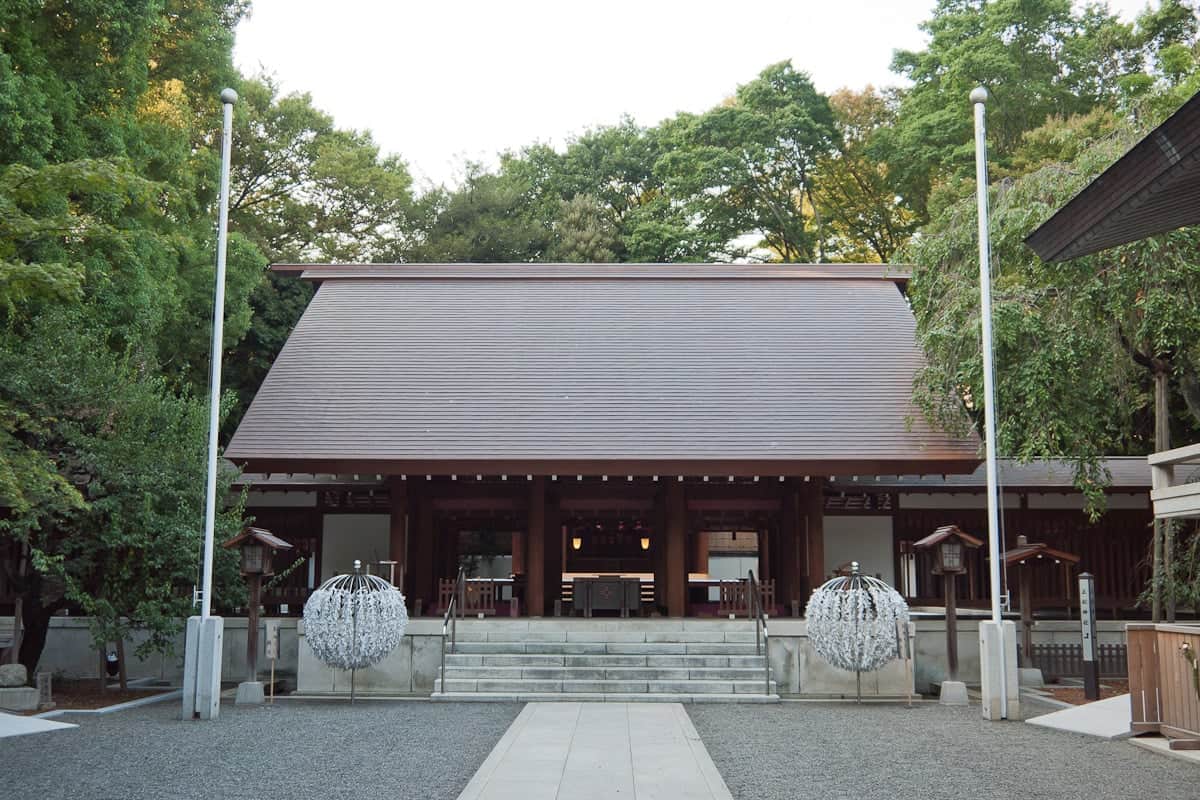
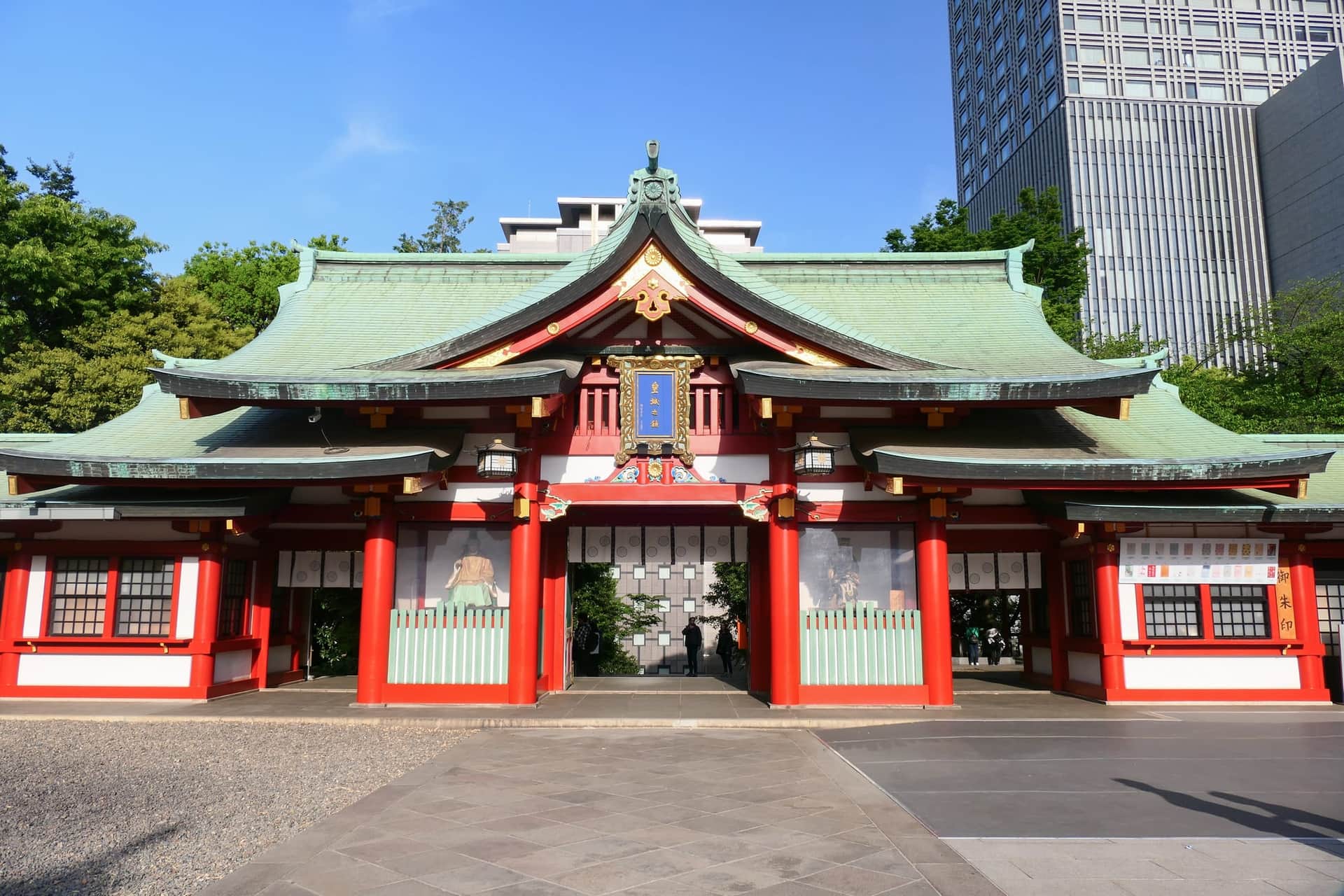
Plan your visit during weekday mornings if you want to experience the shrine's peaceful atmosphere with fewer visitors, as weekends tend to draw larger crowds to this well-known Tokyo shrine.
At a Glance
The Shiai Inari (Four Happiness Inari) shrine within the grounds was named by the legendary samurai and naval commander Katsu Kaishu, a key figure in Japan's transition from shogunate to modern era.
The shrine displays its elaborate festival floats and portable shrines year-round in a modern glass exhibition hall, showcasing the ornate decorations used in the annual September festival that once rivaled other Edo celebrations.
Same as opening hours
This shrine offers goshuin, but we don't have photos yet. Be the first to share yours!
Facilities
Plan your visit during weekday mornings if you want to experience the shrine's peaceful atmosphere with fewer visitors, as weekends tend to draw larger crowds to this well-known Tokyo shrine.
Visit the glass-enclosed festival float exhibition hall along the approach path to see the ornate mikoshi and festival floats used in the September annual festival.
Look for the decorative flower arrangements at the temizuya water purification basin and the charming cherry-shaped good fortune charms tied to the nagi tree for romantic relationships.
If you plan to visit multiple shrines, note that Akasaka Hikawa is one of Tokyo's Ten Shrines, making it a useful stop for a themed shrine itinerary.
Use the name "Akasaka Hikawa Jinja" when searching or asking directions, so you don't confuse it with other Hikawa shrines in Minato.
The divine spirits venerated at this sacred place
Seasonal celebrations and special occasions
Minato, Tokyo Prefecture
Not confirmed
More ways to continue from this place.
Within 300 m Within 600 m
Timetable data: Public Transportation Open Data Center

C3-37.AKASAKA MAPLE HILL
docomo bike share
C3-39.赤坂レジデンシャルホテル
docomo bike share
C2-01.アークヒルズ(アーク森ビル)
docomo bike share
Renting needs the operator's app and a Japanese phone number. docomo day passes are sold at convenience stores. Data sources
What this place is believed to grant
1 recent posts
5.0
1 review
Akasaka Hikawa Jinja is the name to use when searching or asking for directions, since several Hikawa shrines exist in the area. Weekday mornings are the quietest time to visit; weekends bring noticeably larger crowds. It also sits within Tokyo's Ten Shrines circuit, so it fits naturally into a multi-shrine day.
Along the approach, a glass-enclosed hall displays the ornate mikoshi and festival floats used in the September annual festival. At the temizuya water purification basin, look for decorative flower arrangements, and nearby you'll find cherry-shaped good-fortune charms tied to the nagi tree, traditionally associated with romantic relationships.