
Shimenawa
Ritual objects注連縄 ・ Reading: しめなわ
Definition
What it marks
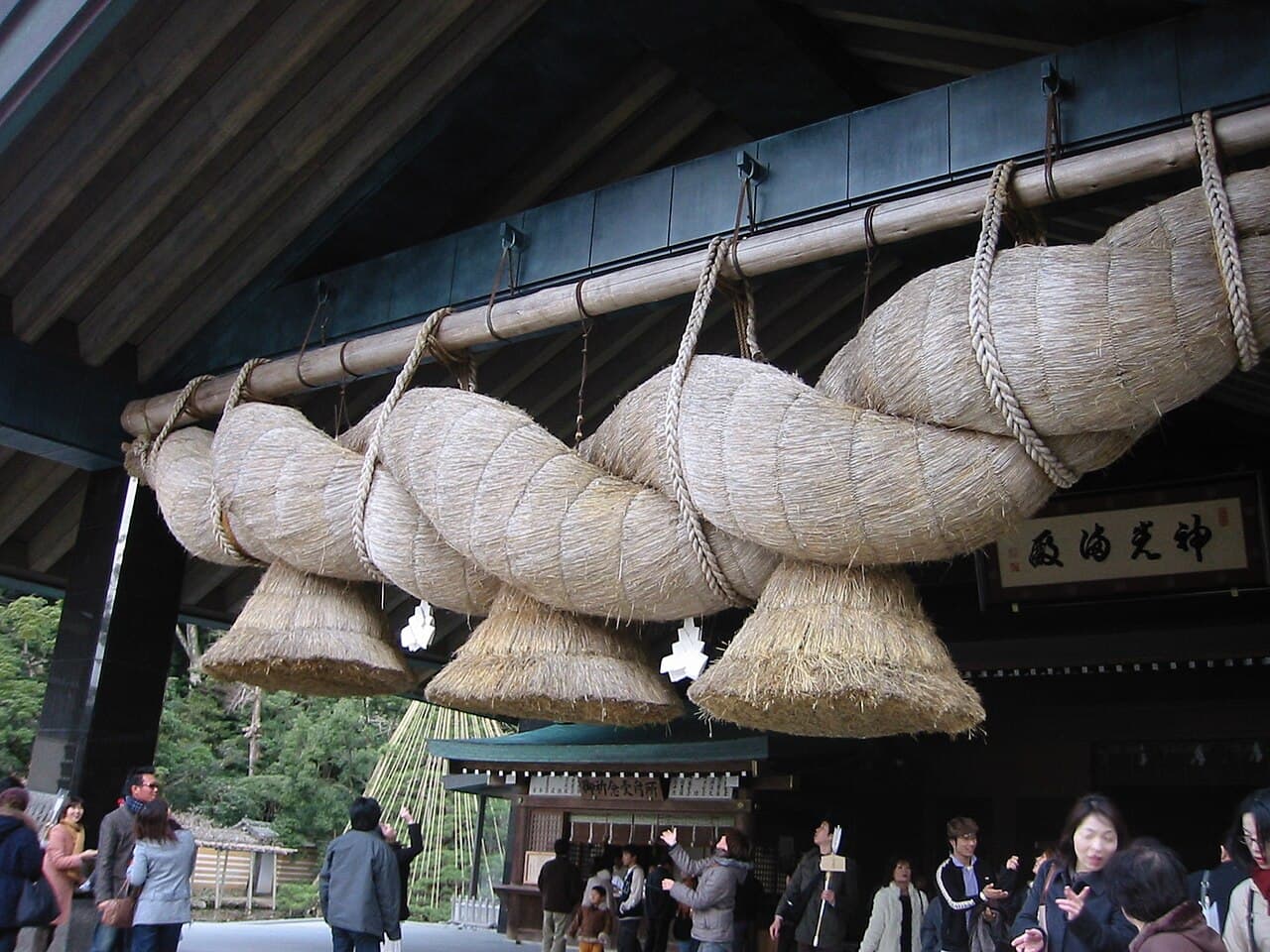
A shimenawa is a rope of twisted rice straw hung across a shrine gate, around a sacred tree, over a rock, or at the front of a hall to set apart a space where the kami is present. Passing beneath one or standing before it, you are at a boundary between everyday ground and consecrated ground. Many ropes carry zigzag paper streamers called shide) and tufts of loose straw, and these markers help you read a place at a glance: what hangs behind the rope is treated as holy.
What they look like
The rope is spun from rice straw, sometimes rush, and its thickness ranges from a slender cord to a massive plaited braid heavier than a person. The strands are usually twisted so the rope tapers toward one end. You will see shimenawa knotted around ancient trees, wrapped around paired rocks standing in the sea, and strung above the offering hall where worshippers pray. Grand examples decorate the great halls of major shrines, where the rope becomes a thick, hanging sculpture of straw.
When they are renewed
Shimenawa are natural materials and wear with weather and time, so they are replaced, often before the New Year, when a fresh rope signals renewal and welcomes the coming year's blessings.
Common questions
- What is a shimenawa used for?
- What is the difference between a shimenawa and shide?
A shimenawa is the twisted rice-straw rope itself, while shide are the white zigzag paper streamers that hang from it. The shide are attached to the shimenawa, and together they signal a sacred boundary.
- Where can I see a very large shimenawa in Japan?
One of the largest and most famous shimenawa in Japan hangs at Izumo Taisha in Shimane Prefecture, at its Kagura hall. It is enormous, roughly as thick as a person's body, and is a highlight for many visitors to the shrine.
Related articles
- How to Read Shinto Shrine ArchitectureLearn to read shrine architecture through building roles, roof structure, documented styles, and official case studies from Ise Jingu and Sumiyoshi Taisha.
- Shrines and Temples in Japan: How to Tell Them ApartRecognize Shinto shrines and Buddhist temples using names, buildings, worship methods, and local guidance without relying on misleading visual shortcuts.