On this page
Key takeaways
- Search the public Goshuin Atlas catalogue in ChatGPT, discover nearby temples and shrines, and explore documented goshuin designs.
- Goshuin Atlas joined ChatGPT in our August 3, 2026 announcement, bringing the public catalogue into a conversation. Start with a place you know and ask what is nearby.
- The first version supports discovery across verified temples and shrines and documented goshuin designs. Try a specific question rather than a complete itinerary:
Goshuin Atlas joined ChatGPT in our August 3, 2026 announcement, bringing the public catalogue into a conversation. Start with a place you know and ask what is nearby. You can also look for a particular kind of goshuin without having to remember every temple name.
Start with a question
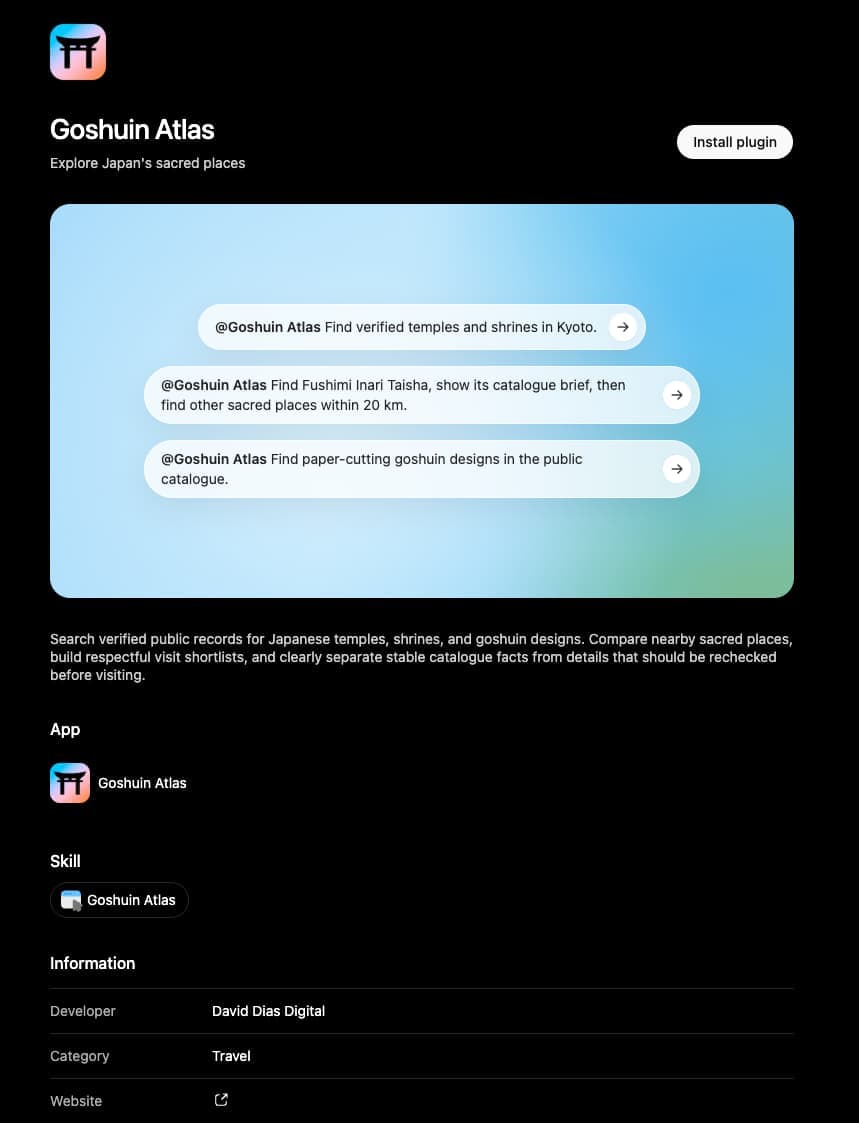
The first version supports discovery across verified temples and shrines and documented goshuin designs. Try a specific question rather than a complete itinerary:
- “Find verified temples and shrines in Kyoto.”
- “What other sacred places are near Fushimi Inari Taisha?”
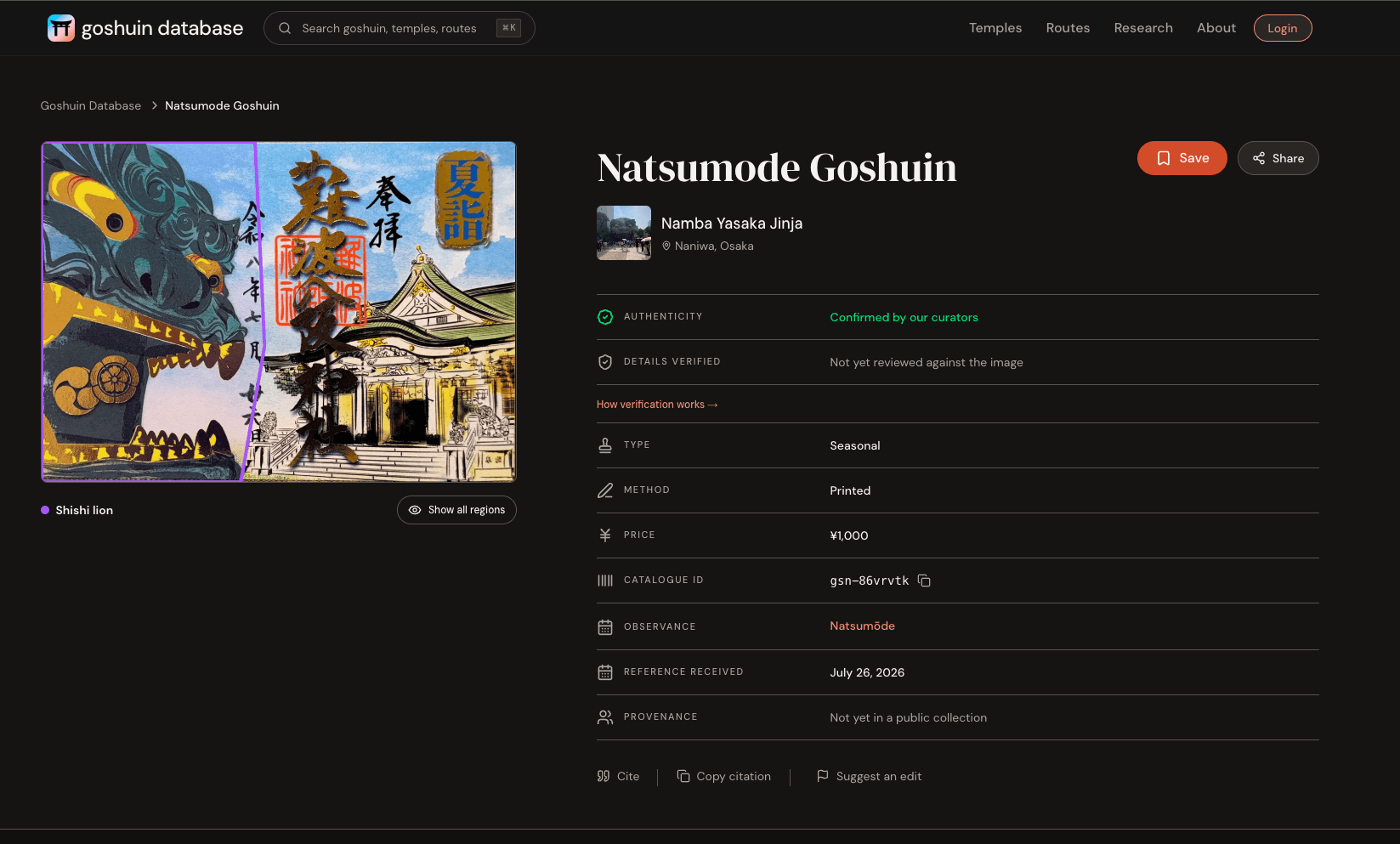
- “Show me documented kirie goshuin.”
Kirie (切り絵, kirie) means paper-cutting. Asking about a design or technique gives you another way into the catalogue, alongside geography and pilgrimage routes.
The launch listing introduces searches for places, nearby visits and paper-cutting goshuin.
The catalogue is the starting point
Answers start with Goshuin Atlas records. These provide place identity, cultural context, relationships between places and documented goshuin.
For example, begin with Fushimi Inari Taisha, then ask about nearby sacred places. The conversation helps narrow your options; the place records remain available to read in the main catalogue.
This first release deliberately used a focused catalogue. Coverage can grow as additional places and goshuin records are ready.
Keep changing details in view
Opening hours, closures, transport and goshuin availability can change. The launch approach allows ChatGPT to cross-check current official sources and distinguish those updates from catalogue information.
A documented design is not a promise that it is available on your visit date. Use the conversation to research and compare, then check the issuing temple or shrine for arrangements that depend on the day. Our seasonal goshuin article explains why designs and availability vary.
Public access, with clear limits
The integration launched with public, read-only access. It receives the search details needed for a question. It cannot see your Goshuin Atlas account or saved places. Your files and exact location are also outside its access.
It also cannot make bookings or change records in Atlas. Asking it to find nearby places does not give it access to your private collection or automatically share a location from the Atlas app.
Try a small discovery first
Open the Goshuin Atlas listing in ChatGPT and start with one area or design. You can also browse the Goshuin Database directly.
This article records the scope announced at launch. It gives the catalogue another entrance: a question, followed by places and records you can explore in more detail.