At a Glance
The most moving thing about Shojoke-in is the way it compresses more than a millennium of Kyoto Buddhist history into a single, quietly powerful precinct. This Jodo temple, formally known as Shōjōkē-in or Seijōka-in, is counted among Kyoto’s oldest surviving temples, with a traditional founding date of 860 and a foundation associated with the monk Ennin. Later, in the 13th century, it was handed to Hōnen, the founder of Jōdo-shū, tying the site directly to the heart of Pure Land Buddhism. Even its name, meaning “pure petals”, points to the lotus imagery central to that faith. Today, it feels less like a monumental showpiece than a living religious place, one where memorials, pilgrimage associations, and treasured works of art still shape the atmosphere.
According to the temple tradition preserved in the provided sources, Shojoke-in was founded in Jōgan 2, 860, by Ennin, also known as Jikaku Daishi, one of the great early figures of Heian-period Buddhism. That alone places the temple deep in Kyoto’s formative religious landscape, before the city’s later rise as the capital of refined court culture. The sources also preserve a longer and more layered institutional history. In the 13th century, the temple was granted to Hōnen, making it a key site in the story of Jōdo-shū, the Pure Land school that emphasizes devotion to Amitabha Buddha and rebirth in the Western Pure Land.
This double lineage matters. On one level, the temple connects to the early Heian transmission of Buddhist learning. On another, it belongs to the devotional world associated with Hōnen, whose teaching transformed Japanese Buddhism by broadening access to salvation through the nembutsu. A source also notes that Mukō Asyoken, also known as Zeshin and dated 1265 to 1336, is sometimes considered the actual historical founder in documents, reminding us that temple origins in Japan are often a blend of legend, institutional memory, and later archival evidence.
The temple’s traditional patrons and restorers also reflect the prestige it accumulated over time. One source names Emperor Seiwa as the legendary founder and Emperor Murakami as the restorer, while another records the temple as associated with Emperor Seiwa, the 56th emperor, and with later imperial patronage. The site is also linked to the story of Hōnen’s remains, and a memorial tower for his relics remains one of the features that leave a deep impression on visitors. This is not just an old temple, but a place where lineage, memory, and devotion remain visible.
The sources provided do not offer a full architectural inventory, but they do reveal important elements of the temple landscape and its treasured objects. The precinct includes a memorial tower for the remains of Hōnen Shōnin, a feature that gives the site both devotional gravity and historical continuity. Visitors also encounter foundation stones and stone Buddha statues said to have been excavated during nearby construction and brought here afterward. That detail is revealing. It suggests that Shojoke-in has become a place of custody for fragments of Kyoto’s religious past, not only for its own established structures but also for material recovered from elsewhere.
Among the temple’s art treasures, the most distinguished is a silk-painted Amitabha Buddha, identified in the sources as a National Treasure. This is precisely the kind of work that makes a temple feel less like a museum and more like a complete spiritual world, where doctrine, image, and ritual reinforce one another. Another named cultural property is the Paper-painted Scroll of the Origins of Crying Fudō. Together, these works show the breadth of the temple’s artistic holdings, from serene Pure Land imagery to more dramatic narrative and devotional forms.
The temple is also associated with the portrait of Hōnen Shōnin as its principal image, which is highly appropriate for a Jōdo temple with such a direct historical link to him. The sources also mention that the temple is called Jōka-in as an alternate name. That alias, along with the lotus-inspired formal name, reinforces the sense of a longstanding institutional identity shaped by Pure Land ideas.
At the center of Shojoke-in is its identity as a head temple of Jōdo Buddhism. Multiple sources emphasize that it is the Jōdo-shū head temple in Kyoto, passed to Hōnen in the 13th century. This makes the temple a place of doctrinal memory as much as a place of worship. The temple is also listed as No. 23 on the Hōnen Shōnin 25 Sacred Sites, a pilgrimage network that keeps his memory active in the religious lives of devotees.
The name Shojoke-in means “pure petals”, a poetic reference to the lotus. In Pure Land Buddhism, the lotus is more than a flower. It symbolizes the purity of awakening emerging from the muddy world of suffering. That symbolism fits the temple beautifully, especially because its religious identity centers on Amitabha Buddha and Hōnen’s vision of accessible salvation.
The Google review data and related notes show how deeply personal the site remains for visitors. One account describes being deeply moved by the Hōnen relic tower, the foundation stones, and the stone Buddhas brought from another site. The same review mentions that the temple holds a signboard with basic historical information, including references to Hōnen, Ennin, and the temple’s founding tradition. It also notes the nearby gravesite of Yamashina Tokitsugu, a court noble and diarist whose burial here adds another layer of elite Kyoto history to the precinct.
Shojoke-in is also connected with events such as Obon services and special lectures like LOTUS WEEKEND, suggesting an institution that continues to teach, commemorate, and gather people rather than remaining frozen in the past. This is a working temple, not just a historic site.
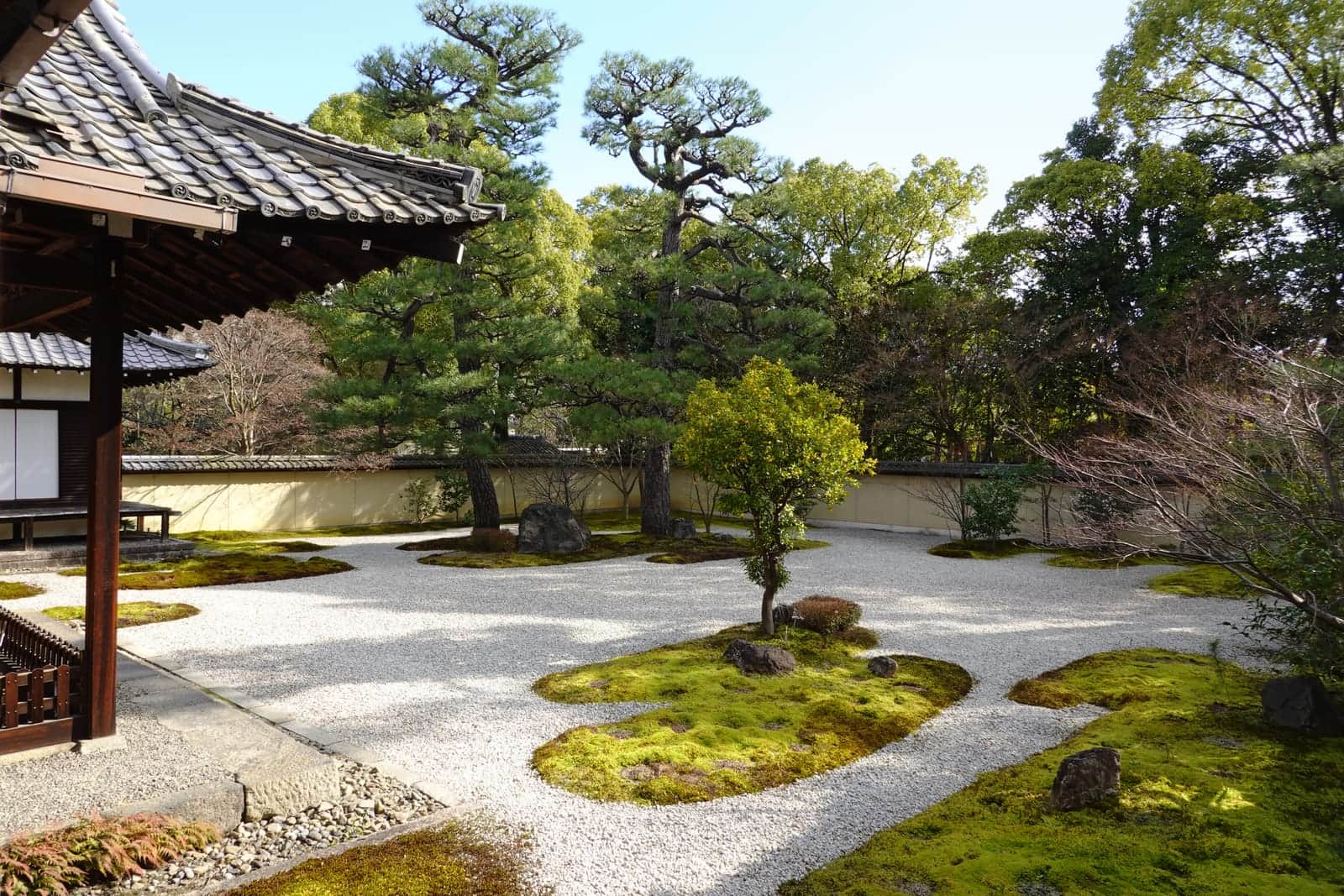
Shojoke-in sits in central Kyoto, in a part of the city where the sacred and the everyday overlap closely. The sources do not describe expansive gardens or mountain scenery, and in a way that restraint is part of its character. This is a temple embedded in the urban grain of Kyoto, near Kyoto Prefectural University of Medicine and Kyoto Gyoen National Garden, and close enough to major streets that access is practical but the atmosphere can still feel removed from the city’s noise.
There is also a striking suggestion in one source that the temple may have no mountain name, possibly because it has long stood in the center of Kyoto. That absence is unusual and telling. Mountain names are often symbolic markers of institutional identity, but here the site’s deep urban rootedness seems to speak for itself.
The temple’s atmosphere is shaped less by dramatic natural scenery than by the seasonal rhythms of devotional life. Crowds are generally moderate, though they become heavier during summer, Obon, and New Year observances. Quiet times are said to be early morning and winter weekdays, which is probably the best moment to appreciate the precinct’s stillness and its memorial tone.
For today’s visitor, Shojoke-in offers a layered encounter with Kyoto Buddhism. You come for the temple’s place in the history of Jōdo-shū, but you stay for the feeling that the past is still physically present here. The memorial to Hōnen, the recovered stone remains, the gravesite of Yamashina Tokitsugu, and the treasured Buddhist paintings together create a site that is at once devotional, historical, and intimate.
The temple’s practical access is straightforward. The nearest stations listed in the sources are Demachiyanagi, about 724 meters away and roughly 9 minutes on foot, and Imadegawa, about 973 meters away and around 12 minutes on foot. Other nearby stations include Kyotoshiyakusho-mae, Kyoto-Kawaramachi, and Nijō, though they require longer walks. The official phone number listed in Google Places is +81 75-231-2550.
What lingers, though, is not convenience but presence. Shojoke-in is one of those Kyoto temples where a name, a lineage, and a handful of objects are enough to evoke an entire religious world. Its 860 founding tradition, Hōnen connection, National Treasure image, and lotus-based name all point to a temple that has managed to remain doctrinally clear, historically deep, and quietly moving all at once.
This temple offers 2 different goshuin designs
Same as opening hours
Regular
¥500
Regular
¥500
Seasonal celebrations and special occasions
Shōjōkein 850th Anniversary Commemorative Project
A commemorative program marking the 850th anniversary of the school's founding, including related memorial services and educational activities.
LOTUS WEEKEND
A named temple event series advertised on the official website.

Not confirmed
Kamigyo, Kyoto Prefecture
More ways to continue from this place.
0 recent posts
Share how your visit was to help other travelers.
No public community posts yet.
Within 300 m Within 600 m

KT037-梨木神社・Coffee Base
docomo bike share
KT288-上阿逹谷口マンション
docomo bike share
KT304-日本バプテスト 京都教会
docomo bike share
Renting needs the operator's app and a Japanese phone number. docomo day passes are sold at convenience stores. Data sources

