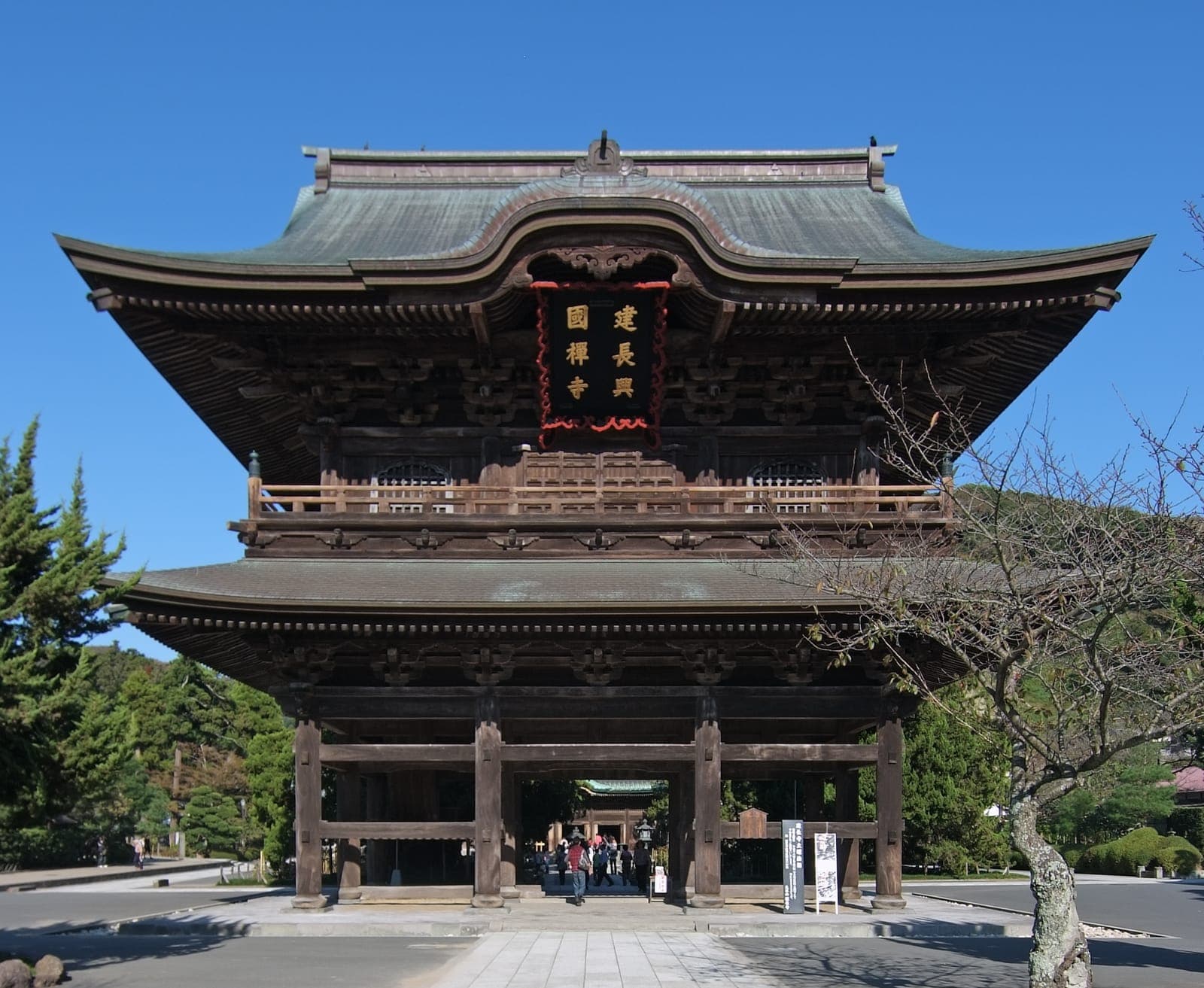
The climb to Hansobo involves ascending approximately 250 steep stone steps through the forest, so wear sturdy, comfortable shoes with good grip and allow 15-20 minutes for the uphill walk from the main Kenchoji Temple grounds.
At a Glance
Hansōbō earned his nickname as 'rice monk' after saving a shipwrecked Zen monk (son of Emperor Daigo II) from Ming China in the 14th century and serving as his varlet, carrying his food.
The shrine's 12 crow tengu statues guard against fire because Hansōbō's original statue miraculously survived a major fire at Hōkō-ji Temple, giving him the power to protect Kenchō-ji from flames.
This temple offers 1 different goshuin designs
Regular
The climb to Hansobo involves ascending approximately 250 steep stone steps through the forest, so wear sturdy, comfortable shoes with good grip and allow 15-20 minutes for the uphill walk from the main Kenchoji Temple grounds.
The shrine marks the starting or ending point of the Ten-en Hiking Course, so consider extending your visit by continuing on this trail that stretches beyond the hilltop shrine into the surrounding mountains.
Look for the 12 statues of karasu (crow) tengu along the pathway leading up to the shrine, each depicted in different poses as protective attendants of Hansobo who guard Kenchoji Temple against fire.
Visit during early June to mid-July for blue hydrangeas blooming along the path, or in autumn when the maple trees create brilliant red foliage that blankets the walkway to the shrine.
Part of the Kencho-ji complex.


Not confirmed
Kamakura, Kanagawa Prefecture
More ways to continue from this place.
1 recent posts
Share how your visit was to help other travelers.
 ZBPro member
Zoë BolandPro shared a goshuin
Within 300 m Within 600 m
Timetable data: Public Transportation Open Data Center