
Three-storied Pagoda
Architecture三重塔 ・ Reading: さんじゅうのとう
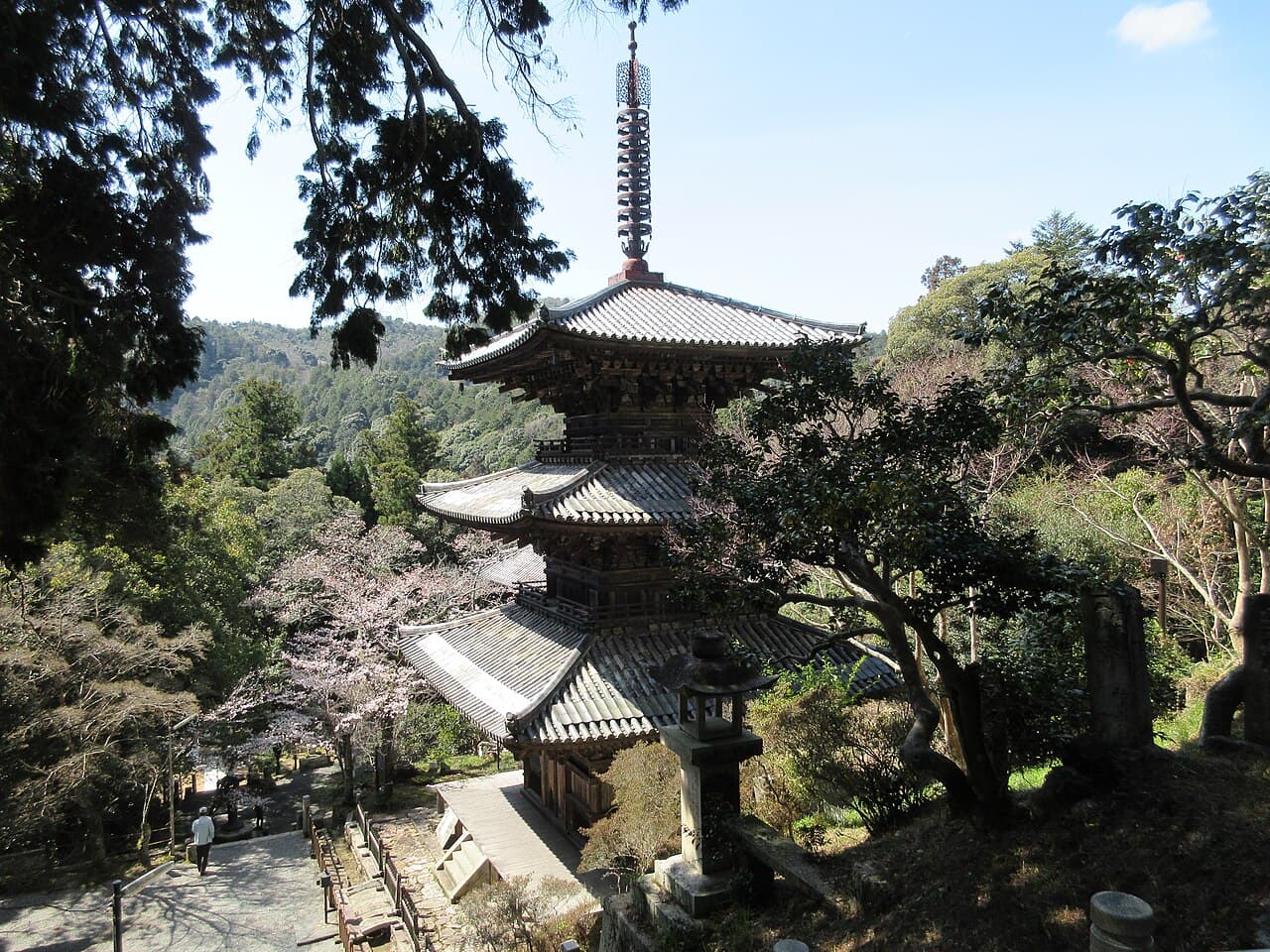
Definition
A three-storied pagoda, a compact tiered tower enshrining relics or a sacred image. It is the most common surviving pagoda form at Japanese temples.
What it is
A three-storied pagoda, or sanju no to, is a tiered wooden tower descended from the Indian stupa, a mound built to hold relics of the Buddha. As the form travelled through China and Korea to Japan, it grew upward into the slender, roofed tower you see today. Despite the tiers, it is not a building you enter and climb. The interior is largely a symbolic core, often centred on a single tall pillar, and the structure exists to honour what is enshrined within rather than to house people.
What to look for
Count the roofs, not the windows, to name a pagoda. Three broad eaves stacked one above the other mark a three-storied pagoda, while five mark the taller five-storied form. Look up to the top and you will see the sorin, a bronze finial of stacked rings that crowns the tower and points skyward. The deep, upturned eaves and the way each level steps inward give these towers their graceful, tapering line.
Where you will find one
Pagodas belong to Buddhist temples rather than Shinto shrines, so a tiered tower is a reliable sign you are on temple grounds. The three-storied form is the most common survivor across Japan, often standing a little apart from the main hall within the temple precinct.
Common questions
- What is the difference between a three-storied and a five-storied pagoda?
The difference between a three-storied and a five-storied pagoda is simply the number of stacked roofs: a three-storied pagoda (sanju no to) has three tiers of eaves, while a five-storied pagoda (goju no to) has five and stands taller. Both serve the same purpose of enshrining relics or a sacred image, and you tell them apart by counting the roofs.
- Can you go inside a three-storied pagoda?
In almost all cases you cannot go inside a three-storied pagoda. Its interior is a symbolic core, often built around a single central pillar, and the tower is meant to be honoured from the outside rather than entered or climbed.
- Does a pagoda mean I am at a temple or a shrine?
A three-storied pagoda almost always means you are at a Buddhist temple rather than a Shinto shrine. Pagodas developed within Buddhism, so a tiered tower is a reliable sign you are on temple grounds.