
Pagoda (To)
Architecture塔 ・ Reading: とう
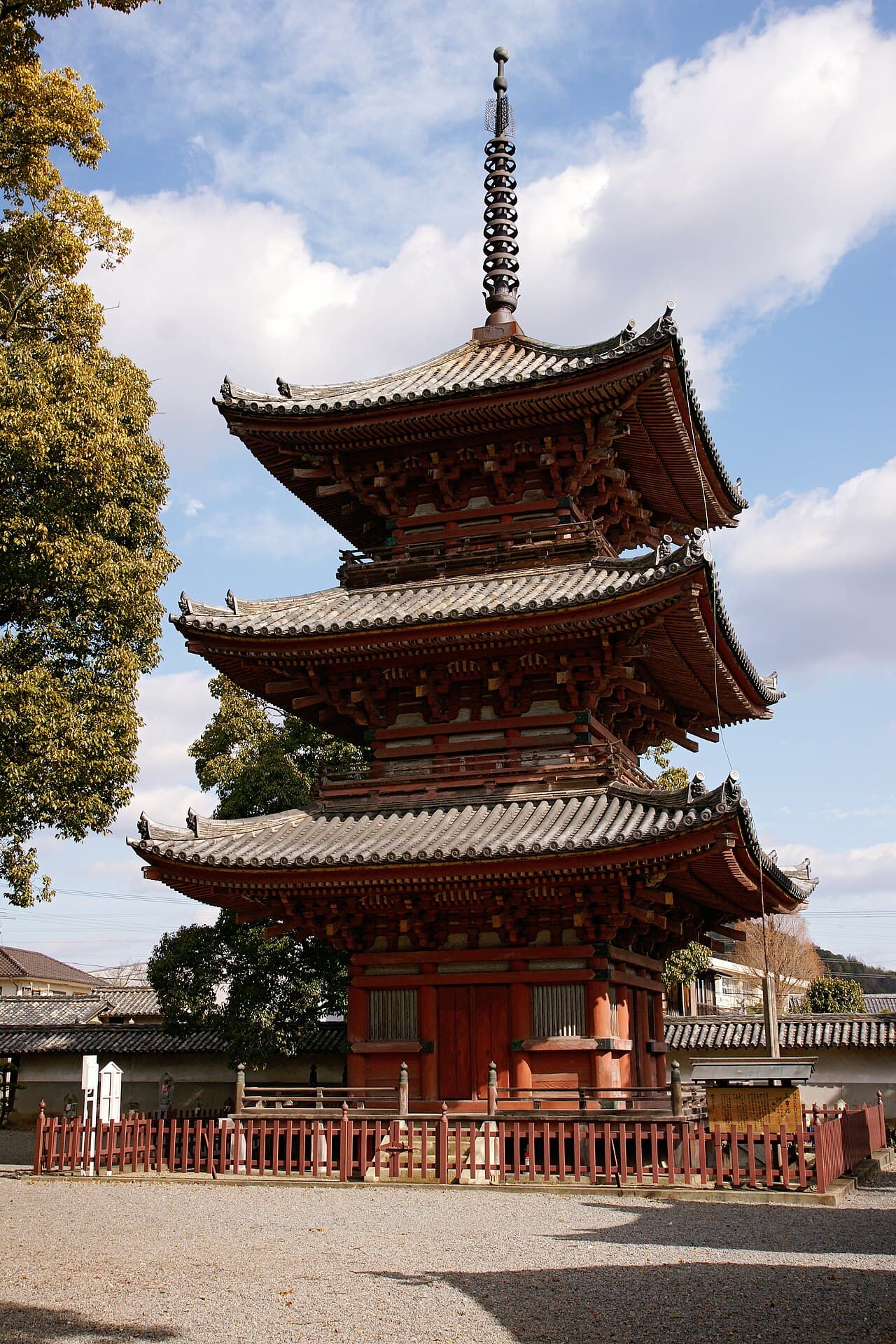
Definition
A pagoda is a tiered tower at a Buddhist temple, traditionally built to enshrine sacred relics. Japanese examples are often three-storey (sanjunoto) or five-storey (gojunoto).
Where it comes from
The pagoda descended from the Indian stupa, the dome-shaped mound raised over relics of the Buddha. As the form travelled through China and Korea it grew upward into a tiered tower, and by the time it reached Japan it had become a slender wooden structure crowned with a metal spire. At its heart runs a central pillar, and beneath it many pagodas hold a small deposit of relics or a symbolic substitute, keeping the tower's original purpose as a reliquary.
What to look for
Count the roofs, not the windows. A three-storey pagoda is a sanjunoto and a five-storey one a gojunoto, each layer marked by broad, deeply eaves. The upper floors are usually solid and cannot be entered. Notice the spire, or sorin, rising from the top, with its stacked rings and finial. Japanese carpenters became famous for building these towers to sway rather than snap in earthquakes.
Telling it apart
A pagoda is not a main hall. The main hall, where worshippers gather before the principal image, sits low and wide, while the pagoda stands tall and narrow and is mostly ceremonial. If you see a compact two-tiered tower with a rounded middle section, that is often a tahoto, a distinct style rather than a simple storey count.
Common questions
- What is the difference between a three-storey and a five-storey pagoda?
The difference between a three-storey and a five-storey pagoda is simply the number of tiers: a three-storey pagoda is called a sanjunoto and a five-storey pagoda is called a gojunoto. Both are tiered Buddhist towers built in the same tradition, with the five-storey form being taller and more imposing.
- Can you go inside a Japanese pagoda?
In most cases you cannot go inside a Japanese pagoda, as the interior is a sacred space built around a central pillar rather than a room for visitors. Pagodas are usually admired from the temple grounds, though a small number open their ground floor on special occasions.