
Five-storied Pagoda
Architecture五重塔 ・ Reading: ごじゅうのとう
Definition
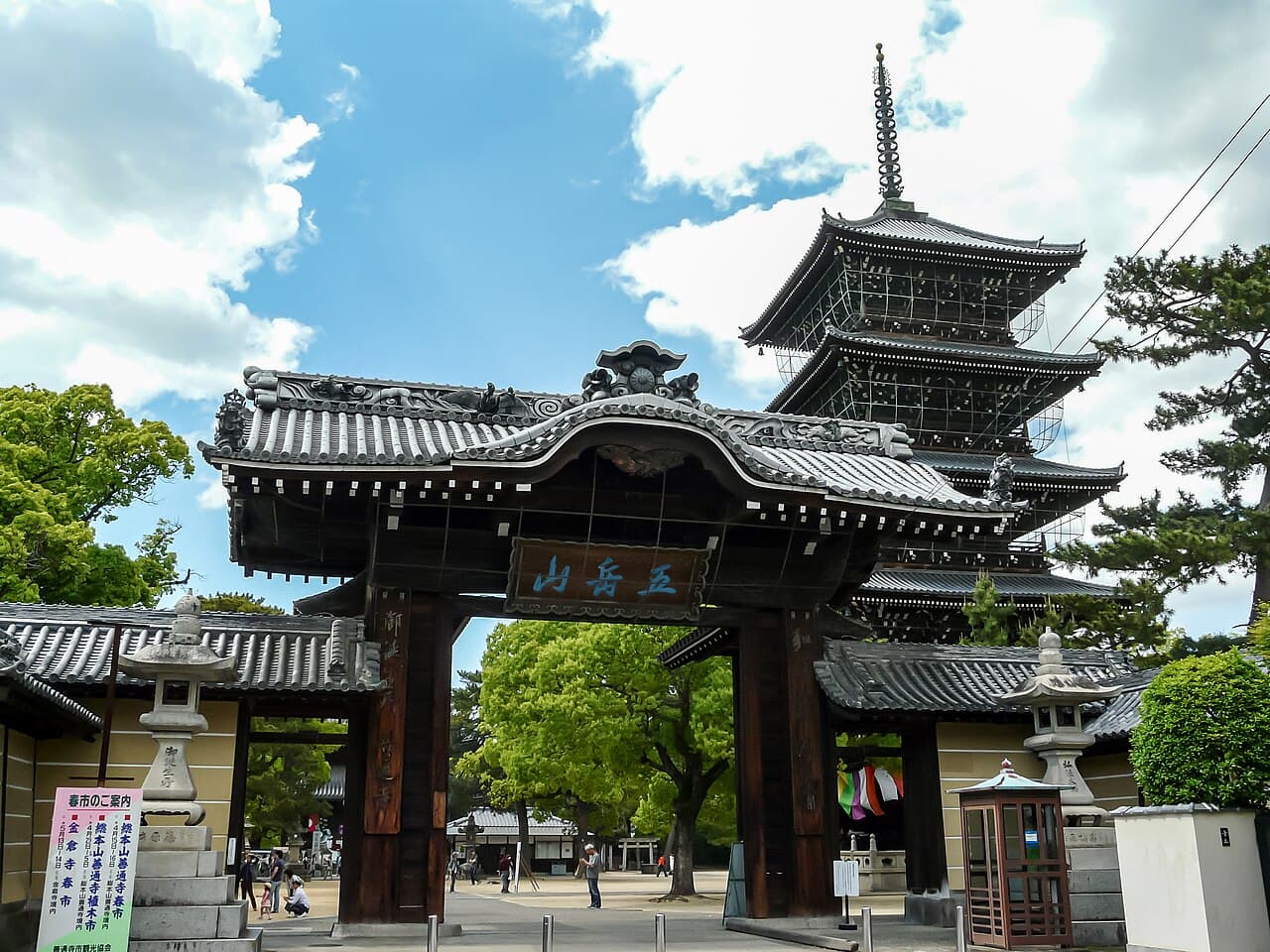
A five-storied pagoda whose stacked roofs shelter sacred relics at the temple's symbolic heart. Its five tiers are traditionally read as the five elements of earth, water, fire, wind, and void.
Where it comes from
The five-storied pagoda descends from the Indian stupa, a mound built to hold relics of the Buddha. As Buddhism travelled through China and Korea to Japan, the form grew upwards into a slender wooden tower of stacked roofs. Beneath or within it, temples enshrine relics or sacred objects, so the pagoda marks the spiritual centre of the grounds even though you rarely go inside. The five tiers are traditionally read as the five elements: earth, water, fire, wind, and void.
What to look for
Count the roofs, not the windows, since each broad tier flares out over the one below. At the very top a bronze spire called the sorin rises with its stacked rings and a final flame-shaped finial. Running down the centre is a single great pillar, the shinbashira, which many pagodas leave loosely joined so it can sway rather than snap. Together with the flexible bracketing between tiers, this is one reason so many pagodas have survived Japan's earthquakes for centuries.
A famous example
The pagoda at Horyuji near Nara is counted among the oldest wooden buildings in the world, dating in large part to the seventh or early eighth century. Toji in Kyoto has the tallest surviving wooden pagoda in the country, a landmark you can see from the bullet train. If a tower has three roofs rather than five, it is a sanjunoto, a three-storied pagoda built on the same idea, and the number of roofs is the quickest way to tell the two apart.
Common questions
- What is a five-storied pagoda in a Japanese temple?
A five-storied pagoda, or gojunoto, is a tall wooden tower of five stacked roofs found at Buddhist temples. It descends from the Indian stupa and traditionally enshrines relics or sacred objects at the temple's symbolic centre, with its five tiers read as the elements of earth, water, fire, wind, and void.
- Can you go inside a five-storied pagoda?
Most five-storied pagodas are closed to visitors, since the interior of a pagoda holds sacred relics rather than usable floors. A handful open their ground level to the public on special occasions, but as a rule you admire a five-storied pagoda from the outside.
- Why do Japanese pagodas survive earthquakes?
Japanese five-storied pagodas survive earthquakes largely thanks to a central pillar called the shinbashira and loosely joined wooden tiers that flex and sway rather than snap. This traditional design has helped some pagodas stand for well over a thousand years.
Related articles
- How to Read Buddhist Temple ArchitectureRead a Japanese Buddhist temple through its gates, main hall, pagoda, study spaces, working buildings, dates, and local plan.
- How to Visit a Buddhist Temple in JapanFollow Buddhist temple etiquette from the gate through incense, prayer, hall entry, photography, and receiving a goshuin.