
Bochi (Cemetery)
Architecture墓地 ・ Reading: ぼち
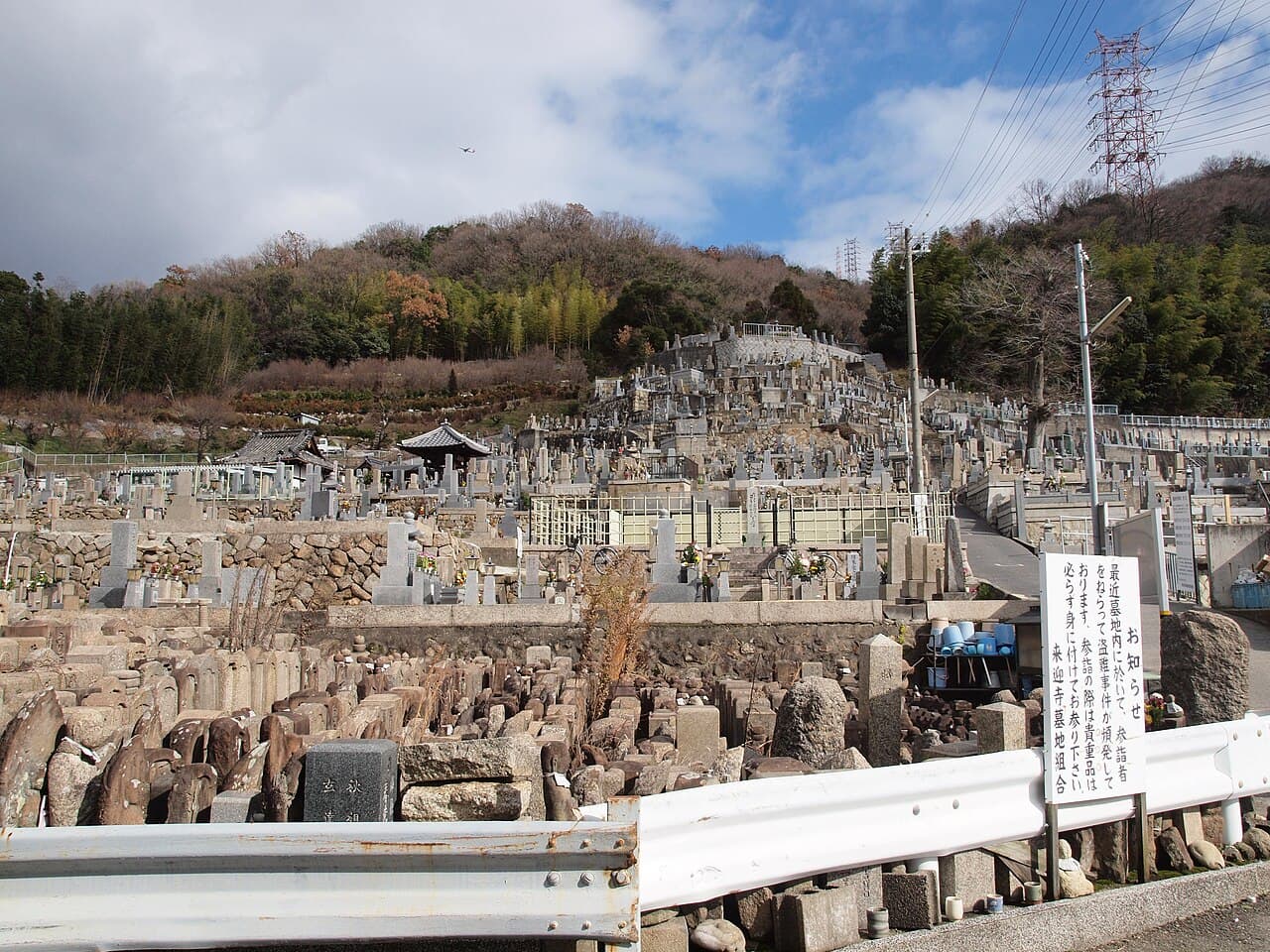
Definition
The graveyard within a temple's precinct, where parishioners' family graves are tended and memorial rites are held.
What it is
A bochi is the cemetery attached to a Buddhist temple, usually set behind or beside the main hall. Historically most Japanese cemeteries were temple grounds, because from the Edo period every household had to register with a temple under the danka system, and that temple cared for the family's graves and conducted their funerals. A single family plot, marked by an upright stone, often holds the cremated remains of many generations together.
What to look for
You will see rows of vertical stone monuments, each carved with a family name and sometimes a Buddhist posthumous name. Nearby you may find a water basin and ladle for rinsing the stone, fresh flowers, incense, and small wooden slats called sotoba standing behind the graves. Statues of Jizo, the guardian of children and travellers, are a common sight.
Visiting respectfully
A bochi is a working place of mourning, not a tourist attraction, so move quietly and keep to the paths. Families visit especially at the equinoxes and during Obon in summer to clean the stones and offer incense. Photograph graves only with care, and never move offerings or step onto a plot that is not yours.
Common questions
- What is a bochi at a Japanese temple?
A bochi is the cemetery within or beside a Buddhist temple's grounds, where parishioners' family graves are kept and memorial rites are held. In Japan, temples have traditionally cared for the dead, so many families are tied to one temple across generations through the danka parishioner system.
- Can tourists visit a temple cemetery in Japan?
You can usually walk along the paths of a temple bochi, but a bochi is a working cemetery rather than a sightseeing attraction. Keep your voice low, stay on the paths, and avoid photographing individual graves out of respect for the families.
- What are the tall wooden boards behind Japanese graves?
The tall wooden slats behind many Japanese graves are called sotoba, and they are added by families at memorial services to honour the deceased. You will often see several of them leaning behind a single stone in a temple bochi.
Related articles
- Best Goshuin in Tokyo: Ten Temple and Shrine StopsPlan respectful Tokyo goshuin routes through Asakusa, Harajuku, Setagaya, Shiba, Kanda, and Bunkyo with official verification guidance.
- How to Read Buddhist Temple ArchitectureRead a Japanese Buddhist temple through its gates, main hall, pagoda, study spaces, working buildings, dates, and local plan.
- How to Visit a Buddhist Temple in JapanFollow Buddhist temple etiquette from the gate through incense, prayer, hall entry, photography, and receiving a goshuin.
- Luggage, Restrooms, and Visitor Facilities at Japan’s Sacred SitesHow to plan storage, toilets, office hours, food, connectivity, and family facilities without assuming every sacred site offers them.
- Photography at Japanese Shrines and Temples: A Respectful GuideHow to photograph sacred sites respectfully, from changing no-photo zones and ceremony privacy to tripods, drones, and sacred objects.
- Shrines and Temples in Japan: How to Tell Them ApartRecognize Shinto shrines and Buddhist temples using names, buildings, worship methods, and local guidance without relying on misleading visual shortcuts.