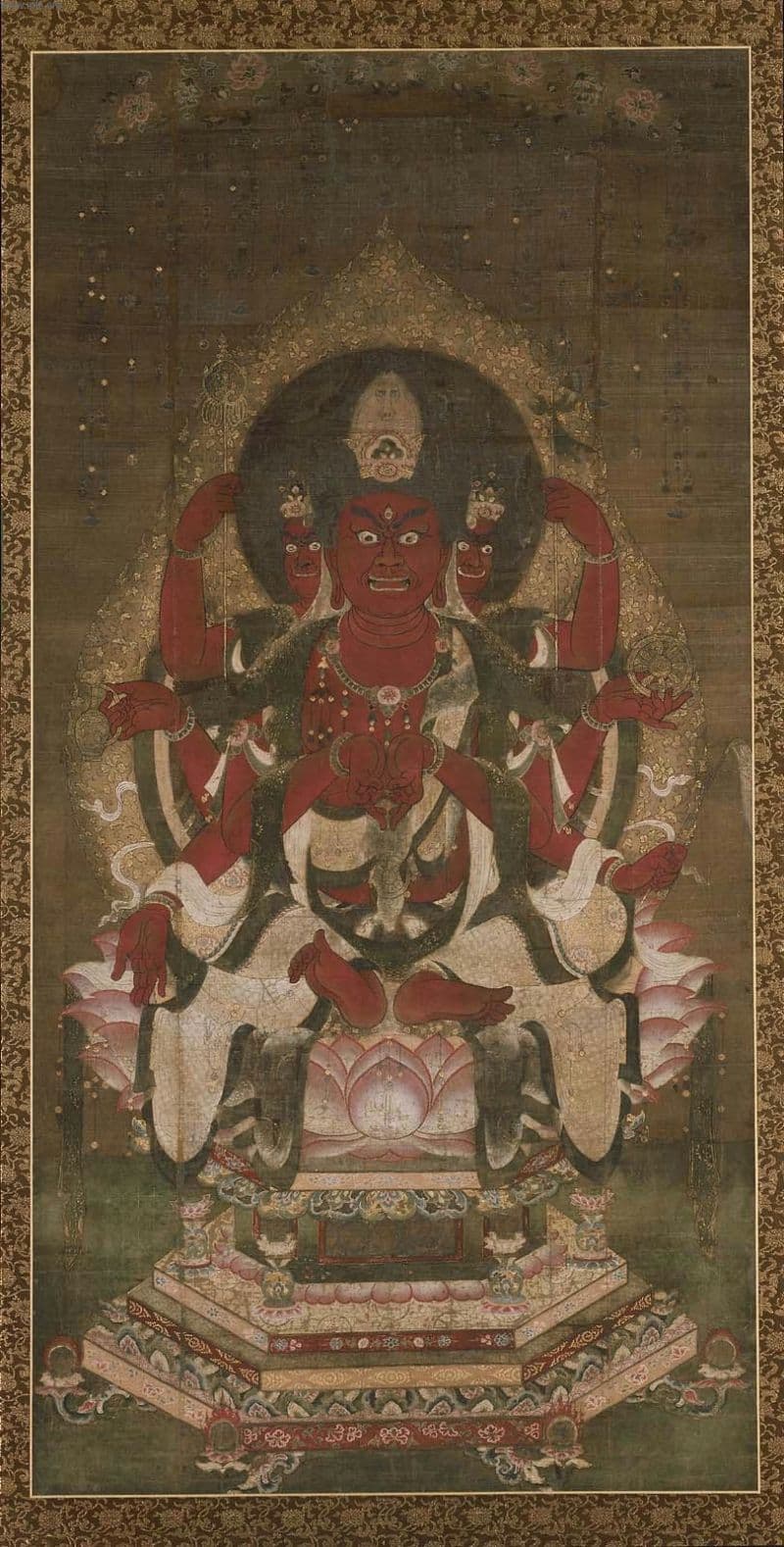
Horse-headed Bodhisattva of Wrathful Compassion
Bato Kannon, known in Sanskrit as Hayagriva, is a bodhisattva venerated across Chinese, Tibetan, and Japanese Buddhism. Unlike most forms of Kannon, who are depicted with serene expressions, Bato Kannon takes a distinctly wrathful appearance, making him a rare example of a ferocious manifestation within the compassionate Kannon family. He is counted among the Six Kannon and is understood as a transformed body of Avalokiteshvara.
His iconography is striking: he is typically shown with a scowling face, three eyes, a horse head atop his crown, and may carry a sword. These wrathful features symbolize an unyielding determination to overcome both inner obstacles and external adversities on behalf of all sentient beings. In Tibetan Buddhism he is closely associated with healing, particularly the curing of skin ailments, and with the defeat of demonic forces alongside his consort Vajravarahi.
In Japan, Bato Kannon's domain extends over beings caught in animal-like states of mind, reflecting his role as a liberator of those trapped in the animal realm. In Chinese Buddhism he is regarded as a protector of travelers and vehicles, a tradition echoed in the Japanese practice of praying to him for traffic safety. He is an important figure in esoteric Buddhist practice and is often enshrined at roadsides and crossroads throughout Japan.