Admission
Not confirmed
At a Glance
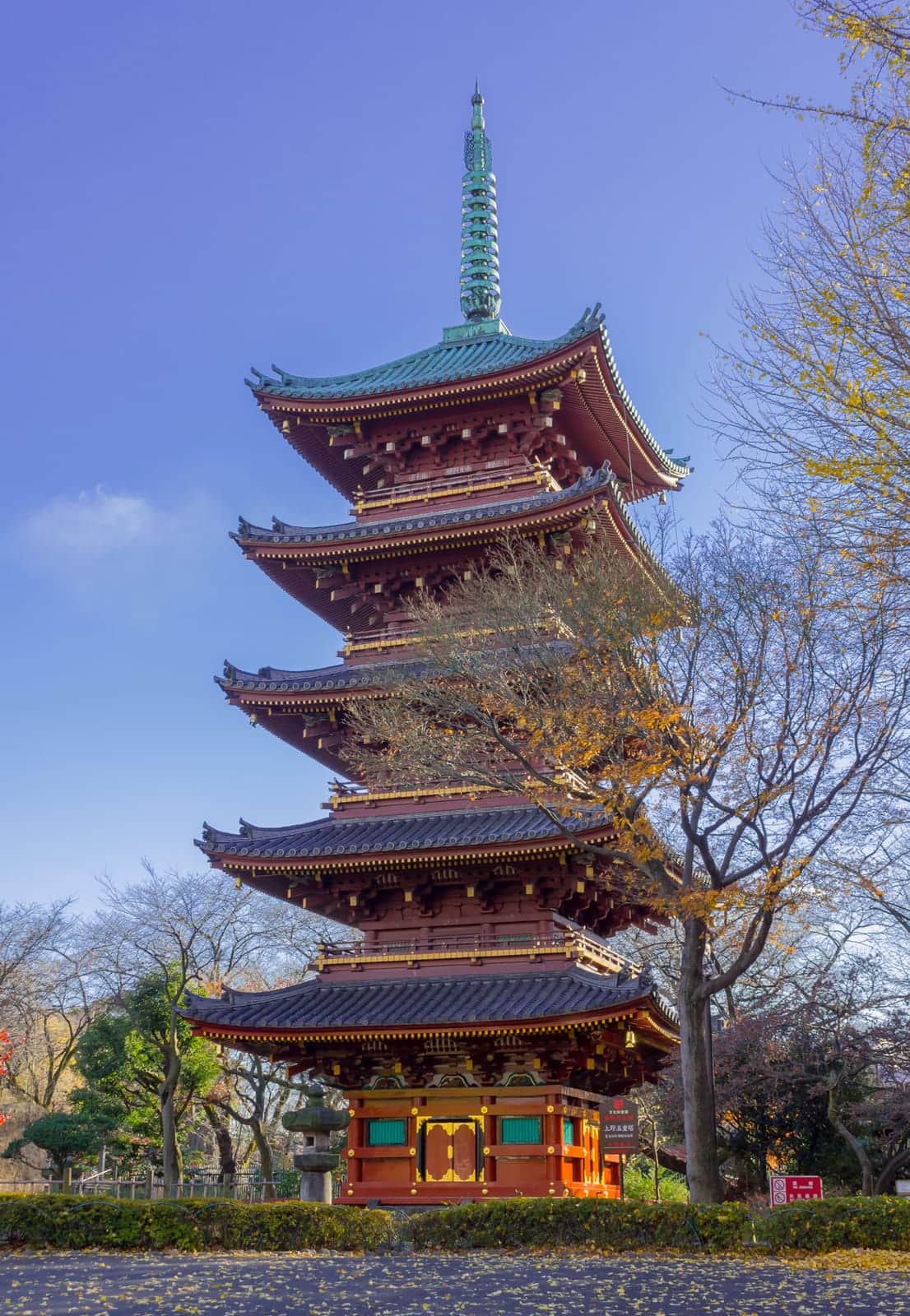
In the mid-1950s, the temple's pagoda was destroyed in a bizarre double-suicide arson fire, but was later restored to its original glory and designated a historical landmark.
The temple was originally built in 1274 to protect a carving made by Nichiren, a famous 13th century Buddhist priest who frequently stopped here on his journeys to Kamakura.
This temple offers goshuin, but we don't have photos yet. Be the first to share yours!
Not confirmed
Typical Crowds
Lively
Facilities
Visit the beautiful statue of Kannon, the Goddess of Mercy, who is believed to assume any form to relieve suffering. This statue represents an important figure found throughout Asian Buddhist temples.
Embrace the unconventional experience of approaching this sacred Tendai sect temple through Yanaka Cemetery, which many visitors find to be a relaxing and uplifting journey rather than somber.
Don't miss the large bronze Buddha statue (Tennoji Daibutsu) at the edge of the temple grounds, which miraculously survived the civil war of 1868 when much of the temple was destroyed.
The divine spirits venerated at this sacred place
More ways to continue from this place.
Within 300 m Within 600 m
Timetable data: Public Transportation Open Data Center
Renting needs the operator's app and a Japanese phone number. docomo day passes are sold at convenience stores. Data sources
What this place is believed to grant
5 recent posts
4.0
1 review
You reach Tennoji Temple by walking through Yanaka Cemetery, which sounds grim but is actually calm and pleasant, especially on a quiet morning.
The grounds hold two notable statues. A Kannon figure, the Buddhist Goddess of Mercy, stands within the temple area. At the edge of the grounds you'll find the large bronze Tennoji Daibutsu, a Buddha that survived the civil war of 1868 even as much of the surrounding temple was destroyed. It's the older of the two and worth a close look.
The temple belongs to the Tendai sect, so expect a traditional atmosphere rather than a tourist-heavy site.
 CGPro member
Christopher GillespiePro left a review
Special little place
 ZBPro member
Zoë BolandPro shared a photo