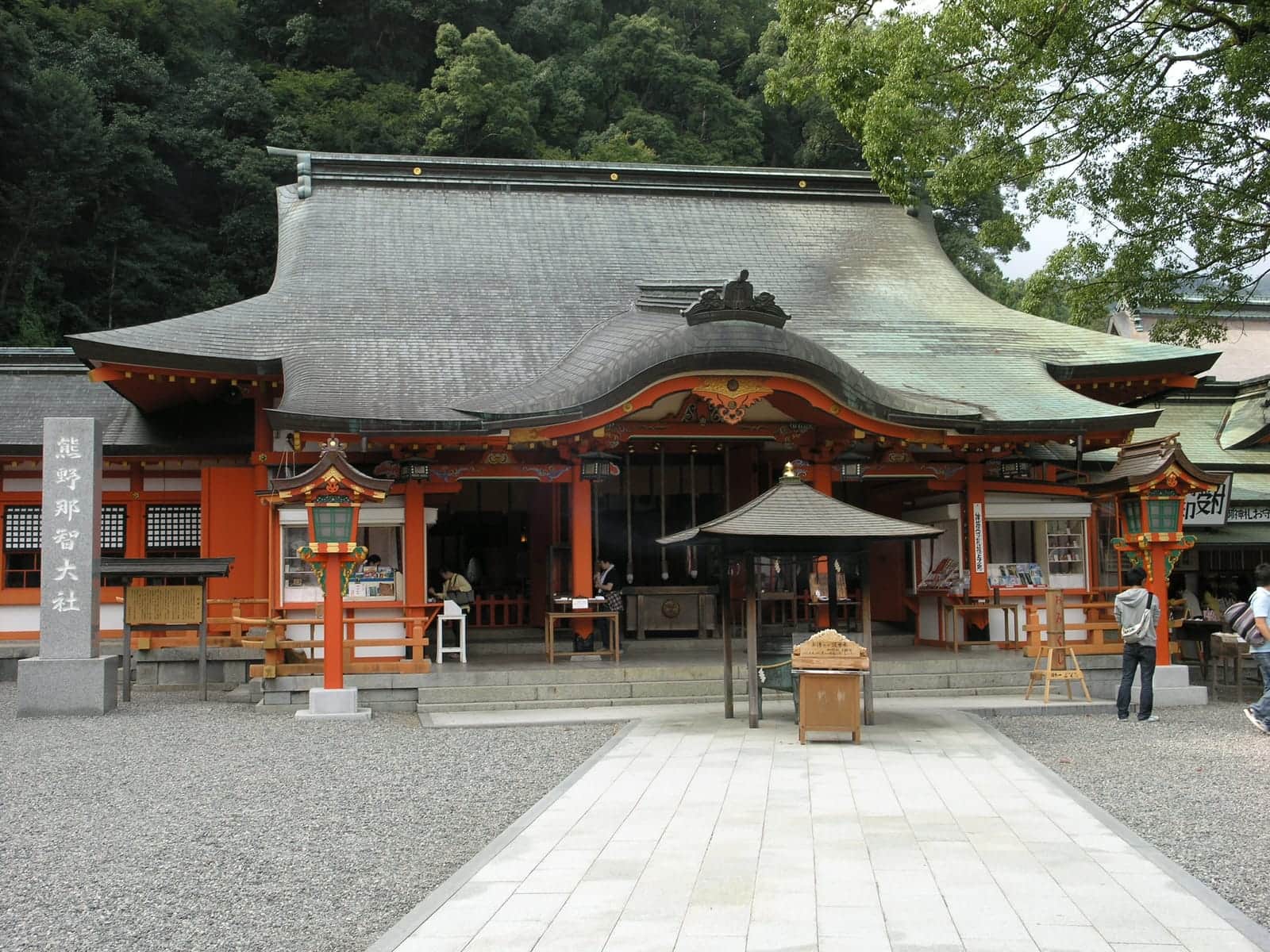
Take time to appreciate the main hall's Momoyama period architecture, originally rebuilt in 1590 by Toyotomi Hidenaga under Hideyoshi's orders and later repaired by Hideyori in 1614.
At a Glance
Many buildings were burned by Oda Nobunaga in the 16th century.
The temple grounds offer the iconic view of the vermillion three-story pagoda framed against Nachi Falls, one of Japan's most photographed spiritual landscapes and a UNESCO World Heritage site.
This temple offers 1 different goshuin designs
Limited edition
¥1,000
Facilities
Take time to appreciate the main hall's Momoyama period architecture, originally rebuilt in 1590 by Toyotomi Hidenaga under Hideyoshi's orders and later repaired by Hideyori in 1614.
Beyond the main hall and pagoda, explore the lesser-visited structures including the Niomon gate, Gyoja-do hall, Daikokuten-do hall, and Amida-do hall, which offer additional architectural and spiritual interest often overlooked by casual visitors.
As the first temple of the Saigoku 33 Kannon Pilgrimage route, Seiganto-ji is an important pilgrimage site where you can obtain your first temple stamp and begin the traditional circuit if you're interested in this spiritual journey.
Visit the temple in combination with neighboring Kumano Nachi Taisha shrine, as they share adjacent grounds due to their historical unity during the syncretic Buddhist-Shinto period before the Meiji era separation.
Remember that Seiganto-ji is part of the UNESCO World Heritage site 'Sacred Sites and Pilgrimage Routes in the Kii Mountain Range' registered in 2004, so you're visiting a location of international cultural significance.
More ways to continue from this place.
Nachikatsuura, Wakayama Prefecture
1 recent posts
5.0
1 review
Plan to visit Seiganto-ji alongside the adjacent Kumano Nachi Taisha shrine. The two sites share the same grounds, a legacy of the era when Buddhism and Shinto were practiced together before the Meiji-era separation, so seeing both in one visit makes sense. Seiganto-ji is also Temple 1 of the Saigoku 33 Kannon Pilgrimage, and you can pick up your first stamp here if you want to start that circuit.
The main hall dates to 1590, rebuilt under Toyotomi Hidenaga on Hideyoshi's orders and repaired again in 1614 by Hideyori. Beyond the hall and pagoda, take time to look at the Niomon gate, Gyoja-do, Daikokuten-do, and Amida-do.
 JTPro member
Jelle & TimPro left a review
Glad I stopped by. Lovely architecture. Lovely details everywhere