
Ema
Ritual objects絵馬 ・ Reading: えま
Definition
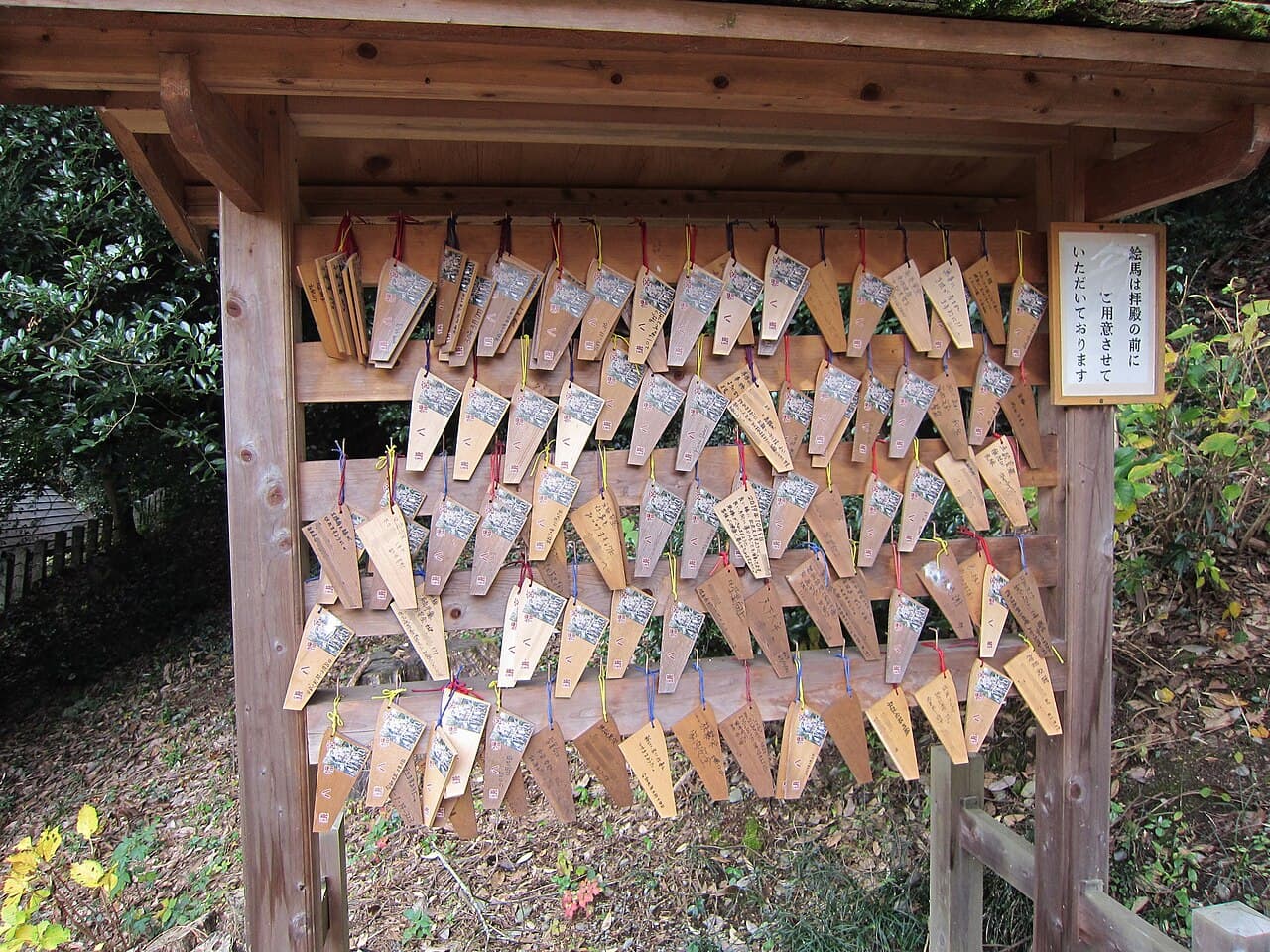
An ema is a wooden votive plaque on which a visitor writes a prayer, intention, or thanks before hanging it at the place designated by a shrine or temple.
Origin
Jinja Honcho traces ema to the older practice of presenting horses to the kami. Painted wooden plaques came to serve as a form of votive presentation without requiring a live horse.
How to use one
Receive an ema from the institution, write a prayer, intention, or thanks on the space provided, and hang it only where instructed. Meiji Jingu, for example, maintains a dedicated ema rack and presents written prayers in its daily morning rite.
Check current arrangements
Designs, indicated amounts, writing space, and handling differ. Check the issuing institution rather than relying on a nationwide price range.
Common questions
- What is an ema used for?
Write a prayer, intention, or thanks, then hang it at the location designated by the shrine or temple.
- Must an ema be taken home?
Normally it is hung where the institution instructs. Follow the local directions rather than assuming one rule.
- How much does an ema cost?
There is no reliable nationwide amount. Check the current indication from the issuing shrine or temple.
Related articles
- Cash, Cards, and Payments at Japanese Shrines and TemplesHow offerings, admission, goshuin, sacred-item counters, parking, and cashless acceptance differ within one visit.
- Complete Guide to Goshuincho Stamp BooksChoose, present, protect, and store a goshuincho, including page formats, kakioki sheets, ink care, office etiquette, and respectful collection.
- Photography at Japanese Shrines and Temples: A Respectful GuideHow to photograph sacred sites respectfully, from changing no-photo zones and ceremony privacy to tripods, drones, and sacred objects.
- Sacred Items at Japan’s ShrinesLearn how ofuda, omamori, ema, and omikuji differ, what visitors do with each one, and why not every sacred object is an offering.