
Shoro
Architecture鐘楼 ・ Reading: しょうろう
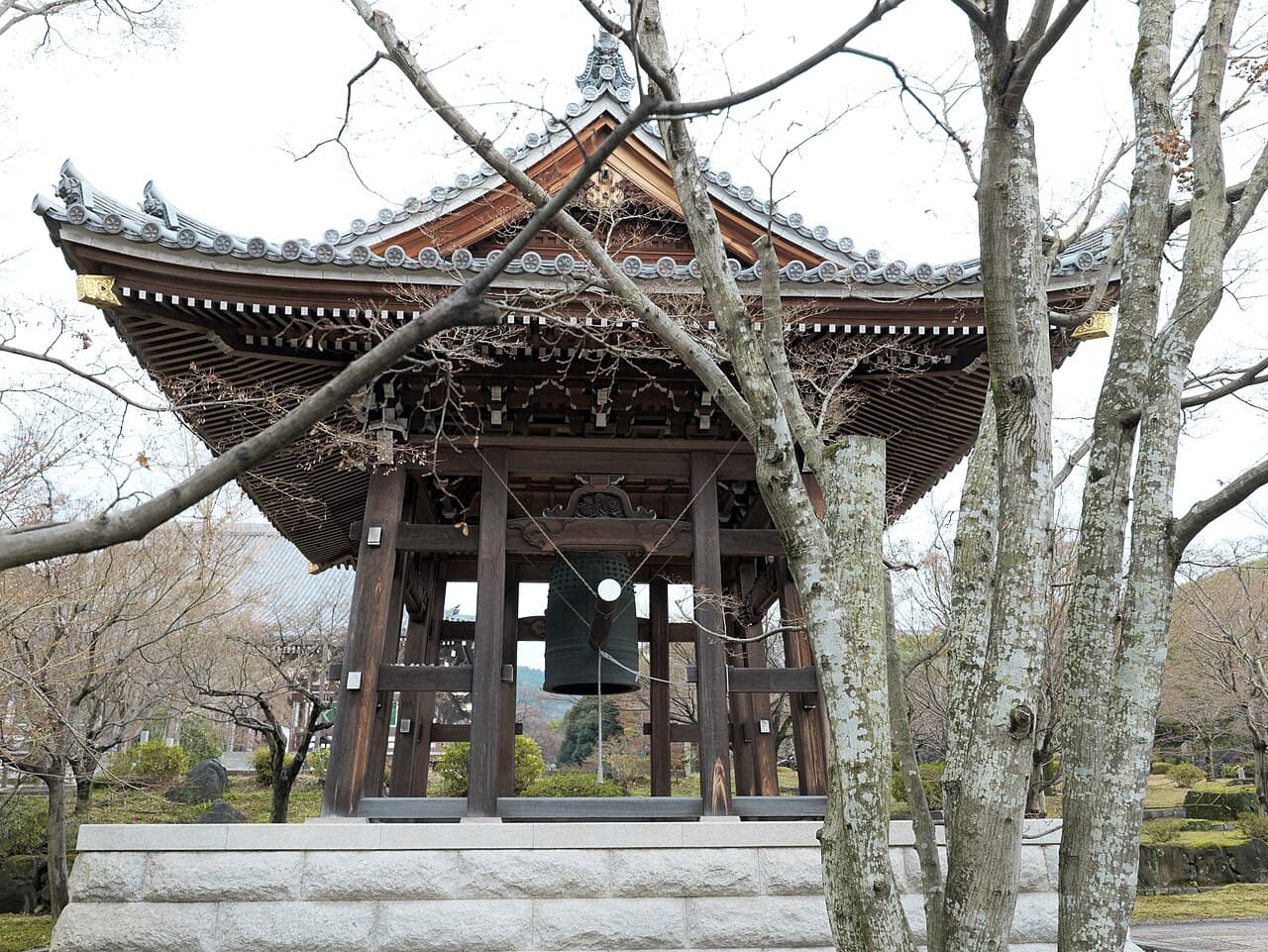
Definition
The shoro is the bell tower of a Buddhist temple, housing the large temple bell (bonsho). Its bell is famously rung 108 times on New Years Eve.
What it is
A shoro is the bell tower of a Buddhist temple, built to house the great bronze bell known as the bonsho. Rather than the small hand bells used inside a hall, this bell is struck from the outside with a suspended wooden beam called a shumoku, which the ringer swings against the bell's flank. The deep, lingering tone was historically used to mark the hours, call monks to practice, and carry across the surrounding town.
What to look for
Most shoro are open, raised structures: a tiled roof supported on stout wooden posts, often with a railed platform, so the bell hangs in plain view. Some temples enclose the tower more fully or build it into a gate. Look for the bell's rounded surface, sometimes cast with inscriptions or bands of studs, and the heavy beam poised to strike it.
When it is rung
The most famous use comes on New Year's Eve, when the bell is sounded in a rite called joya no kane. It is struck 108 times, a number said in Buddhist teaching to match the 108 earthly desires) that trouble the mind. Each strike is meant to release one, sending the old year out cleansed as the new one begins.
Common questions
- What is a shoro at a Japanese temple?
A shoro is the bell tower of a Buddhist temple, a structure that houses the large bronze bell called the bonsho. The bell is struck from outside with a swinging wooden beam called the shumoku, rather than rung by moving the bell itself.
- Why is the temple bell rung 108 times on New Year's Eve?
On New Year's Eve, temples strike the bell 108 times in a rite called joya no kane. The 108 strikes are said to represent and clear away the 108 earthly desires that trouble people, so that the new year can be welcomed with a clean heart.
- Can visitors ring the temple bell?
At many temples visitors are welcome to strike the bell once, usually after paying their respects and sometimes for a small offering. Rules vary from temple to temple, so look for a sign or ask at the temple office before touching the bell.