
Bonsho
Ritual objects梵鐘 ・ Reading: ぼんしょう
Definition
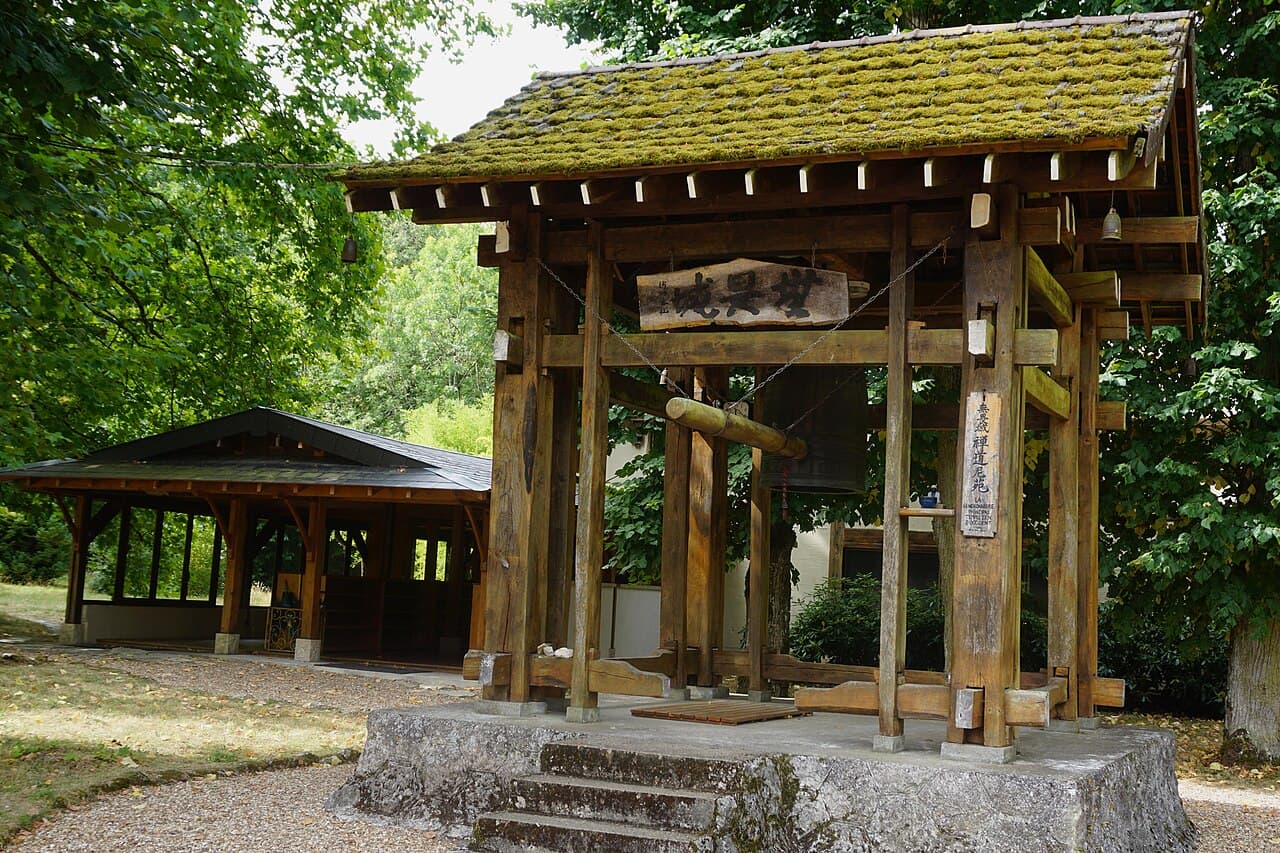
A bonsho is the large bronze bell of a Buddhist temple, struck from the outside with a wooden beam. Its deep tone marks the time and is rung 108 times to close the year.
What it is
A bonsho is the great bronze bell that hangs in a Buddhist temple, usually inside its own open belfry called a shoro. Unlike a Western bell, it has no clapper inside. Instead it is sounded from the outside by swinging a suspended wooden beam, the shumoku, against a raised boss on the bell's surface. The result is a slow, resonant tone that carries a long way and lingers in the air, which is why the bell was long used to mark the hours of the day for the surrounding community.
What to look for
The surface is rarely plain. Look for horizontal and vertical bands dividing it into panels, rows of small rounded studs near the top, and the striking point where the beam lands, often worn smooth over centuries. Cast inscriptions may record the temple, donors, or the date. The bell hangs from a decorative twin-dragon loop called the ryuzu.
When it rings
The most famous moment is joya no kane on New Year's Eve, when the bell is struck 108 times, a number said to match the 108 worldly desires) that Buddhism seeks to release. Many temples let visitors take a turn at the beam. Strike gently and let the sound fade before the next.
Common questions
- What is a bonsho bell used for?
A bonsho is the large bronze bell of a Buddhist temple, used to mark the time and call people to prayer. Its deep tone is also believed to carry Buddhist teaching to everyone within earshot.
- Why is the temple bell rung 108 times at New Year?
On New Year's Eve the bonsho is rung 108 times in a rite called joya no kane, because each of the 108 strikes is said to release one of the 108 worldly desires and send out the old year.
- Can visitors ring the temple bell themselves?
At many temples visitors are welcome to strike the bonsho with the wooden beam, but at some it is reserved for priests, so check the posted notice or ask a member of staff before ringing it.