If you bring your own goshuin book (not the official Kamakura Shichifukujin book), be aware that the temple may provide a pre-written slip instead of writing directly in your book, so clarify your preference when presenting it at the temple office.
At a Glance
The temple houses a single-piece keyaki wood statue of Jurōjin, one of the Seven Lucky Gods, whose deer companion symbolizes 3,000 years of longevity.
The second abbot, Nisshin, endured having a red-hot iron pot placed on his head by shogun Ashikaga Yoshinori, earning him the nickname 'Pot-wearing Nisshin' and making him a symbol of unwavering faith.
This temple offers goshuin, but we don't have photos yet. Be the first to share yours!
If you bring your own goshuin book (not the official Kamakura Shichifukujin book), be aware that the temple may provide a pre-written slip instead of writing directly in your book, so clarify your preference when presenting it at the temple office.
This is a small, quiet temple that takes less than 10 minutes to explore thoroughly, making it ideal to combine with other stops on the Kamakura-Enoshima Seven Lucky Gods pilgrimage route rather than as a standalone destination.
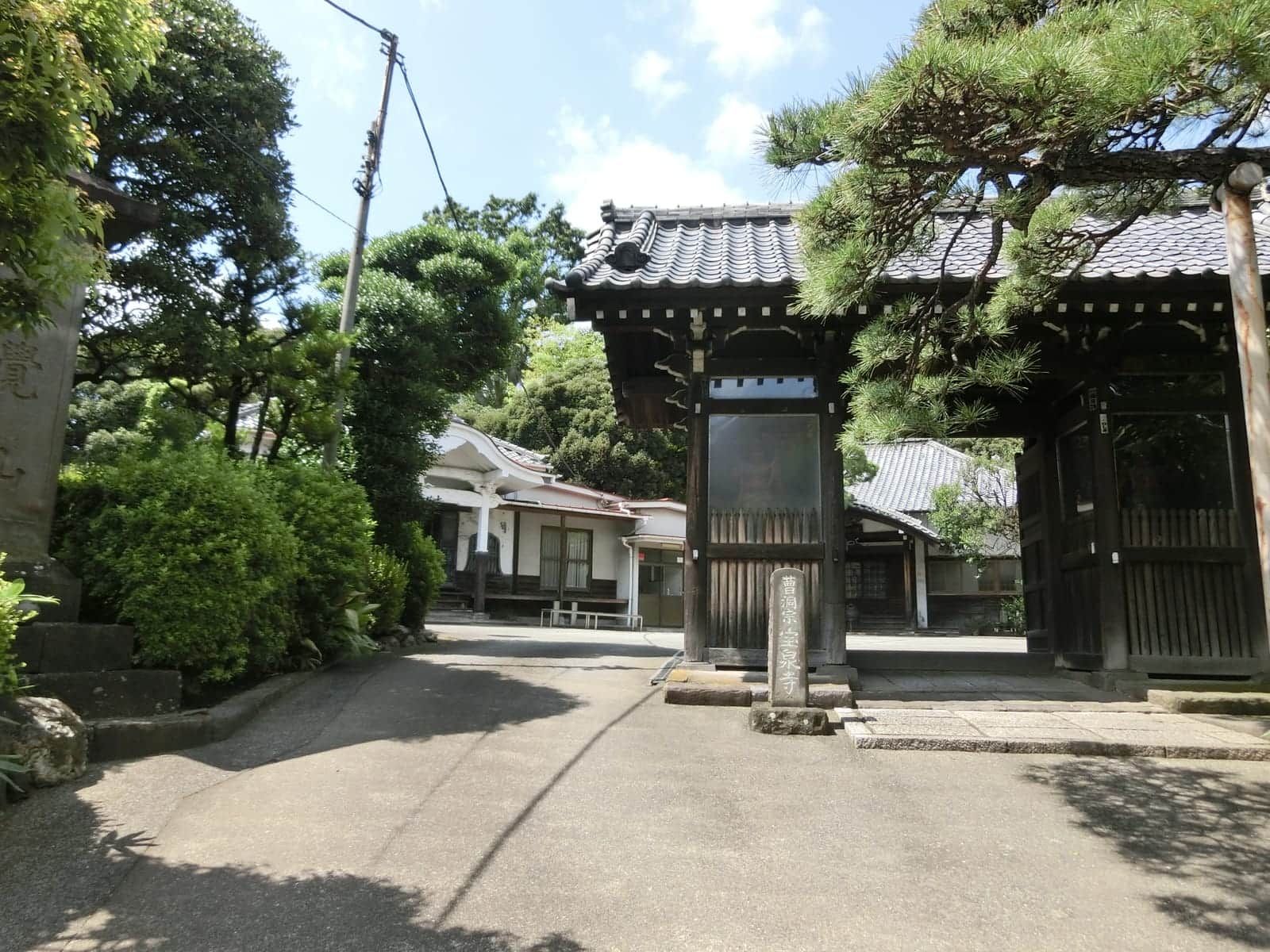
Visit the small hall on the right side of the main hall to see the wooden statue of Jurojin (one of the Seven Lucky Gods), and look for the pond in front of the main hall where Nisshin conducted his famous 100-day winter water austerities at age 21.
Read the info boards in the temple grounds. They explain Nisshin, the second head priest, who endured torture, including a red-hot iron pot on his head, after presenting his treatise to Shogun Ashikaga Yoshinori.
The temple sits in a quiet spot behind Seikawa Hospital, set back from the street with no clear signs. Find the entrance near Familymart by the second torii at Tsurugaoka Hachimangu, then follow the small path.
The temple receives very few visitors outside of the Seven Lucky Gods pilgrimage season, so expect a peaceful, contemplative atmosphere with minimal crowds during most of the year.
Also called Ninja-dera
Kanazawa, Ishikawa Prefecture
Not confirmed
Within 300 m Within 600 m
Renting needs the operator's app and a Japanese phone number. docomo day passes are sold at convenience stores. Data sources
More ways to continue from this place.
0 recent posts
Share how your visit was to help other travelers.
No public community posts yet.