
Torii
Architecture鳥居 ・ Reading: とりい
Definition
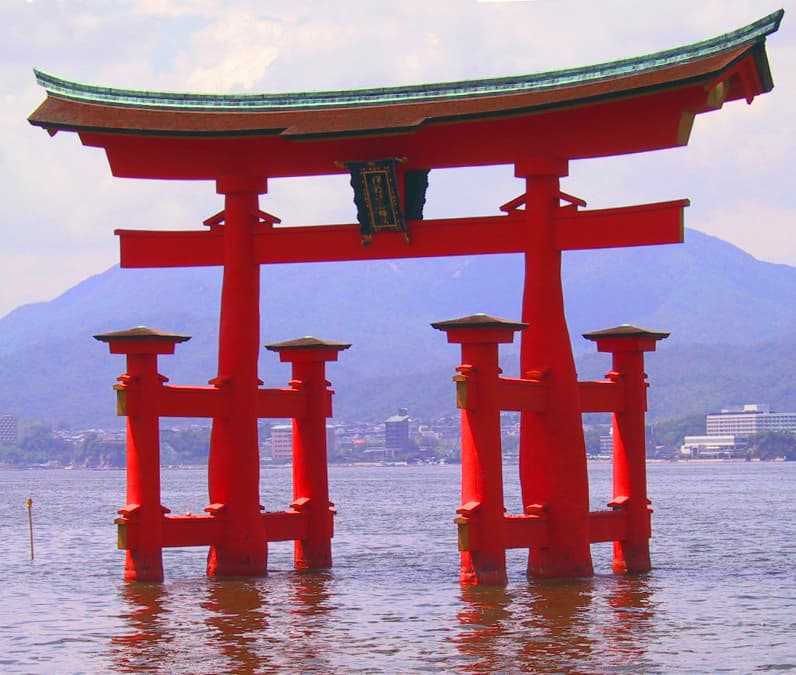
Un torii è il portale all'ingresso di un santuario shintoista, che segna il confine tra il mondo quotidiano e il recinto sacro. Di solito è formato da due pilastri verticali uniti da due travi orizzontali, e viene spesso dipinto di vermiglio.
Ciò che delimita
Un torii si erge all'ingresso di un santuario e a volte lungo il sentiero di avvicinamento. Passarvi sotto significa lasciare lo spazio della vita quotidiana per entrare nella dimora dei kami. Per consuetudine ci si inchina leggermente prima di attraversarlo, e si cammina sui lati piuttosto che al centro, che viene lasciato libero per la divinità.
Il loro aspetto
La maggior parte dei torii condivide la stessa forma di base, due pilastri verticali attraversati da due travi, ma i materiali variano notevolmente, dal legno consumato dagli agenti atmosferici alla lacca vermiglia brillante, fino alla pietra e al bronzo. Alcuni santuari, come Fushimi Inari a Kyoto, costeggiano i loro sentieri con migliaia di essi.
Un modo rapido per distinguere santuario e tempio
Un torii indica quasi sempre un santuario shintoista piuttosto che un tempio buddhista, per cui scorgerne uno è il modo più rapido per distinguerli a colpo d'occhio.
Domande frequenti
- Qual è la differenza tra un torii e un portale di un tempio?
Un torii è il portale d'ingresso di un santuario shintoista e di solito è formato da due pilastri verticali uniti da due travi orizzontali, spesso dipinti di vermiglio. Un portale di un tempio, come il sanmon, appartiene a un tempio buddhista ed è in genere una struttura coperta di dimensioni maggiori, quindi scorgere un torii indica quasi sempre che si sta entrando in un santuario e non in un tempio.
- Perché i torii sono spesso dipinti di rosso?
Molti torii sono dipinti di un vermiglio acceso perché questo colore è tradizionalmente ritenuto in grado di allontanare il male e la sfortuna, e il pigmento contribuiva anche a proteggere il legno. Non tutti i torii sono rossi, tuttavia, poiché alcuni vengono lasciati in legno naturale invecchiato e altri sono realizzati in pietra o bronzo.
- Come si dovrebbe passare sotto un torii?
Quando si attraversa un torii, è d'uso inchinarsi leggermente prima di passarvi sotto, per mostrare rispetto nell'entrare nel recinto sacro. Molti visitatori camminano anche sui lati anziché procedere in linea retta al centro, che è tradizionalmente considerato il cammino dei kami.
Related articles
- I Migliori Goshuin a Kyoto: Percorsi Pratici per AreaPianifica giornate rispettose dedicate ai goshuin a Kyoto per zona, con le schede di Goshuin Atlas, i trasporti e indicazioni chiare sui cambiamenti dell'ultimo minuto.
- I migliori Goshuin a Tokyo: Dieci tappe tra templi e santuariPianifica percorsi goshuin rispettosi a Tokyo attraverso Asakusa, Harajuku, Setagaya, Shiba, Kanda e Bunkyo con guida alla verifica ufficiale.
- Libro goshuin: dove comprare un goshuincho e come usarloScegli un libro goshuin, scopri dove comprarlo in Giappone e come presentarlo nei templi e santuari, trasportare fogli sciolti e proteggere l'inchiostro.
- Come Visitare un Tempio Buddhista in GiapponeSegui l'etichetta del tempio buddhista dal cancello attraverso l'incenso, la preghiera, l'ingresso nella sala, la fotografia e la ricezione di un goshuin.
- Come visitare un santuario Shinto in GiapponeUna guida pratica sull'etichetta nei santuari che copre torii, temizu, offerte, preghiera, goshuin, fotografia, accessibilità ed eccezioni locali.
- # Articoli Sacri nei Santuari del GiapponeScopri come differiscono ofuda, omamori, ema e omikuji, cosa fanno i visitatori con ognuno di essi e perché non ogni oggetto sacro è un'offerta.
- Shinbutsu Shugo: Perché santuari e templi condividono i paesaggi sacri del GiapponeUna storia della lunga relazione tra kami e buddha, della separazione Meiji e dei paesaggi sacri stratificati che i visitatori incontrano ancora.
- Santuari e templi in Giappone: come distinguerliRiconoscere i santuari Shinto e i templi buddhisti utilizzando i nomi, gli edifici, i metodi di culto e le indicazioni locali senza affidarsi a scorciatoie visive fuorvianti.
- Temizu: Purificazione con Acqua Prima del CultoUtilizza temizu con rispetto nei santuari giapponesi, inclusi gli allestimenti con mestolo, acqua corrente, sospesi e bacini per fiori, seguendo le istruzioni locali attuali.