Founder of Nichiren Buddhism
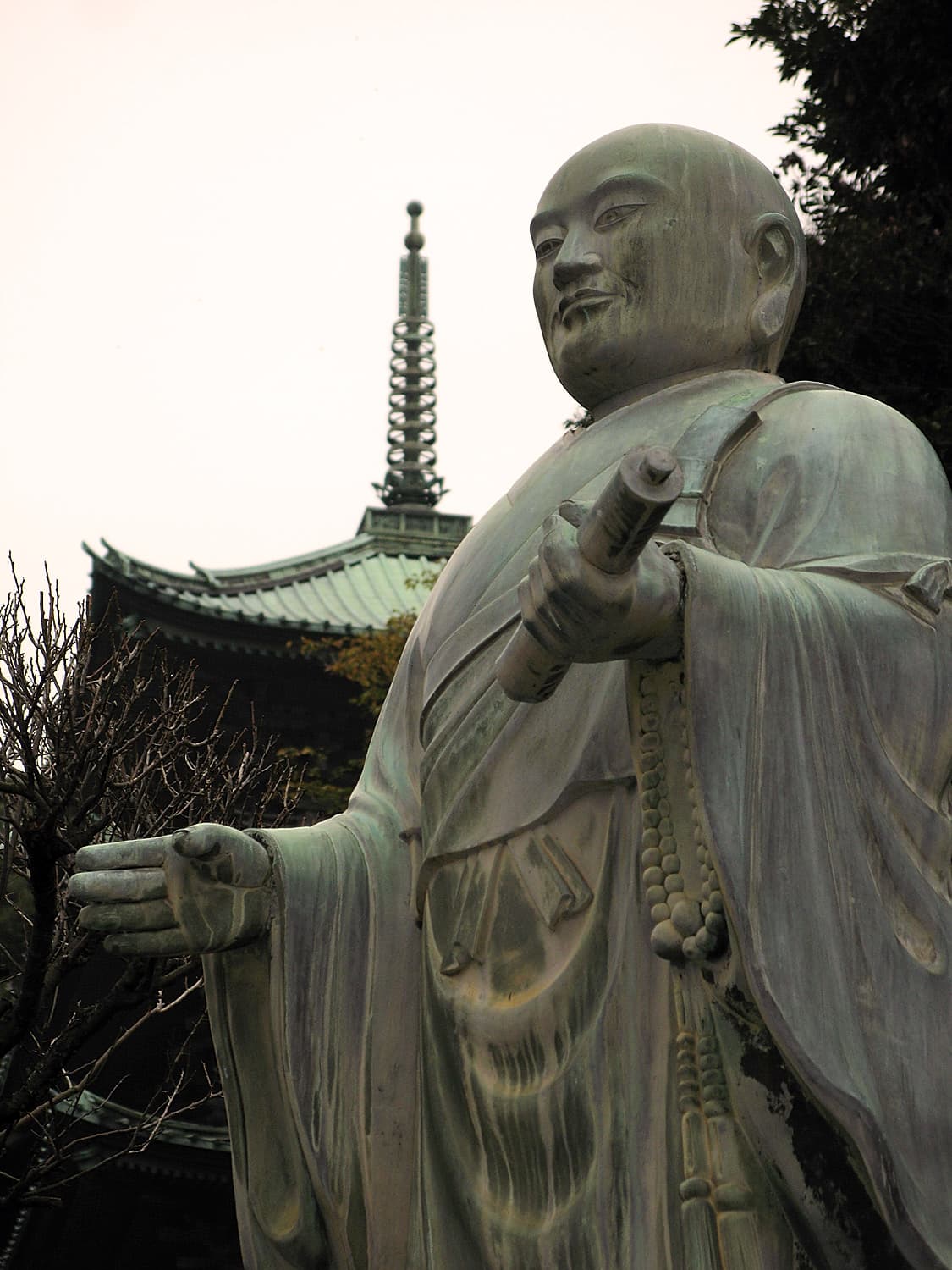
Nichiren (1222–1282) was a Japanese Buddhist monk and philosopher of the Kamakura period whose teachings gave rise to Nichiren Buddhism, a major branch of Japanese Mahayana Buddhism centered on the Lotus Sutra. He taught that the Lotus Sutra alone holds the supreme truth of Buddhism, and that its recitation — expressed in the chant Namu Myōhō Renge Kyō — offers the most direct path to enlightenment in this life, accessible to all people regardless of social standing or learning.
Nichiren held that all Buddhist figures, including Shakyamuni, were manifestations of the Original Eternal Buddha described within the Lotus Sutra. He called on Japan's rulers to support his teachings exclusively, warning that failure to do so would bring social disorder and natural calamities. His outspoken positions drew fierce opposition from both the Buddhist establishment and the government, leading to his exile on two occasions and persecution of his followers.
After his death, Nichiren was posthumously honored with the title Great Bodhisattva Nichiren by Emperor Go-Kōgon in 1358, and later recognized as Great Teacher Risshō by Emperor Taishō in 1922. He claimed to be a reincarnation of the bodhisattva Viśiṣṭacāritra, though some later schools regard him as the Primordial Buddha himself. Today, Nichiren Buddhism encompasses more than forty registered organizations worldwide, including traditional temple sects and major lay movements such as Soka Gakkai.
2 places