일반
¥1,500
한눈에
Slip into the rhythmic hush of a corridor made of gates: an undulating passage where some 10,000 torii stand shoulder to shoulder, their repeated thresholds pulling you toward the wooded slopes of Mount Inari. This is Fushimi Inari-taisha in Fushimi-ku, Kyoto—the head shrine of the kami Inari, venerated for rice, agriculture, and business. Founded in 711 CE by the Hata clan, it rises from the base of Inariyama (233 m) and sends pilgrims along a 4 km mountainside circuit that takes about two hours to complete. As you walk beneath the famous Senbon Torii—about 800 tightly spaced gates forming a tunnel of thresholds—you enter not just a site, but the living axis of a faith that anchors some 32,000 sub-shrines (bunsha) across Japan.
The story begins in the Nara period with the Hata clan, a powerful immigrant lineage credited with founding Fushimi Inari-taisha in 711 CE. Their patronage positioned the shrine at the nexus of agricultural rites and community prosperity, aligning it with the kami Inari, whose sphere ranges from the fertility of paddies to the fortunes of merchants. Over subsequent centuries—through Heian, Kamakura, Muromachi, and into the Edo period—Fushimi Inari became a model of how a local mountain cult can scale into a national devotional network.
A crucial mechanism behind this growth is the practice of division and re-enshrinement: a sacred transfer of the deity’s presence from the head shrine to subsidiary sites. Through this process, Fushimi Inari-taisha inspired roughly 32,000 bunsha nationwide, weaving a religious web that reaches from city markets to rural fields. Each subsidiary shrine reaffirms the head shrine’s centrality, ensuring that the mountain in Kyoto remains the spiritual source for countless communities and businesses across Japan.
What defines Fushimi Inari’s built environment is not a single hall, but a sequence—a choreography of thresholds. The approach is lined with thousands of torii, culminating in the famed Senbon Torii, where about 800 gates stand so close that they create a tunnel-like path. This design is not accidental; it expresses devotion through repetition. Each gate marks a transition from the everyday to the sacred, while the cumulative effect creates an immersive, almost meditative cadence.
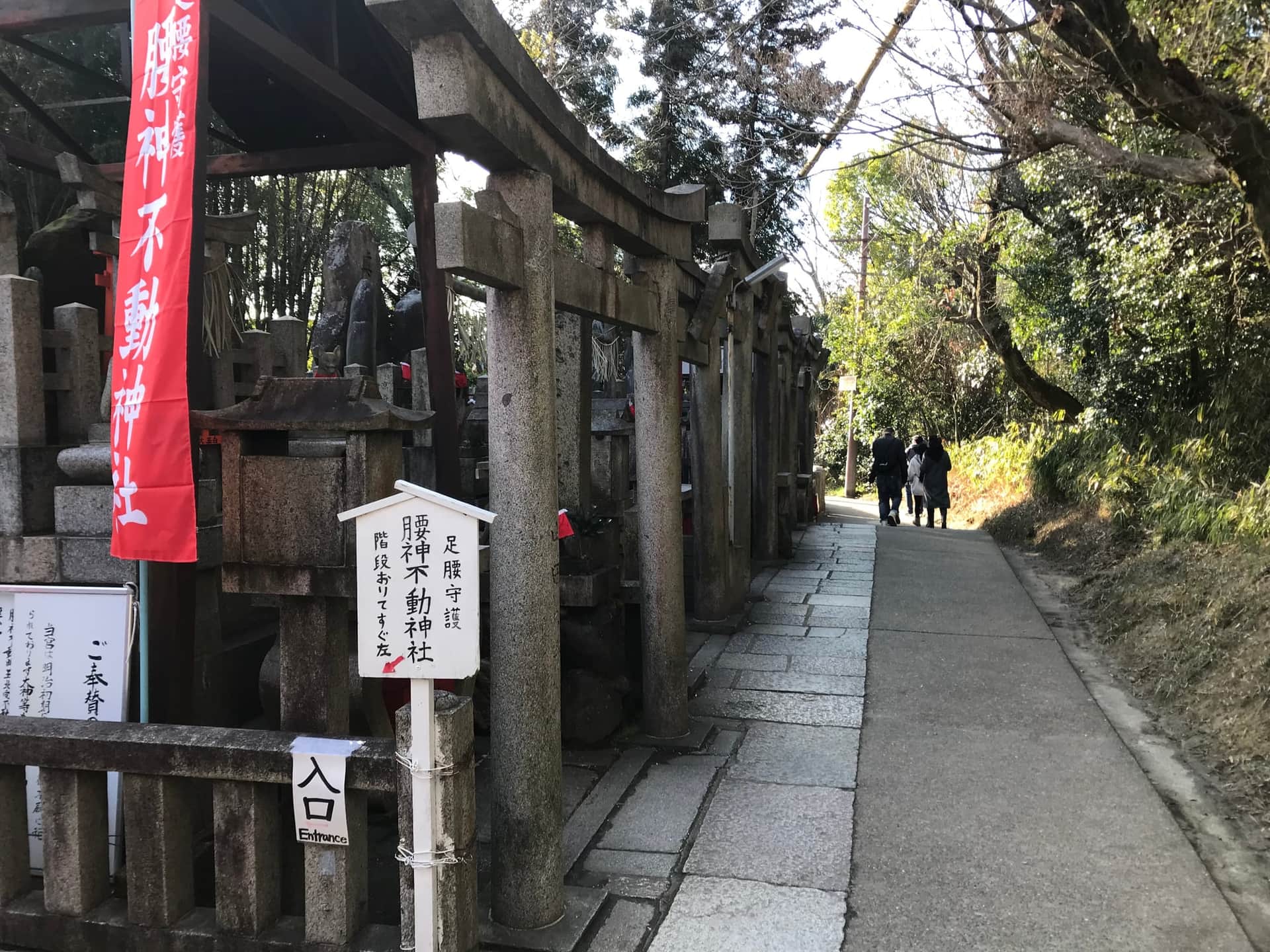
The scale is remarkable: roughly 10,000 torii donated by businesses line the routes that ascend the mountain. Their density intensifies along the 4 km trail, producing alternating bands of light and shadow. As the path climbs toward the inner precincts and smaller altars, the architecture loosens into clusters of minor shrines, each one a waypoint on the ascent. The gates publicly embody gratitude and petition—a visible ledger of vows fulfilled and prosperity sought—so that the architecture itself becomes a ledger of faith and enterprise.
Spatially, the shrine unfolds vertically. Starting at the base of Mount Inari (233 m), visitors move through successive precincts toward the summit, with the path organized by nodes of worship. The interval of gates accelerates and slows, opening onto clearings where smaller shrines punctuate the route. The result is a masterclass in processional design: a measured alternation of enclosure and view, silence and footfall, culminating in high-altitude places of prayer that feel both intimate and immense.
At the heart of this complex stands Inari, the deity whose protection spans the ancient lifeworld of rice and agriculture and the modern dynamism of business. Inari devotion is practical and aspirational, the throughline connecting a good harvest to a flourishing shop, a stable household to a thriving enterprise. The shrine’s torii tradition reflects this: companies and individuals donate gates to honor fulfilled wishes or to seek ongoing success, binding personal fortunes to the shrine’s enduring presence.
Crucially, Fushimi Inari’s role as the head shrine makes it both an origin and a destination. Through division and re-enshrinement, its spiritual authority radiates outward to the network of bunsha, while those same sub-shrines send worshipers and offerings back to the source. In this way, the shrine functions as a living institution of reciprocity, where spiritual and material economies intertwine.
Pilgrimage here is both horizontal and vertical: across Japan via the 32,000-strong lattice of affiliated shrines, and up the mountain via its 4 km route. Completing the circuit is a vow in motion, a ritualized walk that translates belief into breath and stride. The experience is accessible yet profound—rooted in the daily needs of livelihood and the timeless search for blessing.
The shrine’s genius loci is the mountain itself. Mount Inari, rising to 233 m, is less an obstacle than a partner in worship. Its forested slopes cradle the path, and the ever-shifting light under the gates turns the climb into a study of atmosphere and attention. Because the trail extends for 4 km, the ascent becomes a measured engagement with terrain—gentle inclines, stairways, and plateaus where smaller shrines nestle into glades and terraces.
The mountain’s modest height belies its symbolic power. The vertical journey performs a subtle expansion of perspective: what begins at the bustling base evolves into quieter precincts where wind and distant city sounds recede. The shrine’s architecture never tries to overpower the landscape; instead, it frames it—gate after gate presenting the next vista, the next pause, the next prayer.
What you see today is the active expression of a devotion that began in 711 CE and never paused. The immediate magnet is the Senbon Torii, with its approximately 800 gates forming a compressed, cinematic passageway. But the experience extends well beyond that photogenic stretch. Follow the 4 km loop, and you encounter the shrine’s true rhythm: torii-lined paths that thin and thicken, clusters of smaller altars, and resting points where the mountain’s presence is palpable. Most visitors plan about two hours for the ascent and descent, though lingering—letting the architecture and landscape do their unhurried work—reveals new layers.
Equally striking is the way the shrine makes devotion visible. The roughly 10,000 torii that line the routes are a public testament to vows and gratitude, a uniquely architectural form of offering in which the built environment becomes the archive of faith. Each gate is a threshold and a message; together they compose an environment where private wishes and communal identity share the same space.
Beyond the mountain, the shrine’s influence ripples nationwide. With approximately 32,000 bunsha established through division and re-enshrinement, Fushimi Inari-taisha is not only a destination but also a generator of sanctity. Wherever a sub-shrine stands—in cities, towns, and countryside—the head shrine’s authority and blessings remain the reference point. That network is one reason this site is perpetually animated by pilgrims and visitors: people come here to connect to the source, to place personal hopes within a centuries-deep tradition.
In the end, Fushimi Inari-taisha’s power lies in its cadence—of gates and steps, vows and vistas, past and present. From its Nara-period founding by the Hata clan to its role today as the head shrine of Inari in Kyoto’s Fushimi-ku, it has maintained a clear proposition: prosperity is not merely a private goal but a shared ritual, enacted here under thousands of thresholds on the slopes of a sacred mountain. Walk the path, and you participate in that ritual—moving through time, tradition, and space with every step beneath the gates.
산을 한 바퀴 도는 전체 코스는 2-3시간이 걸리며, 'otsuka'라 불리는 수만 개의 개인 석단을 지나게 됩니다. 이곳에서 방문객들은 여전히 불경을 염송하며 메이지 시대 이전의 神仏習合(신불습합) 관습을 보존하고 있습니다.
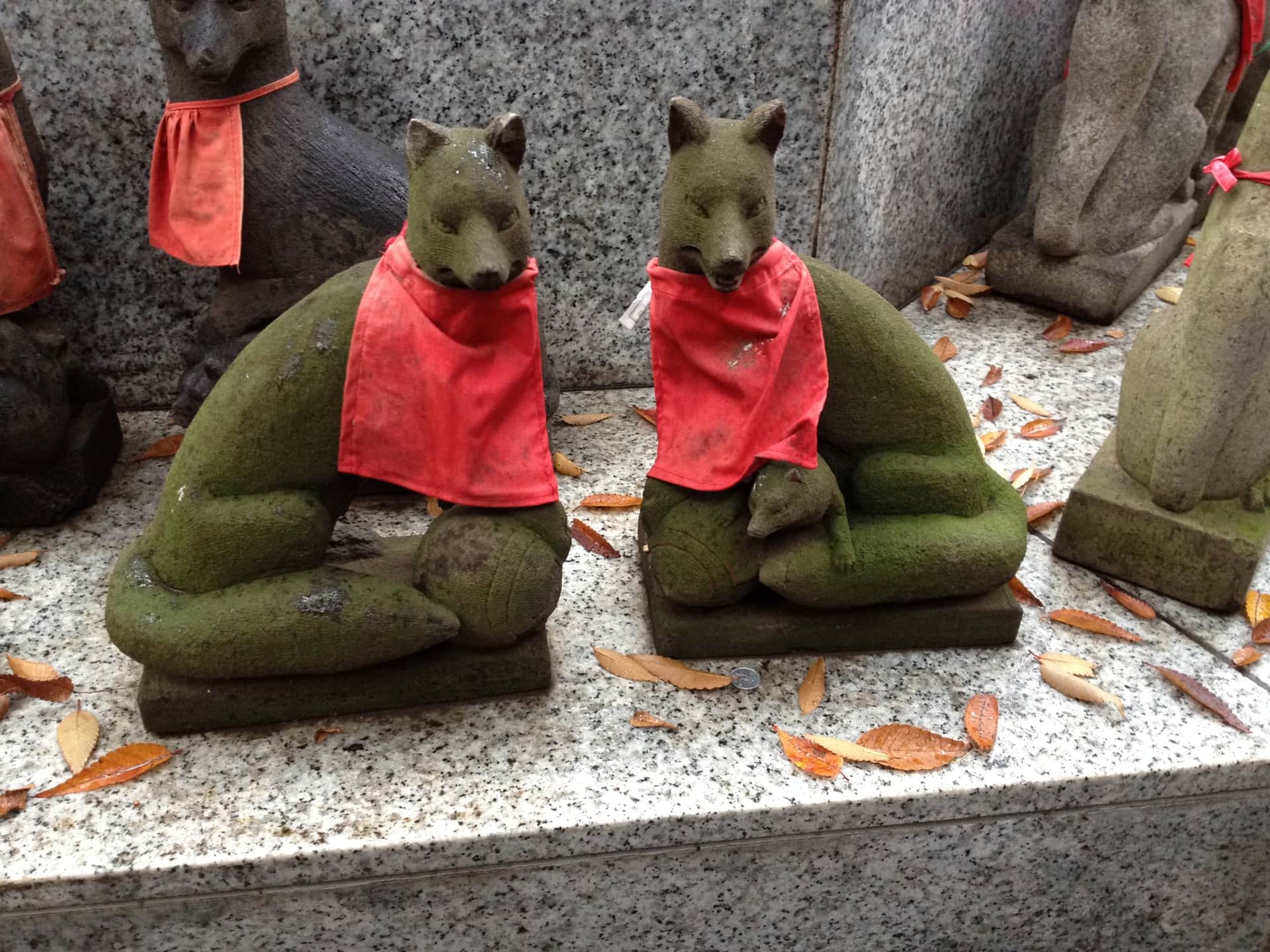
Nintendo의 창시자 미야모토 시게루는 Fushimi Inari에서 영감을 받아 Star Fox 비디오 게임 시리즈를 만들었습니다. 이 신사는 Nintendo의 교토 본사에서 도보 거리에 있으며 산 전망대에서도 보입니다.
이 신사은 다양한 고슈인 디자인 6가지를 제공합니다
일반
¥1,500
일반
¥500
특별
¥2,000
일반
¥500
일반
¥700
월간
편의 시설
Lower shrine grounds are wheelchair accessible. Mountain trails are not. Accessible toilets available.
정상에서 미니 도리이를 구입할 수도 있으며, 일본 문자로 이름과 축복 문구를 새겨줍니다 (비용 3,000엔).
이나리산 정상까지의 전체 등산은 수천 개의 계단을 오르며 왕복 2-3시간이 소요되므로, 편안한 등산화를 착용하고 물을 지참하시기 바랍니다. 중간 지점인 Yotsutsuji 교차로를 지나면 자동판매기가 제한적입니다.
산길을 따라 여러 신사와 부속 신사에 수많은 헌금함이 있으니 동전(100엔 이하)을 충분히 준비하세요.
Visit early in the morning (around sunrise, 5-7am depending on season) or after 6pm to experience the famous Senbon Torii gates with minimal crowds, as the shrine is open 24 hours with pathways illuminated at night.
대부분의 방문객들은 인파가 줄어드는 산 중턱의 Yotsutsuji 전망대에서 발걸음을 멈춥니다. 이 지점을 넘어서면 한적한 산책로, 전통 찻집, 그리고 고요한 분위기 속에 자리한 수많은 개인 참배 제단(お塚)을 만나실 수 있습니다.
이 신성한 장소에서 숭배되는 신령들
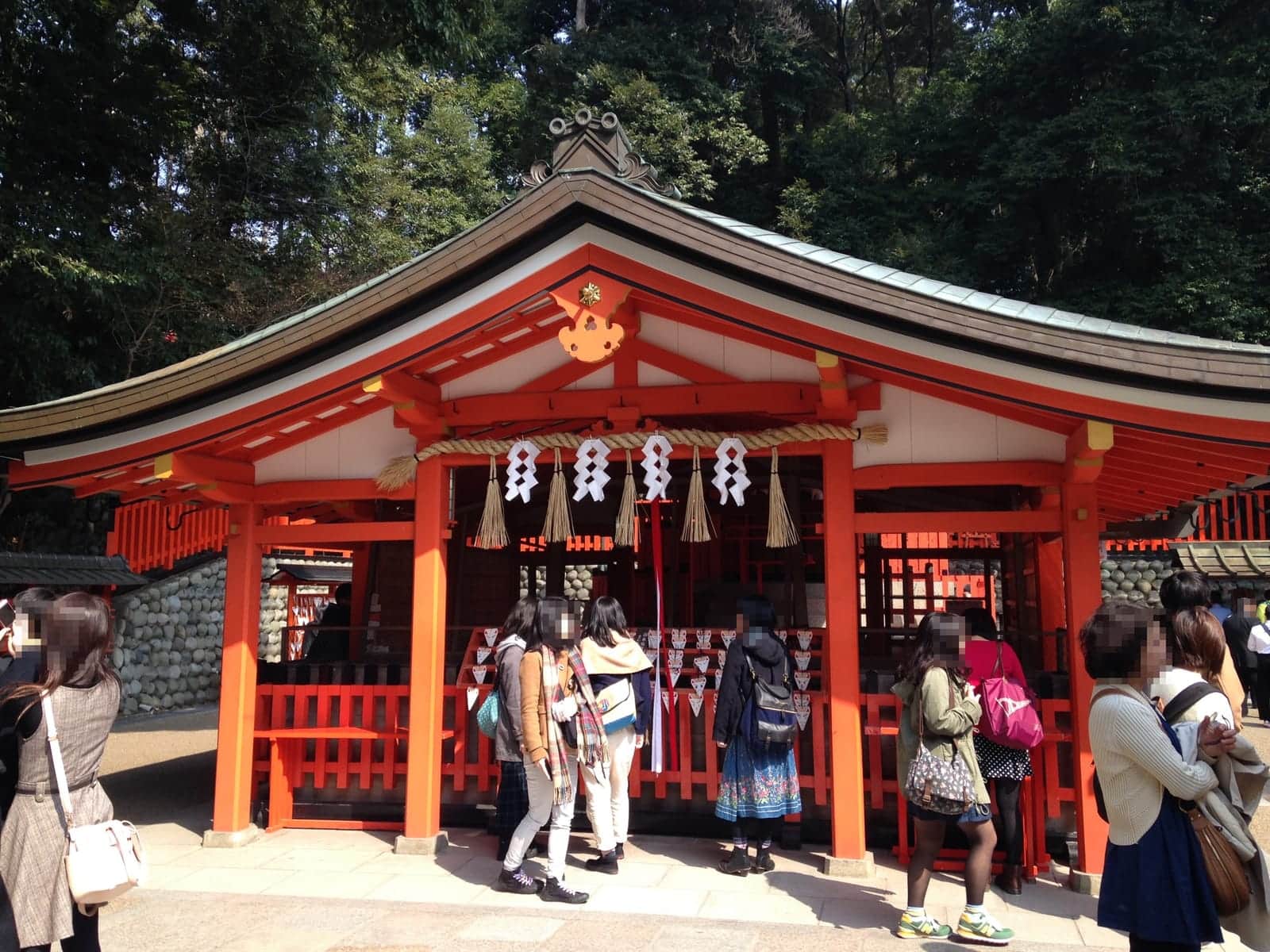
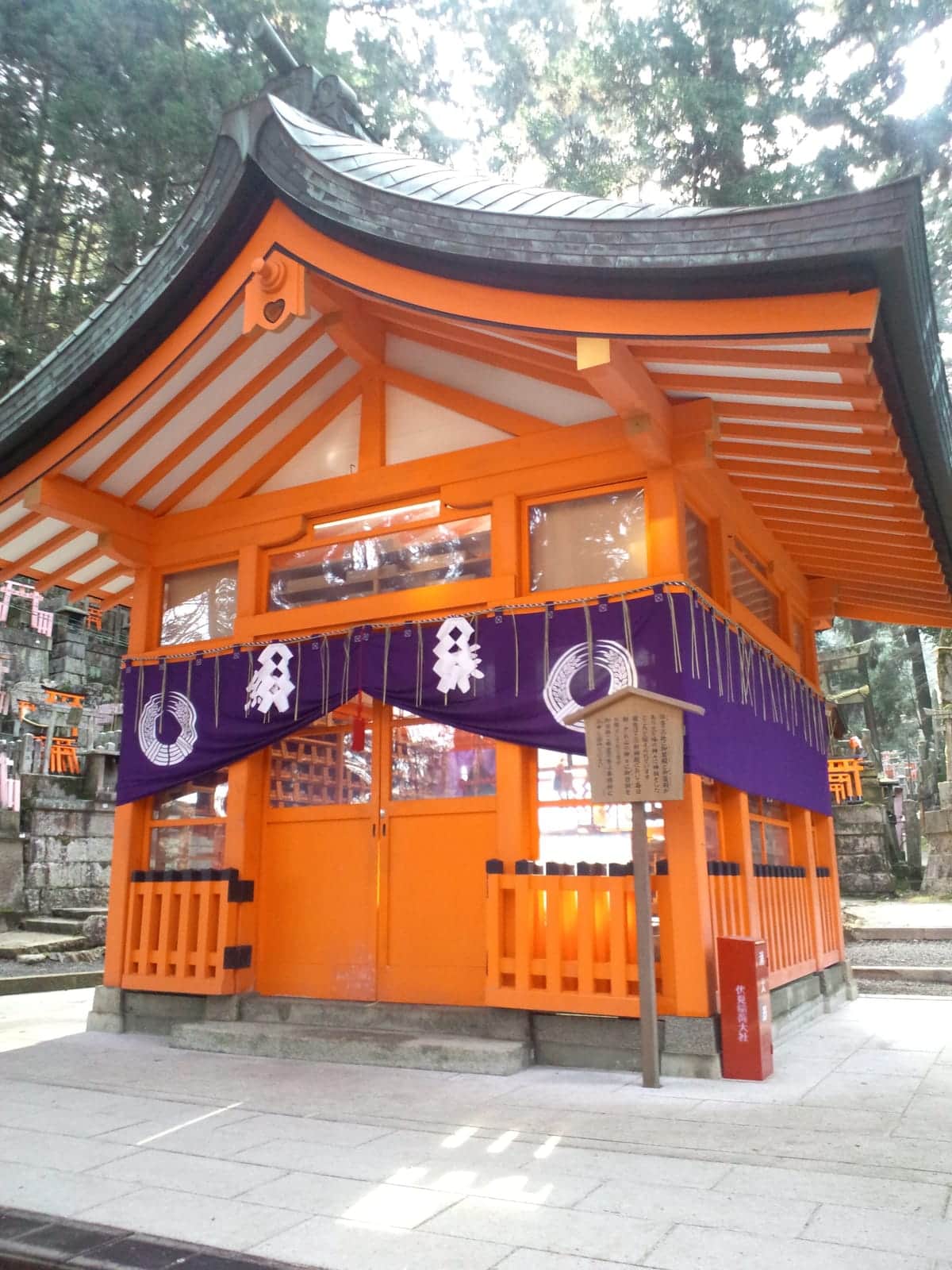
경내 건물 24개
계절별 축하 행사 및 특별 행사
이번 특정 방문을 계획하기 위한 실용적인 답변입니다.
이나리산을 한 바퀴 돌아오는 전체 코스는 2-3시간 정도 잡으세요. 아래쪽 신사 구역과 센본 도리이만 보고 싶다면 30-45분이면 됩니다. 많은 방문객은 요쓰쓰지 전망 지점에서 돌아오며, 왕복 약 60-90분이 걸립니다.
아니요. 산 전체 순례를 경험하고 싶다면 정상 코스도 의미가 있지만, 최고의 시내 전망은 숲으로 둘러싸인 정상보다 요쓰쓰지 주변에서 볼 수 있습니다. 시간이 부족하거나 더위, 계단이 부담된다면 그곳에서 돌아오는 것도 좋은 선택입니다.
신사 경내와 산길은 무료로 들어갈 수 있으며 언제든 방문할 수 있습니다. 상점, 사무소, 직원이 상주하는 구역은 각각 낮 운영 시간이 있으므로 고슈인, 구매, 직원 도움은 낮 시간에 계획하세요.
네, 경내는 밤에도 방문할 수 있고 아래쪽 길은 해가 진 뒤 분위기가 좋습니다. 다만 주의해서 이동하세요. 위쪽 숲길은 조명이 제한적이고 시설도 적습니다. 신사는 방문객에게 소란스러운 행동, 출입 제한 구역 진입, 쓰레기 투기, 야생동물 먹이 주기를 피하라고 안내합니다.
네. 후시미 이나리 타이샤에서는 고슈인을 받을 수 있습니다. 다만 늦은 밤 방문 때가 아니라 직원이 있는 낮 시간에 받으세요. 고슈인초와 소액 엔화 지폐 또는 동전을 준비하세요.
이른 아침, 가능하면 단체 관광객이 몰리기 전에 가는 것이 좋고, 저녁 늦게 방문하는 것도 방법입니다. 아래쪽 센본 도리이 구역은 사진 촬영 인파가 가장 많은 곳입니다. 첫 신사 구역을 지나 위로 올라가면 사람이 눈에 띄게 줄어듭니다.
산길은 긴 계단 오르막이며 전문 등산 코스는 아닙니다. 아래쪽 신사 구역을 넘어 계속 갈 계획이라면 편한 신발을 신고 물을 챙기세요. 길이 오르막으로 접어들면 휠체어와 유모차 접근은 제한적이며, 맡기지 않은 유모차는 표시된 구역에만 둘 수 있습니다.

평소 혼잡도
붐빔
방문 기간
90+ 분
이 장소와 연결된 다른 페이지입니다.
300m 이내 600m 이내 거리를 알 수 없음
대여하려면 사업자 앱과 일본 전화번호가 필요합니다. docomo 1일권은 편의점에서 구입할 수 있습니다. 데이터 출처
후시미구, 교토부 현
이곳이 베푼다고 여겨지는 것
최근 게시물 60개
4.8
15개 리뷰
Fushimi Inari는 24시간 개방되므로, 일출 시간대나 오후 6시 이후에 방문하면 유명한 도리이 터널을 훨씬 적은 인파 속에서 걸을 수 있습니다. 정상까지 올라갔다 내려오는 전체 코스는 2~3시간이 소요되며 수천 개의 계단을 오르내려야 하므로, 적절한 신발을 착용하고 물을 챙기시기 바랍니다. 중간 지점인 Yotsutsuji 교차로를 지나면 자판기를 찾기 어렵습니다.
대부분의 방문객들은 시내 전망이 좋은 Yotsutsuji에서 되돌아갑니다. 이곳을 지나 계속 올라가면 등산로가 훨씬 한적해지며, 길을 따라 전통 찻집과 개인 참배 제단들이 자리하고 있습니다.
 MS
MSmassimo silvestrin 님이 사진 5장을 공유했습니다
MSmassimo silvestrin 님이 체크인했습니다
Fushimi Inari Taisha
Fushimi, Kyoto