
Esenciales de Tokio
Pasa tres días recorriendo las clásicas áreas de santuarios y templos de Tokio, equilibrando paradas en goshuin emblemáticas con vecindarios fáciles de conectar en tren.
- 3 días
- 13 paradas
- Tokyo
Sobre este viaje
Una ruta de goshuin de Tokio para principiantes que conecta los santuarios más destacados con paradas coleccionistas accesibles.
Itinerario día a día
Harajuku a Akasaka
- 4 paradas
- unos 225 min con visitas
Meiji Jingu
ShibuyaCada año, más de tres millones de personas atraviesan la misma imponente puerta de madera en los primeros días de enero, convirtiendo este único sitio sagrado en el lugar de culto más visitado de todo Japón durante la temporada de Año Nuevo. Esa puerta, el gran torii en la entrada sur de Meiji Jingu, se eleva desde un corredor boscoso en el corazón de Shibuya, Tokyo, y en el momento en que pasas bajo ella, la ciudad simplemente desaparece. Fundamentos Históricos La historia de Meiji Jingu comienza con una muerte y una pregunta. Cuando el Emperador Meiji murió el 30 de julio de 1912, Japón no tenía un marco legal claro sobre qué debía seguir. Él había presidido una de las transformaciones nacionales más dramáticas de la historia moderna, guiando a Japón de una sociedad feudal y aislada a una potencia mundial industrializada durante la Restauración Meiji. Nacido en 1852, ascendió al trono en 1867 en el punto de inflexión mismo de esa transformación. Para cuando murió, Japón tenía una constitución moderna, un gobierno parlamentario, una red ferroviaria nacional y un ejército que había derrotado tanto a China como a Rusia. La pregunta que planteó su muerte no era meramente ceremonial. Era: ¿cómo honra una nación a un hombre que la transformó? En cuestión de semanas, figuras prominentes incluyendo al industrial Shibusawa Eiichi y al Alcalde de Tokyo Sakatani Yoshiro habían formado un comité y publicado un memorándum formal que esbozaba una visión: un santuario con un recinto interior financiado por el estado y un recinto exterior financiado por donación pública. El sitio que identificaron fue la Finca Imperial Yoyogi, un terreno de 73 hectáreas en el oeste de Tokyo que había servido previamente como residencia privada del clan Kato del dominio Higo en el período Edo temprano, luego como la finca inferior del clan Ii del dominio Hikone desde 1640, antes de ser comprada por el gobierno Meiji en 1874. La Dieta Imperial aprobó formalmente el proyecto, y el 1 de mayo de 1915, se anunció oficialmente la creación de Meiji Jingu. La construcción comenzó bajo el arquitecto Ito Chuta en el estilo tradicional nagare-zukuri, utilizando principalmente ciprés japonés y cobre. Las maderas estructurales principales provinieron de Kiso en la Prefectura de Nagano y de Alishan en Taiwan, entonces un territorio japonés, con materiales procedentes de cada prefectura del imperio, incluyendo Karafuto, Korea y Kwantung. La construcción fue una empresa genuinamente nacional: grupos juveniles y asociaciones cívicas de todo Japón contribuyeron con mano de obra y financiación, y 100,000 árboles fueron donados por ciudadanos de cada región del país y plantados a partir de 1916. El santuario fue formalmente dedicado el 3 de noviembre de 1920, cumpleaños del Emperador Meiji, y sus terrenos se completaron totalmente para 1926. El volumen interior original del complejo del santuario era de 650 tsubo. El costo total estimado de construcción fue de 5,219,000 yenes en términos de 1920, aproximadamente equivalente a 26 millones de dólares estadounidenses hoy, aunque esta cifra representaba solo alrededor de un cuarto del valor real porque gran parte del material y la mano de obra fueron donados. Hasta 1946, Meiji Jingu mantuvo la designación de Kanpei-taisha, ubicándolo en el primer rango de santuarios apoyados por el gobierno. Los edificios originales no sobrevivieron. Los **ata
Visita estimada · 90 min24 lo han visitado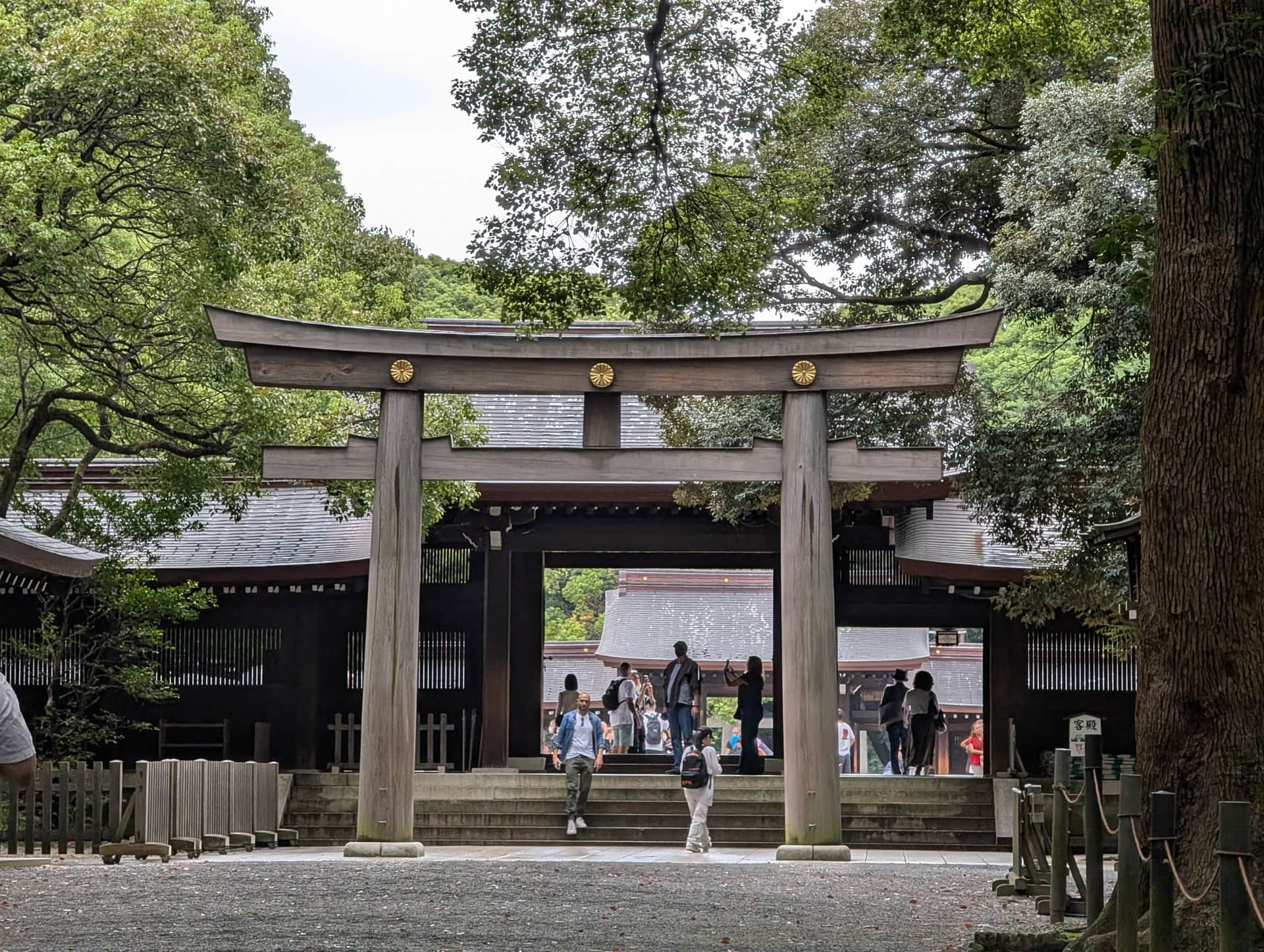
Togo Jinja
ShibuyaTōgō Jinja es un santuario sintoísta en Harajuku, Tokio, dedicado al Almirante Tōgō Heihachirō, quien es venerado aquí como un kami. Establecido en 1940, fue destruido en el Bombardeo de Tokio y reconstruido en 1964, lo que lo convierte en una reconstrucción de posguerra con un fuerte valor conmemorativo. Los terrenos incluyen un pequeño museo y una librería dedicados a Tōgō. El santuario está cerca de la intersección de Takeshita Street y Meiji Avenue, próximo a la Estación de Harajuku, y también alberga la bandera de batalla original de Tōgō de la Batalla de Tsushima, adquirida en 2005. Aunque los restos de Tōgō están enterrados en el Cementerio de Tama, el santuario sigue siendo un sitio importante de conmemoración militar y culto sintoísta moderno. Es un lugar de peregrinación local para quienes están interesados en la historia naval y la cultura conmemorativa de la era de guerra de Japón.
Visita estimada · 30 minEntrada gratuita8 lo han visitado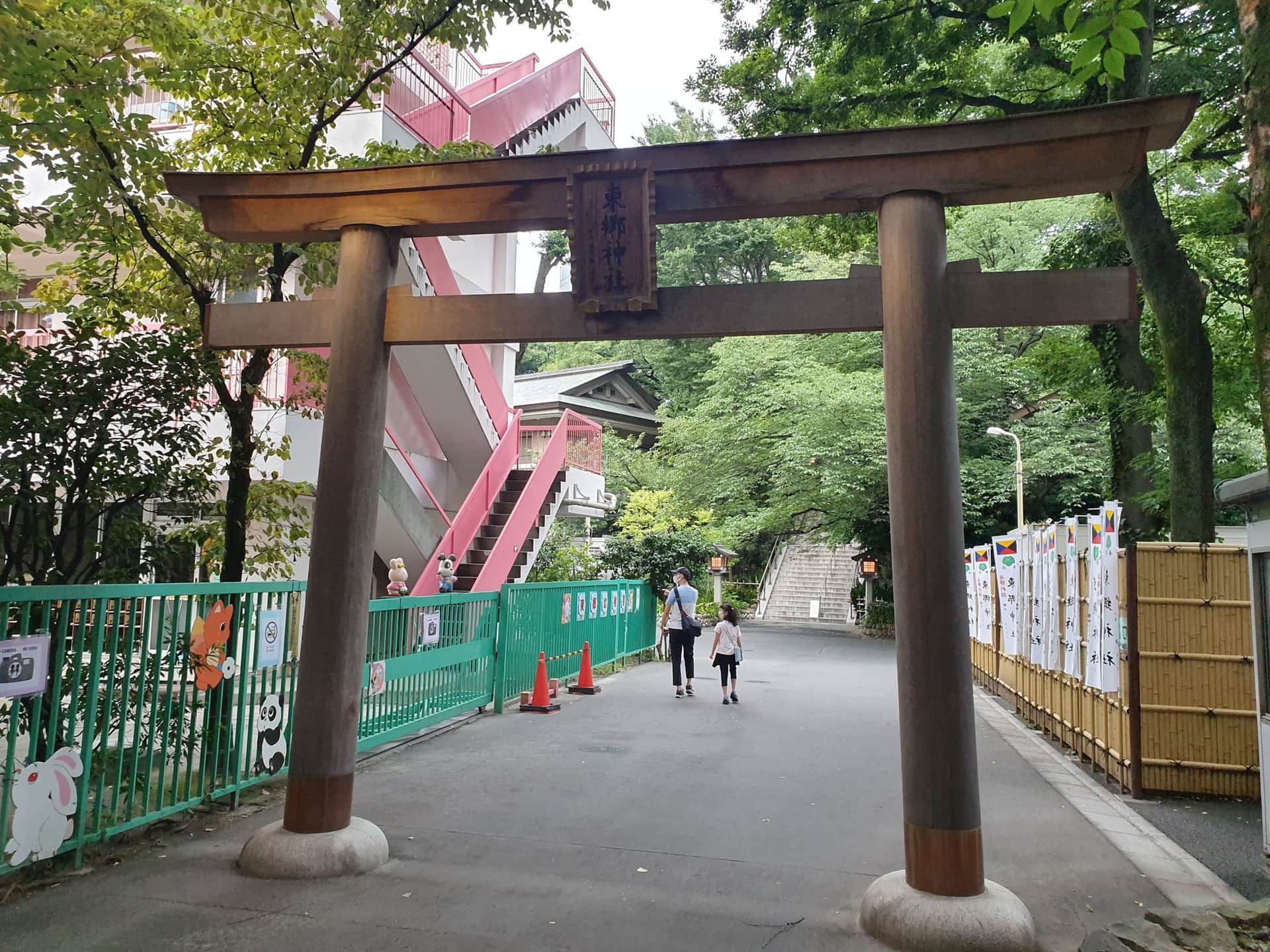
Nogi Jinja
MinatoUn tranquilo camino de piedra te conduce hasta la misma casa donde un general célebre y su esposa devota terminaron sus vidas, un acto de lealtad que conmocionó a una nación y aún irradia complejidad moral e histórica. Aquí, en el distrito Minato del centro de Tokio, los serenos recintos del Santuario Nogi—formalmente Nogi-jinja—consagran los espíritus del General Nogi Maresuke y Nogi Shizuko como kami sintoístas. Fundado el 1 de noviembre de 1923, el santuario se alza sobre la antigua residencia de la pareja, un conjunto único donde un ejemplo de arquitectura occidental del periodo Meiji sobrevive junto a estructuras sagradas tradicionales. El sitio es inseparable de la fecha 13 de septiembre de 1912, cuando, tras la muerte del Emperador Meiji, el general Nogi y su esposa eligieron la muerte ritual, culminación de ideales de toda una vida. El santuario original fue destruido luego en los bombardeos aéreos del 25 de mayo de 1945; lo que ves hoy fue reconstruido en 1962, una reafirmación posguerra de memoria y significado. Fundamentos Históricos Retrocede al turbulento cambio de siglo y encontrarás una figura emblemática de la rápida transformación de Japón: el General Nogi Maresuke (1849–1912), un oficial cuyo servicio y austeridad personal lo convirtieron en símbolo nacional. Su esposa, Nogi Shizuko (1856–1912), compartió sus convicciones y, en la muerte, su destino. Su acto final ocurrió el 13 de septiembre de 1912, el mismo día del funeral del Emperador Meiji. Para sus contemporáneos, fue un gesto marcadamente tradicional de lealtad—lo que comentaristas posteriores llamarían un eco del junshi (seguir a su señor en la muerte). Para otros, fue un acto profundamente controvertido, que expuso las tensiones y contradicciones de la modernización. Inmediatamente después, líderes cívicos buscaron un lugar donde el público pudiera llorar y reflexionar. El Alcalde de Tokio, Barón Yoshio Sakatani, convocó al Chūō Nogi Kai—la Asociación Central Nogi—con una misión clara: construir un santuario para la pareja dentro de los terrenos de su residencia. Esta decisión consagró no solo a dos individuos sino también una conversación nacional sobre el deber, la modernidad, el duelo y la forma de la memoria pública. Oficialmente establecido el 1 de noviembre de 1923, el Nogi-jinja abrió como un sitio dedicado a la veneración de los Nogi como kami, un gesto arraigado en la práctica sintoísta de deificar figuras humanas ejemplares, al igual que las veneraciones a Sugawara no Michizane en los santuarios Tenmangū o a Tokugawa Ieyasu en Tōshōgū. Las primeras décadas del santuario estuvieron marcadas por los eventos sísmicos de la Tokio moderna. Gran parte de la ciudad sufrió incendios y guerra, culminando en los devastadores bombardeos aéreos del 25 de mayo de 1945, cuando los edificios originales del santuario fueron destruidos. Sin embargo, la historia no terminó con la pérdida bélica. En 1962, se construyó el complejo actual, heredando el espíritu fundador de 1923 y restaurando el sitio como un lugar público de memoria. Este arco—fundación tras 1912, destrucción en 1945, reconstrucción en 1962—sitúa al Nogi-jinja junto a muchos santuarios de Tokio que encarnan la resiliencia: una ciudad y una tradición repetidamente rehechas, pero arraigadas en profundas continuidades. La resonancia de los Nogi va mucho más allá de Tokio. En todo Japón, múltiples santuarios honran su memoria. Entre ellos se encuentran sitios en Nasushiobara (en la Prefectura de Tochigi), Fushimi-ku (Kioto), Shimonoseki (Prefectura de Yamaguchi) y Hannō (Prefectura de Saitama). Estos santuarios dispersos marcan una geografía memorial nacional, señalando el peso cultural poco común de la historia de los Nogi y la flexibilidad del sintoísmo para acomodar figuras históricas modernas en su panteón de kami. Maestría Arquitectónica El poder del Nogi-jinja no reside solo en la narrativa; está en la estructura construida del conjunto. De manera única, el recinto incorpora una rara residencia de estilo occidental del periodo Meiji, preservada como parte de los terrenos del santuario. Esta casa—silenciosa, severa y elegante—habla el lenguaje del diseño occidental de finales del siglo XIX y principios del XX: proporciones equilibradas, simetría formal y una paleta reservada de materiales. Con su masa rectilínea y detalles contenidos, es un artefacto de la adopción de formas occidentales durante el periodo Meiji en la educación, el ejército y la arquitectura cívica. Al entrar en esta estructura, se percibe cómo las estéticas importadas se naturalizaron en la vida japonesa, desde planos que siguen la lógica doméstica occidental hasta la fenestración y acabados que se apartan de los tradicionales salones de madera japoneses. Salir al exterior es volver a entrar en una gramática espacial diferente. Los edificios reconstruidos en 1962 retornan al lenguaje del sintoísmo: un eje orientado hacia una puerta torii, un approach ritual que conduce al haiden (sala de adoración) y finalmente al honden (santuario). Estas estructuras están hechas de madera, como corresponde a la arquitectura de santuarios, sus superficies y ensamblajes reflejan una continuidad de la carpintería que se remonta a muchos siglos atrás. Los perfiles del techo se extienden con una autoridad silenciosa, captando luz y sombra durante todo el día; el material del techo en las reconstrucciones posguerra suele ser de aleación de cobre o teja, uniendo durabilidad con silueta tradicional. La secuencia espacial—pasar del bullicio urbano a través del torii, al ablución en el temizuya (pilón de purificación), al silencio del haiden—está coreografiada para desacelerar el paso y enfocar la atención. El detalle no es un pensamiento posterior aquí. Travesaños tallados, celosías y el suave brillo de la madera pulida contribuyen a la dignidad discreta del santuario. El recinto está calibr
Visita estimada · 45 minEntrada gratuita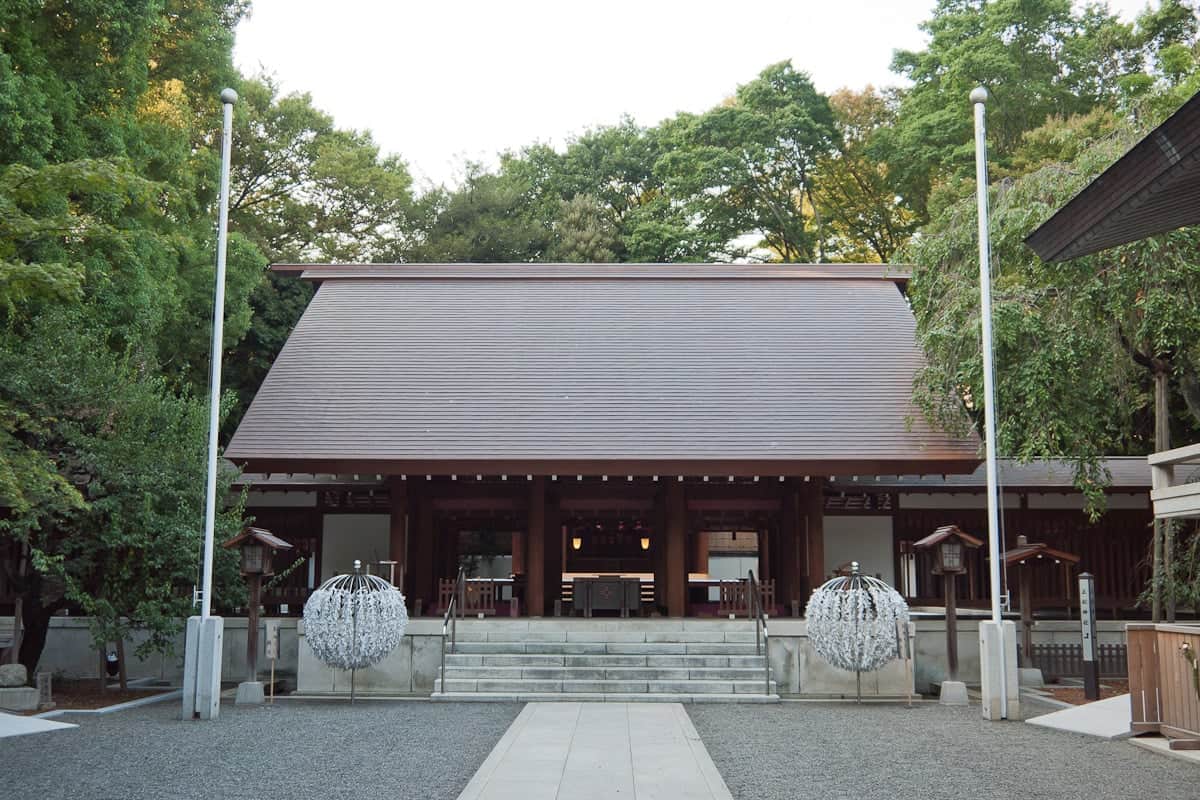
Hie Jinja
ChiyodaSlip from Tokyo’s corridors of power into a sudden splash of vermilion. In the heart of Nagatachō—steps from the National Diet—this sanctuary reveals itself through a tunnel of crimson torii leading up a hillside to a complex rebuilt in 1958 yet rooted in a story that begins in 1478. This is Hie Shrine—once the tutelary shrine of Edo Castle, now one of the Tokyo Ten Shrines—dedicated to Oyamakui-no-kami, the guardian deity of mountains and the spiritual anchor of the capital’s Sannō faith. Celebrated for the Sannō Matsuri, among the three great festivals of old Edo, Hie is where ancient devotion and modern city pulse meet: a shrine that burned, moved, survived wartime devastation in 1945, and rose again to continue blessing the center of Japanese government and the millions who pass through this district each year. Historical Foundations Hie’s story begins amid the formative years of Edo, long before skyscrapers and subways. In 1478, the military tactician and castle-builder Ōta Dōkan fortified his new stronghold on a low hill overlooking a tidal estuary. With the founding of his castle came the indispensable spiritual counterpart: a guardian shrine to protect the domain. Tradition holds that this act planted the seed of Hie Shrine—a tutelary presence charged with safeguarding the nascent castle town that would later become Tokyo. The shrine’s destiny transformed in the early seventeenth century when Tokugawa Ieyasu chose Edo as the seat of his shogunate. Recognizing the protective prestige of Hie’s deity and the deep cultural pull of the Sannō tradition, Ieyasu relocated and patronized the shrine in the opening decades of the 1600s, elevating it as the spiritual guardian of the new shogunal capital. From then on, Hie stood not just as a local protector but as the official tutelary shrine of Edo Castle—its rituals intertwined with the rhythms of governance and city life. The centuries that followed were marked by both growth and fragility. Edo, a city of wood and paper, repeatedly suffered conflagrations. Hie’s precincts, too, burned more than once, each time rebuilt through the backing of shoguns, daimyō, and townspeople who understood the shrine’s protective role over the city. This cycle of destruction and renewal culminated in the most devastating blow: the 1945 air raids of the Second World War, which obliterated much of central Tokyo and destroyed Hie Shrine’s buildings. Resilience defines Hie’s modern chapter. In 1958, the shrine was reconstructed in reinforced concrete, a pragmatic and forward-looking choice that allowed traditional forms to live securely within modern materials. The new complex retained the recognizable silhouette of a Shinto shrine while acknowledging the realities of postwar urban Tokyo. Today, Hie’s presence, a survivor reborn, speaks to continuity: of community, of state, and of faith in a city that has rebuilt itself more than once. Architectural Mastery Approach Hie from any direction and architecture guides the body into devotion. The first encounter is often the Sannō Torii—a distinctive gateway type associated with the Sannō tradition—announcing a threshold between the secular and the sacred. The torii is more than a symbol; its proportions and elegant lines frame a path, focus the gaze, and prepare the mind for ritual space. At Hie, the Sannō Torii stands as a visual signature of the shrine’s identity. Climb next through the famous torii-lined staircase, a corridor of vermilion that turns the act of ascent into a rhythmic experience: step, shadow, light, step. This stairway—photographed by countless visitors—distills a key architectural idea of Shinto space: repetition generates holiness. Each gate reiterates that you are crossing from the everyday to the precinct of the kami, and the repetitive geometry makes your movement intentional, meditative. At the complex’s center are the twin hearts of shrine architecture: the Honden (sanctuary) and the Haiden (worship hall). The Haiden is where the public kneels, claps, and prays; it is an open, inviting volume designed to embrace the congregation. Beyond it, aligned on the same axis but set off-limits to most, the Honden enshrines Oyamakui-no-kami. It is here—within the sanctuary—that offerings are made, norito prayers are chanted by priests, and the deity’s presence is ritually affirmed. Rebuilt in 1958, Hie’s structures are composed of reinforced concrete—a deliberate choice after wartime loss—given surfaces and profiles that echo traditional shrine carpentry. Rooflines reference classic Shinto forms with broad eaves and pronounced ridgelines that shelter the building and soften its mass. The exterior palette emphasizes vermilion and white, accented with metal fittings, conjuring continuity with prewar aesthetics while ensuring durability in Tokyo’s seismic, urban environment. This fusion of traditional expression and modern engineering characterizes postwar shrine reconstruction across Japan, but Hie’s example is especially resonant given its role as guardian of Edo and neighbor to Japan’s contemporary political institutions. The effect is simultaneously timeless and contemporary: stone, concrete, and bright paint adaptable to decades of heavy use by worshippers, officiants, and festival teams. Finally, pay attention to the textures underfoot and overhead. Stone pavements and broad stairways choreograph movement; lanterns illuminate courtyards in evening ceremonies; banners announce rites and festivals. The shrine precinct is not a museum diorama—it is a functioning ritual machine, adaptable and sturdy, built for annual cycles of prayer, celebration, and community. Religious & Cultural Significance Hie Shrine enshrines Oyamakui-no-kami, a powerful mountain and tutelary deity at the core of the Sannō tradition. The word “Sannō” literally means “Mountain King,” signaling the deity’s protective authority and the religious geography that once connected Tokyo to the wider sacred landscape of Japan. Historically, the Sannō faith has strong roots in the guardianship of Mount Hiei and the capital, and Tokyo’s Hie Shrine serves as a metropolitan anchor for this devotion. As the historic tutelary shrine of Edo Castle, Hie’s rituals were linked to the wellbeing of the city and its rulers. Prayers for protection from fire, disease, and misfortune—pressing concerns in a wooden city—were central. Ceremonies marking seasonal transitions, prosperity, and safe governance further entwined the shrine with civic life. This public-facing religious role lives on in the shrine’s schedule of rites and its most famous celebration: the Sannō Matsuri. The Sannō Matsuri is among Edo’s three great festivals, alongside the Kanda and Fukagawa festivals, and its history stretches back to the Tokugawa era. Its grand processions occur in even-numbered years, with portable shrines, priests, musicians, and parishioners traveling in ceremonial order through the city center. In the Edo period, the Sannō procession held rare privilege: authorization to enter the castle precincts, signaling Hie’s unique bond with political authority. In modern times, while the route has adapted to public streets and urban logistics, the festival still manifests as a city-wide blessing—an annual rhythm that connects ancient rite and modern capital. Beyond the festival, Hie acts as a compass for everyday spirituality. Shinto weddings, new-year prayers (hatsumōde), and rites of purification punctuate the calendar. Office workers on lunch break step in for a quick bow and a coin offering; parents bring children for milestone blessings; and petitioners buy amulets for safe business, good health, or exam success. The shrine’s proximity to political buildings adds another layer: it is a place where national policy-makers and clerks alike can seek composure, reflection, and favor from the kami, a quiet counterpart to the debates across the street. Hie’s status as one of the Tokyo Ten Shrines underscores its civic importance. This elite group, distributed across the metropolis, collectively safeguards the city. Membership signals a historical mandate: not merely a neighborhood shrine, but a guardian operating on the scale of the capital. Finally, consider how Hie bridges eras. It embodies the continuity of Shinto practice—the honoring of kami, the purity of space, the seasonal round of celebrations—while standing squarely in a hypermodern district. This tension is not a contradiction but a strength. The shrine’s resilience in 1945, its 1958 rebirth, and the ongoing vitality of the Sannō Matsuri demonstrate a living tradition capable of renewal without losing its essence. Natural Setting & Environment Nagatachō is a district built for policy and power—broad avenues, stately government buildings, sweeping stone. Hie Shrine softens this geometry. The precinct occupies a modest rise, and the approaches make clever use of topography: long stairs and the famed torii-lined slope translate a change in elevation into a pilgrim’s ascent. Even modest hills matter in Shinto. They lift the worshipper, reveal sky, and create a sense of threshold. In a city so heavily engineered, this gentle relief is a perceptible change in atmosphere. The shrine grounds weave greenery into the urban grid. Trees flank stone paths; small courtyards open to sky; shrubs and plantings frame the main axis from Sannō Torii to worship hall. Light and shadow play across the vermilion surfaces, and breezes passing through the gates produce a quiet rustle that contrasts with nearby traffic. Seasonal changes—soft spring light, the heat shimmer of midsummer, autumnal clarity, winter crispness—give the precinct a cyclical mood that mirrors Shinto’s calendar of rites. Space is also choreographed to offer moments of pause. Step aside from the main approach and the bustle thins; a side path, a lantern, a stone basin for purification recalibrate your senses. Water, stone, and wood—arranged with restraint—contribute to the overall feeling of clarity that Shinto strives for. The shrine’s environment may not be a sprawling landscape garden, but it functions as a spiritual garden: a vessel for calm in the city’s most intense district. And yet, the skyline is always near. Look up from the courtyard and modern Tokyo frames the sacred space: office towers, the silhouette of the National Diet, and, depending on your vantage, glimpses into Akasaka’s high-rise canyons. This juxtaposition—vermilion gates against glass and steel—makes Hie a signature sight in contemporary Tokyo and a case study in how the sacred inhabits the city rather than escaping it. Visitor Experience & Heritage Arriving is part of the experience. The shrine lies within easy reach of Akasaka and Tameike-Sannō stations, and the walk from either point heightens the contrast between civic bustle and shrine serenity. As you approach, the first threshold is a torii—pause here. Bow lightly before passing beneath; then continue toward the courtyard where the Haiden awaits. If the torii-lined staircase is on your route, consider climbing its corridor of gates for a more dramatic approach and a striking photo opportunity. At the Haiden, you’ll find the familiar ritual choreography: bow twice, clap twice, offer your prayer, and bow once more. The sound of the claps echoes under the broad eaves and across the stone paving. From here, you can admire the alignment of the complex: the Haiden opening to the courtyard and, beyond, the Honden housing Oyamakui-no-kami. While access to the Honden is restricted, seasonal ceremonies sometimes spill outward, letting visitors glimpse the patterned movements of priests and attendants. Elsewhere in the precinct, you can explore additional gates and sub-precincts, each scaled to different forms of devotion. Chōzuya basins for ritual purification—cool water over cupped hands—offer a sensory reset. Amulet counters present a spectrum of talismans tuned to modern needs: safe travels, good business, academic success, health. The design language is deliberately contemporary-traditional: clean signage, practical circulation, and durable finishes that welcome thousands of daily visitors without losing warmth. Hie’s festival calendar culminates in the Sannō Matsuri. In even-numbered years, the shrine’s ceremonial procession takes to the streets in a meticulously ordered parade. Portable shrines carried on shoulders, priests in formal robes, musicians keeping rhythm—the city becomes a stage for blessing. Watching the procession pass through business districts and government neighborhoods is to see a centuries-old rite reconciling the sacred with the civic. Between major processions, annual rites maintain continuity: purification ceremonies, harvest thanksgiving, and New Year observances ensure that rituals touch every season. Historically, Hie was privileged in ways few shrines could claim. In Edo times, the Sannō Matsuri procession entered castle precincts—a literal crossing into centers of power that cemented Hie’s role as protector of the political heart. That privilege, transmuted into modern forms, survives as proximity: today, the shrine stands beside the institutions of national governance, offering a spiritual counterpoint to policy and debate. In heritage terms, Hie is notable not for ancient timber preserved against time but for resilient tradition preserved through rebuilding. The complex is not UNESCO-listed, and its current buildings date to 1958, yet the shrine’s cultural status within Tokyo is deeply felt: it is a key node in the Tokyo Ten Shrines, it anchors the Sannō faith in the capital, and it embodies the continuity of devotion from 1478 to the present. That continuity is what visitors come to witness and participate in: an ongoing relationship between deity and city, renewed with each bow and clap. For those who appreciate architectural detail, linger at the Sannō Torii. Compare its profile to the more common torii seen elsewhere in Japan: subtle differences in proportions and the way the top elements meet give the Sannō type its identity. Then turn back to the Haiden and note how the broad eaves shelter worshippers from sun and rain, creating an outdoor room where the boundary between building and courtyard dissolves—a hallmark of shrine design, here executed in robust postwar materials. If you’re visiting around midday, you may share the courtyard with office workers on their lunch break, pausing for a moment of quiet or sipping tea on the steps. In the early evening, lanterns begin to glow, and the shrine shifts into a more contemplative register. During festival preparations, the energy changes again: ropes, palanquins, and ceremonial gear appear; priests rehearse; banners unfurl. Each phase reveals a different facet of Hie’s living heritage. Practical orientation matters in an urban shrine, and Hie’s layout is intuitive. Major paths converge on the main courtyard; signage directs you without intruding; thresholds are legible. The shrine’s staff navigates a dual brief: to maintain ritual purity and to welcome visitors from around the world. This duality reflects Shinto at its best—rooted in local practice, open to the global public. As you prepare to leave, take one last look back through the torii. The gate frames the city beyond—taxis, suits, umbrellas, protest placards on some days, and on others the quiet of a weekend morning. This view captures Hie’s essence. It is not a retreat away from the world but a lens for seeing the world differently. For more than five centuries—from Ōta Dōkan’s first act of devotion in 1478, through Tokugawa Ieyasu’s elevation of the shrine in the 1600s, through fires, the 1945 devastation, and the 1958 reconstruction—Hie has persisted as a guardian of the capital’s wellbeing. In that persistence lies its power. Hie Shrine shows how a city remembers: through ritual repetition, through rebuilding, through the steady return of festivals and prayers. It is a place to witness the living continuity of Japanese tradition in the very district where the nation charts its future. Whether you come for the Sannō Matsuri, for a quick prayer between meetings, or to savor the visual poetry of a torii-lined staircase in the afternoon light, you step into a story still being written—one clap, one procession, one year at a time.
Visita estimada · 60 minEntrada gratuita6 lo han visitado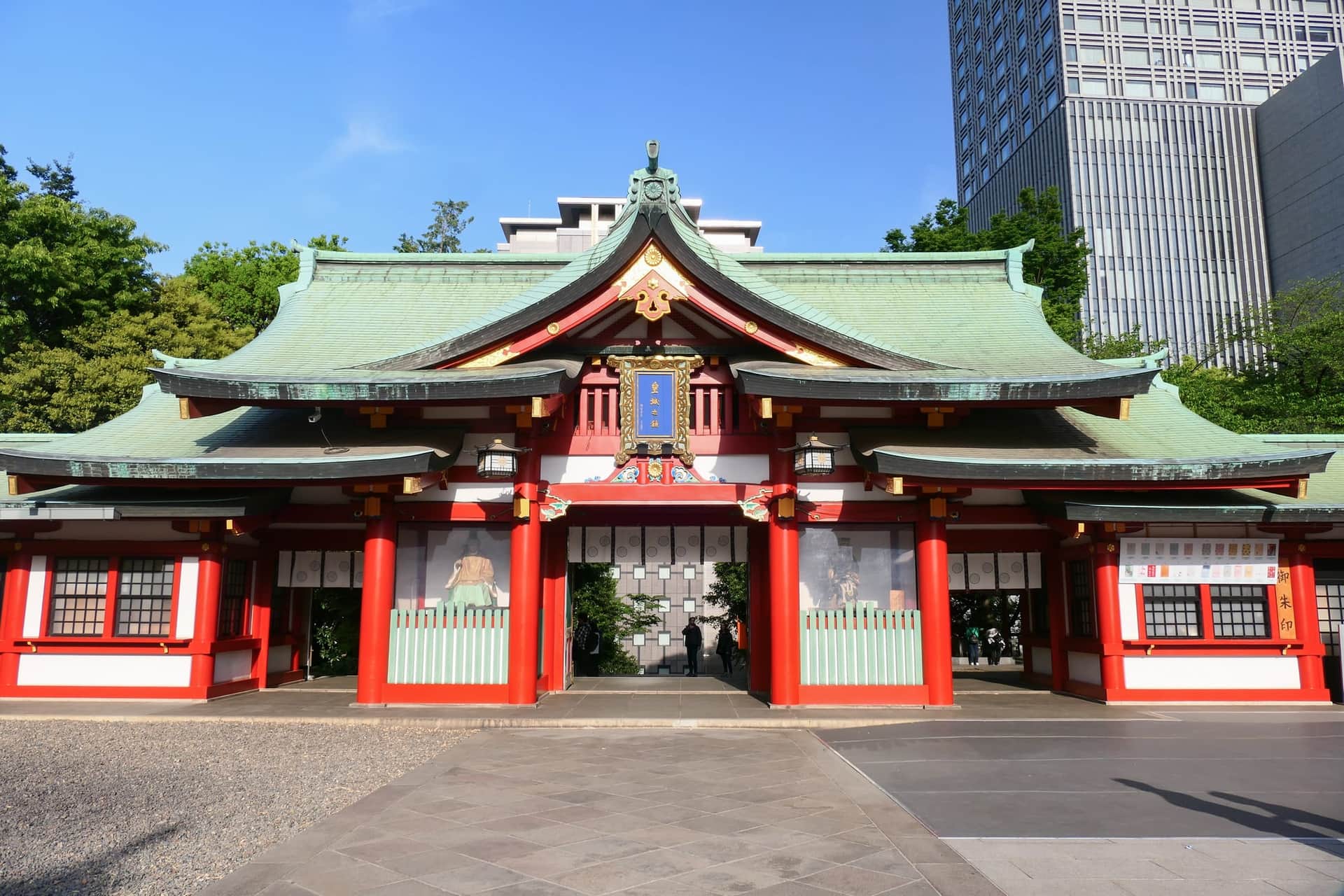
Asakusa, pueblo antiguo
- 5 paradas
- unos 270 min con visitas
Senso-ji
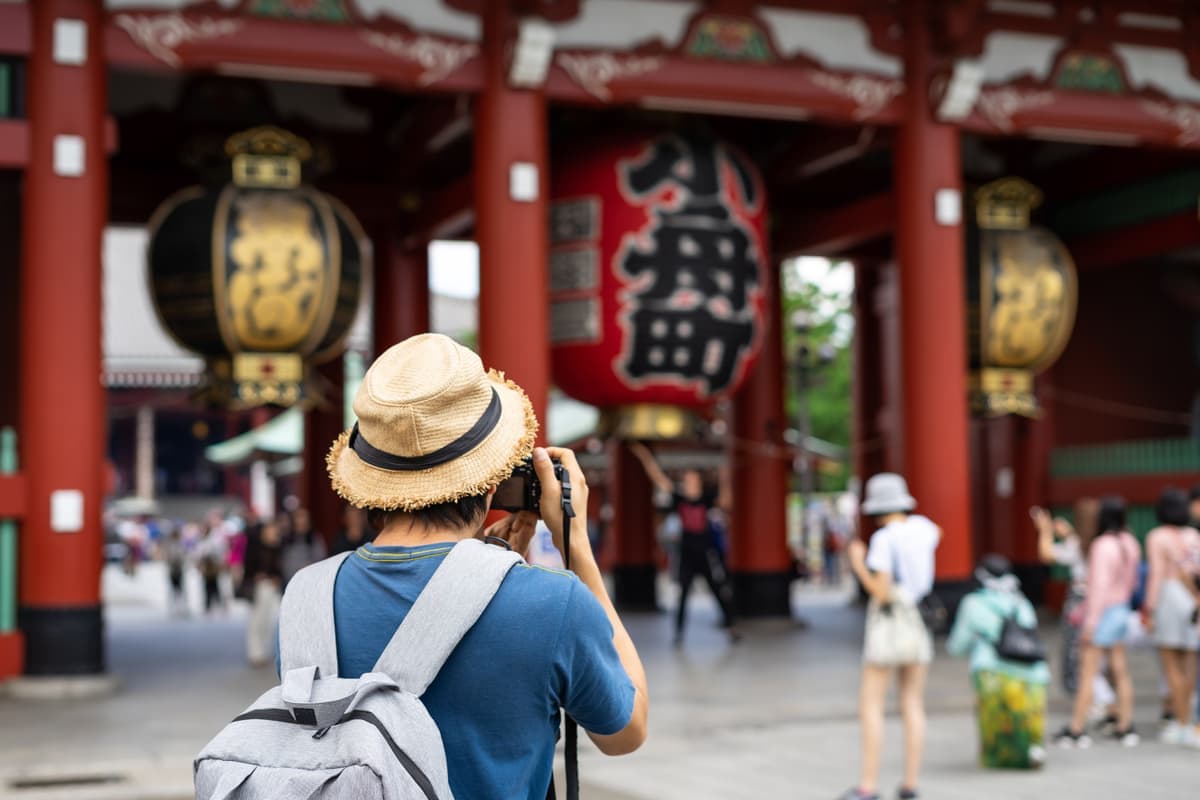
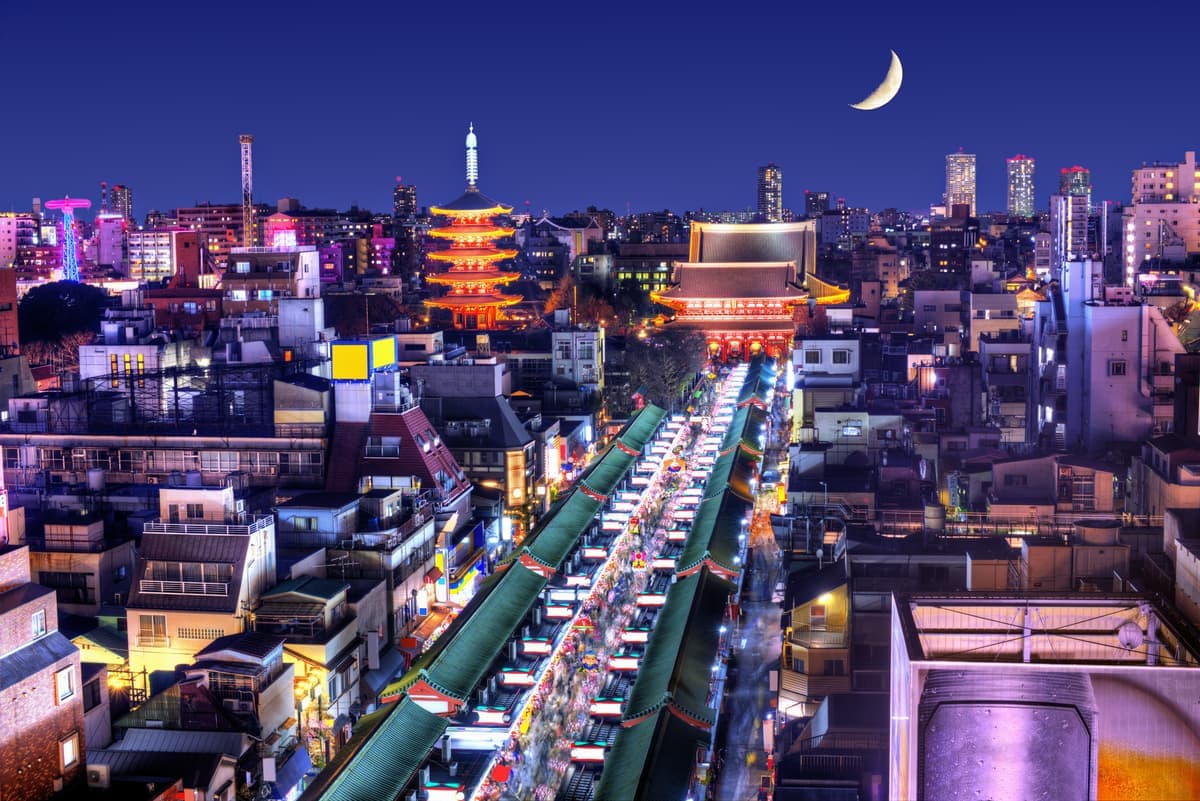
TaitoThe first thing that grips you at Sensō-ji is the sense that this place has never been merely a monument. It is a living center of devotion, crowded with pilgrims, day-trippers, and local worshippers, yet still anchored by a single hidden image of Kannon, the bodhisattva of compassion. Founded in 628, and known formally as Kinryū-zan Sensō-ji, this is Tokyo’s oldest temple and one of Japan’s most visited sacred sites, drawing more than 30 million visitors a year. The temple’s heart is famously unseen, because the principal image has been kept out of public view for centuries. That mixture of revelation and concealment, ritual and street life, gives the whole precinct its unforgettable character. Historical Foundations The temple’s origin story is one of the best-known in Japan. According to tradition, on the morning of March 18, 628, two fishermen, Hinokuma Hamanari and his brother Takenari, were fishing in the Sumida River when they found a small statue in their net. Their village headman, Haji no Nakatomo, recognized the figure as Avalokitesvara Bodhisattva, called in Japan Kannon or Sho Kanzeon Bosatsu, and devoted himself to Buddhist practice. He converted his home into a temple and spent the rest of his life in worship and memorial services. In 645, the priest Shokai arrived in the area and built a hall for the image. After receiving a revelation in a dream, he decided to conceal the statue from view. Since then, the sacred image has remained hibutsu, never publicly unveiled. That hidden status is one of the great defining features of Sensō-ji. In the mid-ninth century, the renowned Tendai priest Ennin visited and created a replica image, also associated with the temple’s devotional life, so that something could be shown occasionally to the public. Through the Kamakura period (1185 to 1333), the temple attracted the devotion of shoguns, military leaders, and literati. Its status rose again in 1590, when Tokugawa Ieyasu, the first Tokugawa shogun, designated it as the temple for shogunal prayers. During the Edo period (1603 to 1867), successive shoguns visited, and devotion to Kannon spread widely among common people. As Edo grew into one of the world’s largest cities, Asakusa developed into a major cultural center, later associated with theater, film, music, and vaudeville in the modern era. The temple was devastated in the 10 March 1945 firebombing of Tokyo during World War II. The main hall was rebuilt in the 1950s, specifically 1958, using donations from supporters across Japan. After the war, in 1950, Sensō-ji became independent, having previously been associated with the Tendai school. That sequence, destruction followed by rebuilding, is central to the way people understand the temple today, as both an old sanctuary and a place that was restored by collective faith. Architectural Mastery Sensō-ji’s precinct is defined by a procession of gates and halls that shape the visitor’s experience from the first step. The best-known entrance is Kaminarimon Gate, often translated as the Thunder Gate, whose massive red lantern has become one of Tokyo’s most recognizable images. Passing through it, visitors enter Nakamise-dōri, the approach street lined with shops selling traditional snacks, souvenirs, and crafts. The street is not an incidental extra. It is part of the temple’s ritual atmosphere, extending the transition from ordinary city life into sacred space. Beyond Nakamise lies Hōzōmon Gate, commonly called the Nio-mon Gate, and also Niten-mon Gate, both important architectural markers within the grounds. The complex also includes the striking five-story pagoda, one of the temple’s best-known landmarks. Nearby are Bentendo Hall, Awashimado Hall, Yogodo Hall, and the Main Hall, or Kannon-do. The main hall’s roof is especially notable: it rises in a dramatic slope, taller and more emphatic than what many visitors expect of a temple building. The structure is divided into the naijin or inner sanctuary and the gejin or outer sanctuary, and the principal image rests in a miniature temple inside the inner space. That small inner shrine, locked and protected, reinforces the paradox at the center of the site, public worship around an image that remains unseen. One of the temple’s most important surviving treasures is Denboin and its garden, designated a National Scenic Beauty Site. The grounds are not only built space but carefully composed landscape, where the architecture and garden together guide movement, pause, and contemplation. In the Main Hall, there are also two calligraphic masterpieces by Noguchi Sekko, one of the Three Best Calligraphers of the Edo Period, with texts quoting Hanjusan by Shan-tao of the Pure Land tradition. Even in calligraphy, the temple’s message is one of compassion and equal regard for all beings. Religious & Cultural Significance The temple is dedicated to Kannon, the bodhisattva of mercy and compassion, who responds to suffering with boundless benevolence. In Japanese Buddhism, Kannon appears in multiple forms, including Juichimen with 11 faces, Senju with 1,000 hands, and Nyoirin, associated with the wish-granting jewel and the Dharma wheel. Sensō-ji’s principal image embodies the basic form, one face and two hands, but the theology around it extends far beyond a single icon. This is also an active pilgrimage site. Sensō-ji is the 13th stop on the Bandō Sanjūsankasho pilgrimage route, and it receives worshippers from across Japan and beyond. The temple’s own materials state that it draws around 30 million visitors each year, making it one of the most frequented religious sites in the world. Devotion here is visible in simple gestures, especially the prayer taught to visitors at the main hall: place your hands together and chant “Namu Kanzeon Bosatsu”, meaning “I place my trust in Bodhisattva Kannon.” Several auxiliary halls deepen the temple’s devotional life. Yogodo Hall houses eight Buddhas connected with the Yogoshu, protectors associated with the Chinese zodiac, each thought to watch over those born in certain years. Awashimado Hall and Bentendo Hall add further layers of worship and local practice. The presence of these subsidiary cults makes Sensō-ji feel less like a single shrine to a single deity and more like a whole religious landscape. Natural Setting & Environment Sensō-ji was first established in what was once a fishing village at the edge of the Sumida River, in the wild landscape of Musashino near the estuary of Tokyo Bay. That origin matters, because the temple’s present urban intensity hides the fact that it began at a watery frontier. Even now, the temple’s setting reflects that relationship between the sacred and the changing city. Asakusa is dense and energetic, yet the temple precinct creates intervals of quiet, especially in early morning or after dark. The garden of Denboin offers a more deliberate encounter with nature. Its designation as a scenic site points to the care with which this environment has been shaped. Seasonal changes, the view of the pagoda, and the contrasts between open courtyards, wooden halls, and planted spaces all contribute to the atmosphere. The temple’s tall rooflines and pagoda are visible markers above the district, but the interior experience is more intimate, with incense smoke, bells, and the movement of people slowing as they pass from gate to gate. Visitor Experience & Heritage For today’s visitor, Sensō-ji is both a major religious site and a place where the texture of Tokyo’s older culture is still easy to feel. The route itself is part of the experience, from Kaminarimon through Nakamise-dōri to the main hall. You can obtain scarlet seal stamps at the temple, visit the halls one by one, or simply stand for a moment in front of the incense burner and watch the flow of people around you. The temple’s modern popularity never fully overwhelms its devotional core, because the route, the hidden image, and the prayer practice all keep reminding you that this is a functioning Buddhist sanctuary. Sensō-ji’s fame comes from more than age alone. It has survived political transformation, wartime destruction, postwar rebuilding, and the relentless expansion of the city around it. Yet the essential story has remained stable for nearly fourteen centuries, a fisherman’s net, a hidden statue, a community turned toward compassion. That is why the temple continues to matter so widely, not only as an icon of Asakusa or Tokyo, but as a place where Japanese Buddhist devotion, urban history, and popular culture still meet in one remarkably alive space.
Visita estimada · 90 minEntrada gratuita23 lo han visitado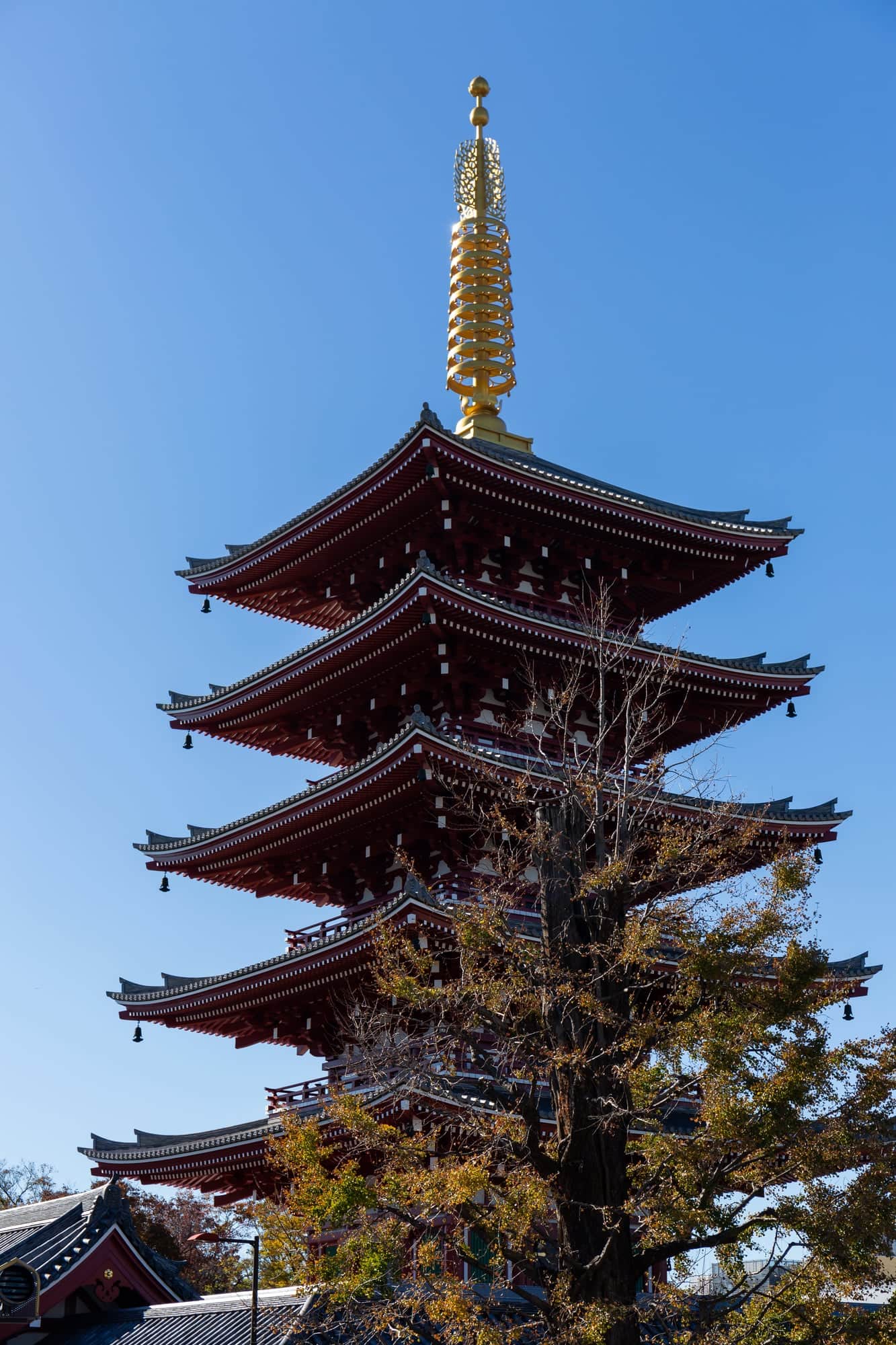
Asakusa Jinja
TaitoA single fishing net changed the destiny of Asakusa. On the morning of March 18, 628, two brothers, Hamanari and Takenari Hinokuma, cast their net into the Sumida River, then known as Asakusa Bay. They caught no fish. Instead, the net repeatedly brought up the same small image, a statue of Kannon, the Buddhist figure of compassion. Today, Asakusa Jinja preserves the memory of that discovery and venerates the three men connected with it: the fishermen and Hajinomatsuchi, the learned local landowner who recognized the statue. Known affectionately as Sanja-sama, or “the Three,” the shrine is also the spiritual center of Sanja Matsuri, one of Tokyo’s most famous traditional festivals. Historical Foundations The brothers first carried the mysterious image ashore near present-day Komagata and placed it on the stump of a Japanese pagoda tree, known as an enju. They then asked Hajinomatsuchi to examine it. He identified the figure as Kannon, a powerful object of devotion believed to bring benefits in this world. The brothers embraced faith in the image, prayed intensely, and asked that their next day’s fishing be successful. On March 19, their boat filled with fish. Hajinomatsuchi soon shaved his head, became a Buddhist monk, transformed his home into a temple, and devoted the remainder of his life to caring for the image and teaching the local population. This episode forms the legendary origin of Sensoji, whose growth brought prosperity to what had once been a small rural settlement. According to tradition, the descendants of the three men later received a dream revelation from Kannon. The message instructed them to enshrine their ancestors as protective deities beside the Kannon hall. The resulting sanctuary became known as Sanja Gongen, meaning the shrine of the Three Manifestations. Its precise foundation date is unknown. The tradition most plausibly places its establishment between the late Heian period and the early Kamakura period, when the religious idea of gongen was widespread. In that system, a buddha could appear temporarily in the form of a native Japanese kami in order to guide people. The shrine’s name changed during the modern separation of Buddhist and Shinto institutions. In 1868, the first year of the Meiji era, it became Sanja Myojin Shrine. It was designated a village shrine in 1872, and in 1873 received its present name, Asakusa Jinja, while becoming the general guardian shrine of Asakusa. Local residents still call it Sanja-sama, preserving the older identity. Architectural Mastery The present buildings were donated and constructed in 1649, during the reign of the third Tokugawa shogun, Tokugawa Iemitsu. Their survival is remarkable. Fires, wartime destruction, and the Great Kanto Earthquake of 1923 damaged much of Tokyo, yet the shrine buildings escaped major loss and retain the appearance of the early Edo period. The main complex consists of the inner sanctuary, the offering hall, and the worship hall. The latter two are connected by a covered passage, forming the architectural arrangement called gongen-zukuri. This style is associated with important Tokugawa-period sanctuaries, including Nikko Toshogu. It creates a layered progression from the public space of worship toward the more restricted sacred interior. The buildings were designated an Important Cultural Property of Japan in 1951. By 1996, their painted surfaces and lacquerwork had deteriorated substantially. A restoration costing 350 million yen renewed the exterior decoration. After 33 years had passed since the previous major restoration, the renewed colors brought back the strong reds, greens, golds, and dark lacquer tones characteristic of early Edo architecture. Look closely at the decorative creatures carved and painted throughout the complex. The phoenix represents auspicious rule and is associated with the birth of a virtuous sovereign. The kirin, a benevolent creature with the body of a deer, the head of a wolf, the tail of an ox, and the feet of a horse, is said to appear when an excellent ruler emerges. The unusual flying dragon, with a fish-like body and wings, governs water. Near the entrance, the right and left ministers, known as imperial retainers, hold weapons whose purpose is to repel evil. Religious and Cultural Significance The shrine’s central religious identity comes from the three founders, who are treated as local guardian deities. Their story links the sacred history of Asakusa with the origin of Sensoji and with the community’s prosperity. The relationship also reflects the older, intertwined religious world in which Buddhist and kami traditions worked together before the Meiji government ordered their institutional separation. The most dramatic expression of this local devotion is Sanja Matsuri, held each year on the third Saturday and Sunday of May. The festival’s present form developed during the Edo period, although its origins are older. The three principal portable shrines, Ichinomiya, Ninomiya, and Sannomiya, are carried through the neighborhood. The procession renews bonds among the shrine’s ujiko, or local parishioners, and expresses prayers for the prosperity of Asakusa. Visitors may see these great mikoshi in the portable shrine storehouse, which opens during the May festival, at New Year, and on some weekends and holidays in early spring. Other annual observances include sacred dances, miko maiden performances, the traditional Binzasara dance, purification rites, seasonal celebrations, and special worship services. The shrine also conducts ceremonies for newborn children, protection from misfortune, children’s festivals, and Shinto weddings. In modern Asakusa, it supports youth education and the continuation of traditional culture through workshops, seasonal farming activities, harvest events, and community programs. Natural Setting and Sacred Objects The torii marks the boundary between ordinary human space and the shrine’s sacred precinct. Asakusa Jinja’s front gate is a shinmei torii, erected in September 1885. Beside it is a shrine name tablet written by Sasaki Yukitada, a senior priest associated with the Grand Shrine of Ise. Before approaching the main building, visitors traditionally use the water purification pavilion to rinse their hands and mouth. The shrine’s sacred tree recalls the founding legend directly. Because the fishermen placed the recovered Kannon image on an enju stump, enju trees growing within the precinct are treated as shinboku, or sacred trees that can serve as vessels for divine presence. Two especially unusual stone guardian dogs date from the early Edo period. Rather than facing one another separately in the usual manner, these figures appear to sit close together. Their affectionate posture has given them associations with good relationships, marital harmony, and fulfilled love. The grounds also preserve an extraordinary record of Asakusa’s literary and performing-arts life. Monuments commemorate Kabuki actors, writers, poets, dancers, and local personalities, including Kawatake Mokuami, Nakamura Kichiemon I, Ichikawa En’o I, Kubota Mantaro, and Kawaguchi Matsutaro. Other stones honor the art of flowers, fans, and dance. A monument to the popular manga Kochikame connects the precinct with modern popular culture, while a hyakudo stone marks the route used for repeated devotional visits. The fan monument is connected with an annual ceremony on April 8, when old fans are ceremonially burned. Visitor Experience and Heritage Asakusa Jinja is located at 2-3-1 Asakusa, Taito-ku, Tokyo. It is approximately seven minutes on foot from Asakusa Station on the Tokyo Metro Ginza Line, Toei Asakusa Line, and Tobu Skytree Line, and about ten minutes from Tsukuba Express Asakusa Station. The shrine adjoins the Sensoji area, but vehicles may enter only from Umamichi-dori. On-site parking is reserved for people receiving prayers and for wedding participants, with permission from shrine staff. After worship, visitors may receive a goshuin, a calligraphic seal recording the date and place of pilgrimage. The practice originated as proof that a person had deposited a hand-copied sutra at a temple and became common at shrines during the Edo period. At Asakusa Jinja, regular seals include those of Asakusa Jinja, the Asakusa Seven Lucky Gods pilgrimage, and Hikan Inari Shrine, with each regular seal offered for 500 yen. Seasonal seals appear for New Year, Sanja Matsuri, and summer worship. The essential order is simple: bow at the torii, purify yourself, pray with two bows, two claps, and one bow, then request the seal. The shrine also participates in the Asakusa Seven Lucky Gods circuit, which actually visits nine temples and shrines, and in the Tokyo Fukume-guri, an eight-shrine pilgrimage. These routes extend the experience beyond a single precinct, revealing Asakusa as a living district where sacred tradition, neighborhood memory, performance, and everyday life remain closely connected.
Visita estimada · 45 minEntrada gratuita13 lo han visitado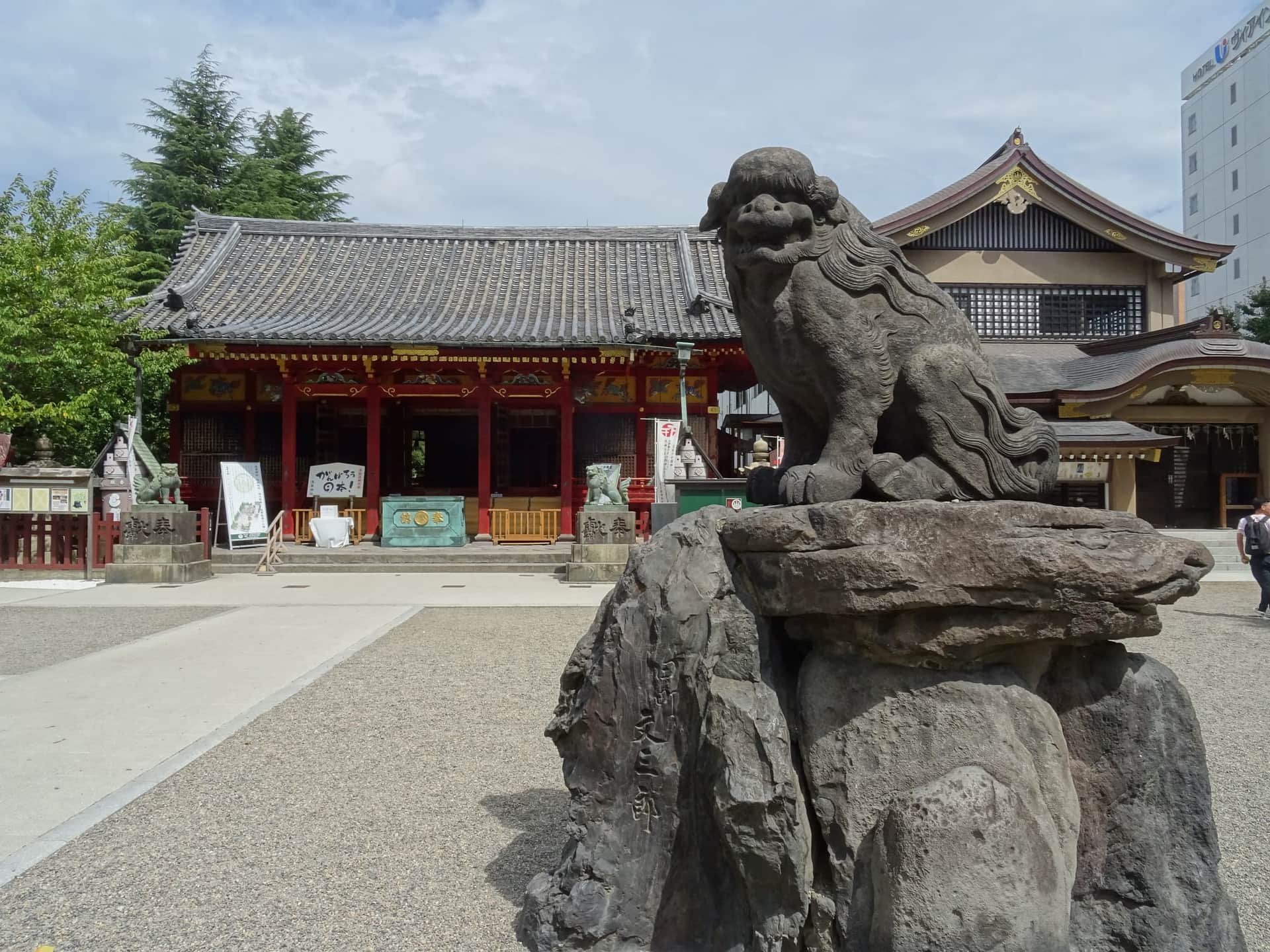
- Traslado
unos 20 min
Matsuchiyama Shoden
TaitoUn templo budista histórico en Asakusa alberga a Kangiten (Shoten), la deidad de la fortuna y las relaciones, con cabeza de elefante. Es conocido por sus ofrendas de rábano y por estar en la cima de una colina con vistas al río Sumida.
Visita estimada · 45 minEntrada gratuita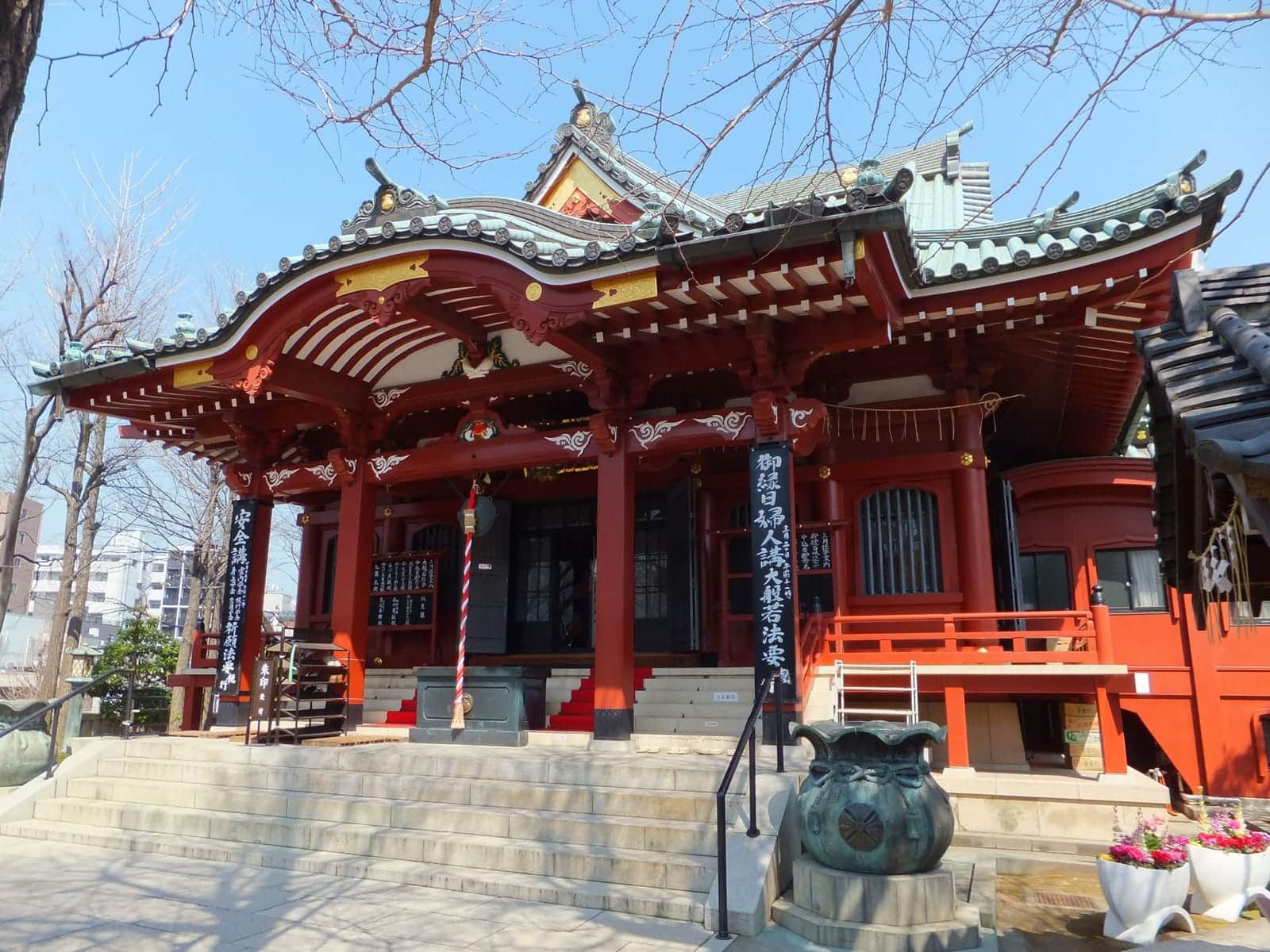
Imado Jinja
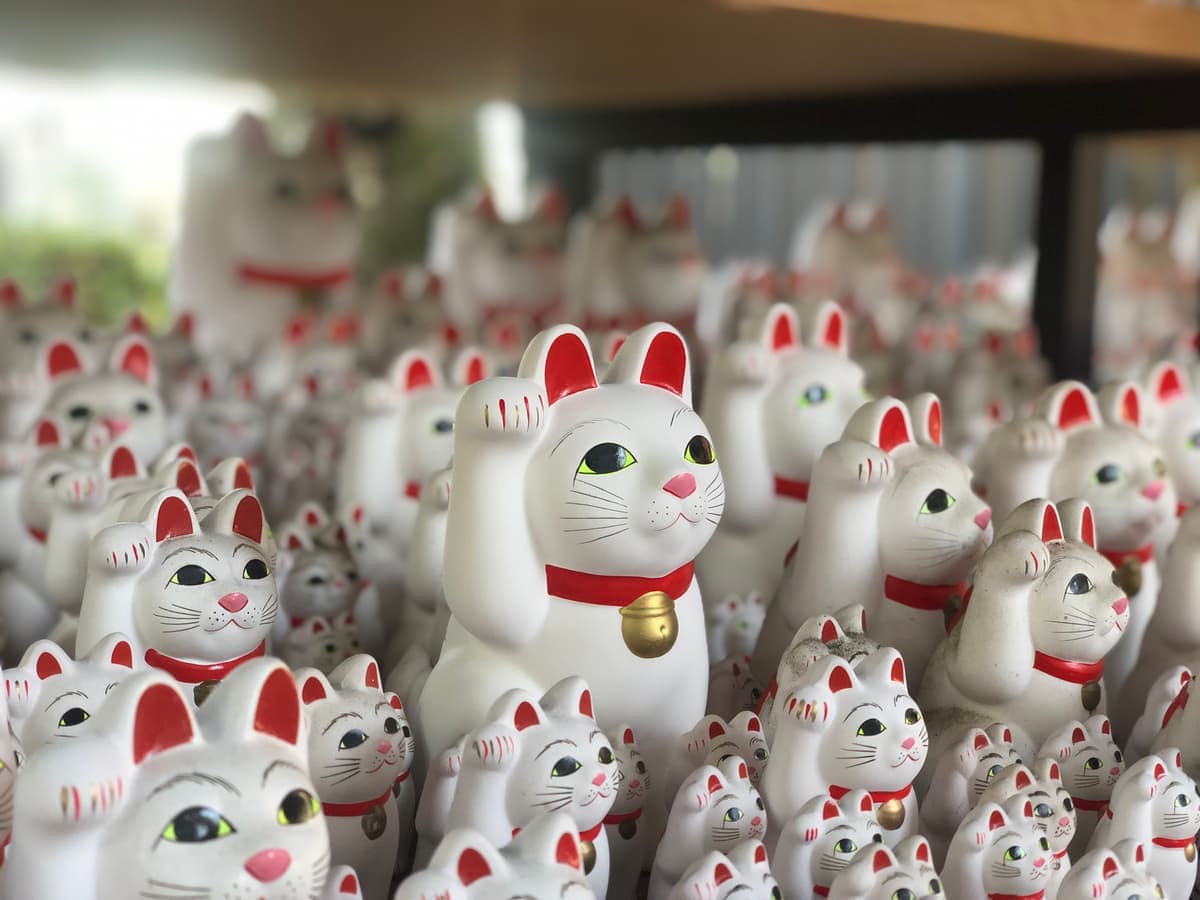
TaitoUn mar de patas que llaman te recibe aquí: filas de figuras brillantes con brazos levantados, sus expresiones serenas pero invitadoras. Este es Imado, en Asakusa, este de Tokio, celebrado como el lugar de nacimiento del maneki-neko, el “gato que llama” que ha traído buena fortuna a Japón y más allá. Una vez un municipio separado, hoy integrado en el distrito de Asakusa de Taitō, Imado también es conocido por la cerámica de Imado y las muñecas de Imado, artesanías populares que se cristalizaron durante el período Edo (1603–1868). La historia que anima este vecindario es desarmadoramente simple: una leyenda de una anciana que, tras un sueño, moldeó figuras de gatos con arcilla local; y, sin embargo, su impacto cultural es inmenso: los comerciantes adoptaron la figura como un emblema de buena suerte, y una imagen nacida en hornos de callejones llegó a simbolizar prosperidad en escaparates desde Edo hasta el mundo. Fundamentos Históricos Para apreciar Imado, comienza con la ciudad que sirvió: Edo, la bulliciosa metrópoli moderna temprana que se convertiría en Tokio. En el período Edo (1603–1868), los hornos locales aquí en Imado producían cerámica duradera y muñecas de arcilla expresivas para un mercado urbano en expansión. La artesanía popular prosperó en tales vecindarios, donde los artesanos respondían a los gustos de los habitantes de la ciudad: tenderos, artistas, peregrinos—cu cuyas vidas diarias estaban saturadas de objetos que prometían seguridad, éxito y pequeños placeres. Dentro de este contexto, una historia tomó forma y perduró: una anciana, pobre pero piadosa, soñó que debía modelar figuras de gatos. Siguió la visión, moldeando gatos de arcilla; las figuras se vendieron, y con ellas sus fortunas crecieron. Aunque escasa, esta leyenda proporcionó un origen humano para el maneki-neko, enraizando el encanto popular en las manos y esperanzas de un artesano individual. Lo que importa históricamente es el resultado: estas artesanías populares se difundieron por Edo, y los comerciantes—sensibles a señales que atraían clientes—adoptaron el gato que llama como un emblema de buena suerte. La figura era fácil de reconocer, fácil de reproducir y fácil de colocar en escaparates. Con el tiempo, el gesto de llamado del gato se convirtió en parte del vocabulario visual de las calles de Edo. La identidad de Imado—un vecindario entrelazado, talleres y un objeto con historia—persistió a medida que cambiaban los límites administrativos. Una vez un municipio separado, ahora se administra dentro del distrito de Taitō, anclado en Asakusa, un área famosa por su cultura urbana en capas. No hay aquí una lista de UNESCO, y sin embargo su patrimonio intangible—artesanía, historia y símbolo—ha demostrado ser tan duradero como la arcilla cocida. Maestría Arquitectónica La “arquitectura” de Imado es la arquitectura de la creación: hornos, talleres y escaparates donde la arcilla se convirtió en comercio. Durante el período Edo, los hornos locales en Imado producían cerámica de Imado—cerámica utilitaria—y muñecas de arcilla moldeadas, secadas y cocidas para asequibilidad y encanto. El proceso era sencillo: la arcilla trabajable se moldeaba a mano o se presionaba en moldes simples, luego se secaba cuidadosamente para evitar agrietamientos. La cocción endurecía las piezas; la pintura a mano proporcionaba rostros, gestos y color. Las muñecas de Imado resultantes eran expresivas en lugar de monumentales—destinadas a la mano y el hogar, no para exhibición en palacios. El maneki-neko pertenece a este mundo de artesanía práctica y reproducible. Su poder no radica en una escala monumental, sino en una silueta estandarizada: cuerpo redondeado, postura erguida, pata levantada en un arco que llama. Tal diseño puede modelarse repetidamente, pintarse con variaciones y venderse a precios que un comerciante podría permitirse. En ese sentido, la figura es una obra maestra del diseño de productos del período Edo—reconocible de un vistazo, instantáneamente legible en un escaparate, infinitamente adaptable en detalle superficial mientras se mantiene estable en forma. Los artesanos de Imado se especializaron precisamente en este equilibrio. Mientras caminas hoy, el “entorno construido” que importa son las tiendas y estudios donde la herencia continúa: exhibiciones en ventanas que leen como un catálogo de gestos; estantes que realizan un coro visual de patas que llaman; bancos de trabajo donde los creadores contemporáneos aún moldean y pintan. La arquitectura de la artesanía—mesas, herramientas, estantes de secado—es modesta, pero revela una coreografía sofisticada de trabajo y objeto que ha cambiado poco en principio desde el período Edo. Significado Religioso y Cultural Aunque no es un recinto de templo, Imado se sitúa dentro de la economía espiritual de Edo-Tokio, donde la creencia, el comercio y la vida diaria se entrelazan. El maneki-neko encarna esta fusión: una figura de buena suerte destinada a llamar a la prosperidad. En el período Edo, tales objetos actuaban como talismanes prácticos; un comerciante podría colocar uno en la entrada como una señal invitadora para los transeúntes. Los comerciantes de Edo lo abrazaron por la misma razón que los negocios modernos aún lo hacen: comunica bienvenida y esperanza en un lenguaje que cualquiera puede leer. La leyenda de la anciana es crucial aquí. Ubica la fortuna no en el patrocinio imperial o ritual esotérico, sino en el humilde acto de crear. Esa democratización de la suerte—la prosperidad hecha tangible a través de una pequeña figura de arcilla—refleja adecuadamente la ética de Asakusa, históricamente un distrito de artistas, comerciantes y artesanos. Con el tiempo, el maneki-neko trascendió sus orígenes vecinales para convertirse en un signo ubicuo en Japón y en toda Asia Oriental, sin embargo, su ADN cultural sigue siendo profundamente Imado: hecho a mano, asequible y optimista. A través del área de Asakusa hoy, encontrarás constantes referencias a la leyenda—tarjetas, carteles y mascotas que evocan el gesto; tiendas que curan estantes de gatos que llaman como si organizaran pequeños altares a la prosperidad. Si bien no hay una única práctica ritual “correcta” asociada a la figura, el acto de elegir una, colocarla en un umbral y dejar que “funcione” es en sí mismo una devoción vernácula. Entorno Natural y Medio Ambiente El entorno de Imado es urbano e íntimo: las estrechas calles de Asakusa, los bajos escaparates y los animados ritmos peatonales. El material natural clave aquí es la tierra misma—la arcilla que una vez sustentó a los hornos locales y continúa respaldando la identidad artesanal del área. En lugar de dramáticas vistas montañosas o jardines de templos, Imado ofrece una estética diferente: la cálida presencia táctil de la arcilla moldeada a mano, el mate y brillo de los esmaltes bajo la luz cambiante del día, y las calles a escala humana donde la artesanía y el comercio se encuentran. Estacionalmente, la energía del vecindario cambia con el tráfico peatonal—ocupado los fines de semana, contemplativo en las mañanas de los días de semana—permitiéndote experimentar las figuritas en diferentes luces. Debido a que el patrimonio aquí está tejido en el paisaje urbano cotidiano, se siente vivo: no preservado bajo vidrio, sino encontrado en escaparates, bancos de estudio y el rápido intercambio entre comprador y creador. Experiencia del Visitante y Patrimonio ¿Qué puedes ver hoy? Espera una rica concentración de tiendas y estudios que venden figuritas de maneki-neko, cerámica de Imado y muñecas de Imado. Busca guiños visuales a la leyenda de la anciana—ilustraciones, señalización o pequeñas exhibiciones narrativas. Muchas tiendas presentan familias de gatos en tamaños variados, a veces agrupados en temas, lo que te ayuda a sentir cómo la figura migró del banco del artesano a la exhibición del mercado. El placer es comparativo: nota las sutiles diferencias de expresión, el ángulo de la pata levantada, la interacción de color y esmalte—todas pistas de la mano del creador. Dado que Imado se administra dentro del distrito de Asakusa de Taitō, está al alcance de otros puntos culturales destacados, sin embargo, mantiene una identidad distinta anclada en la artesanía. No hay aquí una designación de UNESCO, lo que es extrañamente liberador: el patrimonio se siente informal y participativo. Comprar una pequeña figura no es solo ir de compras; es involucrarse con una tradición viva que se remonta al período Edo (1603–1868). Si disfrutas del contexto, pregunta a los comerciantes sobre su stock—muchos están felices de explicar patrones, rangos de precios y cómo estos objetos encajan en la costumbre local. Como símbolo, el maneki-neko ha viajado lejos, pero su dirección más resonante sigue siendo aquí, donde comenzó la historia: un vecindario que convirtió la imaginación en arcilla, la arcilla en figuras y las figuras en un lenguaje de bienvenida en toda la ciudad. La experiencia es tranquila pero poderosa. Sigues el arco desde la leyenda hasta el horno hasta el escaparate, y en ese viaje, vislumbras cómo los objetos cotidianos llevan el peso de la memoria de una ciudad. Imado puede no presumir de grandes salones o puertas imponentes, pero ofrece algo igualmente duradero: una lección concentrada sobre cómo se entrelazan artesanía, comercio y creencia—y cómo una pequeña figura con una pata levantada llegó a llamar al mundo moderno.
Visita estimada · 45 minEntrada gratuita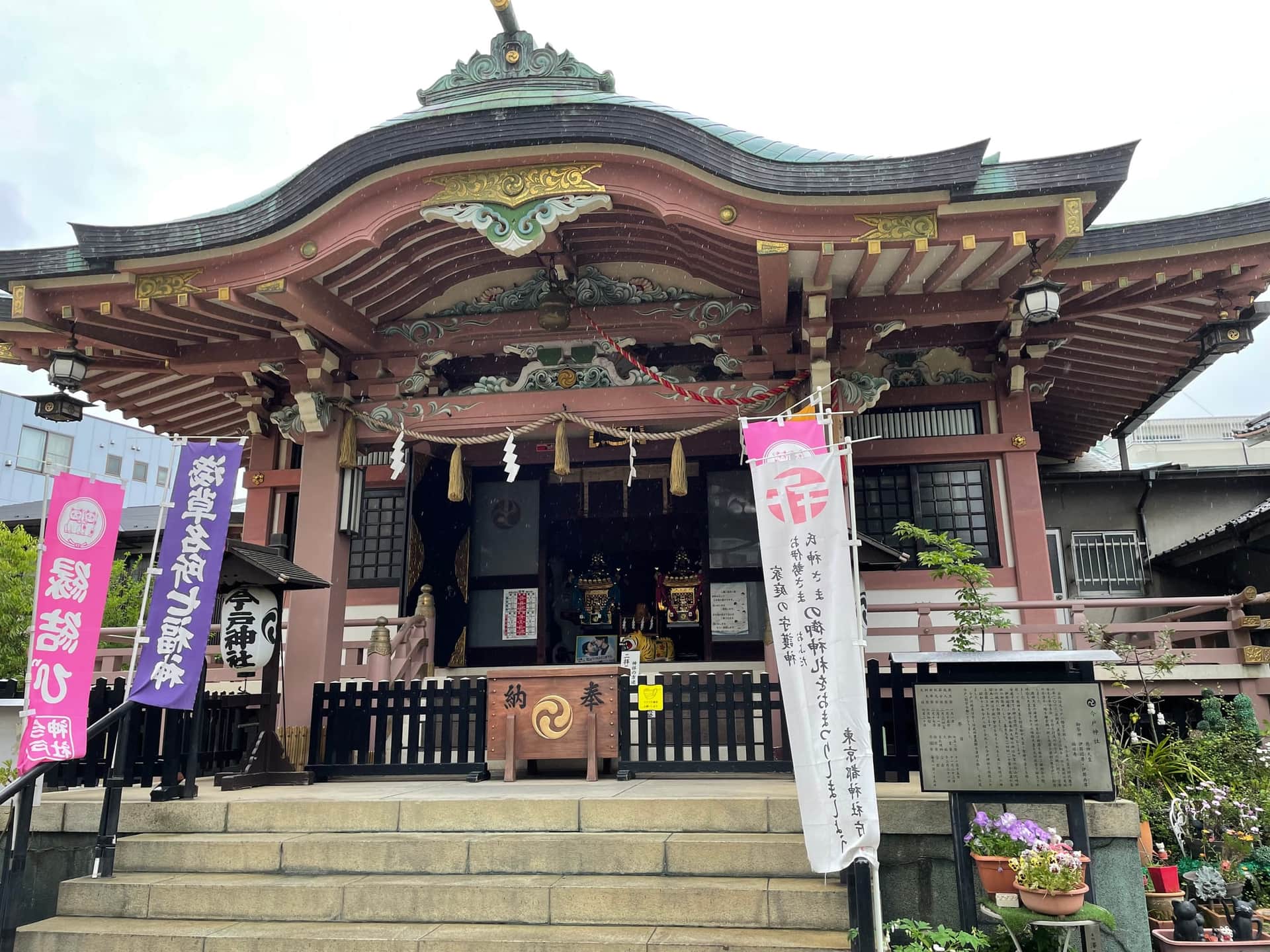
- Traslado
unos 20 min
Ono Terusaki Jinja
TaitoOno Terusaki-jinja es un santuario histórico en Shitaya, Taito, Tokio, cerca de las estaciones de Iriya y Uguisudani. Se fundó tradicionalmente en 852 y está dedicado a Ono no Takamura. Destacan el recinto en la cima y el Shitaya Sakamoto Fuji-zuka, Bien Cultural Folclórico Tangible Importante.
Visita estimada · 45 min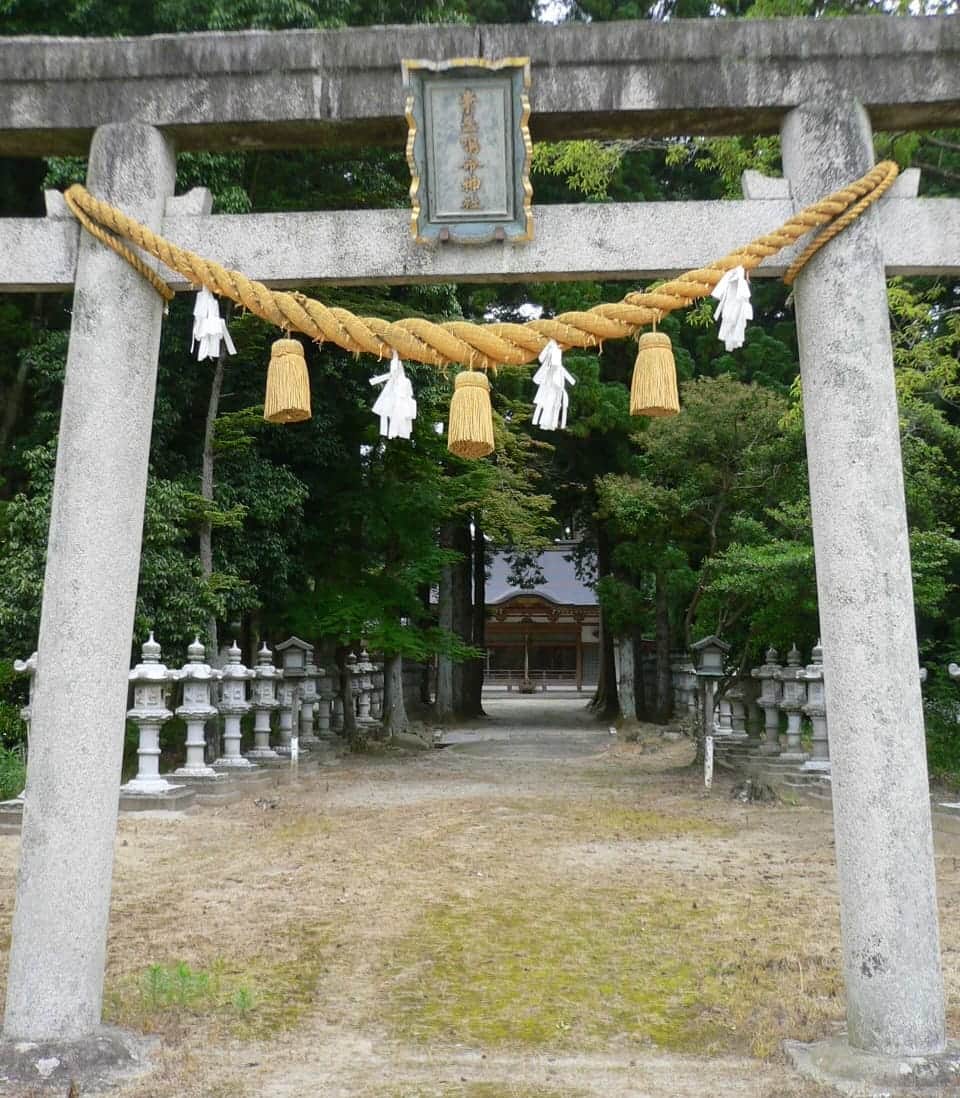
De Ueno a Kanda
- 4 paradas
- unos 180 min con visitas
Shinobazu Benten-do
TaitoA 17th-century Buddhist temple hall dedicated to Benzaiten, goddess of water, music, and fortune. Located on an island in Shinobazu Pond within Ueno Park, the temple is surrounded by lotus flowers and accessible via a short bridge, creating a serene atmosphere.
Visita estimada · 30 minEntrada gratuita10 lo han visitado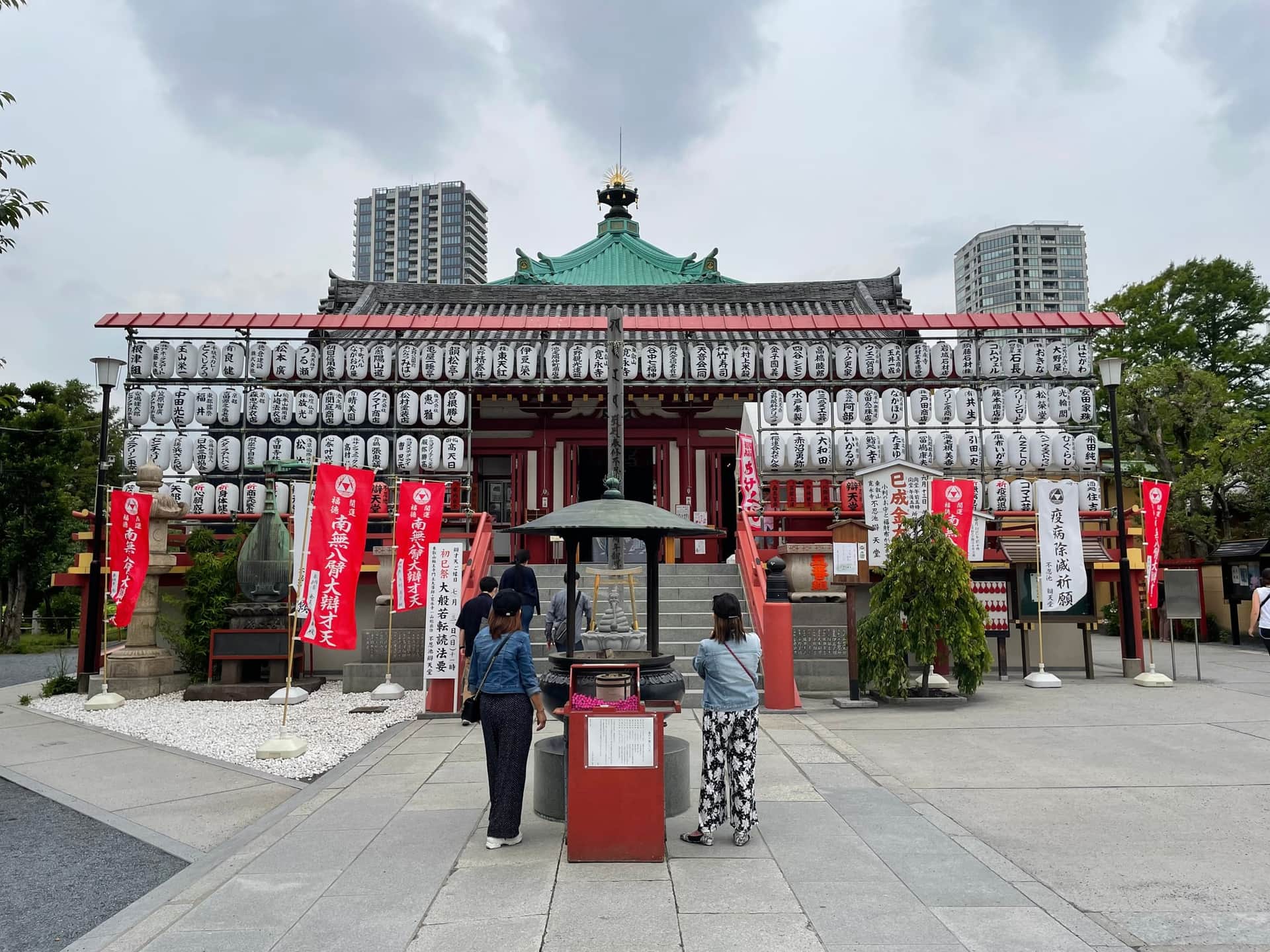
Kanei-ji
TaitoHistórico templo budista Tendai fundado en 1625, en su momento un vasto complejo que rivalizaba con Enryaku-ji. Sirvió como templo de la familia Tokugawa y albergó a seis shoguns Tokugawa. Destruido en gran parte en 1868 durante la Guerra Boshin, las estructuras restantes preservan su legado.
Visita estimada · 45 minEntrada gratuita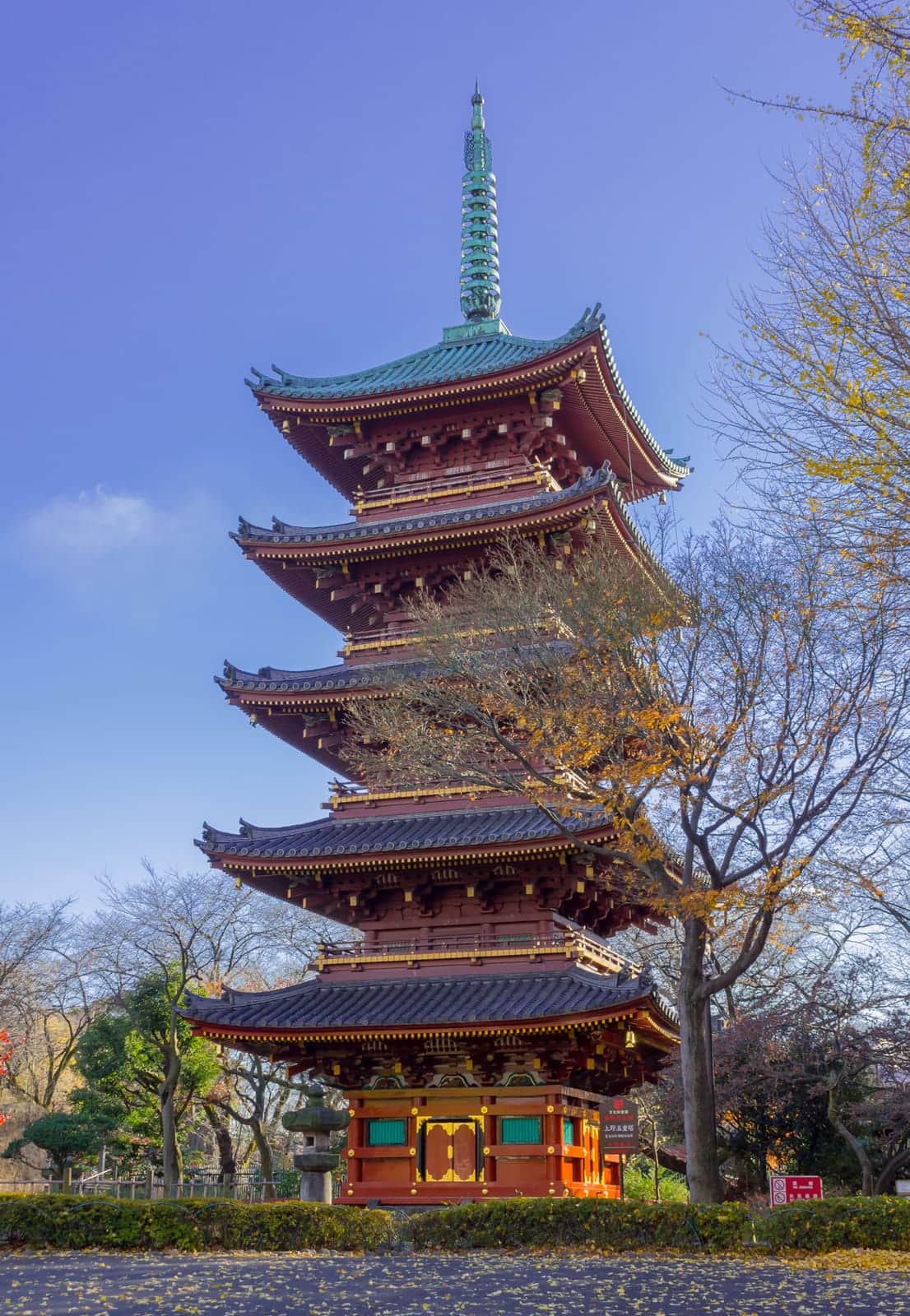
- Traslado
unos 20 min
Yushima Tenmangu
BunkyoYushima Tenmangu (湯島天満宮) es un santuario sintoísta en la ciudad de Bunkyo, Tokio. Situado en un barrio urbano, sirve como lugar local de culto sintoísta y como una parada cultural útil para los visitantes que exploran los santuarios comunitarios de la zona y el paisaje religioso cotidiano.
Visita estimada · 45 min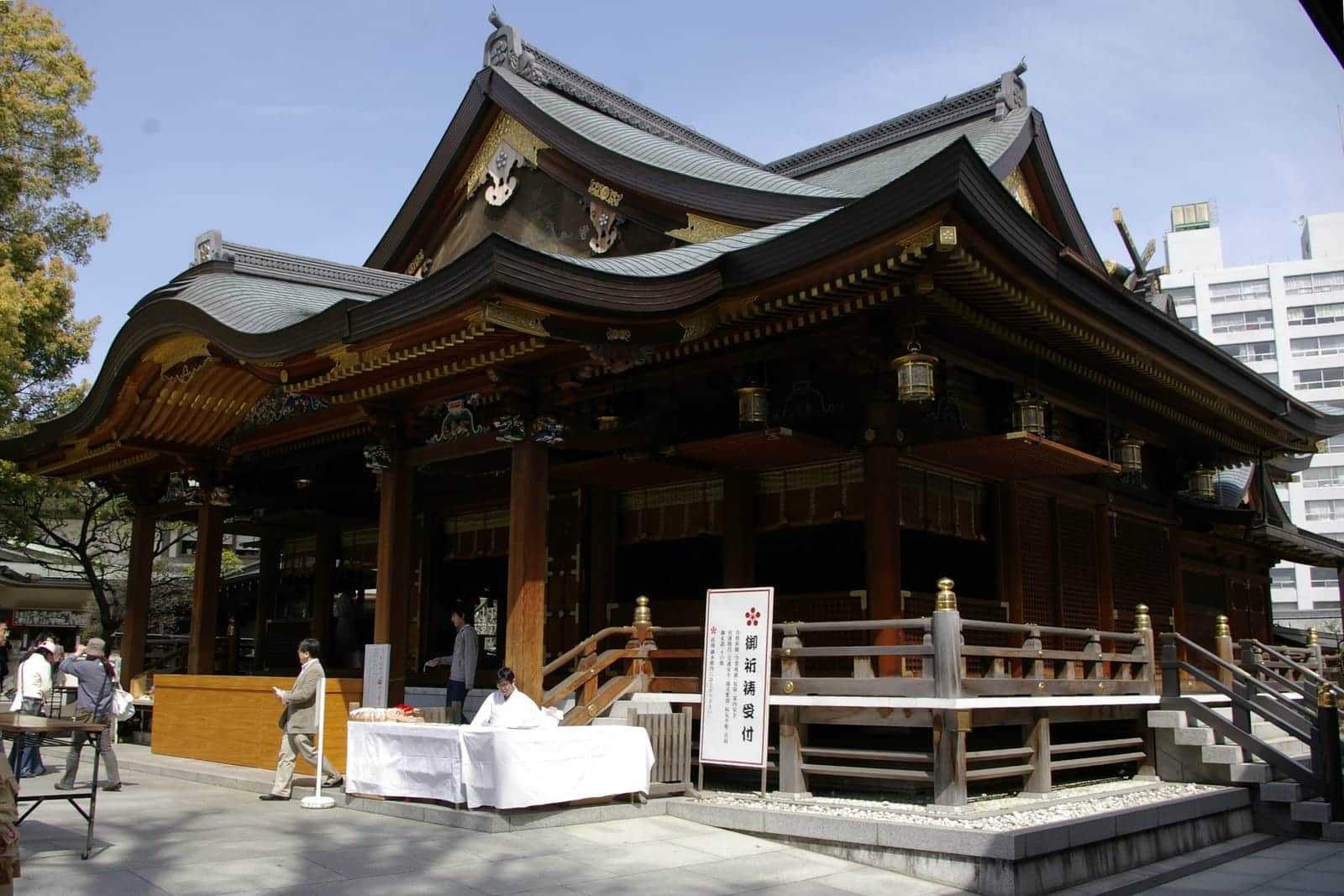
Kanda Myoujin
ChiyodaVisita estimada · 60 min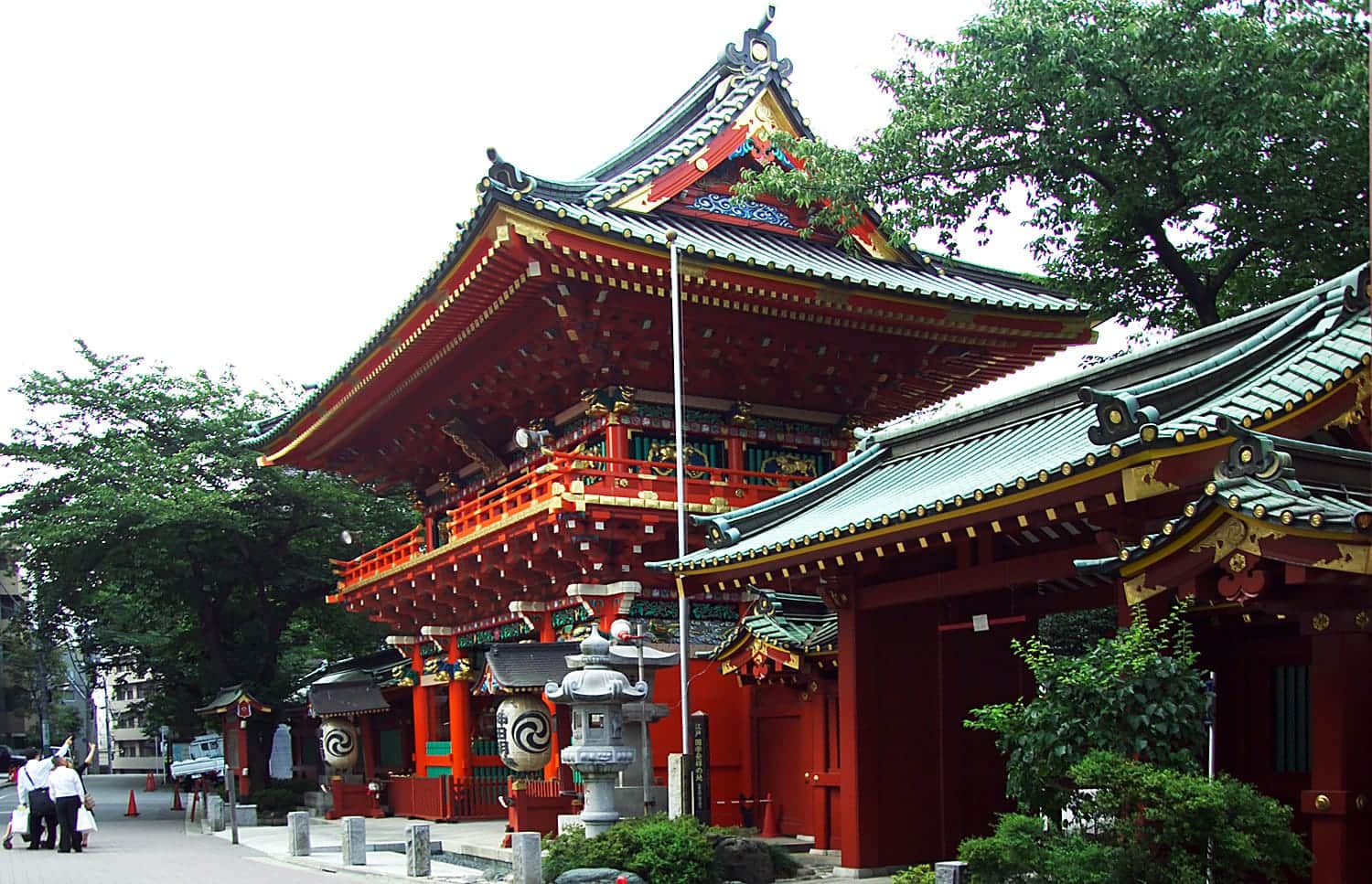
Más formas de explorar Tokyo
Rutas más cortas, tranquilas o completas para tu próximo viaje.
Primer Goshuin
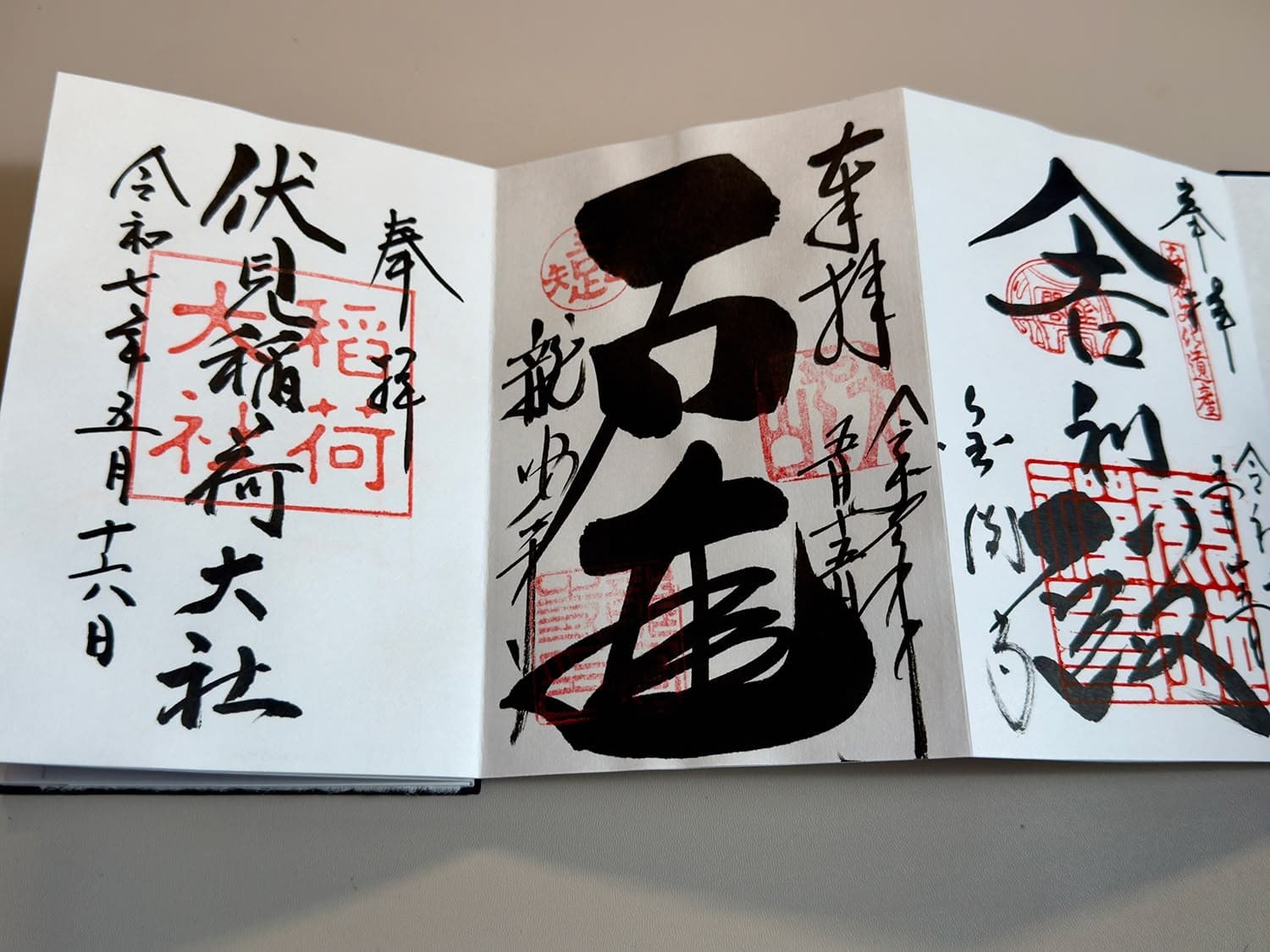
Aprende cómo funcionan las visitas de goshuin, luego sigue una ruta fácil de un día a través de templos y santuarios amigables para principiantes con un ritmo sencillo.
- 1 día
- 4 paradas
- Tokyo
 Pro
ProTokio Oculto
Una ruta de dos días por los santuarios y callejones laterales más tranquilos de Tokio, ideal cuando deseas paradas de goshuin significativas lejos de los circuitos más concurridos.
- 2 días
- 8 paradas
- Tokyo
 Pro
ProSantuarios de animales en Tokio
Una ruta de dos días por Tokio para paradas en santuarios con motivos de zorro, gato y animales, diseñada para coleccionistas que disfrutan de temas de goshuin más caracterizados.
- 2 días
- 9 paradas
- Tokyo
 Pro
ProExploración a fondo de Tokio
Un plan de cinco días en Tokio para coleccionistas listos para ir más allá de los lugares obvios, mezclando goshuin distintivos, áreas más tranquilas y una cobertura más profunda de la ciudad.
- 4 días
- 20 paradas
- Tokyo
 Pro
ProPaseo por Yanesen
Un paseo lento de un día por Yanaka, Nezu y Sendagi, combinando la atmósfera del antiguo Tokio con un pequeño conjunto de paradas reflexivas para goshuin.
- 1 día
- 5 paradas
- Tokyo