参观费用
尚未确认
概览
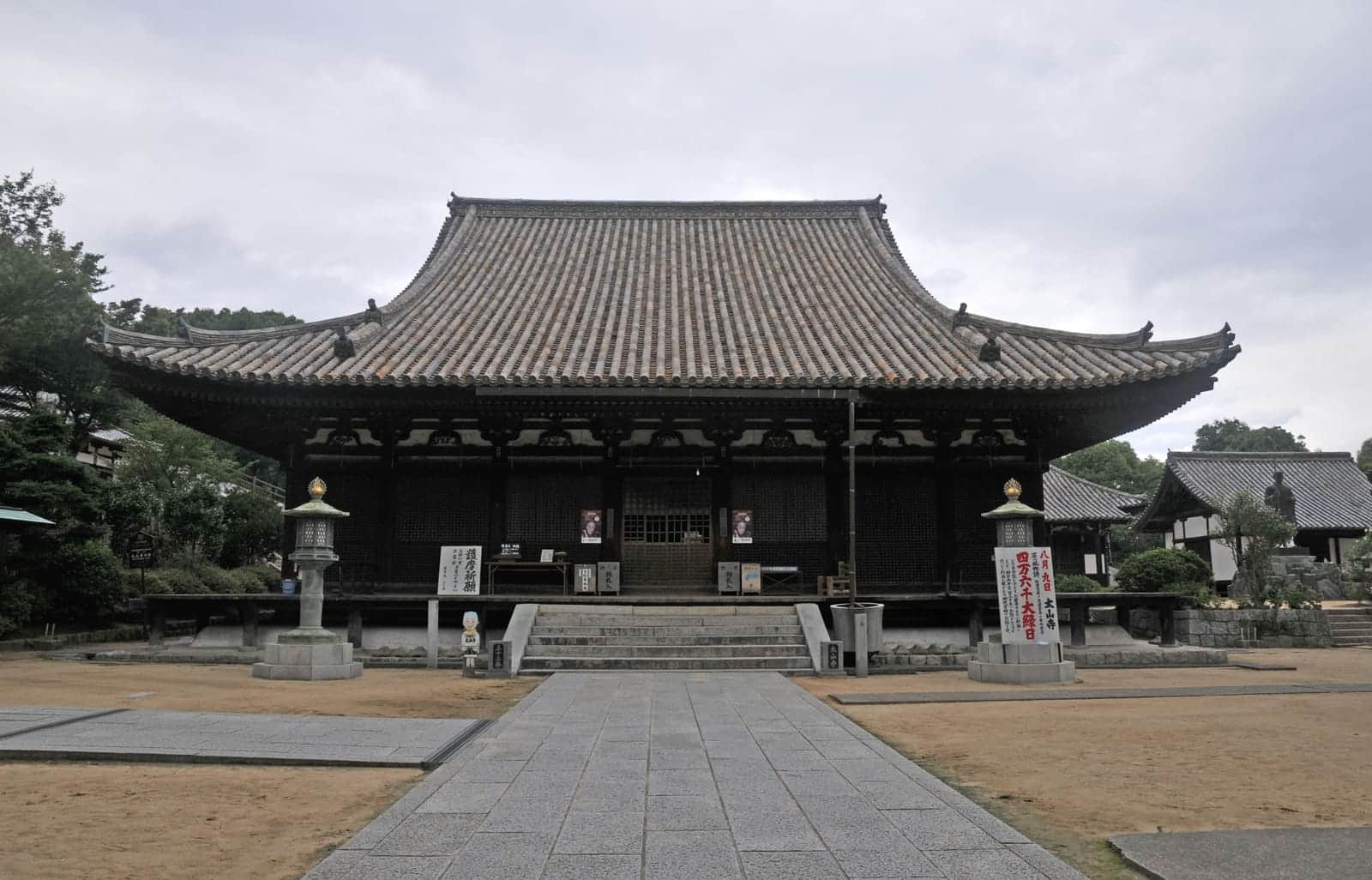
The daishi-do hall bristles with elaborate tile dragons and a rare winged beast over the porch. Legend says the dragon's eyes glow when it spots someone with bad intentions.
The temple houses the oldest surviving copper name slip on the Shikoku Pilgrimage, discovered in 1924 by an American professor. It's the first documented use of the word 'henro' (pilgrim).
与开放时间相同
此 寺院 提供御朱印,但我们还没有照片。欢迎成为第一个分享的人!
尚未确认
神圣的灵魂在这个神圣的地方受到崇敬
季节性庆祝活动和特殊场合
Kirishitan Stone Lantern
A highlighted stone lantern associated with hidden Christian worship at the temple.
Dragon by Hidari Jingoro
A 5-meter-long dragon carving highlighted as a notable temple feature.
Kannondo
A hall housing a Juichimen Kannon statue and noted for a Keicho-era pedestal inscription.
松山市, 爱媛县 县
据信此地能赐予的福佑
0 条最新帖子
分享你的参访体验,帮助其他旅行者。
暂无公开社区帖子。
与此地点相关的更多页面。
300米以内 600米以内