
东京必备精华
在东京的经典神社和寺庙地区花三天时间,将标志性的御朱印站点与易于乘坐列车连接的街区结合起来。
- 3 天
- 13 个停靠点
- Tokyo
关于这段旅程
一条连接主要神社与易于到达的收集地点的首次东京御朱印路线。
每日行程
从原宿到赤坂
- 4个地点
- 含参观约225分钟
明治神宫
Shibuya每年仅在一月的头几天,就有超过三百万人穿过同一座高耸的木质大门,使这个神圣场所成为整个日本新年期间参拜人数最多的地方。这座门,即Meiji Jingu南入口处的巨大鸟居,矗立在东京涩谷中心的林荫走廊中,当你踏入其下的那一刻,城市便消失了。 历史基础 Meiji Jingu的故事始于一次逝世和一个问题。当明治天皇于1912年7月30日去世时,日本尚无明确的法律框架来规定后续应该如何处理。他主持了现代史上最具戏剧性的国家转型之一,在明治维新期间引导日本从一个封建、孤立的社会转变为工业化的世界强国。他生于1852年,于1867年登基,正值这场转型的关键时刻。到他去世时,日本已拥有现代宪法、议会政府、全国铁路网络,以及一支击败过中国和俄国的军队。他的去世所带来的问题不仅仅是仪式性的,而是:一个国家如何纪念一位重塑它的人? 几周之内,包括实业家涩泽荣一和东京市长阪谷芳郎在内的知名人士组成了一个委员会,并发表了一份正式备忘录,概述了一个愿景:由国家资助内苑、由公众捐赠资助外苑的神社。他们确定的地点是代代木御苑,这是东京西部一片73公顷的土地,江户时代早期曾是肥后藩加藤氏的私人住宅,从1640年起成为彦根藩井伊氏的下屋敷,后于1874年被明治政府购买。 帝国议会正式批准了该项目,1915年5月1日,正式宣布创建Meiji Jingu。建筑师伊东忠太采用传统的流造风格开始建造,主要使用日本柏木和铜。主要结构木材来自长野县木曾和当时为日本领土的台湾阿里山,材料来自帝国的每个府县,包括桦太、朝鲜和关东州。这次建设是真正的全国性事业:来自日本各地的青年团体和民间组织贡献了劳动力和资金,从1916年开始,来自全国各地的公民捐赠了10万棵树并进行了种植。 神社于1920年11月3日明治天皇诞辰日正式奉献,其场地于1926年全部建成。神社建筑群原始内部面积为650坪。按1920年的标准,总建设成本估计为521.9万日元,约相当于今天的2600万美元,尽管这个数字仅代表实际价值的四分之一左右,因为大量材料和劳动力都是捐赠的。直到1946年,Meiji Jingu一直拥有官币大社的称号,使其位列政府支持的神社中的最高等级。 原有建筑未能
预计参观 · 90 分钟24 人到访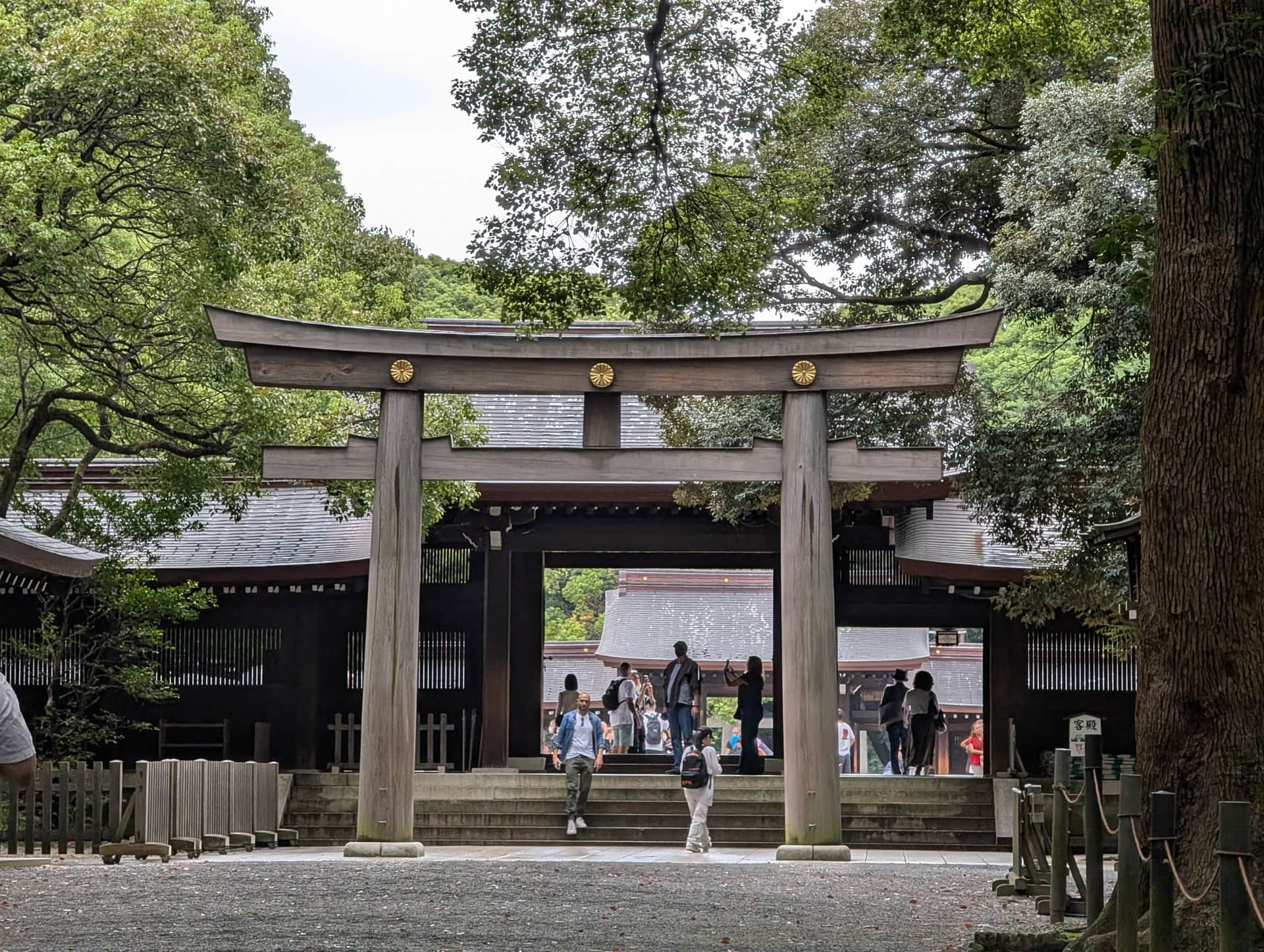
东乡神社
ShibuyaTōgō Jinja是东京原宿的一座神道神社,供奉作为神灵的海军上将东乡平八郎。它成立于1940年,在东京大轰炸中被摧毁,并于1964年重建,是具有强烈纪念价值的战后重建建筑。 神社的占地内包括一个小型博物馆和一间致力于东乡的书店。神社靠近竹下街和明治大街的交叉口,距离原宿站很近,同时还保存着东乡在对马海战中使用的原始战旗,该战旗于2005年获得。 虽然东乡的遗骨埋葬在多摩公墓,但该神社仍然是军事纪念和现代神道信仰的重要场所。对于对海军历史和日本战时代纪念文化感兴趣的人来说,它是一个当地朝圣地点。
预计参观 · 30 分钟免费入场8 人到访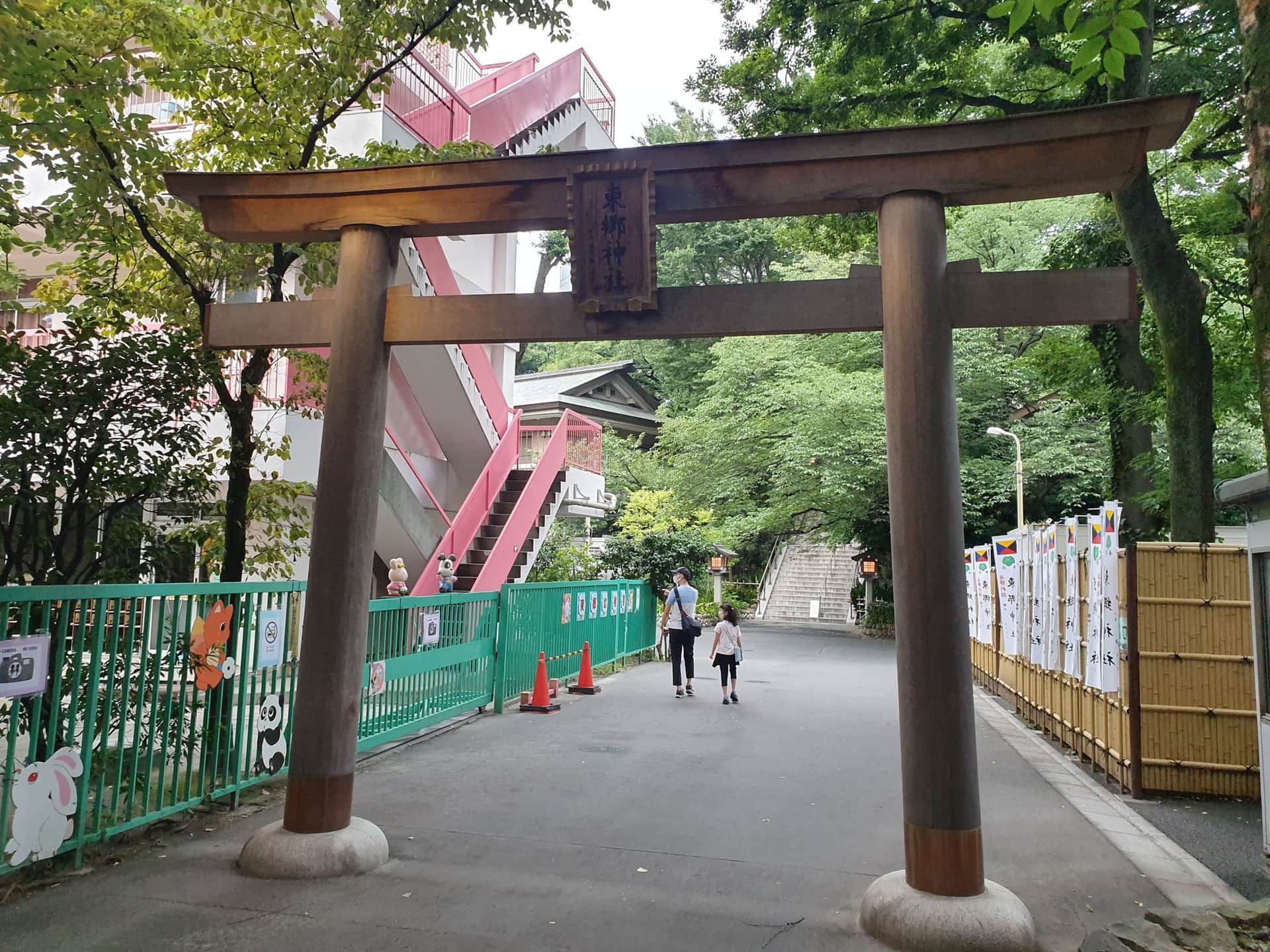
乃木神社
MinatoA quiet stone path leads you into the very house where a celebrated general and his devoted wife ended their lives—an act of loyalty that shocked a nation and still radiates moral and historical complexity. Here in central Tokyo’s Minato ward, the serene precincts of Nogi Shrine—formally Nogi-jinja—enshrine the spirits of General Nogi Maresuke and Nogi Shizuko as Shinto kami. Founded on November 1, 1923, the shrine stands on the couple’s former residence, a unique compound where a Meiji-period example of Western architecture survives alongside traditional sacred structures. The site is inseparable from the date September 13, 1912, when, upon the death of the Meiji Emperor, General Nogi and his wife chose ritual death, a culmination of lifelong ideals. The original shrine was later destroyed in the May 25, 1945 air raids; what you see today was rebuilt in 1962—a postwar reassertion of memory and meaning. Historical Foundations Walk back to the turbulent turn of the century and you encounter a figure emblematic of Japan’s rapid transformation: General Nogi Maresuke (1849–1912), an officer whose service and personal austerity made him a national symbol. His wife, Nogi Shizuko (1856–1912), shared his convictions and, in death, his fate. Their final act occurred on September 13, 1912, the very day of the Meiji Emperor’s funeral. To contemporaries, it was framed as a starkly traditional gesture of loyalty—what later commentators would call an echo of junshi (following one’s lord in death). To others, it was a deeply controversial act, exposing the tensions and contradictions of modernization. In the immediate aftermath, civic leaders sought a place where the public could grieve and reflect. The Tokyo Mayor, Baron Yoshio Sakatani, convened the Chūō Nogi Kai—the Central Nogi Association—with a clear mission: to build a shrine to the couple within the grounds of their residence. This decision enshrined not only two individuals but also a national conversation about duty, modernity, mourning, and the shape of public memory. Officially established on November 1, 1923, Nogi-jinja opened as a dedicated site of veneration to the Nogis as kami, a gesture rooted in longstanding Shinto practice of deifying exemplary human figures, much like the venerations of Sugawara no Michizane at Tenmangū shrines or Tokugawa Ieyasu at Tōshōgū. The shrine’s early decades were shadowed by the seismic events of modern Tokyo. Much of the city suffered from fire and war, culminating in the devastating air raids of May 25, 1945, when the original shrine buildings were destroyed. Yet the story did not end with wartime loss. In 1962, the present shrine complex was built, inheriting the founding spirit of the 1923 establishment and restoring the site as a public locus of memory. This arc—founding after 1912, destruction in 1945, rebuilding in 1962—places Nogi-jinja alongside many Tokyo shrines that embody resilience: a city and a tradition repeatedly remade, yet rooted in deep continuities. The resonance of the Nogis reaches far beyond Tokyo. Across Japan, multiple shrines honor their memory. Among them are sites in Nasushiobara (in Tochigi Prefecture), Fushimi-ku (Kyoto), Shimonoseki (Yamaguchi Prefecture), and Hannō (Saitama Prefecture). These dispersed sanctuaries mark a nationwide memorial geography, signaling the uncommon cultural weight of the Nogis’ story and the pliability of Shinto in accommodating modern historical figures into its pantheon of kami. Architectural Mastery The power of Nogi-jinja lies not solely in narrative; it resides in the compound’s built fabric. Uniquely, the precinct incorporates a rare Meiji-period Western-style residence, preserved as part of the shrine grounds. This house—quiet, severe, and elegant—speaks the language of late nineteenth- and early twentieth-century Western design: balanced proportions, formal symmetry, and a reserved palette of materials. With its rectilinear massing and restrained detailing, it stands as an artifact of the Meiji period’s embrace of Western forms in education, military, and civic architecture. Entering this structure, you sense how imported aesthetics were naturalized into Japanese life, from floor plans that follow Western domestic logic to fenestration and finishes that depart from traditional Japanese timber halls. To step back outside is to re-enter a different grammar of space. The rebuilt 1962 shrine buildings return you to the language of Shinto: an axis oriented to a torii gate, a ritual approach leading toward the haiden (worship hall) and ultimately the honden (sanctuary). These structures are crafted in timber, as befits shrine architecture, their surfaces and joinery reflecting a continuity of carpentry practice that reaches back many centuries. The roof profiles sweep with a quiet authority, catching light and shadow throughout the day; roofing material in postwar reconstructions often employs copper alloy or tile, marrying durability with traditional silhouette. The spatial sequence—passing from the urban bustle through the torii, to the ablution at the temizuya (purification basin), to the hush of the haiden—is choreographed to decelerate your pace and focus attention. Detail is not an afterthought here. Carved transoms, latticework screens, and the soft sheen of polished wood contribute to the shrine’s understated dignity. The precinct is calibrated for ceremony: a forecourt capable of receiving worshippers, a haiden scaled for both individual prayer and communal ritual, and a honden enclosed and consecrated, accessible only to priests. It is in this carefully tiered arrangement that Shinto’s architectural logic reveals itself—an architecture of invitation and threshold, culminating in the unreachable sanctum where the enshrined kami reside. One of the most arresting spaces is the shrine’s treasure museum, where, at carefully circumscribed times, the blades associated with the Nogis’ deaths are displayed. These artifacts—shown only three times a year, on New Year’s, during the Worshippers’ Grand Festival in spring, and at the Annual Autumn Festival—are handled with formal reverence. The museum’s controlled lighting and cases do not sensationalize; rather, they frame the objects as relics of moral decision and national debate. Their measured display schedule underscores the shrine’s ethic: to remember without spectacle, to commemorate without easy answers. Taken together, the compound’s architectural ensemble—Western residence and Shinto sanctuaries—synthesizes the contradictions of the Meiji and Taishō eras. Here, two architectural idioms stand in deliberate relation, translating a personal story into spatial form. The result is a site whose power is cumulative: the more time you spend with the buildings, the more its quiet coherence emerges. Religious & Cultural Significance While visitors often come for history, they encounter a living religious site. In Shinto, to enshrine human beings as kami is neither unprecedented nor superficial. It is a way of acknowledging exemplary lives that, in Japanese cultural logic, continue to act within the world. At Nogi-jinja, the enshrined couple are venerated for their integrity, frugality, and sense of duty—values widely promoted in the late Meiji and early Taishō periods and still debated today. The Nogis’ deaths on September 13, 1912, the day of the Meiji Emperor’s funeral, were interpreted by many of their contemporaries as the ultimate expression of loyalty to the sovereign. Others viewed the act with unease, seeing it as a vestige of an earlier feudal ethic incompatible with modern life. The fact that Nogi Shizuko chose to die with her husband complicates the narrative further, inviting discussion of marital devotion and gendered expectations. Rather than dictate a single interpretation, the shrine’s religious framing allows worshippers to bring their own intentions: to pray for strength in duty, to seek clarity in moments of moral crossroads, to honor the continuity of family, or to reflect on the costs of idealism. Ceremonially, the shrine’s calendar is anchored by the three public display periods of the blades: New Year’s, the spring Grand Festival, and the Autumn Festival. Each is a hinge in the ritual year. New Year’s draws people seeking renewal and good fortune, a nationwide practice known as hatsumōde. The Worshippers’ Grand Festival in spring celebrates gratitude and community ties, while the Annual Autumn Festival often coincides with the season when, culturally, remembrance and harvest intertwine. During these times, the shrine functions as a stage for formal rites led by clergy: purification, offerings of rice and sake, prayers intoned at the haiden, and the dignified soundscape of kagura instruments when traditional dance is performed. The wider network of Nogi Shrines—in Nasushiobara, Fushimi-ku (Kyoto), Shimonoseki (Yamaguchi), and Hannō (Saitama)—reinforces how the couple’s memory moved into the national religious sphere. Each branch shrine adapts the veneration to a local context, but the underlying idea is shared: the Nogis as moral exemplars whose virtues can be entreated in prayer. In this way, Nogi-jinja participates in a broader Shinto pattern where individuals become conduits of blessing and instruction, not abstract symbols but active presences. Natural Setting & Environment Though only steps from busy avenues and subways, the precinct’s microclimate is defined by shade, gravel, and seasonal color. The approach is marked by a torii that frames a modest canopy of trees; branches filter the urban glare into moving patches of light. This interplay matters. In Shinto, the natural world is not a backdrop but a participant, and the landscaping supports the shrine’s purpose: to create an interval of quiet inside the city’s pulse. Through spring, young leaves soften the architecture’s lines; in summer, the foliage thickens, muffling sound. Autumn brings burnished tones to the grounds and sets the stage for the Annual Autumn Festival and its associated displays. Winter clarifies the forms: the sweep of the roofline, the clean planes of the timber walls, the purposeful geometry of pathways. Even when floral display is sparse, the shrine’s sensory field is rich: the crunch of gravel underfoot, the scent of wood after rain, the faint metallic note of the suzu bell when worshippers approach the haiden. The presence of the Meiji-period Western house adds another layer to the landscape. Its geometry contrasts with the organic curves of shrine roofs and the informal drifts of planted shrubs. Viewed from the path, the residence reads as a quiet sentinel of history, its windows and doors calibrated to human scale, its silhouette revealed differently by each season’s light. The tension between these two architectures—the Western domestic and the Shinto sacred—creates a site where modernity and tradition meet in the sensory present. Visitor Experience & Heritage Arriving today, you pass beneath the torii and perform a simple purification at the temizuya—scooping water to cleanse hands and mouth, an act less about hygiene than about preparing mind and spirit. In front of the haiden, visitors bow, ring the bell, offer coins, clap twice, and bow again—gestures that are at once structured and intimate. The shrine is active, but unhurried; most days you’ll share the space with office workers on lunch break, families marking life events, and travelers grateful for a pocket of stillness. On designated days—the New Year period, the Worshippers’ Grand Festival in spring, and the Annual Autumn Festival—the treasure museum opens to display the blades used in the Nogis’ suicides. These occasions are powerful and quiet. People stand in contemplation, encountering not just metal but the dense moral questions embedded in it. The museum’s role is not to shock but to witness, reinforcing the shrine’s identity as a place of memory. Elsewhere in the precinct, the Meiji-period Western residence draws visitors curious about domestic architecture of the age when Japan deliberately engaged Western styles. Even without entering, the house’s exterior communicates the era’s careful borrowing: symmetry, measured ornament, and a self-consciously “modern” aura. Standing between the residence and the shrine, you inhabit the hinge of two stories—the nation’s transformation and the personal choices that transformation provoked. The rebuilt 1962 shrine pavilion demonstrates postwar craftsmanship and restraint. While it does not claim the age-patina of premodern timber, it articulates continuity through form and function: a honden that remains hidden and holy; a haiden that invites approach; ritual furniture aligned precisely; and a precinct that functions in tune with the liturgical calendar. Photographers often find themselves drawn to the meeting points—where wood meets sky, where the torii frames modern buildings beyond, where the Western house’s straight lines set off the shrine’s curves. Although not a UNESCO site or a National Treasure in the formal sense, Nogi-jinja is a recognized and respected locus of cultural memory. Its power is cumulative, the kind that grows each time you connect a date to a structure: September 13, 1912 to the residence; November 1, 1923 to the shrine’s founding; May 25, 1945 to the air raids; 1962 to renewal. In a city of constant change, those dates anchor the place. Practical rhythms shape the visit. Mornings tend to be quietest. Midday light pours across the forecourt, sharpening the shadows cast by rails and rafters. Late afternoon deepens the colors of timber and foliage. When the museum exhibits the blades, expect more visitors, but also a hush—people come to look, and to think. If your timing aligns, attending a seasonal festival reveals the site in its full ceremonial life: priests in white robes and tall black hats, norito prayers rising in measured cadence, and offerings placed with exacting care before the kami. Beyond Tokyo, the existence of sister shrines in Nasushiobara, Fushimi-ku (Kyoto), Shimonoseki, and Hannō testifies to the breadth of the Nogis’ legacy. Some visitors make a point of seeking out more than one, tracing a personal pilgrimage through the archipelago. Doing so illuminates how regional communities have shaped the memory of the Nogis in their own contexts, while the Tokyo shrine remains the emotional center, rooted in the very ground where the couple lived and died. The most poignant way to leave the precinct is to return to the beginning: the Western house, the torii, the path back to the city. At Nogi-jinja, architecture is not merely background; it is the medium through which the past speaks. By enfolding a Meiji Western residence and a Shinto shrine into one sacred precinct, the site embodies Japan’s modern paradox: a culture that learned to carry tradition forward by accommodating the new, and to accommodate the new without forgetting the obligations of the past. As you step back onto the sidewalk, consider how the shrine reconciles opposites. It memorializes a controversial act without instructing you what to feel. It honors the Nogis as kami while welcoming the skeptical. It sits in Minato, among offices, apartments, and cafés, yet holds itself apart, its gravel and timber warm with attention. The dates—1912, 1923, 1945, 1962—are more than markers. They are a rhythm, the rhythm of loss and rebuilding that furnished modern Tokyo not only with buildings, but with meanings. And in that rhythm, Nogi-jinja remains steady: a place to bow, to breathe, to face history, and to walk on more awake than before.
预计参观 · 45 分钟免费入场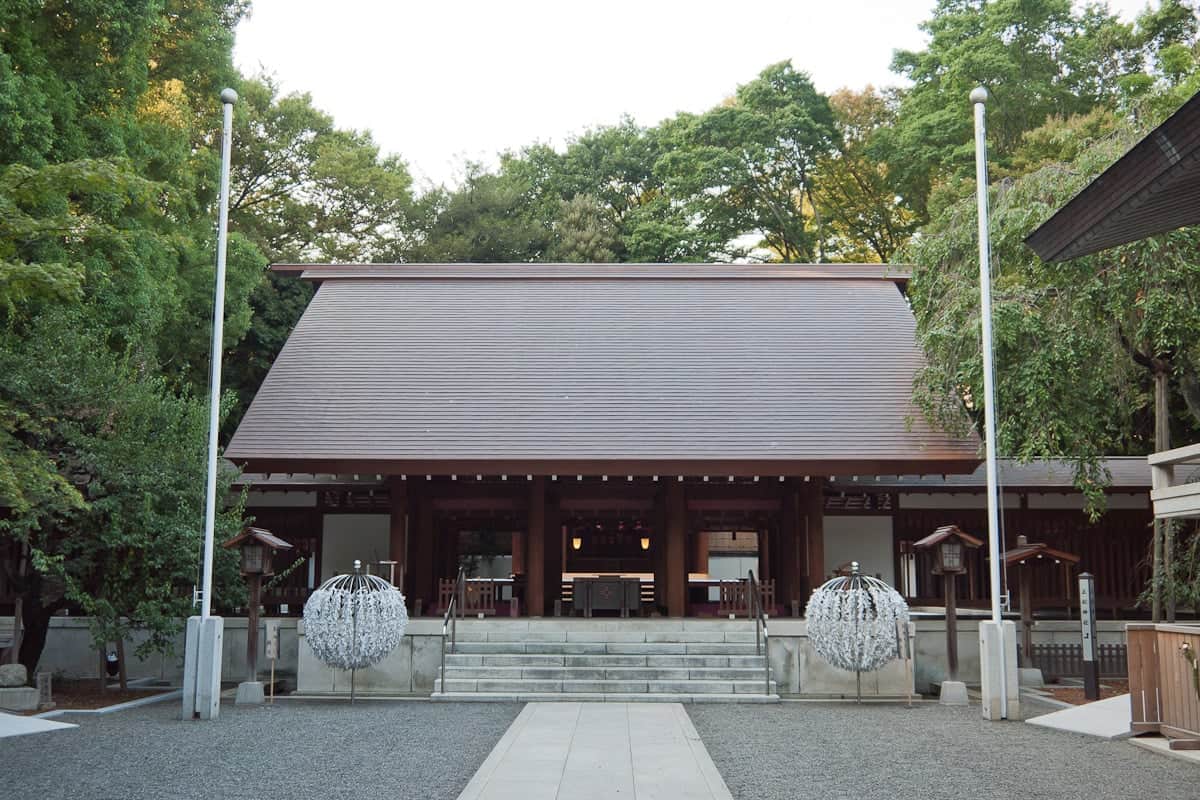
日枝神社
ChiyodaSlip from Tokyo’s corridors of power into a sudden splash of vermilion. In the heart of Nagatachō—steps from the National Diet—this sanctuary reveals itself through a tunnel of crimson torii leading up a hillside to a complex rebuilt in 1958 yet rooted in a story that begins in 1478. This is Hie Shrine—once the tutelary shrine of Edo Castle, now one of the Tokyo Ten Shrines—dedicated to Oyamakui-no-kami, the guardian deity of mountains and the spiritual anchor of the capital’s Sannō faith. Celebrated for the Sannō Matsuri, among the three great festivals of old Edo, Hie is where ancient devotion and modern city pulse meet: a shrine that burned, moved, survived wartime devastation in 1945, and rose again to continue blessing the center of Japanese government and the millions who pass through this district each year. Historical Foundations Hie’s story begins amid the formative years of Edo, long before skyscrapers and subways. In 1478, the military tactician and castle-builder Ōta Dōkan fortified his new stronghold on a low hill overlooking a tidal estuary. With the founding of his castle came the indispensable spiritual counterpart: a guardian shrine to protect the domain. Tradition holds that this act planted the seed of Hie Shrine—a tutelary presence charged with safeguarding the nascent castle town that would later become Tokyo. The shrine’s destiny transformed in the early seventeenth century when Tokugawa Ieyasu chose Edo as the seat of his shogunate. Recognizing the protective prestige of Hie’s deity and the deep cultural pull of the Sannō tradition, Ieyasu relocated and patronized the shrine in the opening decades of the 1600s, elevating it as the spiritual guardian of the new shogunal capital. From then on, Hie stood not just as a local protector but as the official tutelary shrine of Edo Castle—its rituals intertwined with the rhythms of governance and city life. The centuries that followed were marked by both growth and fragility. Edo, a city of wood and paper, repeatedly suffered conflagrations. Hie’s precincts, too, burned more than once, each time rebuilt through the backing of shoguns, daimyō, and townspeople who understood the shrine’s protective role over the city. This cycle of destruction and renewal culminated in the most devastating blow: the 1945 air raids of the Second World War, which obliterated much of central Tokyo and destroyed Hie Shrine’s buildings. Resilience defines Hie’s modern chapter. In 1958, the shrine was reconstructed in reinforced concrete, a pragmatic and forward-looking choice that allowed traditional forms to live securely within modern materials. The new complex retained the recognizable silhouette of a Shinto shrine while acknowledging the realities of postwar urban Tokyo. Today, Hie’s presence, a survivor reborn, speaks to continuity: of community, of state, and of faith in a city that has rebuilt itself more than once. Architectural Mastery Approach Hie from any direction and architecture guides the body into devotion. The first encounter is often the Sannō Torii—a distinctive gateway type associated with the Sannō tradition—announcing a threshold between the secular and the sacred. The torii is more than a symbol; its proportions and elegant lines frame a path, focus the gaze, and prepare the mind for ritual space. At Hie, the Sannō Torii stands as a visual signature of the shrine’s identity. Climb next through the famous torii-lined staircase, a corridor of vermilion that turns the act of ascent into a rhythmic experience: step, shadow, light, step. This stairway—photographed by countless visitors—distills a key architectural idea of Shinto space: repetition generates holiness. Each gate reiterates that you are crossing from the everyday to the precinct of the kami, and the repetitive geometry makes your movement intentional, meditative. At the complex’s center are the twin hearts of shrine architecture: the Honden (sanctuary) and the Haiden (worship hall). The Haiden is where the public kneels, claps, and prays; it is an open, inviting volume designed to embrace the congregation. Beyond it, aligned on the same axis but set off-limits to most, the Honden enshrines Oyamakui-no-kami. It is here—within the sanctuary—that offerings are made, norito prayers are chanted by priests, and the deity’s presence is ritually affirmed. Rebuilt in 1958, Hie’s structures are composed of reinforced concrete—a deliberate choice after wartime loss—given surfaces and profiles that echo traditional shrine carpentry. Rooflines reference classic Shinto forms with broad eaves and pronounced ridgelines that shelter the building and soften its mass. The exterior palette emphasizes vermilion and white, accented with metal fittings, conjuring continuity with prewar aesthetics while ensuring durability in Tokyo’s seismic, urban environment. This fusion of traditional expression and modern engineering characterizes postwar shrine reconstruction across Japan, but Hie’s example is especially resonant given its role as guardian of Edo and neighbor to Japan’s contemporary political institutions. The effect is simultaneously timeless and contemporary: stone, concrete, and bright paint adaptable to decades of heavy use by worshippers, officiants, and festival teams. Finally, pay attention to the textures underfoot and overhead. Stone pavements and broad stairways choreograph movement; lanterns illuminate courtyards in evening ceremonies; banners announce rites and festivals. The shrine precinct is not a museum diorama—it is a functioning ritual machine, adaptable and sturdy, built for annual cycles of prayer, celebration, and community. Religious & Cultural Significance Hie Shrine enshrines Oyamakui-no-kami, a powerful mountain and tutelary deity at the core of the Sannō tradition. The word “Sannō” literally means “Mountain King,” signaling the deity’s protective authority and the religious geography that once connected Tokyo to the wider sacred landscape of Japan. Historically, the Sannō faith has strong roots in the guardianship of Mount Hiei and the capital, and Tokyo’s Hie Shrine serves as a metropolitan anchor for this devotion. As the historic tutelary shrine of Edo Castle, Hie’s rituals were linked to the wellbeing of the city and its rulers. Prayers for protection from fire, disease, and misfortune—pressing concerns in a wooden city—were central. Ceremonies marking seasonal transitions, prosperity, and safe governance further entwined the shrine with civic life. This public-facing religious role lives on in the shrine’s schedule of rites and its most famous celebration: the Sannō Matsuri. The Sannō Matsuri is among Edo’s three great festivals, alongside the Kanda and Fukagawa festivals, and its history stretches back to the Tokugawa era. Its grand processions occur in even-numbered years, with portable shrines, priests, musicians, and parishioners traveling in ceremonial order through the city center. In the Edo period, the Sannō procession held rare privilege: authorization to enter the castle precincts, signaling Hie’s unique bond with political authority. In modern times, while the route has adapted to public streets and urban logistics, the festival still manifests as a city-wide blessing—an annual rhythm that connects ancient rite and modern capital. Beyond the festival, Hie acts as a compass for everyday spirituality. Shinto weddings, new-year prayers (hatsumōde), and rites of purification punctuate the calendar. Office workers on lunch break step in for a quick bow and a coin offering; parents bring children for milestone blessings; and petitioners buy amulets for safe business, good health, or exam success. The shrine’s proximity to political buildings adds another layer: it is a place where national policy-makers and clerks alike can seek composure, reflection, and favor from the kami, a quiet counterpart to the debates across the street. Hie’s status as one of the Tokyo Ten Shrines underscores its civic importance. This elite group, distributed across the metropolis, collectively safeguards the city. Membership signals a historical mandate: not merely a neighborhood shrine, but a guardian operating on the scale of the capital. Finally, consider how Hie bridges eras. It embodies the continuity of Shinto practice—the honoring of kami, the purity of space, the seasonal round of celebrations—while standing squarely in a hypermodern district. This tension is not a contradiction but a strength. The shrine’s resilience in 1945, its 1958 rebirth, and the ongoing vitality of the Sannō Matsuri demonstrate a living tradition capable of renewal without losing its essence. Natural Setting & Environment Nagatachō is a district built for policy and power—broad avenues, stately government buildings, sweeping stone. Hie Shrine softens this geometry. The precinct occupies a modest rise, and the approaches make clever use of topography: long stairs and the famed torii-lined slope translate a change in elevation into a pilgrim’s ascent. Even modest hills matter in Shinto. They lift the worshipper, reveal sky, and create a sense of threshold. In a city so heavily engineered, this gentle relief is a perceptible change in atmosphere. The shrine grounds weave greenery into the urban grid. Trees flank stone paths; small courtyards open to sky; shrubs and plantings frame the main axis from Sannō Torii to worship hall. Light and shadow play across the vermilion surfaces, and breezes passing through the gates produce a quiet rustle that contrasts with nearby traffic. Seasonal changes—soft spring light, the heat shimmer of midsummer, autumnal clarity, winter crispness—give the precinct a cyclical mood that mirrors Shinto’s calendar of rites. Space is also choreographed to offer moments of pause. Step aside from the main approach and the bustle thins; a side path, a lantern, a stone basin for purification recalibrate your senses. Water, stone, and wood—arranged with restraint—contribute to the overall feeling of clarity that Shinto strives for. The shrine’s environment may not be a sprawling landscape garden, but it functions as a spiritual garden: a vessel for calm in the city’s most intense district. And yet, the skyline is always near. Look up from the courtyard and modern Tokyo frames the sacred space: office towers, the silhouette of the National Diet, and, depending on your vantage, glimpses into Akasaka’s high-rise canyons. This juxtaposition—vermilion gates against glass and steel—makes Hie a signature sight in contemporary Tokyo and a case study in how the sacred inhabits the city rather than escaping it. Visitor Experience & Heritage Arriving is part of the experience. The shrine lies within easy reach of Akasaka and Tameike-Sannō stations, and the walk from either point heightens the contrast between civic bustle and shrine serenity. As you approach, the first threshold is a torii—pause here. Bow lightly before passing beneath; then continue toward the courtyard where the Haiden awaits. If the torii-lined staircase is on your route, consider climbing its corridor of gates for a more dramatic approach and a striking photo opportunity. At the Haiden, you’ll find the familiar ritual choreography: bow twice, clap twice, offer your prayer, and bow once more. The sound of the claps echoes under the broad eaves and across the stone paving. From here, you can admire the alignment of the complex: the Haiden opening to the courtyard and, beyond, the Honden housing Oyamakui-no-kami. While access to the Honden is restricted, seasonal ceremonies sometimes spill outward, letting visitors glimpse the patterned movements of priests and attendants. Elsewhere in the precinct, you can explore additional gates and sub-precincts, each scaled to different forms of devotion. Chōzuya basins for ritual purification—cool water over cupped hands—offer a sensory reset. Amulet counters present a spectrum of talismans tuned to modern needs: safe travels, good business, academic success, health. The design language is deliberately contemporary-traditional: clean signage, practical circulation, and durable finishes that welcome thousands of daily visitors without losing warmth. Hie’s festival calendar culminates in the Sannō Matsuri. In even-numbered years, the shrine’s ceremonial procession takes to the streets in a meticulously ordered parade. Portable shrines carried on shoulders, priests in formal robes, musicians keeping rhythm—the city becomes a stage for blessing. Watching the procession pass through business districts and government neighborhoods is to see a centuries-old rite reconciling the sacred with the civic. Between major processions, annual rites maintain continuity: purification ceremonies, harvest thanksgiving, and New Year observances ensure that rituals touch every season. Historically, Hie was privileged in ways few shrines could claim. In Edo times, the Sannō Matsuri procession entered castle precincts—a literal crossing into centers of power that cemented Hie’s role as protector of the political heart. That privilege, transmuted into modern forms, survives as proximity: today, the shrine stands beside the institutions of national governance, offering a spiritual counterpoint to policy and debate. In heritage terms, Hie is notable not for ancient timber preserved against time but for resilient tradition preserved through rebuilding. The complex is not UNESCO-listed, and its current buildings date to 1958, yet the shrine’s cultural status within Tokyo is deeply felt: it is a key node in the Tokyo Ten Shrines, it anchors the Sannō faith in the capital, and it embodies the continuity of devotion from 1478 to the present. That continuity is what visitors come to witness and participate in: an ongoing relationship between deity and city, renewed with each bow and clap. For those who appreciate architectural detail, linger at the Sannō Torii. Compare its profile to the more common torii seen elsewhere in Japan: subtle differences in proportions and the way the top elements meet give the Sannō type its identity. Then turn back to the Haiden and note how the broad eaves shelter worshippers from sun and rain, creating an outdoor room where the boundary between building and courtyard dissolves—a hallmark of shrine design, here executed in robust postwar materials. If you’re visiting around midday, you may share the courtyard with office workers on their lunch break, pausing for a moment of quiet or sipping tea on the steps. In the early evening, lanterns begin to glow, and the shrine shifts into a more contemplative register. During festival preparations, the energy changes again: ropes, palanquins, and ceremonial gear appear; priests rehearse; banners unfurl. Each phase reveals a different facet of Hie’s living heritage. Practical orientation matters in an urban shrine, and Hie’s layout is intuitive. Major paths converge on the main courtyard; signage directs you without intruding; thresholds are legible. The shrine’s staff navigates a dual brief: to maintain ritual purity and to welcome visitors from around the world. This duality reflects Shinto at its best—rooted in local practice, open to the global public. As you prepare to leave, take one last look back through the torii. The gate frames the city beyond—taxis, suits, umbrellas, protest placards on some days, and on others the quiet of a weekend morning. This view captures Hie’s essence. It is not a retreat away from the world but a lens for seeing the world differently. For more than five centuries—from Ōta Dōkan’s first act of devotion in 1478, through Tokugawa Ieyasu’s elevation of the shrine in the 1600s, through fires, the 1945 devastation, and the 1958 reconstruction—Hie has persisted as a guardian of the capital’s wellbeing. In that persistence lies its power. Hie Shrine shows how a city remembers: through ritual repetition, through rebuilding, through the steady return of festivals and prayers. It is a place to witness the living continuity of Japanese tradition in the very district where the nation charts its future. Whether you come for the Sannō Matsuri, for a quick prayer between meetings, or to savor the visual poetry of a torii-lined staircase in the afternoon light, you step into a story still being written—one clap, one procession, one year at a time.
预计参观 · 60 分钟免费入场6 人到访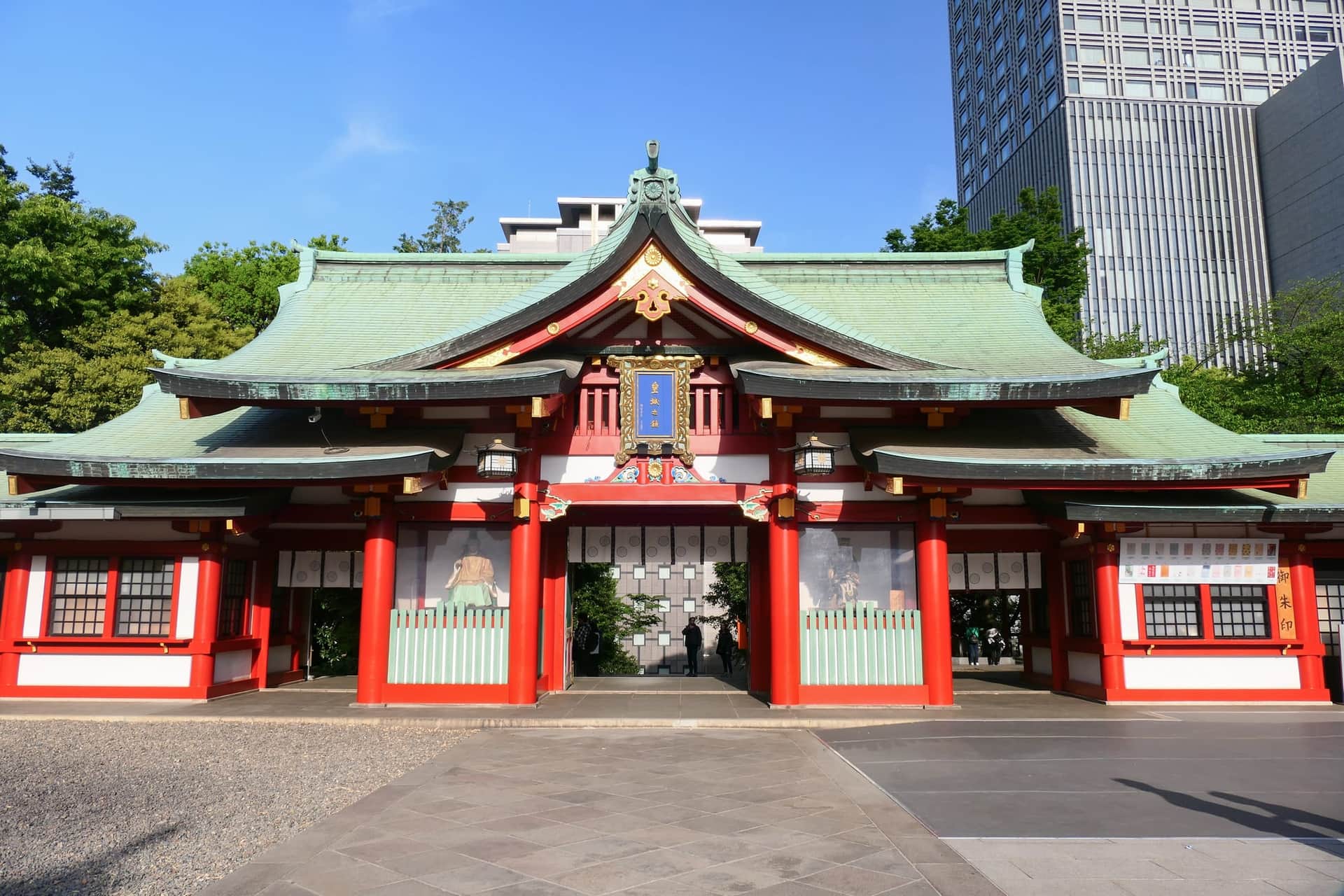
浅草老街
- 5个地点
- 含参观约270分钟
浅草寺
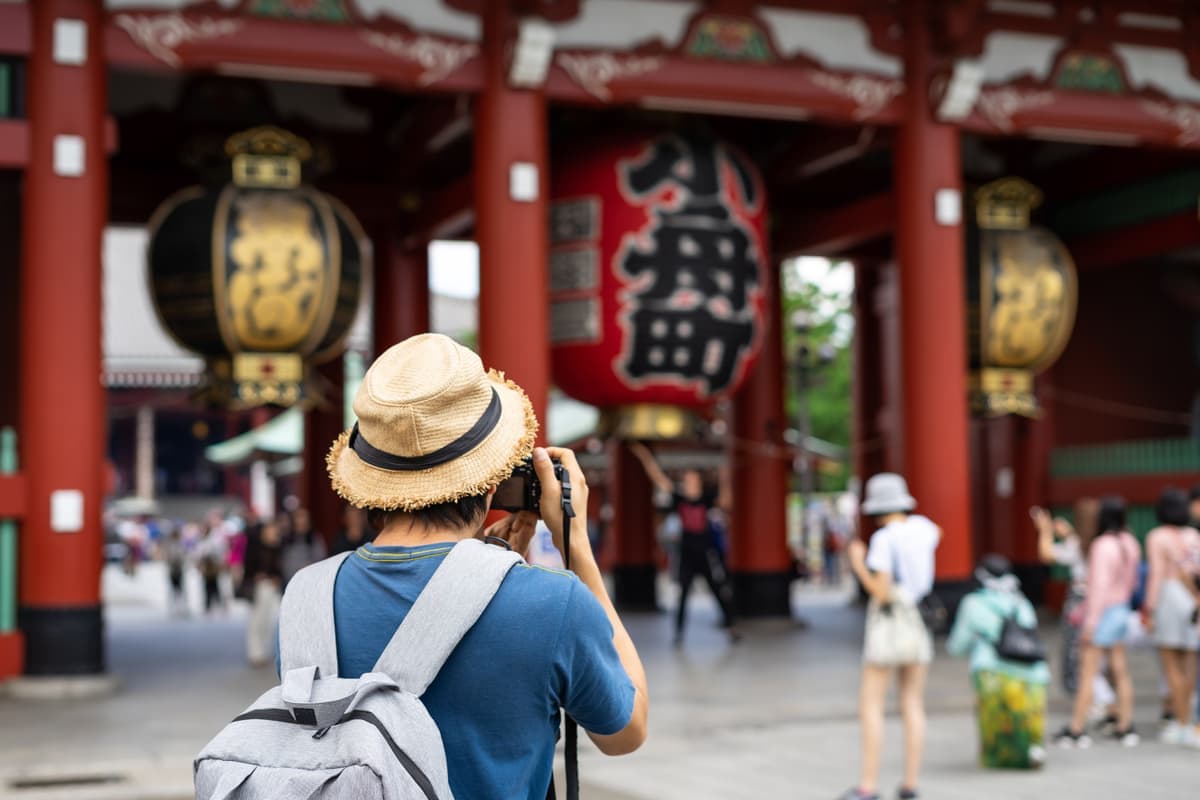
TaitoThe first thing that grips you at Sensō-ji is the sense that this place has never been merely a monument. It is a living center of devotion, crowded with pilgrims, day-trippers, and local worshippers, yet still anchored by a single hidden image of Kannon, the bodhisattva of compassion. Founded in 628, and known formally as Kinryū-zan Sensō-ji, this is Tokyo’s oldest temple and one of Japan’s most visited sacred sites, drawing more than 30 million visitors a year. The temple’s heart is famously unseen, because the principal image has been kept out of public view for centuries. That mixture of revelation and concealment, ritual and street life, gives the whole precinct its unforgettable character. Historical Foundations The temple’s origin story is one of the best-known in Japan. According to tradition, on the morning of March 18, 628, two fishermen, Hinokuma Hamanari and his brother Takenari, were fishing in the Sumida River when they found a small statue in their net. Their village headman, Haji no Nakatomo, recognized the figure as Avalokitesvara Bodhisattva, called in Japan Kannon or Sho Kanzeon Bosatsu, and devoted himself to Buddhist practice. He converted his home into a temple and spent the rest of his life in worship and memorial services. In 645, the priest Shokai arrived in the area and built a hall for the image. After receiving a revelation in a dream, he decided to conceal the statue from view. Since then, the sacred image has remained hibutsu, never publicly unveiled. That hidden status is one of the great defining features of Sensō-ji. In the mid-ninth century, the renowned Tendai priest Ennin visited and created a replica image, also associated with the temple’s devotional life, so that something could be shown occasionally to the public. Through the Kamakura period (1185 to 1333), the temple attracted the devotion of shoguns, military leaders, and literati. Its status rose again in 1590, when Tokugawa Ieyasu, the first Tokugawa shogun, designated it as the temple for shogunal prayers. During the Edo period (1603 to 1867), successive shoguns visited, and devotion to Kannon spread widely among common people. As Edo grew into one of the world’s largest cities, Asakusa developed into a major cultural center, later associated with theater, film, music, and vaudeville in the modern era. The temple was devastated in the 10 March 1945 firebombing of Tokyo during World War II. The main hall was rebuilt in the 1950s, specifically 1958, using donations from supporters across Japan. After the war, in 1950, Sensō-ji became independent, having previously been associated with the Tendai school. That sequence, destruction followed by rebuilding, is central to the way people understand the temple today, as both an old sanctuary and a place that was restored by collective faith. Architectural Mastery Sensō-ji’s precinct is defined by a procession of gates and halls that shape the visitor’s experience from the first step. The best-known entrance is Kaminarimon Gate, often translated as the Thunder Gate, whose massive red lantern has become one of Tokyo’s most recognizable images. Passing through it, visitors enter Nakamise-dōri, the approach street lined with shops selling traditional snacks, souvenirs, and crafts. The street is not an incidental extra. It is part of the temple’s ritual atmosphere, extending the transition from ordinary city life into sacred space. Beyond Nakamise lies Hōzōmon Gate, commonly called the Nio-mon Gate, and also Niten-mon Gate, both important architectural markers within the grounds. The complex also includes the striking five-story pagoda, one of the temple’s best-known landmarks. Nearby are Bentendo Hall, Awashimado Hall, Yogodo Hall, and the Main Hall, or Kannon-do. The main hall’s roof is especially notable: it rises in a dramatic slope, taller and more emphatic than what many visitors expect of a temple building. The structure is divided into the naijin or inner sanctuary and the gejin or outer sanctuary, and the principal image rests in a miniature temple inside the inner space. That small inner shrine, locked and protected, reinforces the paradox at the center of the site, public worship around an image that remains unseen. One of the temple’s most important surviving treasures is Denboin and its garden, designated a National Scenic Beauty Site. The grounds are not only built space but carefully composed landscape, where the architecture and garden together guide movement, pause, and contemplation. In the Main Hall, there are also two calligraphic masterpieces by Noguchi Sekko, one of the Three Best Calligraphers of the Edo Period, with texts quoting Hanjusan by Shan-tao of the Pure Land tradition. Even in calligraphy, the temple’s message is one of compassion and equal regard for all beings. Religious & Cultural Significance The temple is dedicated to Kannon, the bodhisattva of mercy and compassion, who responds to suffering with boundless benevolence. In Japanese Buddhism, Kannon appears in multiple forms, including Juichimen with 11 faces, Senju with 1,000 hands, and Nyoirin, associated with the wish-granting jewel and the Dharma wheel. Sensō-ji’s principal image embodies the basic form, one face and two hands, but the theology around it extends far beyond a single icon. This is also an active pilgrimage site. Sensō-ji is the 13th stop on the Bandō Sanjūsankasho pilgrimage route, and it receives worshippers from across Japan and beyond. The temple’s own materials state that it draws around 30 million visitors each year, making it one of the most frequented religious sites in the world. Devotion here is visible in simple gestures, especially the prayer taught to visitors at the main hall: place your hands together and chant “Namu Kanzeon Bosatsu”, meaning “I place my trust in Bodhisattva Kannon.” Several auxiliary halls deepen the temple’s devotional life. Yogodo Hall houses eight Buddhas connected with the Yogoshu, protectors associated with the Chinese zodiac, each thought to watch over those born in certain years. Awashimado Hall and Bentendo Hall add further layers of worship and local practice. The presence of these subsidiary cults makes Sensō-ji feel less like a single shrine to a single deity and more like a whole religious landscape. Natural Setting & Environment Sensō-ji was first established in what was once a fishing village at the edge of the Sumida River, in the wild landscape of Musashino near the estuary of Tokyo Bay. That origin matters, because the temple’s present urban intensity hides the fact that it began at a watery frontier. Even now, the temple’s setting reflects that relationship between the sacred and the changing city. Asakusa is dense and energetic, yet the temple precinct creates intervals of quiet, especially in early morning or after dark. The garden of Denboin offers a more deliberate encounter with nature. Its designation as a scenic site points to the care with which this environment has been shaped. Seasonal changes, the view of the pagoda, and the contrasts between open courtyards, wooden halls, and planted spaces all contribute to the atmosphere. The temple’s tall rooflines and pagoda are visible markers above the district, but the interior experience is more intimate, with incense smoke, bells, and the movement of people slowing as they pass from gate to gate. Visitor Experience & Heritage For today’s visitor, Sensō-ji is both a major religious site and a place where the texture of Tokyo’s older culture is still easy to feel. The route itself is part of the experience, from Kaminarimon through Nakamise-dōri to the main hall. You can obtain scarlet seal stamps at the temple, visit the halls one by one, or simply stand for a moment in front of the incense burner and watch the flow of people around you. The temple’s modern popularity never fully overwhelms its devotional core, because the route, the hidden image, and the prayer practice all keep reminding you that this is a functioning Buddhist sanctuary. Sensō-ji’s fame comes from more than age alone. It has survived political transformation, wartime destruction, postwar rebuilding, and the relentless expansion of the city around it. Yet the essential story has remained stable for nearly fourteen centuries, a fisherman’s net, a hidden statue, a community turned toward compassion. That is why the temple continues to matter so widely, not only as an icon of Asakusa or Tokyo, but as a place where Japanese Buddhist devotion, urban history, and popular culture still meet in one remarkably alive space.
预计参观 · 90 分钟免费入场23 人到访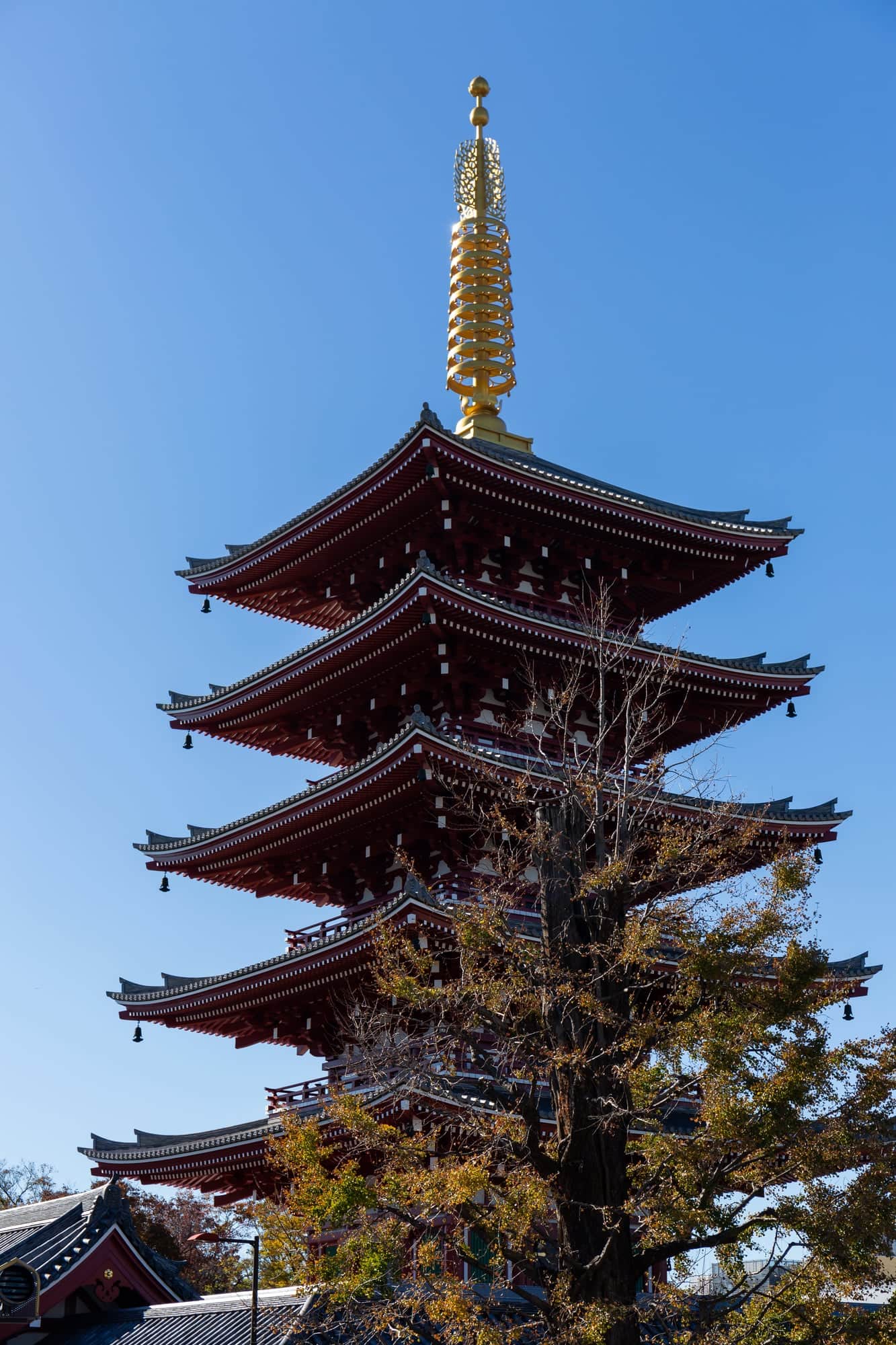
浅草神社
TaitoA single fishing net changed the destiny of Asakusa. On the morning of March 18, 628, two brothers, Hamanari and Takenari Hinokuma, cast their net into the Sumida River, then known as Asakusa Bay. They caught no fish. Instead, the net repeatedly brought up the same small image, a statue of Kannon, the Buddhist figure of compassion. Today, Asakusa Jinja preserves the memory of that discovery and venerates the three men connected with it: the fishermen and Hajinomatsuchi, the learned local landowner who recognized the statue. Known affectionately as Sanja-sama, or “the Three,” the shrine is also the spiritual center of Sanja Matsuri, one of Tokyo’s most famous traditional festivals. Historical Foundations The brothers first carried the mysterious image ashore near present-day Komagata and placed it on the stump of a Japanese pagoda tree, known as an enju. They then asked Hajinomatsuchi to examine it. He identified the figure as Kannon, a powerful object of devotion believed to bring benefits in this world. The brothers embraced faith in the image, prayed intensely, and asked that their next day’s fishing be successful. On March 19, their boat filled with fish. Hajinomatsuchi soon shaved his head, became a Buddhist monk, transformed his home into a temple, and devoted the remainder of his life to caring for the image and teaching the local population. This episode forms the legendary origin of Sensoji, whose growth brought prosperity to what had once been a small rural settlement. According to tradition, the descendants of the three men later received a dream revelation from Kannon. The message instructed them to enshrine their ancestors as protective deities beside the Kannon hall. The resulting sanctuary became known as Sanja Gongen, meaning the shrine of the Three Manifestations. Its precise foundation date is unknown. The tradition most plausibly places its establishment between the late Heian period and the early Kamakura period, when the religious idea of gongen was widespread. In that system, a buddha could appear temporarily in the form of a native Japanese kami in order to guide people. The shrine’s name changed during the modern separation of Buddhist and Shinto institutions. In 1868, the first year of the Meiji era, it became Sanja Myojin Shrine. It was designated a village shrine in 1872, and in 1873 received its present name, Asakusa Jinja, while becoming the general guardian shrine of Asakusa. Local residents still call it Sanja-sama, preserving the older identity. Architectural Mastery The present buildings were donated and constructed in 1649, during the reign of the third Tokugawa shogun, Tokugawa Iemitsu. Their survival is remarkable. Fires, wartime destruction, and the Great Kanto Earthquake of 1923 damaged much of Tokyo, yet the shrine buildings escaped major loss and retain the appearance of the early Edo period. The main complex consists of the inner sanctuary, the offering hall, and the worship hall. The latter two are connected by a covered passage, forming the architectural arrangement called gongen-zukuri. This style is associated with important Tokugawa-period sanctuaries, including Nikko Toshogu. It creates a layered progression from the public space of worship toward the more restricted sacred interior. The buildings were designated an Important Cultural Property of Japan in 1951. By 1996, their painted surfaces and lacquerwork had deteriorated substantially. A restoration costing 350 million yen renewed the exterior decoration. After 33 years had passed since the previous major restoration, the renewed colors brought back the strong reds, greens, golds, and dark lacquer tones characteristic of early Edo architecture. Look closely at the decorative creatures carved and painted throughout the complex. The phoenix represents auspicious rule and is associated with the birth of a virtuous sovereign. The kirin, a benevolent creature with the body of a deer, the head of a wolf, the tail of an ox, and the feet of a horse, is said to appear when an excellent ruler emerges. The unusual flying dragon, with a fish-like body and wings, governs water. Near the entrance, the right and left ministers, known as imperial retainers, hold weapons whose purpose is to repel evil. Religious and Cultural Significance The shrine’s central religious identity comes from the three founders, who are treated as local guardian deities. Their story links the sacred history of Asakusa with the origin of Sensoji and with the community’s prosperity. The relationship also reflects the older, intertwined religious world in which Buddhist and kami traditions worked together before the Meiji government ordered their institutional separation. The most dramatic expression of this local devotion is Sanja Matsuri, held each year on the third Saturday and Sunday of May. The festival’s present form developed during the Edo period, although its origins are older. The three principal portable shrines, Ichinomiya, Ninomiya, and Sannomiya, are carried through the neighborhood. The procession renews bonds among the shrine’s ujiko, or local parishioners, and expresses prayers for the prosperity of Asakusa. Visitors may see these great mikoshi in the portable shrine storehouse, which opens during the May festival, at New Year, and on some weekends and holidays in early spring. Other annual observances include sacred dances, miko maiden performances, the traditional Binzasara dance, purification rites, seasonal celebrations, and special worship services. The shrine also conducts ceremonies for newborn children, protection from misfortune, children’s festivals, and Shinto weddings. In modern Asakusa, it supports youth education and the continuation of traditional culture through workshops, seasonal farming activities, harvest events, and community programs. Natural Setting and Sacred Objects The torii marks the boundary between ordinary human space and the shrine’s sacred precinct. Asakusa Jinja’s front gate is a shinmei torii, erected in September 1885. Beside it is a shrine name tablet written by Sasaki Yukitada, a senior priest associated with the Grand Shrine of Ise. Before approaching the main building, visitors traditionally use the water purification pavilion to rinse their hands and mouth. The shrine’s sacred tree recalls the founding legend directly. Because the fishermen placed the recovered Kannon image on an enju stump, enju trees growing within the precinct are treated as shinboku, or sacred trees that can serve as vessels for divine presence. Two especially unusual stone guardian dogs date from the early Edo period. Rather than facing one another separately in the usual manner, these figures appear to sit close together. Their affectionate posture has given them associations with good relationships, marital harmony, and fulfilled love. The grounds also preserve an extraordinary record of Asakusa’s literary and performing-arts life. Monuments commemorate Kabuki actors, writers, poets, dancers, and local personalities, including Kawatake Mokuami, Nakamura Kichiemon I, Ichikawa En’o I, Kubota Mantaro, and Kawaguchi Matsutaro. Other stones honor the art of flowers, fans, and dance. A monument to the popular manga Kochikame connects the precinct with modern popular culture, while a hyakudo stone marks the route used for repeated devotional visits. The fan monument is connected with an annual ceremony on April 8, when old fans are ceremonially burned. Visitor Experience and Heritage Asakusa Jinja is located at 2-3-1 Asakusa, Taito-ku, Tokyo. It is approximately seven minutes on foot from Asakusa Station on the Tokyo Metro Ginza Line, Toei Asakusa Line, and Tobu Skytree Line, and about ten minutes from Tsukuba Express Asakusa Station. The shrine adjoins the Sensoji area, but vehicles may enter only from Umamichi-dori. On-site parking is reserved for people receiving prayers and for wedding participants, with permission from shrine staff. After worship, visitors may receive a goshuin, a calligraphic seal recording the date and place of pilgrimage. The practice originated as proof that a person had deposited a hand-copied sutra at a temple and became common at shrines during the Edo period. At Asakusa Jinja, regular seals include those of Asakusa Jinja, the Asakusa Seven Lucky Gods pilgrimage, and Hikan Inari Shrine, with each regular seal offered for 500 yen. Seasonal seals appear for New Year, Sanja Matsuri, and summer worship. The essential order is simple: bow at the torii, purify yourself, pray with two bows, two claps, and one bow, then request the seal. The shrine also participates in the Asakusa Seven Lucky Gods circuit, which actually visits nine temples and shrines, and in the Tokyo Fukume-guri, an eight-shrine pilgrimage. These routes extend the experience beyond a single precinct, revealing Asakusa as a living district where sacred tradition, neighborhood memory, performance, and everyday life remain closely connected.
预计参观 · 45 分钟免费入场13 人到访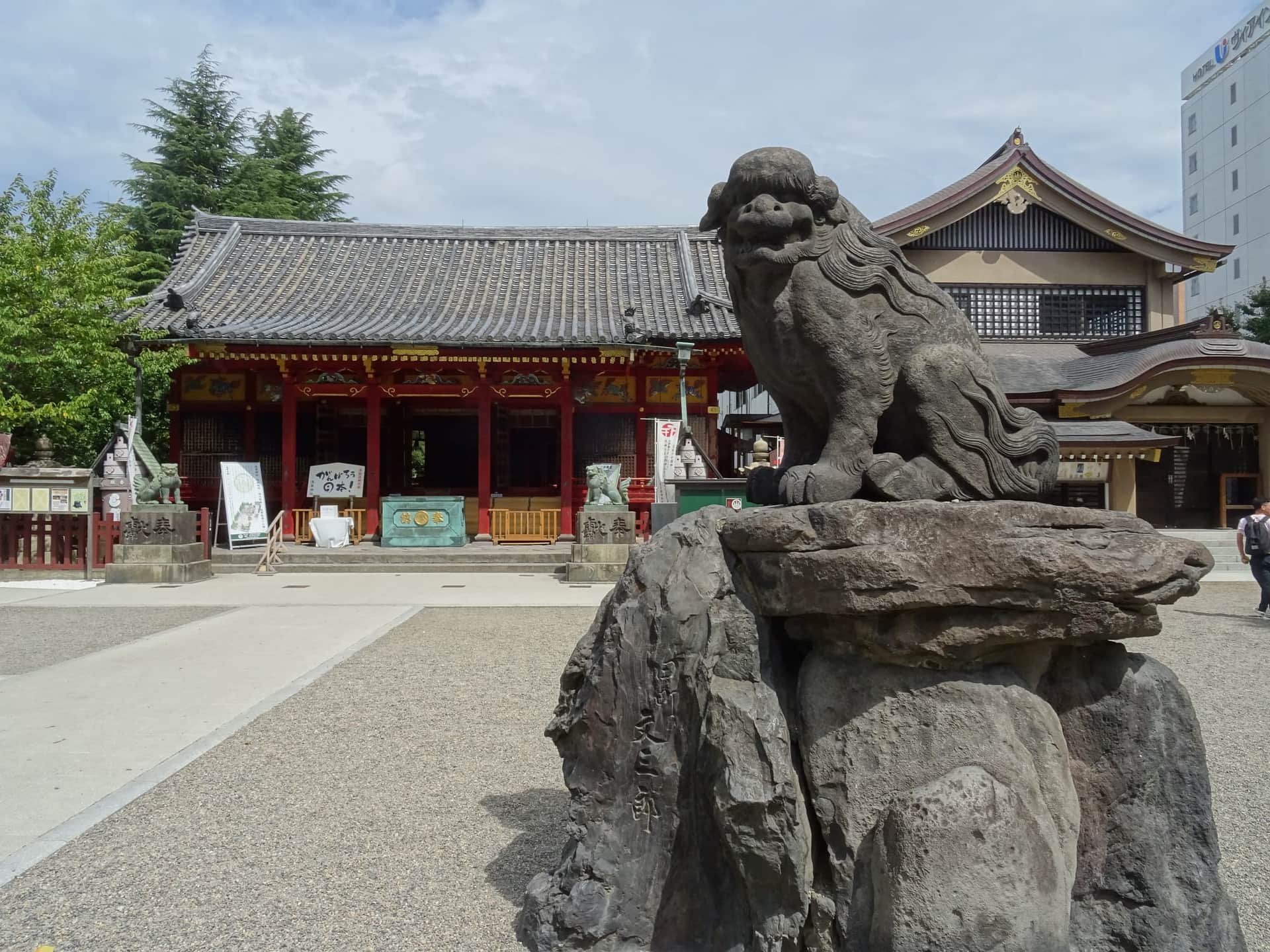
- 交通
约20分钟
待乳山圣天
Taito位于浅草的一座历史悠久的佛教寺院,以供奉欢喜天(圣天)而闻名,这是一位象头财富与姻缘之神。该寺以萝卜供奉和独特的山顶位置而著称,可俯瞰隅田川,吸引着祈求繁荣昌盛的参拜者。
预计参观 · 45 分钟免费入场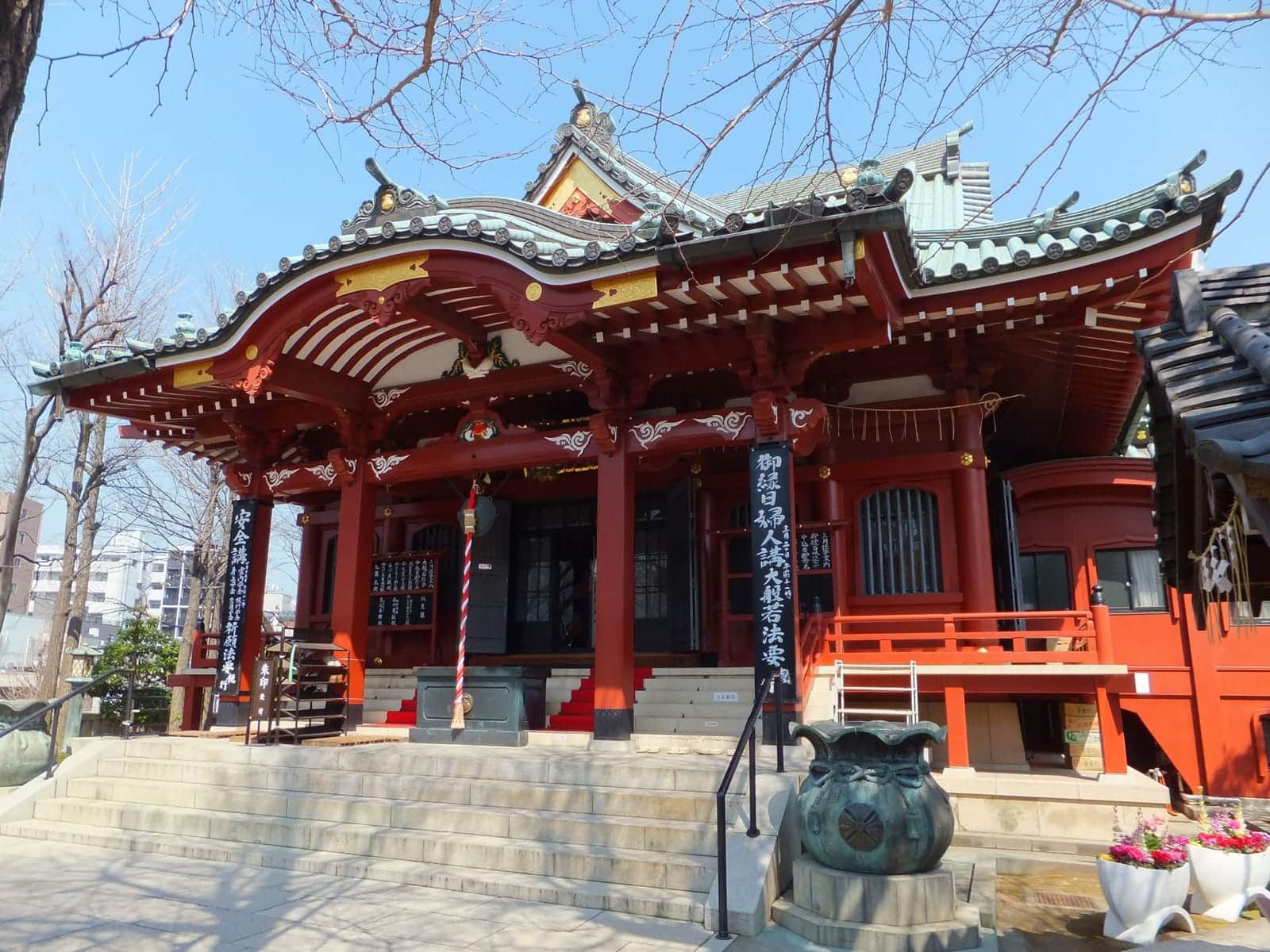
今户神社
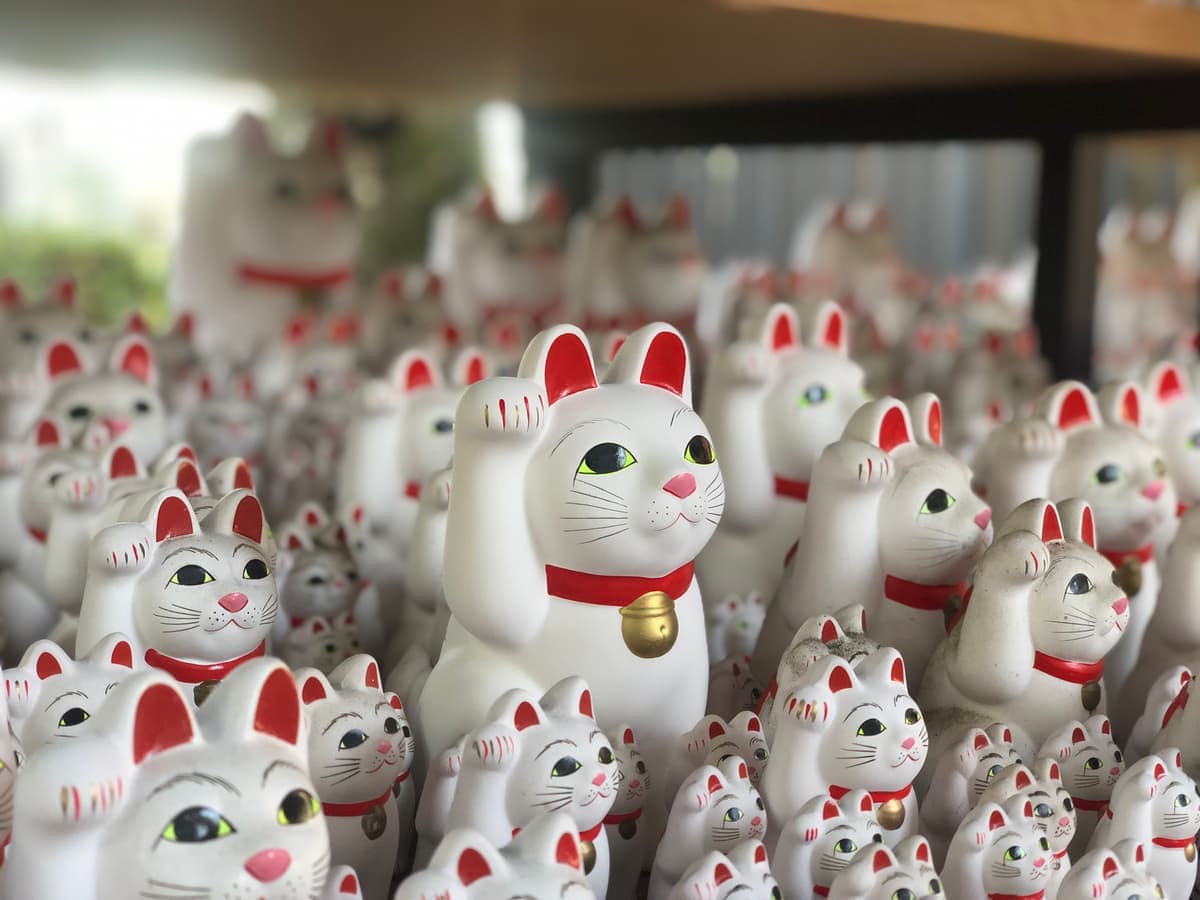
TaitoA sea of beckoning paws greets you here—rows of glossy figures with raised arms, their expressions serene yet inviting. This is Imado, in Asakusa, eastern Tokyo, celebrated as the birthplace of the maneki‑neko, the “beckoning cat” that has waved good fortune across Japan and beyond. Once a separate township, today folded into Taitō ward’s Asakusa district, Imado is also known for Imado ware and Imado dolls, folk crafts that crystallized during the Edo period (1603–1868). The story that animates this neighborhood is disarmingly simple—a legend of an old woman who, after a dream, shaped cat figures from local clay—and yet its cultural impact is immense: merchants adopted the figure as a good‑luck emblem, and an image born in backstreet kilns came to symbolize prosperity in storefronts from Edo to the world. Historical Foundations To appreciate Imado, begin with the city it served: Edo, the bustling early modern metropolis that would become Tokyo. In the Edo period (1603–1868), local kilns here in Imado produced durable pottery and expressive clay dolls for an expanding urban market. Folk craft thrived in such neighborhoods, where artisans answered the tastes of townspeople—shopkeepers, entertainers, pilgrims—whose daily lives were saturated with objects promising security, success, and small delights. Within this context, a tale took shape and endured: an old woman, poor but pious, dreamed that she should model cat figures. She followed the vision, molding cats from clay; the figures sold, and with them her fortunes rose. However spare, this legend provided a human origin for the maneki‑neko, rooting the popular charm in the hands and hopes of an individual craftsperson. What matters historically is the outcome: these folk crafts spread through Edo, and merchants—sensitive to signs that attracted customers—adopted the beckoning cat as an emblem of good luck. The figure was easy to recognize, easy to reproduce, and easy to place in shop windows. Over time, the cat’s beckoning gesture became part of the visual vocabulary of Edo’s streets. Imado’s identity—interlacing neighborhood, workshops, and a storied object—persisted as administrative boundaries changed. Once a separate township, it is now administered within Taitō ward, anchored in Asakusa, an area famous for layered urban culture. There is no UNESCO listing here, and yet its intangible heritage—craft, story, and symbol—has proven as durable as fired clay. Architectural Mastery Imado’s “architecture” is the architecture of making: kilns, workshops, and shopfronts where clay became commerce. During the Edo period, local kilns in Imado turned out Imado ware—utilitarian pottery—and clay dolls shaped, dried, and fired for affordability and charm. The process was straightforward: workable clay was hand‑shaped or pressed into simple molds, then dried carefully to prevent cracking. Firing hardened the pieces; hand‑painting supplied faces, gestures, and color. The resulting Imado dolls were expressive rather than monumental—meant for the hand and the hearth, not for palace display. The maneki‑neko belongs to this world of practical, reproducible craft. Its power lies not in monumental scale but in a standardized silhouette: rounded body, upright posture, paw raised in a beckoning arc. Such a design can be modeled repeatedly, painted with variation, and sold at price points a shopkeeper could afford. In that sense, the figure is a masterpiece of Edo‑period product design—recognizable at a glance, instantly legible in a shop window, endlessly adaptable in surface detail while stable in form. Imado’s artisans specialized in precisely this balance. As you walk today, the “built environment” that matters are the shops and studios where the lineage continues: window displays that read like a catalog of gestures; shelves that perform a visual chorus of inviting paws; workbenches where contemporary makers still shape and paint. The craft’s architecture—tables, tools, drying racks—is modest, but it reveals a sophisticated choreography of labor and object that has changed little in principle since the Edo period. Religious & Cultural Significance Though not a temple precinct, Imado sits within the spiritual economy of Edo‑Tokyo, where belief, commerce, and daily life interlace. The maneki‑neko embodies this fusion: a good‑luck figure meant to beckon prosperity. In the Edo period, such objects acted as practical talismans; a shopkeeper might place one by the entrance as an inviting signal to passersby. The merchants of Edo embraced it for the same reason modern businesses still do: it communicates welcome and hope in a language anyone can read. The legend of the old woman is crucial here. It locates fortune not in imperial patronage or esoteric ritual, but in the humble act of crafting. That democratization of luck—prosperity made tangible through a small clay figure—suitably reflects the ethos of Asakusa, historically a district of entertainers, traders, and artisans. Over time, the maneki‑neko transcended its neighborhood origins to become a ubiquitous sign in Japan and across East Asia, yet its cultural DNA remains deeply Imado: handmade, affordable, and optimistic. Across the Asakusa area today, you will find constant references to the legend—cards, posters, and mascots that echo the gesture; shops that curate shelves of beckoning cats as if arranging small altars to prosperity. While there is no single “correct” ritual practice attached to the figure, the act of choosing one, placing it at a threshold, and letting it “work” is itself a vernacular devotion. Natural Setting & Environment Imado’s environment is urban and intimate: Asakusa’s narrow streets, low storefronts, and lively pedestrian rhythms. The key natural material here is the earth itself—the clay that once sustained local kilns and continues to underwrite the craft identity of the area. Rather than dramatic mountain vistas or temple gardens, Imado offers a different aesthetic: the warm tactile presence of hand‑shaped clay, the matte and gloss of glazes under changing daylight, and the human‑scaled streets where craft and commerce meet. Seasonally, the neighborhood’s energy shifts with foot traffic—busy on weekends, contemplative on weekday mornings—allowing you to experience the figurines in differing lights. Because the heritage here is woven into the everyday cityscape, it feels alive: not preserved under glass, but encountered in shop windows, studio benches, and the quick exchange of buyer and maker. Visitor Experience & Heritage What can you see today? Expect a rich concentration of shops and studios selling maneki‑neko figurines, Imado ware, and Imado dolls. Look for visual nods to the legend of the old woman—illustrations, signage, or small narrative displays. Many shops present families of cats in varied sizes, sometimes grouped in themes, which helps you sense how the figure migrated from artisan bench to marketplace display. The pleasure is comparative: notice the subtle differences of expression, the angle of the raised paw, the interplay of color and glaze—all clues to the hand of the maker. Because Imado is administered within Taitō ward’s Asakusa district, it sits within easy reach of other cultural highlights, yet it retains a distinct identity anchored in craft. There is no UNESCO designation here, which is oddly liberating: the heritage feels unceremonious and participatory. Buying a small figure is not just shopping; it is engaging with a living tradition that stretches back to the Edo period (1603–1868). If you enjoy context, ask shopkeepers about their stock—many are happy to explain patterns, price ranges, and how these objects fit into local custom. As a symbol, the maneki‑neko has traveled far, but its most resonant address remains here, where the story began: a neighborhood that turned imagination into clay, clay into figures, and figures into a citywide language of welcome. The experience is quiet yet powerful. You trace the arc from legend to kiln to shop window, and in that journey, you glimpse how everyday objects carry the weight of a city’s memory. Imado may not boast grand halls or towering gates, but it offers something equally enduring: a concentrated lesson in how craft, commerce, and belief interlock—and how a small figure with a raised paw came to beckon the modern world.
预计参观 · 45 分钟免费入场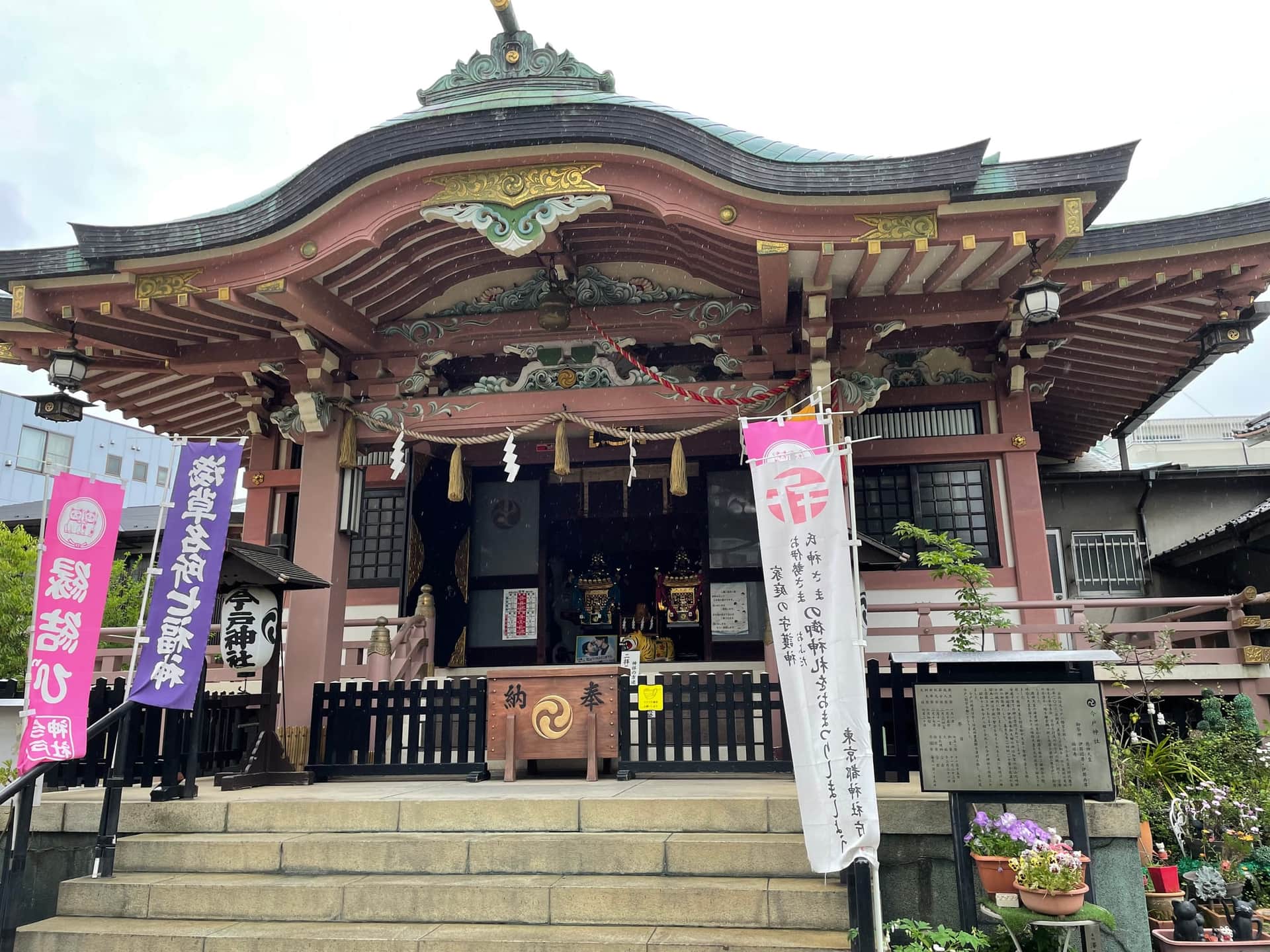
- 交通
约20分钟
小野照崎神社
Taito小野照崎神社是位于东京都台东区下谷的一座历史悠久的神社,靠近入谷站和莺谷站。传统上创建于852年,供奉小野篁,以山顶神社境内和下谷坂本富士冢而闻名,后者是重要有形民俗文化财产。
预计参观 · 45 分钟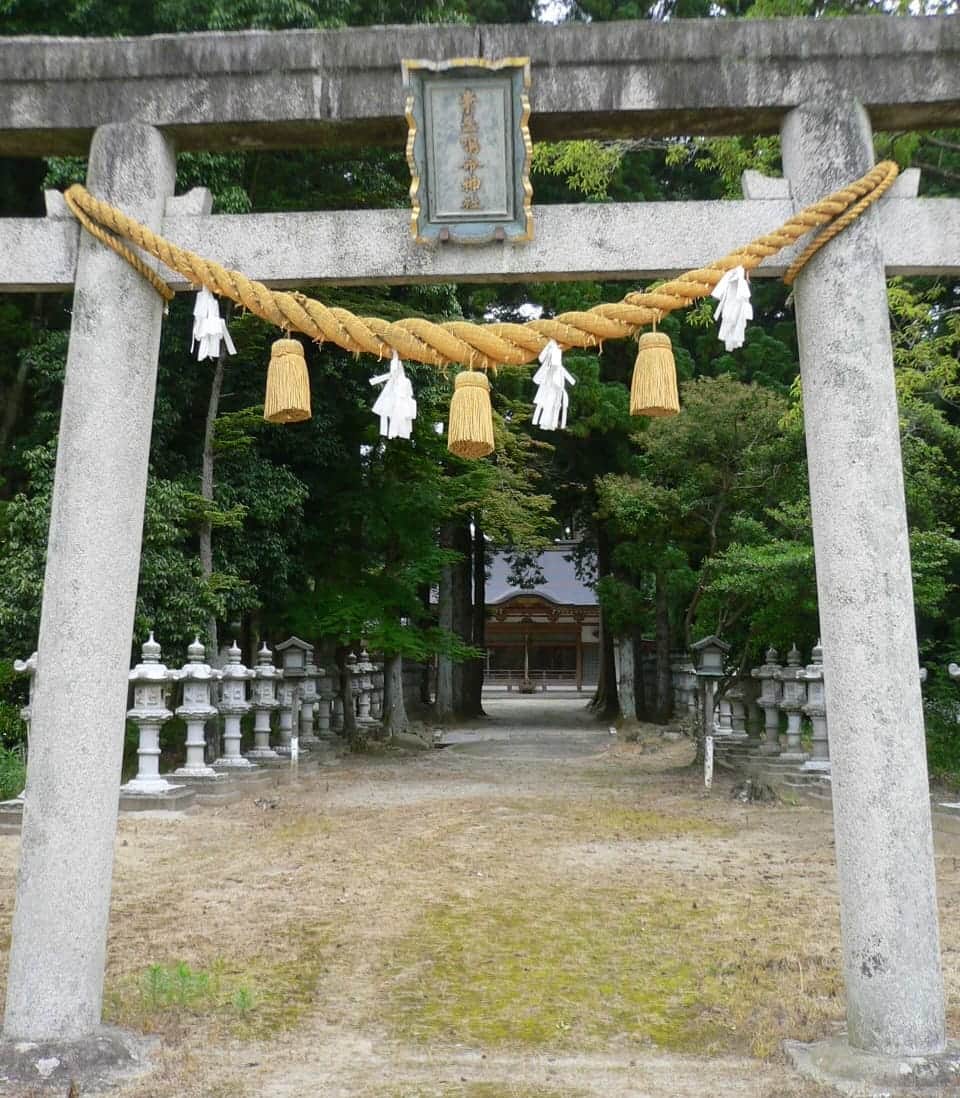
上野到神田
- 4个地点
- 含参观约180分钟
不忍池辩天堂
TaitoA 17th-century Buddhist temple hall dedicated to Benzaiten, goddess of water, music, and fortune. Located on an island in Shinobazu Pond within Ueno Park, the temple is surrounded by lotus flowers and accessible via a short bridge, creating a serene atmosphere.
预计参观 · 30 分钟免费入场10 人到访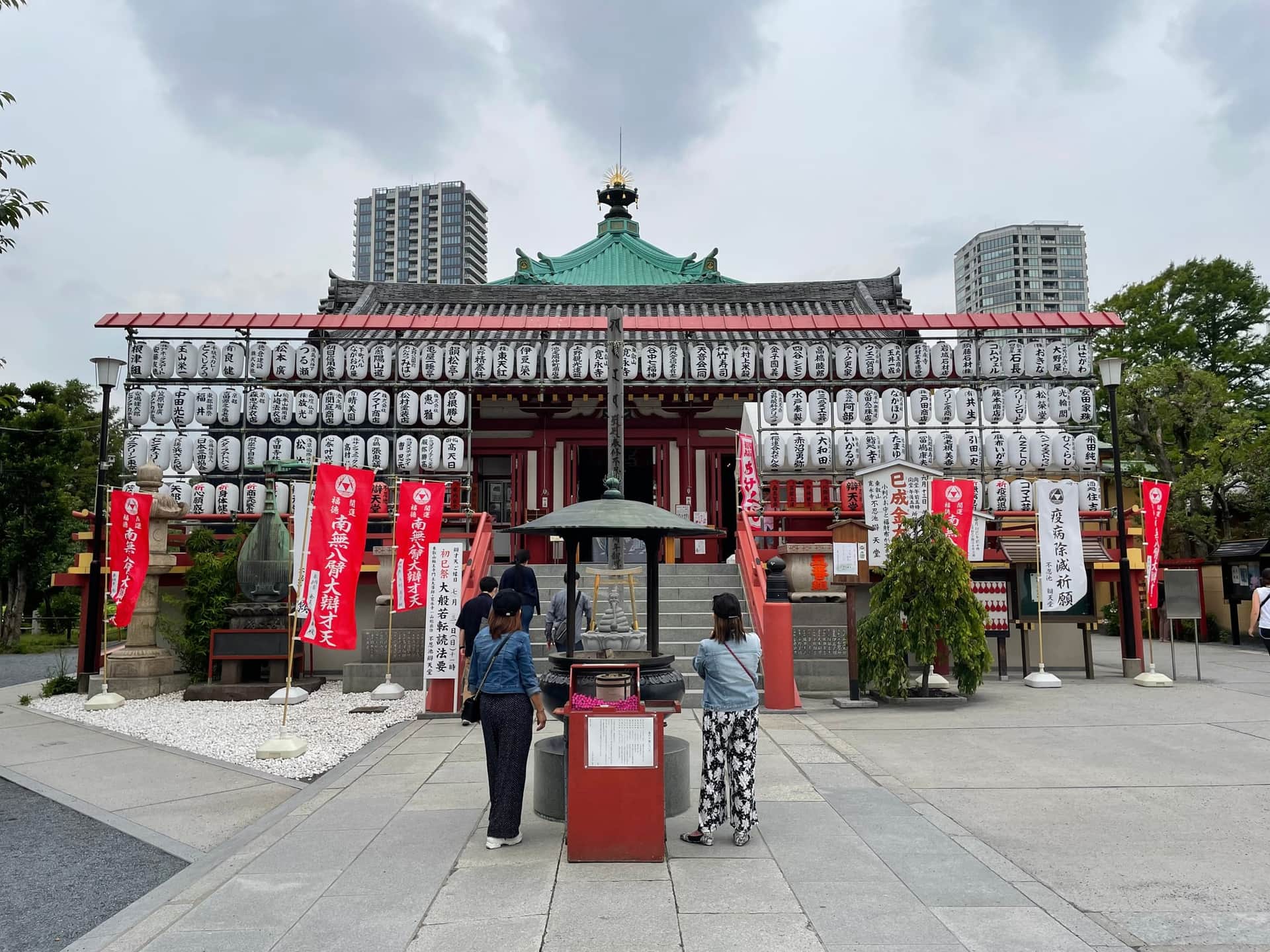
宽永寺
TaitoHistoric Tendai Buddhist temple founded in 1625, once a vast complex rivaling Enryaku-ji. Served as the Tokugawa family temple and housed six Tokugawa shoguns. Largely destroyed in 1868 during the Boshin War, the remaining structures preserve its legacy.
预计参观 · 45 分钟免费入场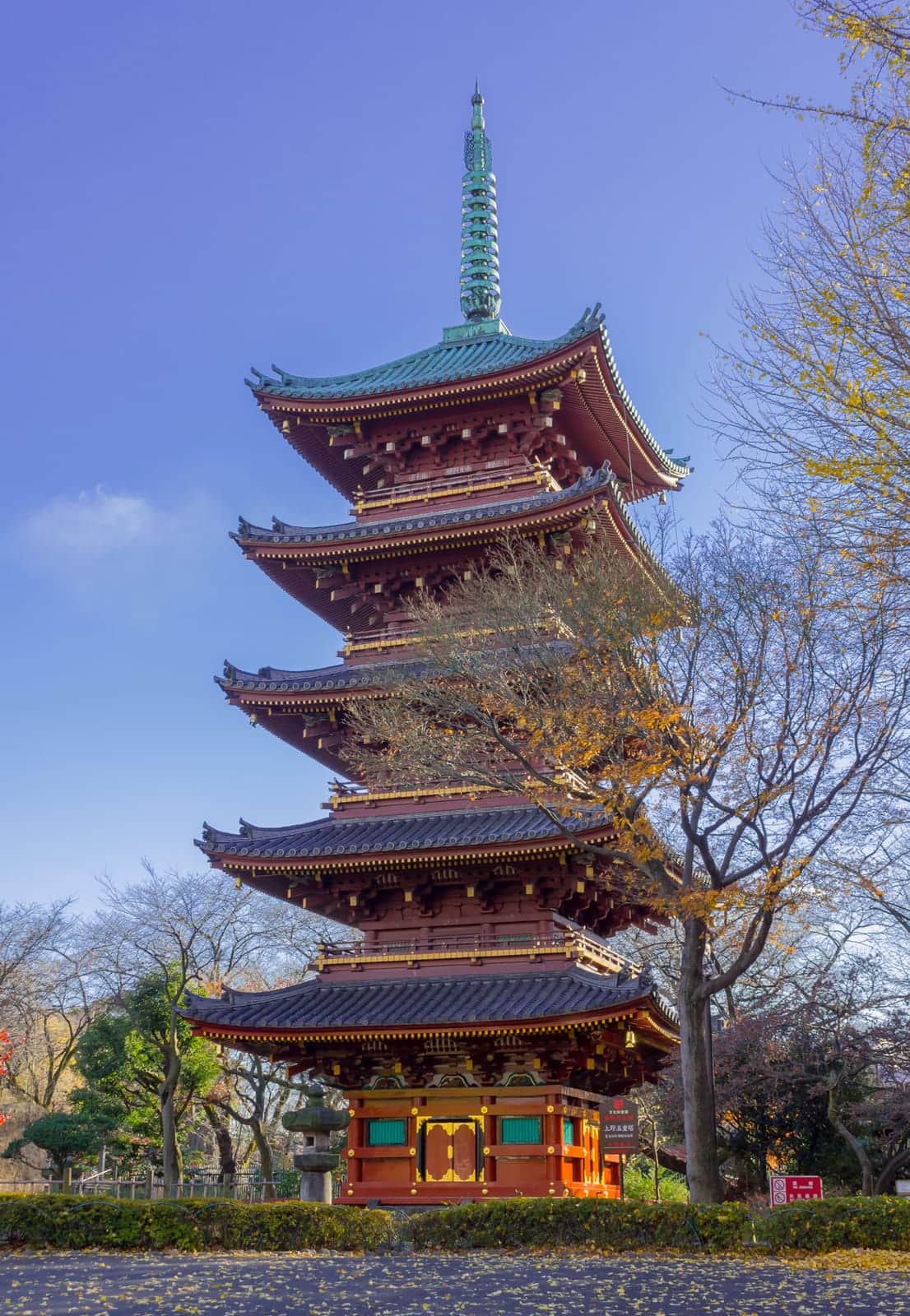
- 交通
约20分钟
湯島天滿宮
Bunkyo汤岛天满宫(湯島天満宮)是位于东京都文京区的一座神社。它坐落在城市街区内,既是当地神道教信仰场所,也是游客探索该地区社区神社和日常宗教景观的实用文化景点。
预计参观 · 45 分钟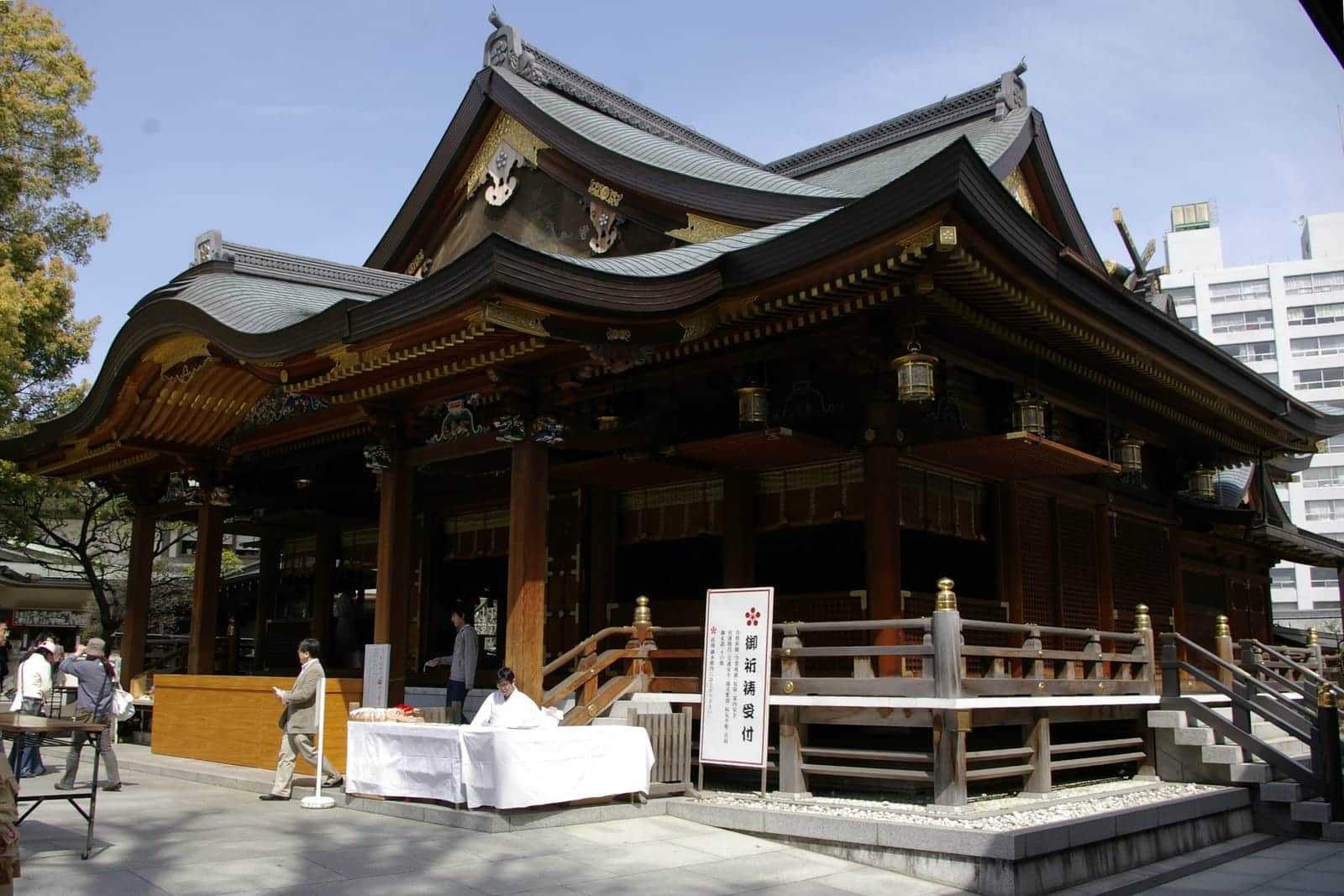
Kanda Myoujin
Chiyoda预计参观 · 60 分钟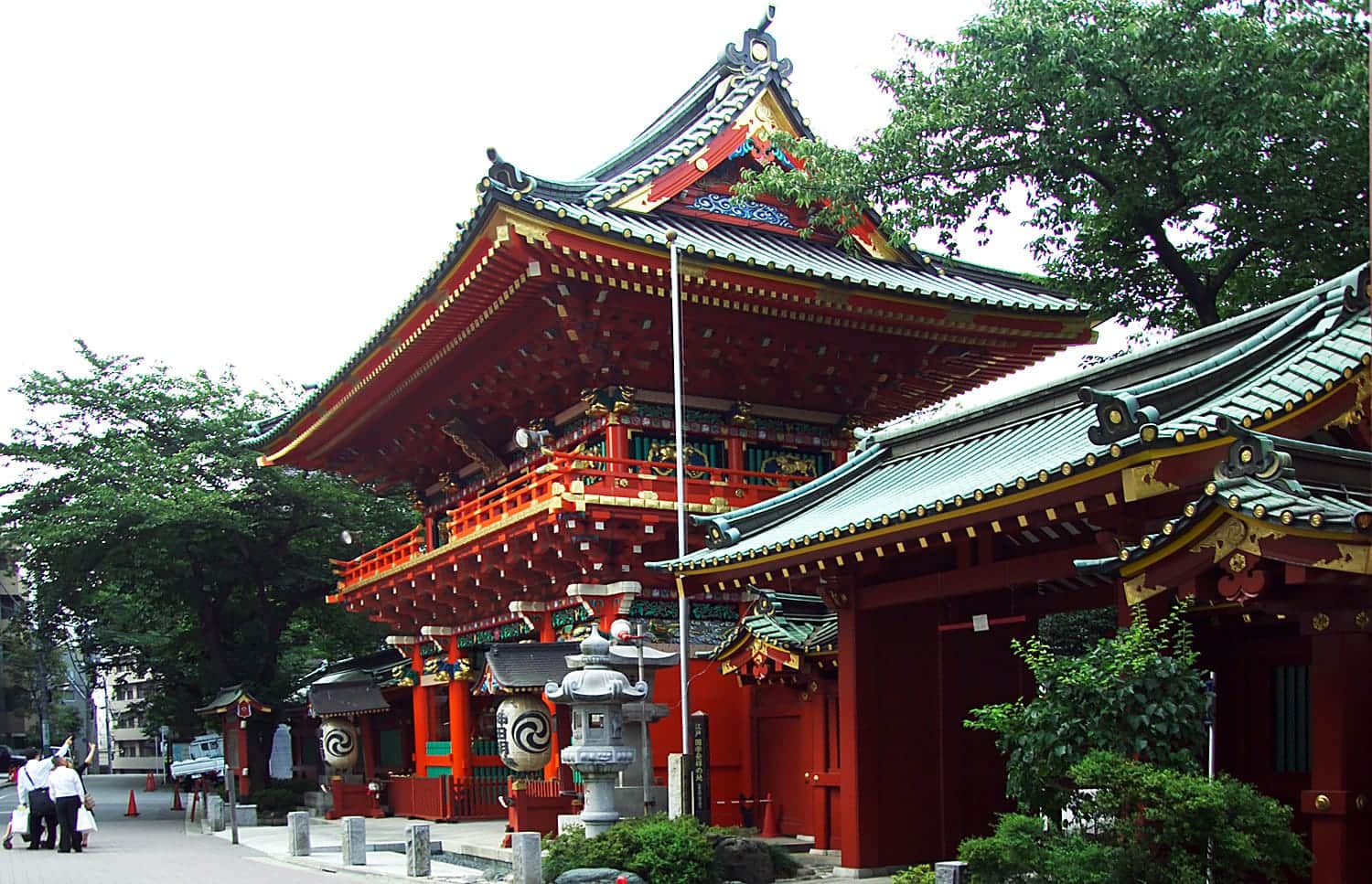
探索东京都的更多方式
为下一次旅行寻找更短、更清静或更深入的路线。
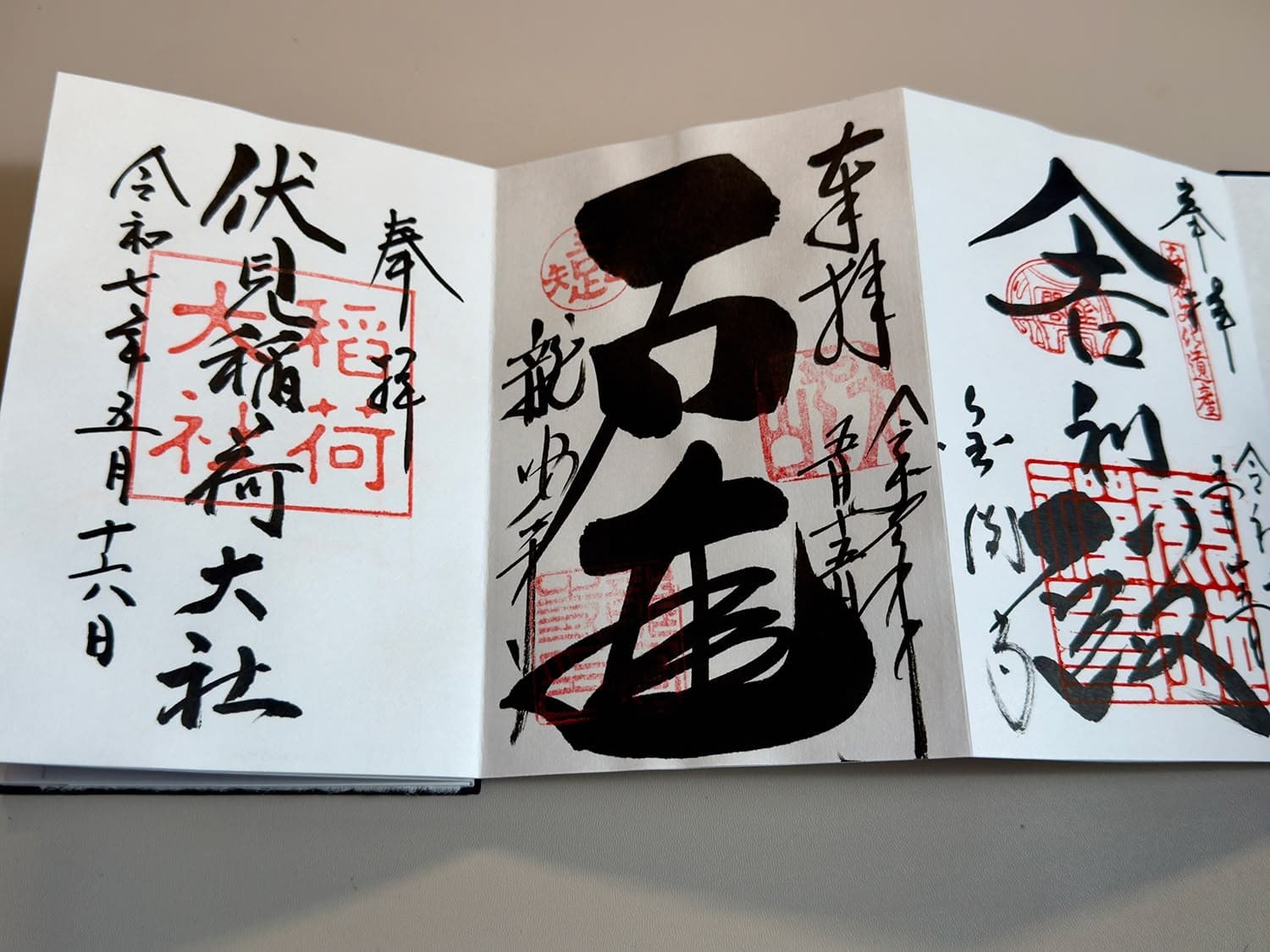
初次御朱印
了解御朱印参拜的工作原理,然后跟随一条轻松的一日路线,游览初学者友好的寺庙和神社,节奏舒适。
- 1 天
- 4 个停靠点
- 东京都
 Pro
Pro隐秘东京
一条为期两天的路线,途经东京较为安静的神社和小街,是当你想在远离最繁忙线路的地方进行有意义的御朱印参拜时的理想选择。
- 2 天
- 8 个停靠点
- 东京都
 Pro
Pro东京动物神社
为狐狸、猫咪和动物主题神社的收藏者设计的两日东京路线,专为喜爱更具特色御朱印主题的收集者而建。
- 2 天
- 9 个停靠点
- 东京都
 Pro
Pro东京深度探索
一个五天的东京计划,适合准备超越常见景点的收藏者,混合独特的御朱印、较为安静的地区和更深入的城市覆盖。
- 4 天
- 20 个停靠点
- 东京都
 Pro
Pro谷根千漫步
一次缓慢的一日漫步,穿过谷中、根津和千駄木,结合了老东京的氛围和少量精心挑选的御朱印景点。
- 1 天
- 5 个停靠点
- 东京都