
Look for the sacred monkey statues, known as masaru, meaning 'to prevail' or 'to ward off evil,' instead of the usual guardian dog statues. Touch the father monkey for business success and the mother monkey for family safety.
概览
Slip from Tokyo’s corridors of power into a sudden splash of vermilion. In the heart of Nagatachō—steps from the National Diet—this sanctuary reveals itself through a tunnel of crimson torii leading up a hillside to a complex rebuilt in 1958 yet rooted in a story that begins in 1478. This is Hie Shrine—once the tutelary shrine of Edo Castle, now one of the Tokyo Ten Shrines—dedicated to Oyamakui-no-kami, the guardian deity of mountains and the spiritual anchor of the capital’s Sannō faith. Celebrated for the Sannō Matsuri, among the three great festivals of old Edo, Hie is where ancient devotion and modern city pulse meet: a shrine that burned, moved, survived wartime devastation in 1945, and rose again to continue blessing the center of Japanese government and the millions who pass through this district each year.
Hie’s story begins amid the formative years of Edo, long before skyscrapers and subways. In 1478, the military tactician and castle-builder Ōta Dōkan fortified his new stronghold on a low hill overlooking a tidal estuary. With the founding of his castle came the indispensable spiritual counterpart: a guardian shrine to protect the domain. Tradition holds that this act planted the seed of Hie Shrine—a tutelary presence charged with safeguarding the nascent castle town that would later become Tokyo.
The shrine’s destiny transformed in the early seventeenth century when Tokugawa Ieyasu chose Edo as the seat of his shogunate. Recognizing the protective prestige of Hie’s deity and the deep cultural pull of the Sannō tradition, Ieyasu relocated and patronized the shrine in the opening decades of the 1600s, elevating it as the spiritual guardian of the new shogunal capital. From then on, Hie stood not just as a local protector but as the official tutelary shrine of Edo Castle—its rituals intertwined with the rhythms of governance and city life.
The centuries that followed were marked by both growth and fragility. Edo, a city of wood and paper, repeatedly suffered conflagrations. Hie’s precincts, too, burned more than once, each time rebuilt through the backing of shoguns, daimyō, and townspeople who understood the shrine’s protective role over the city. This cycle of destruction and renewal culminated in the most devastating blow: the 1945 air raids of the Second World War, which obliterated much of central Tokyo and destroyed Hie Shrine’s buildings.
Resilience defines Hie’s modern chapter. In 1958, the shrine was reconstructed in reinforced concrete, a pragmatic and forward-looking choice that allowed traditional forms to live securely within modern materials. The new complex retained the recognizable silhouette of a Shinto shrine while acknowledging the realities of postwar urban Tokyo. Today, Hie’s presence, a survivor reborn, speaks to continuity: of community, of state, and of faith in a city that has rebuilt itself more than once.
Approach Hie from any direction and architecture guides the body into devotion. The first encounter is often the Sannō Torii—a distinctive gateway type associated with the Sannō tradition—announcing a threshold between the secular and the sacred. The torii is more than a symbol; its proportions and elegant lines frame a path, focus the gaze, and prepare the mind for ritual space. At Hie, the Sannō Torii stands as a visual signature of the shrine’s identity.
Climb next through the famous torii-lined staircase, a corridor of vermilion that turns the act of ascent into a rhythmic experience: step, shadow, light, step. This stairway—photographed by countless visitors—distills a key architectural idea of Shinto space: repetition generates holiness. Each gate reiterates that you are crossing from the everyday to the precinct of the kami, and the repetitive geometry makes your movement intentional, meditative.
At the complex’s center are the twin hearts of shrine architecture: the Honden (sanctuary) and the Haiden (worship hall). The Haiden is where the public kneels, claps, and prays; it is an open, inviting volume designed to embrace the congregation. Beyond it, aligned on the same axis but set off-limits to most, the Honden enshrines Oyamakui-no-kami. It is here—within the sanctuary—that offerings are made, norito prayers are chanted by priests, and the deity’s presence is ritually affirmed.
Rebuilt in 1958, Hie’s structures are composed of reinforced concrete—a deliberate choice after wartime loss—given surfaces and profiles that echo traditional shrine carpentry. Rooflines reference classic Shinto forms with broad eaves and pronounced ridgelines that shelter the building and soften its mass. The exterior palette emphasizes vermilion and white, accented with metal fittings, conjuring continuity with prewar aesthetics while ensuring durability in Tokyo’s seismic, urban environment.
This fusion of traditional expression and modern engineering characterizes postwar shrine reconstruction across Japan, but Hie’s example is especially resonant given its role as guardian of Edo and neighbor to Japan’s contemporary political institutions. The effect is simultaneously timeless and contemporary: stone, concrete, and bright paint adaptable to decades of heavy use by worshippers, officiants, and festival teams.
Finally, pay attention to the textures underfoot and overhead. Stone pavements and broad stairways choreograph movement; lanterns illuminate courtyards in evening ceremonies; banners announce rites and festivals. The shrine precinct is not a museum diorama—it is a functioning ritual machine, adaptable and sturdy, built for annual cycles of prayer, celebration, and community.
Hie Shrine enshrines Oyamakui-no-kami, a powerful mountain and tutelary deity at the core of the Sannō tradition. The word “Sannō” literally means “Mountain King,” signaling the deity’s protective authority and the religious geography that once connected Tokyo to the wider sacred landscape of Japan. Historically, the Sannō faith has strong roots in the guardianship of Mount Hiei and the capital, and Tokyo’s Hie Shrine serves as a metropolitan anchor for this devotion.
As the historic tutelary shrine of Edo Castle, Hie’s rituals were linked to the wellbeing of the city and its rulers. Prayers for protection from fire, disease, and misfortune—pressing concerns in a wooden city—were central. Ceremonies marking seasonal transitions, prosperity, and safe governance further entwined the shrine with civic life. This public-facing religious role lives on in the shrine’s schedule of rites and its most famous celebration: the Sannō Matsuri.
The Sannō Matsuri is among Edo’s three great festivals, alongside the Kanda and Fukagawa festivals, and its history stretches back to the Tokugawa era. Its grand processions occur in even-numbered years, with portable shrines, priests, musicians, and parishioners traveling in ceremonial order through the city center. In the Edo period, the Sannō procession held rare privilege: authorization to enter the castle precincts, signaling Hie’s unique bond with political authority. In modern times, while the route has adapted to public streets and urban logistics, the festival still manifests as a city-wide blessing—an annual rhythm that connects ancient rite and modern capital.
Beyond the festival, Hie acts as a compass for everyday spirituality. Shinto weddings, new-year prayers (hatsumōde), and rites of purification punctuate the calendar. Office workers on lunch break step in for a quick bow and a coin offering; parents bring children for milestone blessings; and petitioners buy amulets for safe business, good health, or exam success. The shrine’s proximity to political buildings adds another layer: it is a place where national policy-makers and clerks alike can seek composure, reflection, and favor from the kami, a quiet counterpart to the debates across the street.
Hie’s status as one of the Tokyo Ten Shrines underscores its civic importance. This elite group, distributed across the metropolis, collectively safeguards the city. Membership signals a historical mandate: not merely a neighborhood shrine, but a guardian operating on the scale of the capital.
Finally, consider how Hie bridges eras. It embodies the continuity of Shinto practice—the honoring of kami, the purity of space, the seasonal round of celebrations—while standing squarely in a hypermodern district. This tension is not a contradiction but a strength. The shrine’s resilience in 1945, its 1958 rebirth, and the ongoing vitality of the Sannō Matsuri demonstrate a living tradition capable of renewal without losing its essence.
Nagatachō is a district built for policy and power—broad avenues, stately government buildings, sweeping stone. Hie Shrine softens this geometry. The precinct occupies a modest rise, and the approaches make clever use of topography: long stairs and the famed torii-lined slope translate a change in elevation into a pilgrim’s ascent. Even modest hills matter in Shinto. They lift the worshipper, reveal sky, and create a sense of threshold. In a city so heavily engineered, this gentle relief is a perceptible change in atmosphere.
The shrine grounds weave greenery into the urban grid. Trees flank stone paths; small courtyards open to sky; shrubs and plantings frame the main axis from Sannō Torii to worship hall. Light and shadow play across the vermilion surfaces, and breezes passing through the gates produce a quiet rustle that contrasts with nearby traffic. Seasonal changes—soft spring light, the heat shimmer of midsummer, autumnal clarity, winter crispness—give the precinct a cyclical mood that mirrors Shinto’s calendar of rites.
Space is also choreographed to offer moments of pause. Step aside from the main approach and the bustle thins; a side path, a lantern, a stone basin for purification recalibrate your senses. Water, stone, and wood—arranged with restraint—contribute to the overall feeling of clarity that Shinto strives for. The shrine’s environment may not be a sprawling landscape garden, but it functions as a spiritual garden: a vessel for calm in the city’s most intense district.
And yet, the skyline is always near. Look up from the courtyard and modern Tokyo frames the sacred space: office towers, the silhouette of the National Diet, and, depending on your vantage, glimpses into Akasaka’s high-rise canyons. This juxtaposition—vermilion gates against glass and steel—makes Hie a signature sight in contemporary Tokyo and a case study in how the sacred inhabits the city rather than escaping it.
Arriving is part of the experience. The shrine lies within easy reach of Akasaka and Tameike-Sannō stations, and the walk from either point heightens the contrast between civic bustle and shrine serenity. As you approach, the first threshold is a torii—pause here. Bow lightly before passing beneath; then continue toward the courtyard where the Haiden awaits. If the torii-lined staircase is on your route, consider climbing its corridor of gates for a more dramatic approach and a striking photo opportunity.
At the Haiden, you’ll find the familiar ritual choreography: bow twice, clap twice, offer your prayer, and bow once more. The sound of the claps echoes under the broad eaves and across the stone paving. From here, you can admire the alignment of the complex: the Haiden opening to the courtyard and, beyond, the Honden housing Oyamakui-no-kami. While access to the Honden is restricted, seasonal ceremonies sometimes spill outward, letting visitors glimpse the patterned movements of priests and attendants.
Elsewhere in the precinct, you can explore additional gates and sub-precincts, each scaled to different forms of devotion. Chōzuya basins for ritual purification—cool water over cupped hands—offer a sensory reset. Amulet counters present a spectrum of talismans tuned to modern needs: safe travels, good business, academic success, health. The design language is deliberately contemporary-traditional: clean signage, practical circulation, and durable finishes that welcome thousands of daily visitors without losing warmth.
Hie’s festival calendar culminates in the Sannō Matsuri. In even-numbered years, the shrine’s ceremonial procession takes to the streets in a meticulously ordered parade. Portable shrines carried on shoulders, priests in formal robes, musicians keeping rhythm—the city becomes a stage for blessing. Watching the procession pass through business districts and government neighborhoods is to see a centuries-old rite reconciling the sacred with the civic. Between major processions, annual rites maintain continuity: purification ceremonies, harvest thanksgiving, and New Year observances ensure that rituals touch every season.
Historically, Hie was privileged in ways few shrines could claim. In Edo times, the Sannō Matsuri procession entered castle precincts—a literal crossing into centers of power that cemented Hie’s role as protector of the political heart. That privilege, transmuted into modern forms, survives as proximity: today, the shrine stands beside the institutions of national governance, offering a spiritual counterpoint to policy and debate.
In heritage terms, Hie is notable not for ancient timber preserved against time but for resilient tradition preserved through rebuilding. The complex is not UNESCO-listed, and its current buildings date to 1958, yet the shrine’s cultural status within Tokyo is deeply felt: it is a key node in the Tokyo Ten Shrines, it anchors the Sannō faith in the capital, and it embodies the continuity of devotion from 1478 to the present. That continuity is what visitors come to witness and participate in: an ongoing relationship between deity and city, renewed with each bow and clap.
For those who appreciate architectural detail, linger at the Sannō Torii. Compare its profile to the more common torii seen elsewhere in Japan: subtle differences in proportions and the way the top elements meet give the Sannō type its identity. Then turn back to the Haiden and note how the broad eaves shelter worshippers from sun and rain, creating an outdoor room where the boundary between building and courtyard dissolves—a hallmark of shrine design, here executed in robust postwar materials.
If you’re visiting around midday, you may share the courtyard with office workers on their lunch break, pausing for a moment of quiet or sipping tea on the steps. In the early evening, lanterns begin to glow, and the shrine shifts into a more contemplative register. During festival preparations, the energy changes again: ropes, palanquins, and ceremonial gear appear; priests rehearse; banners unfurl. Each phase reveals a different facet of Hie’s living heritage.
Practical orientation matters in an urban shrine, and Hie’s layout is intuitive. Major paths converge on the main courtyard; signage directs you without intruding; thresholds are legible. The shrine’s staff navigates a dual brief: to maintain ritual purity and to welcome visitors from around the world. This duality reflects Shinto at its best—rooted in local practice, open to the global public.
As you prepare to leave, take one last look back through the torii. The gate frames the city beyond—taxis, suits, umbrellas, protest placards on some days, and on others the quiet of a weekend morning. This view captures Hie’s essence. It is not a retreat away from the world but a lens for seeing the world differently. For more than five centuries—from Ōta Dōkan’s first act of devotion in 1478, through Tokugawa Ieyasu’s elevation of the shrine in the 1600s, through fires, the 1945 devastation, and the 1958 reconstruction—Hie has persisted as a guardian of the capital’s wellbeing.
In that persistence lies its power. Hie Shrine shows how a city remembers: through ritual repetition, through rebuilding, through the steady return of festivals and prayers. It is a place to witness the living continuity of Japanese tradition in the very district where the nation charts its future. Whether you come for the Sannō Matsuri, for a quick prayer between meetings, or to savor the visual poetry of a torii-lined staircase in the afternoon light, you step into a story still being written—one clap, one procession, one year at a time.
The Sannō Matsuri procession was the only festival in Edo permitted to enter the castle grounds, earning it the nickname "Tenka Matsuri" (Festival of the Realm) and cementing Hie's unique bond with political power.
1945年空袭后,Hie神社于1958年使用模仿传统神社风格的钢筋混凝土重建,将现代工程技术与古老设计相结合,以适应地震多发的东京。
此 神社 提供 1 款不同的御朱印设计
通常
¥500
Look for the sacred monkey statues, known as masaru, meaning 'to prevail' or 'to ward off evil,' instead of the usual guardian dog statues. Touch the father monkey for business success and the mother monkey for family safety.
参观免费的宝物殿,每周二和周五9:00至16:00开放,可观赏17世纪的刀剑和德川家康书写的430年历史书法卷轴,彰显神社与德川家族的渊源。
请在偶数年的六月计划您的参观,以见证Sanno Matsuri(山王祭),这是东京三大江户祭典之一,届时由便携式神舆、神职人员和乐师组成的盛大游行队伍将穿过市中心...
从后门穿过90座朱红色鸟居构成的隧道,这是神社最上镜的体验,尤其是在天黑后氛围更佳,虽然主殿下午4点关闭,但鸟居通道仍可进入。
神圣的灵魂在这个神圣的地方受到崇敬
1 个境内建筑
The Treasure Hall, which holds the treasures of Hie Shrine, was built in 1979, a year after the shrine's 500th anniversary at Edo Castle in 1978. It contains 31 swords, some of which are national treasures and important cultural properties, along with many items related to the Tokugawa Shogunate.
季节性庆祝活动和特殊场合
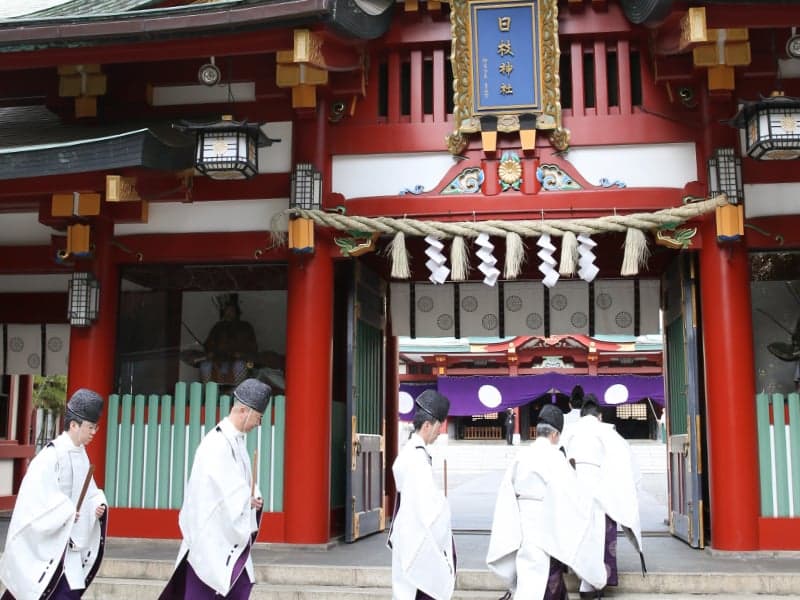
Sakutan Festival
Announcement of the start of distributing Jingū Taima and the shrine's ofuda - a Shinto rite held as household talismans are prepared for distribution to parishioner households.
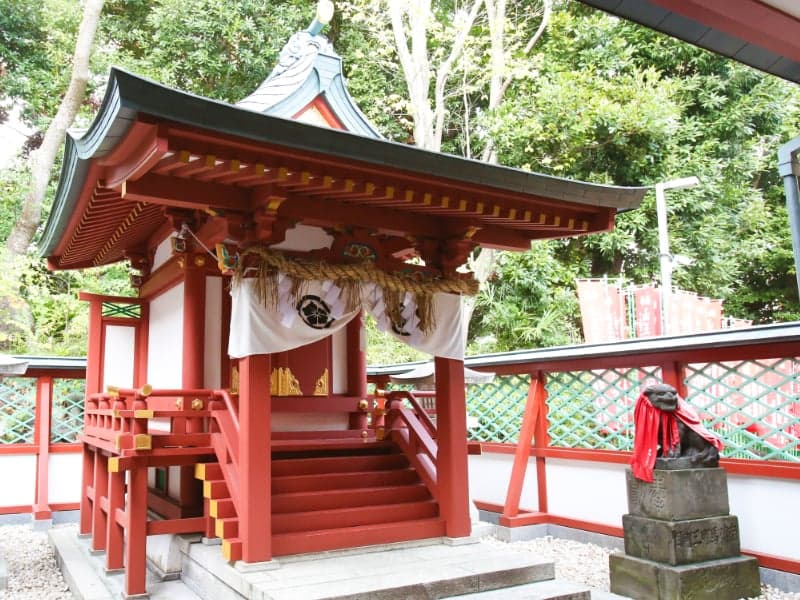
Koshin Festival
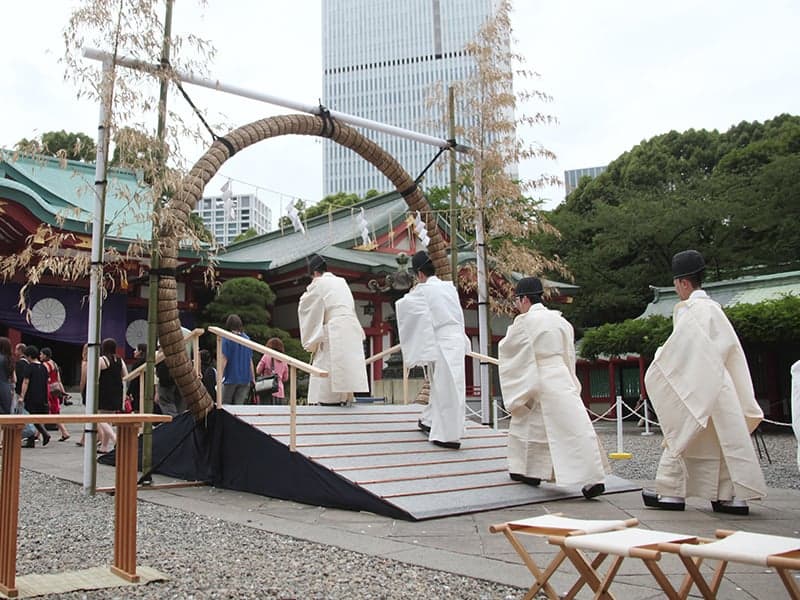
Great Purification and Fire-extinguishing Ceremony
This is a Shinto ritual in which the sins, impurities and disasters that one has committed unknowingly are transferred to a doll, and the person then passes through a "Chigo-no-Wa" (a circular ring of rice straw) to purify their body and mind.
也称为 Sanno, Hie
千代田区, 东京都 县


参观时间
45-60 分钟
与此地点相关的更多页面。
300米以内 600米以内
时刻数据:公共交通开放数据中心

A5-02.山王パークタワー
docomo bike share
A5-06.APA HOTEL PRIDE 赤坂国会議事堂前
docomo bike share
C3-30.東京赤坂NKビル (ヴィアインプライム赤坂)
docomo bike share
租借需要运营商的应用程序和日本手机号码。docomo 单日券可在便利店购买。 数据来源
据信此地能赐予的福佑
10 条最新帖子
4.5
2 条评价
Hie Shrine sits in central Tokyo, easily reached by subway. The Treasure Hall is free but only open Tuesdays and Fridays from 9:00 to 16:00, so plan around that if you want to see the 17th-century swords and a calligraphy scroll written by Tokugawa Ieyasu himself. The main shrine closes at 4 pm, so arrive with time to spare.
Instead of the usual guardian dogs, you'll find monkey statues called masaru. Touch the father monkey for business luck and the mother for family safety.
 WP
WPWilliam Perez 发表了评价
We climbed the steps in the back without realizing there’s a giant escalator in the front. It’s okay! We win these. Too many people though.
Hie Jinja
Chiyoda, Tokyo
