In questa pagina
Punti chiave
- Our first update letter brought together Digital Goshuincho, visit photos, collection milestones, and more useful maps on goshuin.com.
- Digital Goshuincho, visit photos and richer maps were the focus of our first update letter, sent on April 28, 2026. It gathered changes across several app versions and goshuin.
- Digital Goshuincho entered beta in version 1.2.4. It let you scan a goshuin, link it to the temple you visited and return to that record later. Scanning and matching were still being improved.
Digital Goshuincho, visit photos and richer maps were the focus of our first update letter, sent on April 28, 2026. It gathered changes across several app versions and goshuin.com, connecting a personal collection with the places behind it.
A digital companion to your physical book
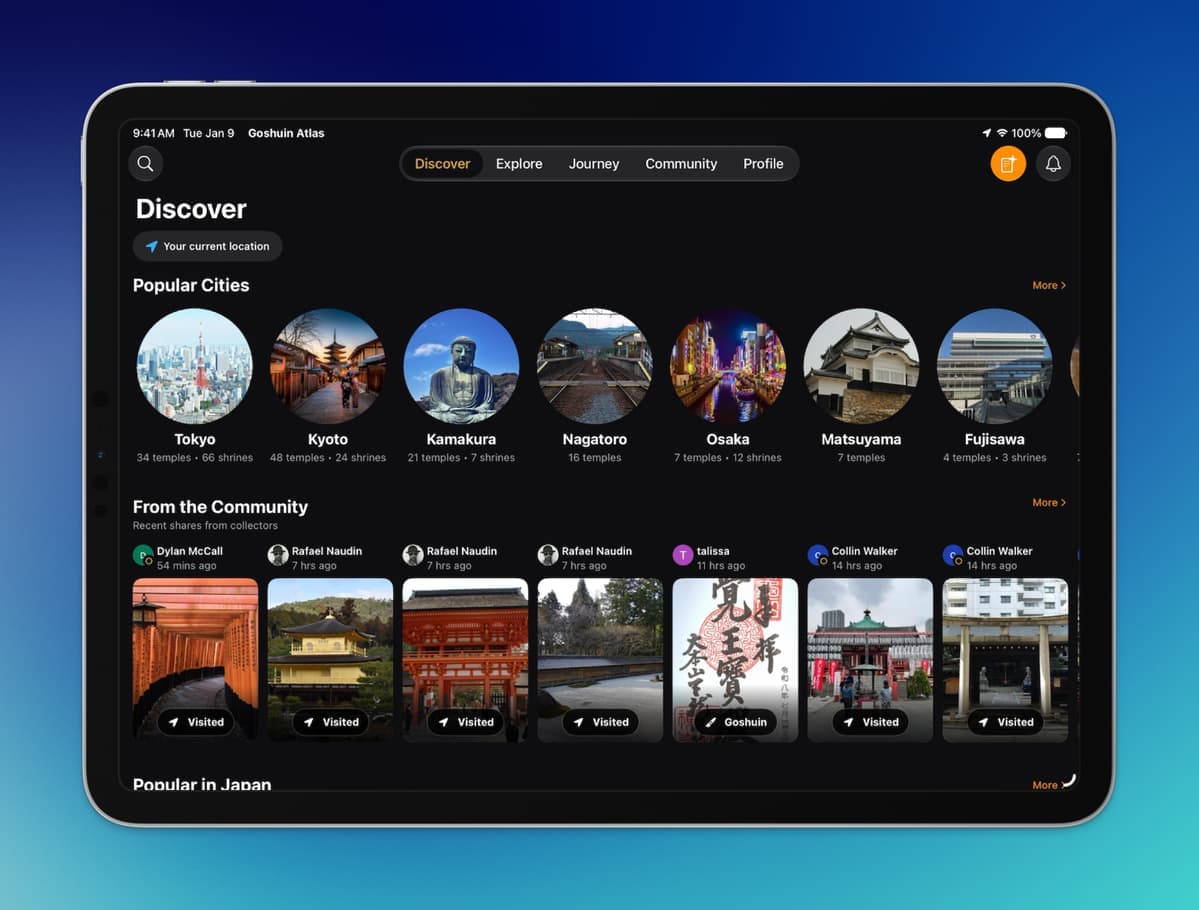
Digital Goshuincho entered beta in version 1.2.4. It let you scan a goshuin, link it to the temple you visited and return to that record later. Scanning and matching were still being improved.
The Digital Goshuincho beta as shown in the April letter.
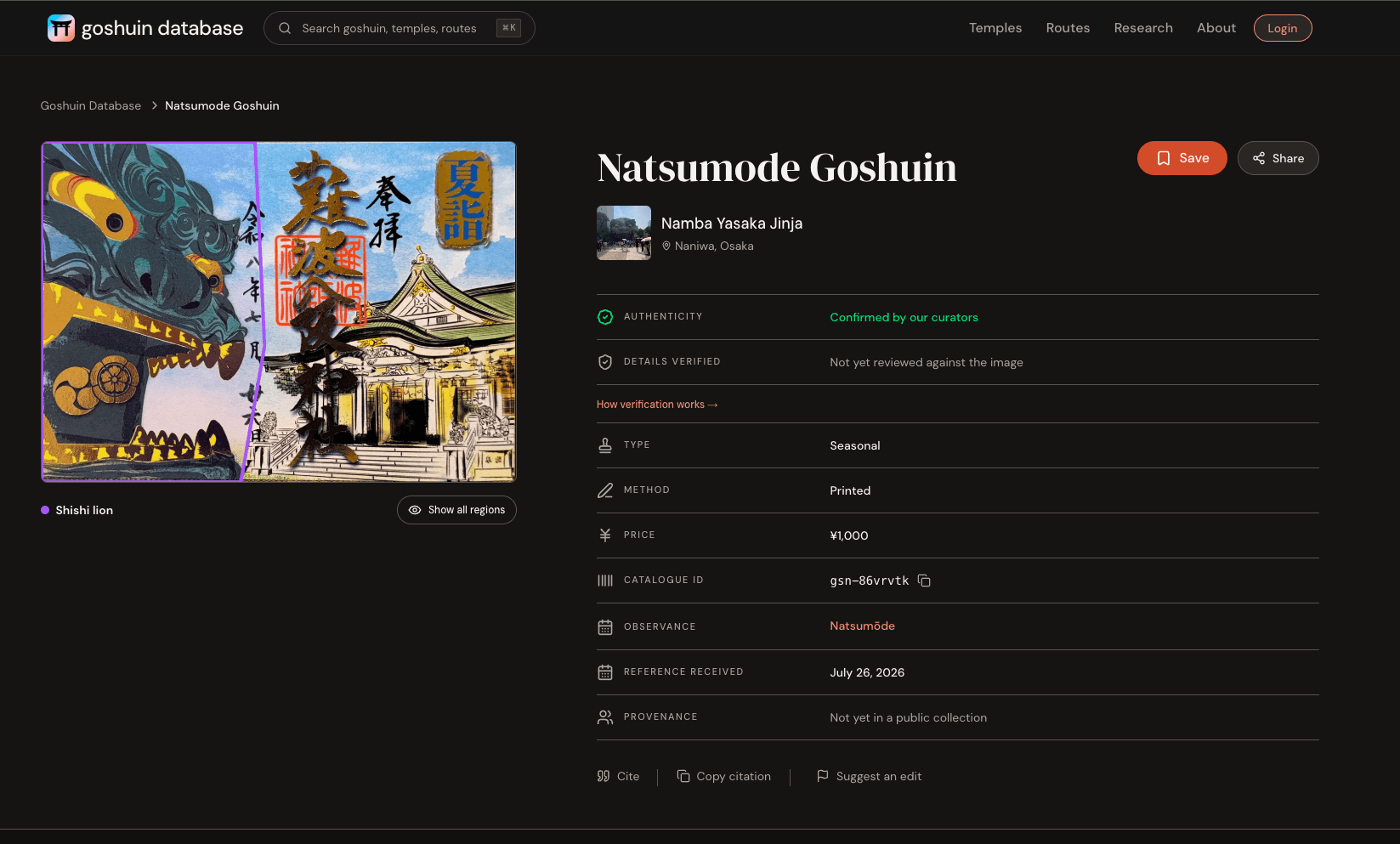
A goshuincho (御朱印帳, goshuinchō) is the physical book used to receive temple and shrine stamps. The digital feature was introduced as a companion to that book. Our goshuincho guide explains the books themselves, and the introduction to goshuin covers the practice.
Photos attached to a visit
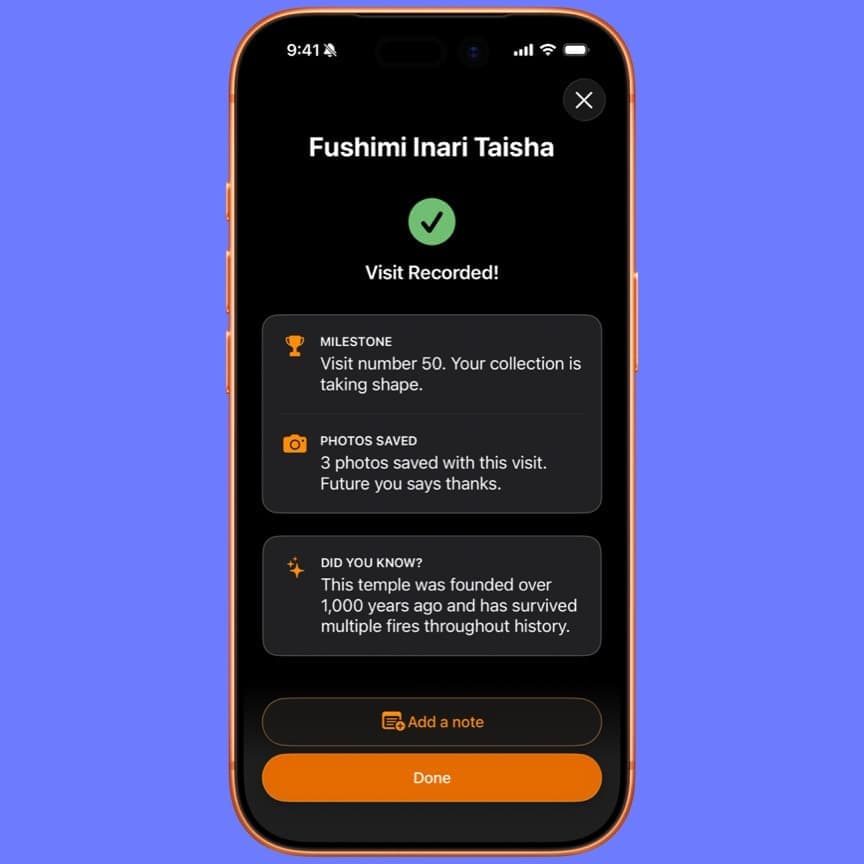
Version 1.2.5 added photos to temple visits. A record could include the approach, a detail of the grounds or the goshuin you received, keeping those images connected with the place.
Adding photos to a visit in version 1.2.5.
The same update introduced Achievements for early milestones, including a first visit, prefecture or region. That is part of the app's history: the September 2026 update later replaced Achievements with Atlas Points.
Smaller changes to the personal record
The letter also covered visit notes and separate saved lists for temples and goshuin in version 1.2.4. Version 1.2.6 brought check-ins into the personal feed, making recent visits easier to find.
Versions 1.2.6 and 1.2.7 addressed map and scrolling problems. These were practical improvements around recording a visit and returning to it without losing your place.
Explore along a railway line
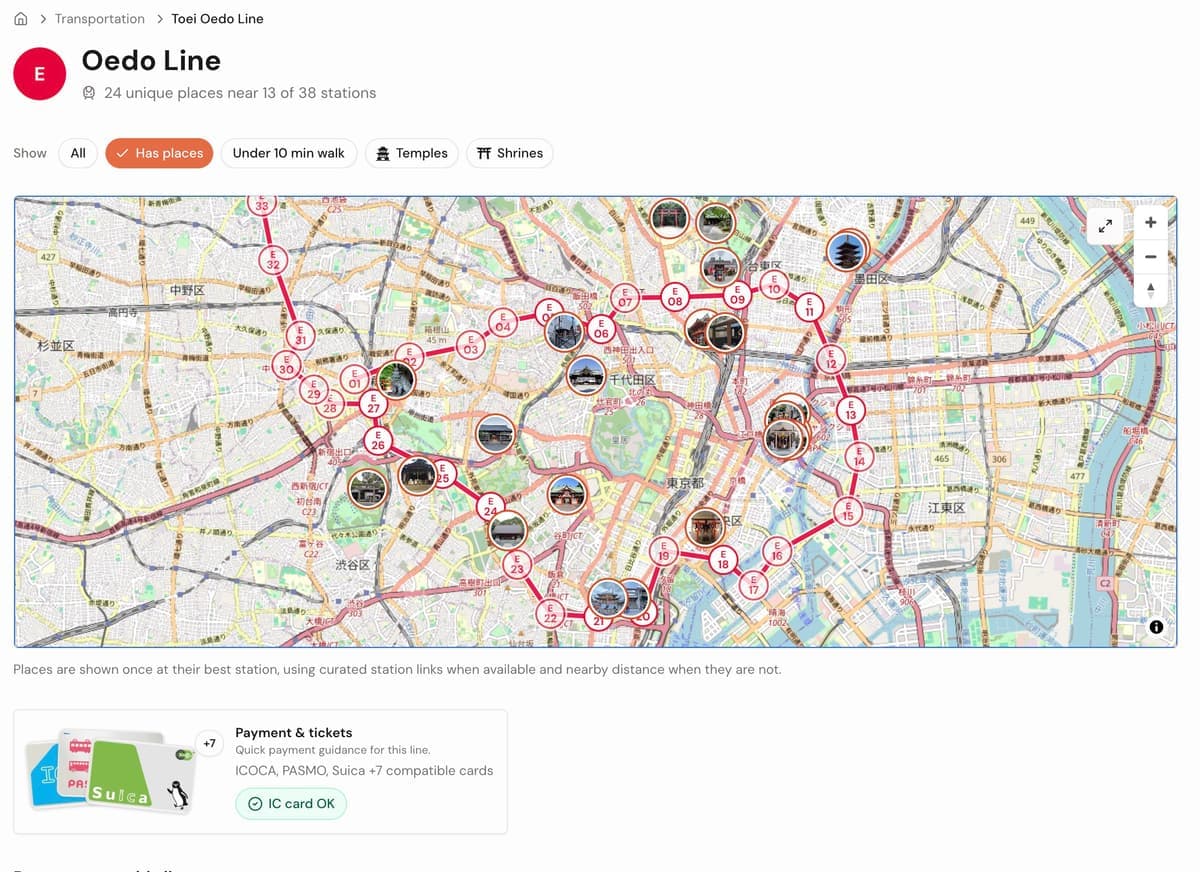
On the website, transportation pages gained station maps and temple thumbnails. The Toei Oedo Line page was the example shared in the announcement.
The transportation page as shown in the April update, linking stations with nearby sacred places.
A line could become a starting point for discovery. Instead of choosing every stop from scratch, you could see which places lay near the stations along a route.
More detail on place maps
Temple and shrine pages also gained richer maps. The announcement highlighted Fushimi Inari Taisha, with a trail path, nearby transport stations and thumbnails for buildings.
The richer place map for Fushimi Inari Taisha shared in the April update.
These changes brought the surroundings into the place record. A temple visit rarely begins exactly at its gate; knowing the approach and nearby stations helps put the destination in context.
This article preserves the product changes from the first letter. The time-limited Golden Week offer in the original email has ended and is not part of this update. Find the current app on the App Store.