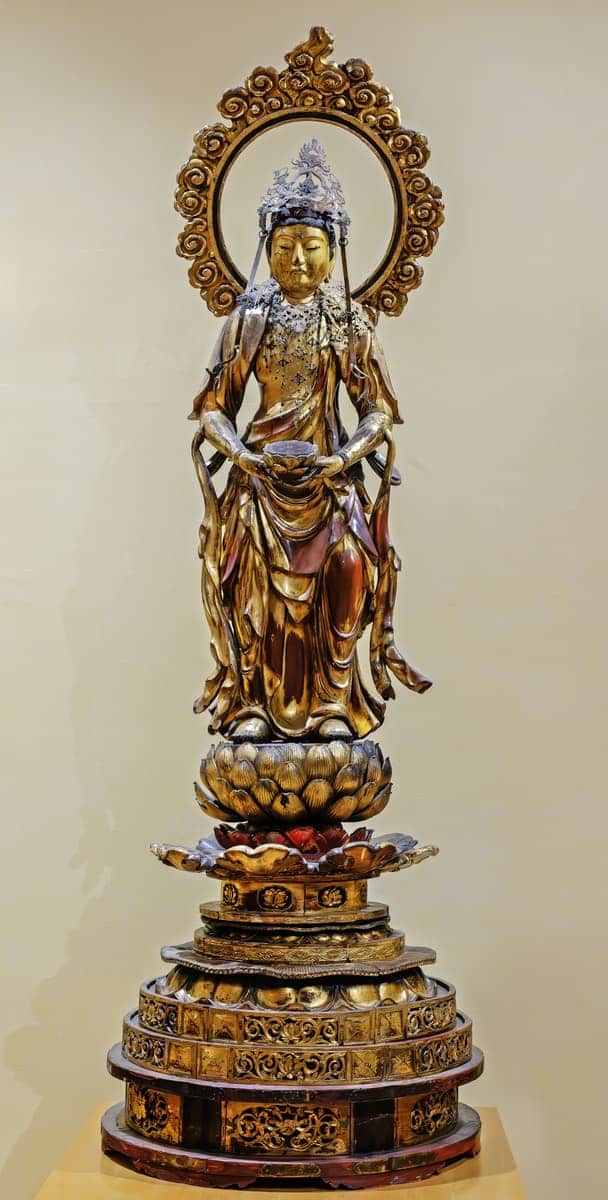
Ne manquez pas le Myogen Temple derrière le sanctuaire principal, qui abrite l'effigie de Senju Kannon aux mille bras (la divinité principale du temple).
En bref
Bien qu'il soit appelé sanctuaire Inari et qu'il possède un torii, le Myōgon-ji est en réalité un temple bouddhiste sans affiliation shintoïste officielle, un vestige du syncrétisme religieux d'avant l'ère Meiji.
La divinité gardienne du temple, Dakiniten, était à l'origine une démone mangeuse d'hommes dans la mythologie hindoue avant d'être convertie au bouddhisme par la forme courroucée du Bouddha Vairocana.
Identiques aux heures d'ouverture
Ce temple offre des goshuin, mais nous n'avons pas encore de photos. Soyez le premier à partager le vôtre !
Équipements
Ne manquez pas le Myogen Temple derrière le sanctuaire principal, qui abrite l'effigie de Senju Kannon aux mille bras (la divinité principale du temple).
Visitez avant le coucher du soleil pour apprécier pleinement l'impressionnant chemin de torii rouges et le vaste domaine du temple entouré par la nature.
Visit Reikozuka, the hillside covered with over 1,000 stone fox statues dressed in bright red bibs, located behind the Okuno-in pavilion through the sacred copse.
Le temple est facilement accessible depuis Nagoya en prenant le train en direction de Toyohashi depuis la gare Meitetsu Nagoya, en changeant à la gare de Kō pour un train en direction de la gare de Toyokawa-inari, le temple se trouvant à seulement trois minutes à pied de la gare.
Essayez les sushi Inari locaux dans la rue juste avant l'entrée du temple, qui présentent de délicieuses poches de tofu frit garnies de riz à sushi.
Les esprits divins vénérés en ce lieu sacré
Autres pages utiles liées à ce lieu.
Ce que ce lieu est censé accorder
Aussi connu sous le nom de Myōgon-ji
Toyokawa, Aichi Préfecture
0 publications récentes
Partagez votre visite pour aider d'autres voyageurs.
Aucune publication publique de la communauté pour le moment.