
At a Glance
Listen for the low, resonant boom that locals call the “Evening Bell of Mii”—a sound that has rolled across Lake Biwa for centuries and inspired poets and painters alike. You’re standing within Nagara-san Onjō-ji, commonly known as Mii-dera or simply Onjō-ji, a grand Tendai temple complex at the foot of Mount Hiei in Ōtsu, Shiga. As the head temple of the Jimon branch—sister to Enryaku-ji above—it was once counted among Japan’s four largest temple complexes. Founded in imperial memory in the 7th century and revitalized in the 9th century, it remains Temple 14 of the beloved Saigoku Kannon Pilgrimage, its 40 named buildings cascading across the hillside like a city of faith.
History here moves with both mountain weight and lake light. The temple’s name, “Mii-dera,” means “Temple of the Three Wells,” recalling sacred springs that have supplied ritual water since antiquity—water offered to emperors and to buddhas alike. Tradition ties the site to Emperor Tenji (r. 661–672) and his nearby palace, anchoring the temple’s earliest identity in the courtly world of the Asuka–Nara age. But the decisive chapter comes in the Heian period when the great monk Enchin (814–891)—later revered as Chishō Daishi—established a flourishing Tendai center here in the 9th century. His lineage, known as Jimon, balanced the powerful Sanmon line on Mount Hiei, and the two became rival siblings: doctrinally close, politically combustible.
That rivalry could be brutal. In the late 11th–12th centuries, militant monks from Enryaku-ji repeatedly descended, torches in hand, and Mii-dera’s halls burned more than once. Yet each time, the temple rose again, attracting aristocratic patronage, sustaining scholastic study, and tending its ritual calendar beneath the protective arm of the mountain. Centuries later, amid the upheavals of the 1570s, the complex suffered heavy damage during the wars that culminated in Oda Nobunaga’s scorched-earth campaign on Mount Hiei. Much of what you see today reflects the great rebuilding in the late 16th and early 17th centuries, when the Momoyama and early Edo elites restored Mii-dera’s stature.
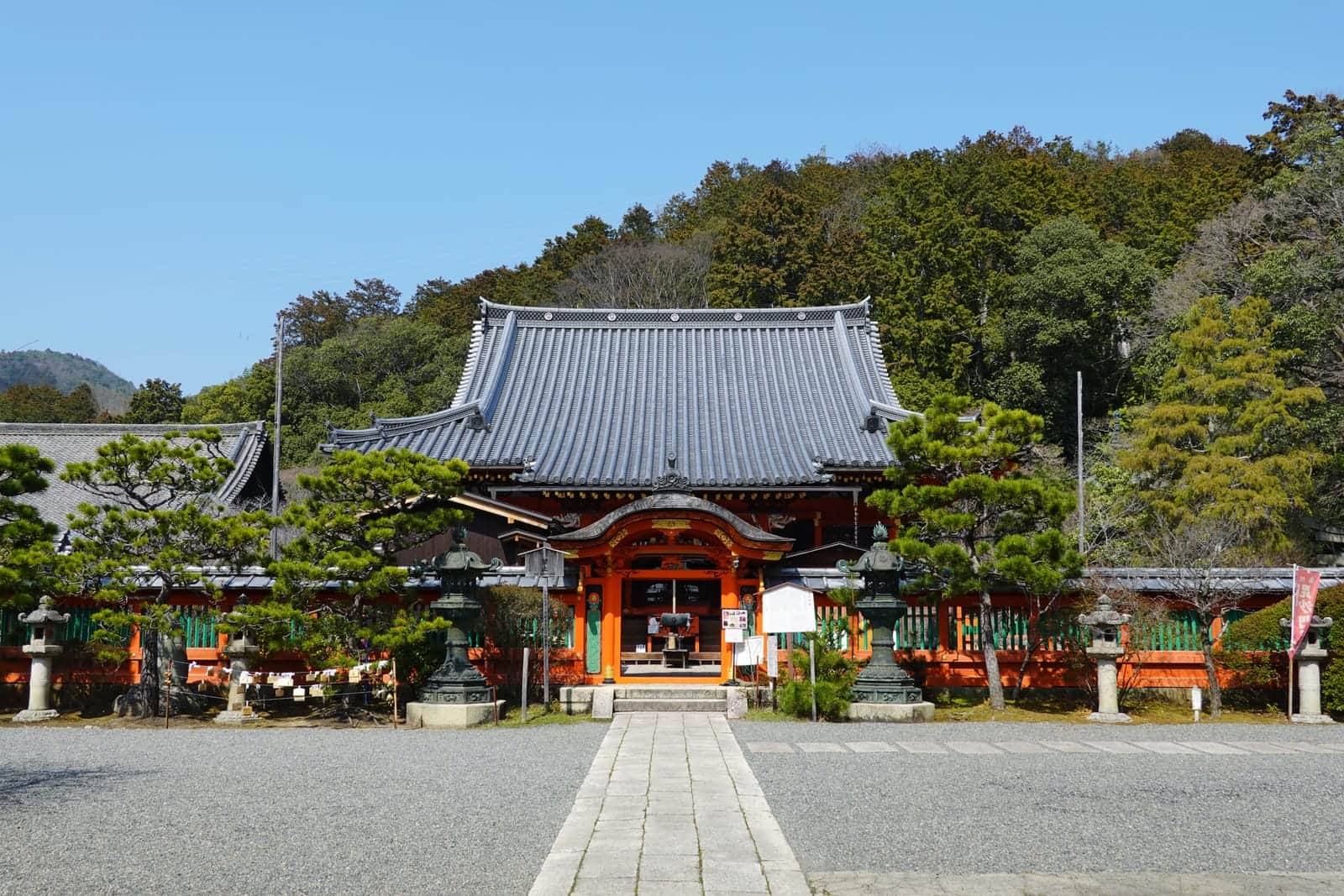
Architecturally, the complex stretches like a terraced mandala—gate, avenue, hall, and bell tower in measured procession. The main sanctuary, the Kondō (Main Hall), is a superb Momoyama-period reconstruction in the classic irimoya-zukuri (hip-and-gable) form. Its broad, sheltering roof—traditionally sheathed in cypress bark or tile—hovers over deep eaves, while stout pillars and joinery reveal the precision of carpenters who built without nails, locking timber through hidden mortise-and-tenon. The Kondō enshrines the temple’s principal image, Maitreya (Miroku) Bosatsu, a hibutsu—a “hidden Buddha” revealed only on special occasions—reminding visitors that the deepest seeing in Buddhism is not of the eye, but of insight.
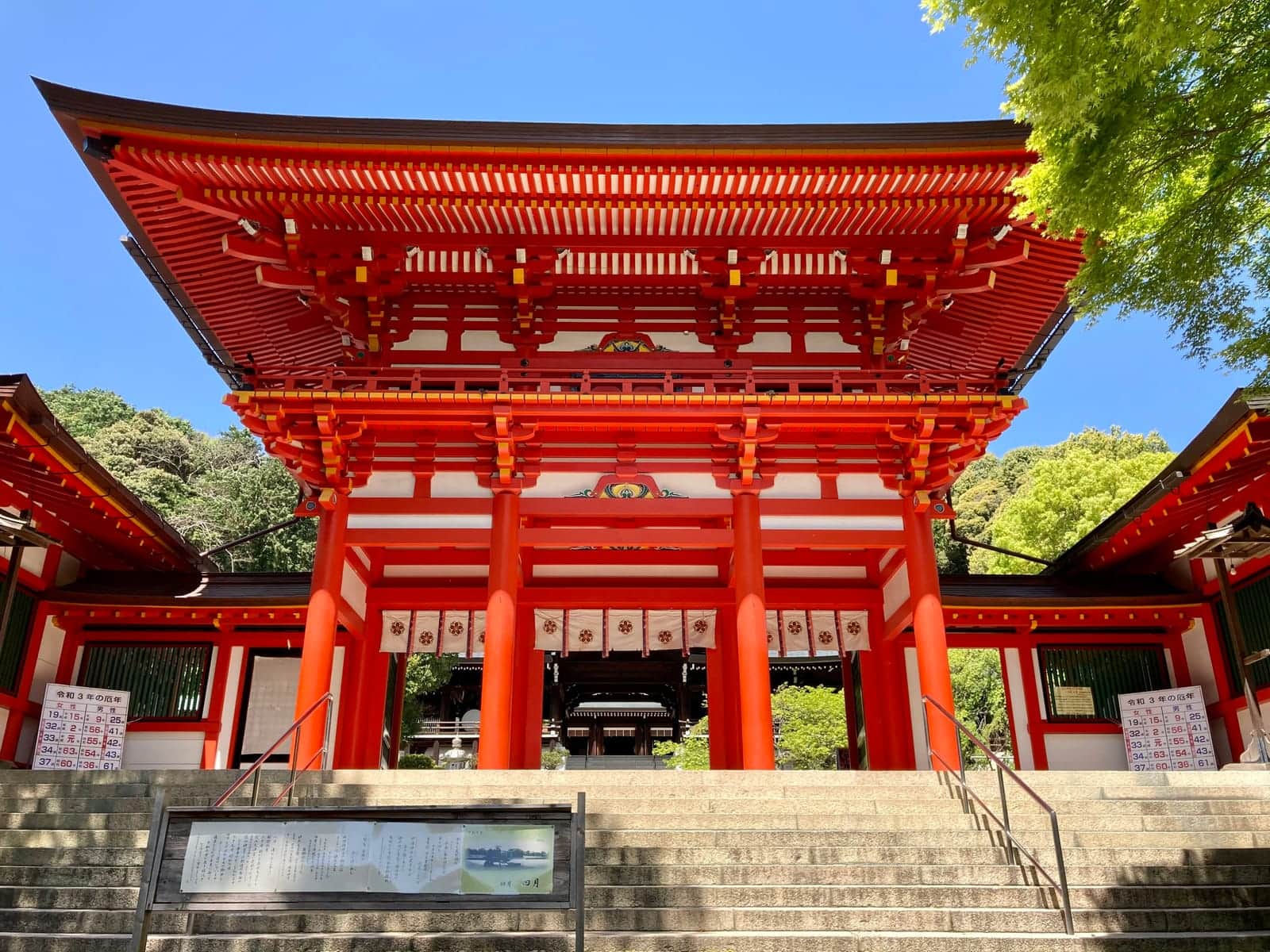
Nearby stands the Kannon-dō, focal point for Temple 14 on the Saigoku Kannon Pilgrimage, where devotees queue for a glimpse of the temple’s cherished Kannon image and the stamp that marks their journey’s progress. The Niōmon gate, with its pair of muscular guardian kings (Niō), announces passage from the everyday into the precincts of protection and vow. Seek out the ornate Karamon—a richly carved “Chinese gate”—whose curving gables and lavish relief work reflect the aesthetic bravura of the Azuchi–Momoyama age. Within the grounds, the elegant Kōjō-in Guest Hall embodies the refined shoin style of reception architecture, with sliding doors, ink landscapes, and a carefully framed garden—a space designed to choreograph revelation, where vistas unfold as you move.
And then, of course, the bell. The bonshō of Mii-dera—massive bronze, centuries old—is both instrument and icon. Medieval legends say the warrior-monk Benkei once stole this very bell and muscled it up to Mount Hiei, only for the bell to cry in the accent of Ōmi that it wished to return home; enraged, Benkei rolled it back down, leaving scars that storytellers still point out. Whatever the truth, the bell’s fame is real: “Mii no banshō”—the evening bell of Mii-dera—became one of the celebrated “Eight Views of Ōmi,” a poetic theme immortalized by painters like Utagawa Hiroshige. When it sounds at dusk, the lake seems to hold its breath.
Religiously, Mii-dera mirrors the breadth of Tendai thought—a capacious umbrella that shelters meditative practice, esoteric ritual, and devotion to compassionate figures like Kannon. As the Jimon head temple, it functioned historically as a scholastic and ritual hub parallel to Enryaku-ji, with a calendar marked by scripture recitations, memorial rites for emperors and patrons, and seasonal observances. Pilgrims on the Saigoku circuit step into this current, offering candles and prayers to Kannon, whose merciful gaze is said to respond to any form of suffering. And with Maitreya as principal image, the temple’s doctrinal heart points toward the compassionate future Buddha, a promise of awakening in an age yet to come.
The name “Mii”—“three wells”—is not poetic abstraction; it is geography and water. Within the precincts are sacred springs long used to draw water for imperial and temple rites. In earlier centuries, ritualists fetched water at dawn to wash sacred images, to mix inks for scripture copying, or to prepare offerings on days aligned with the lunar calendar. Even today, the presence of this water defines the temple’s identity, linking it to the nearby capital traditions of Kyoto and to the life-giving expanse of Lake Biwa below.
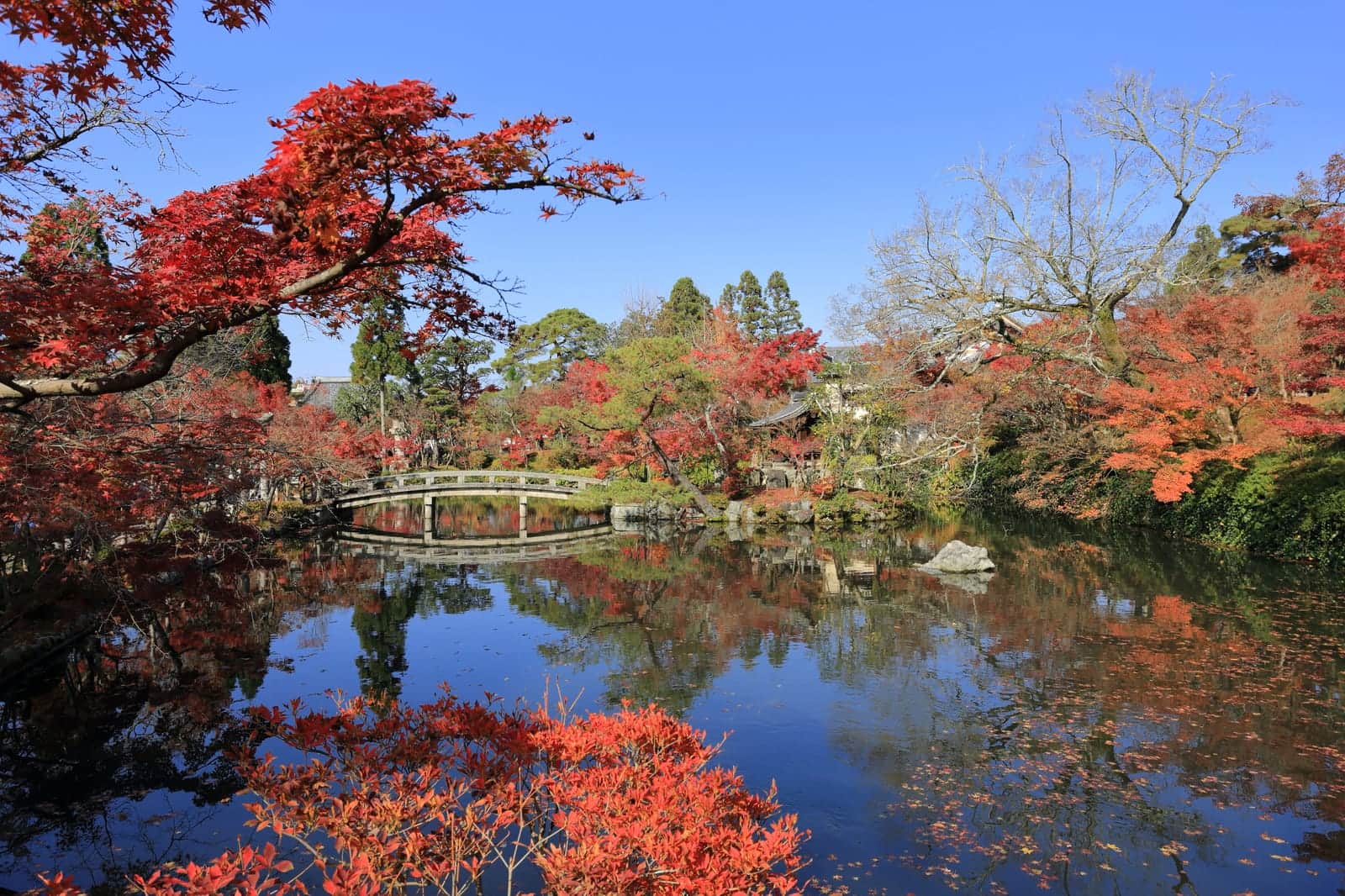
Mii-dera’s setting is integral to its meaning. Situated on the lower flank of Mount Hiei, the precincts climb and fold over the hillside, with corridors that catch breezes, stairways that frame distant lake light, and courtyards perfumed by cherry blossoms in spring and lit by maple fire in autumn. The dynamic between mountain and water—shadowed slopes and bright lake—creates a natural chiaroscuro, a perfect stage for Tendai’s synthesis of contemplation and worldly compassion. In rain, roof tiles bead and darken; in snow, brackets and balustrades become calligraphy in white; at dusk, the bell’s vibration moves through cedar trunks and slips out over the shoreline neighborhoods of Ōtsu.
As a historical complex once “counted among Japan’s four largest,” Mii-dera still impresses with scale: roughly 40 named buildings and countless subsidiary structures step across its grounds. The treasure halls safeguard sutras, ritual implements, and paintings accrued over a millennium—testimony to the temple’s role as both sanctuary and cultural archive. Architectural and artistic elements across the site carry official recognition as National Treasures and Important Cultural Properties, underscoring their value to Japan’s collective heritage.
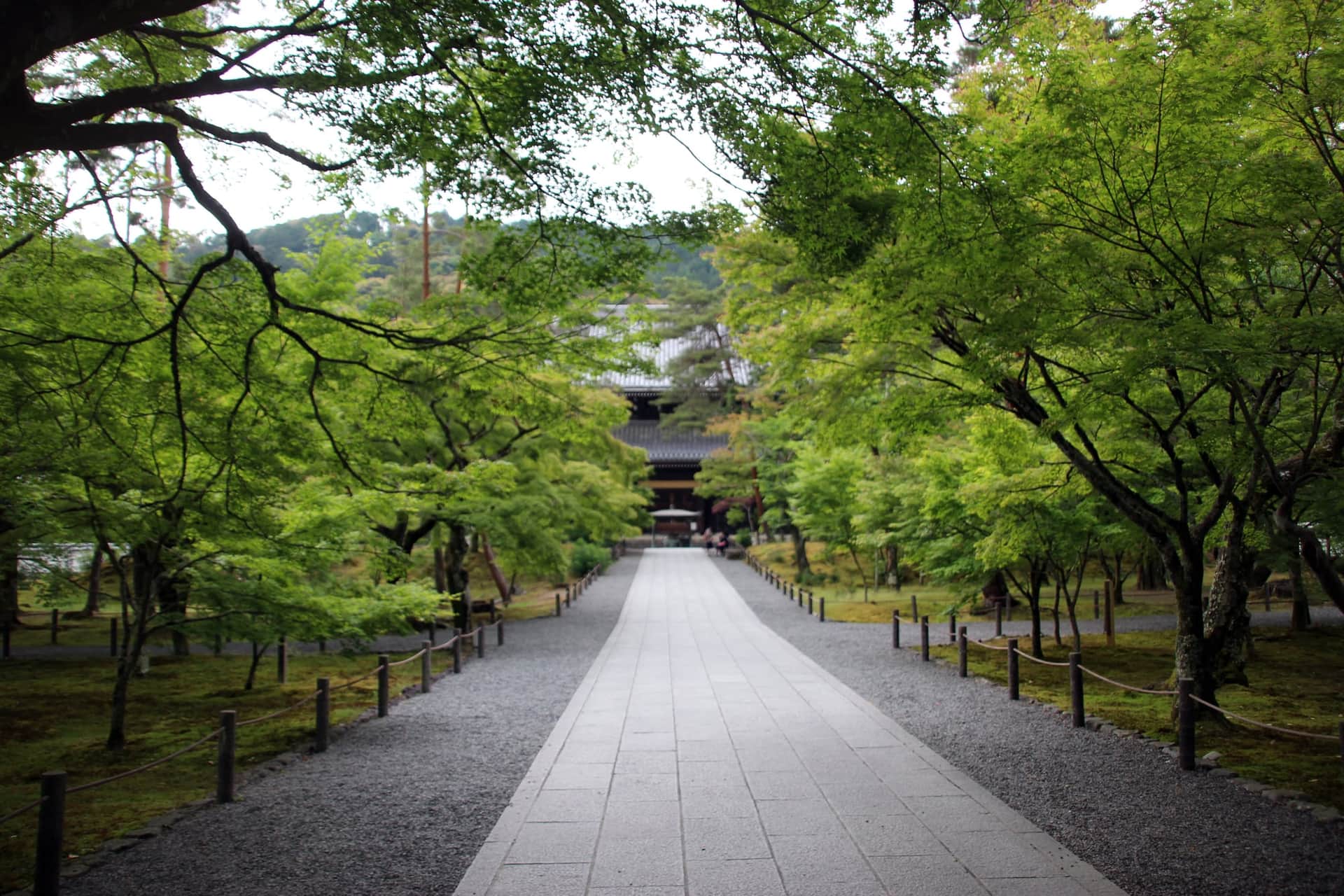
For visitors, the experience is layered. Start at the Niōmon, pause to read the fierce serenity of the guardians’ faces, then let the main approach guide you upward to the Kondō—watch how the hall’s darkened timber absorbs light, how incense softens the air, how footfalls turn hushed over polished floorboards. Detour to the Kannon-dō to witness living pilgrimage: the seal, the sutra murmured under breath, the brief, luminous exchange between supplicant and icon. Seek out the bell tower; if you arrive near evening, wait—let the strike unspool across your ribs. If time allows, find the Kōjō-in, where architecture and garden stage a dialogue of restraint and grace.
Mii-dera’s story is not merely survival but renewal—rebuilt after fire, re-energized after war, reinterpreted by each generation of monks and lay believers who keep its precincts alive. As the head temple of Jimon Tendai, a “sister” to Enryaku-ji, and a vital node in the Saigoku pilgrimage, it continues to braid scholarship, ritual, and community into a living tradition. And when you finally turn to leave, glance back from the slope: the roofs step like waves, the lake catches the sky, and somewhere within that measured world a monk lifts a mallet, and the bell of Mii-dera speaks once more.
A wooden dragon sculpture on the sacred spring building had to have spikes driven into its eyes by the artist himself because it kept escaping at night to terrorize locals by flying to Lake Biwa.
Mii-dera houses the world's oldest passport, used by monks traveling to China, now registered in UNESCO's Memory of the World. This rare document reveals how international Buddhist exchange worked centuries ago.
This temple offers 4 different goshuin designs
Same as opening hours
Regular
Regular
Regular
Regular
Facilities
Shopping
The divine spirits venerated at this sacred place
9 structures on the grounds
Also called Onjo-ji
Otsu, Shiga Prefecture
Typical Crowds
Peaceful
Visit Duration
45-60 minutes
What this place is believed to grant
2 recent posts
Share how your visit was to help other travelers.
 ZBPro member
Zoë BolandPro shared a goshuin
More ways to continue from this place.
ZBPro memberZoë BolandPro shared a photo
Within 300 m Within 600 m