God of Creation and Destruction
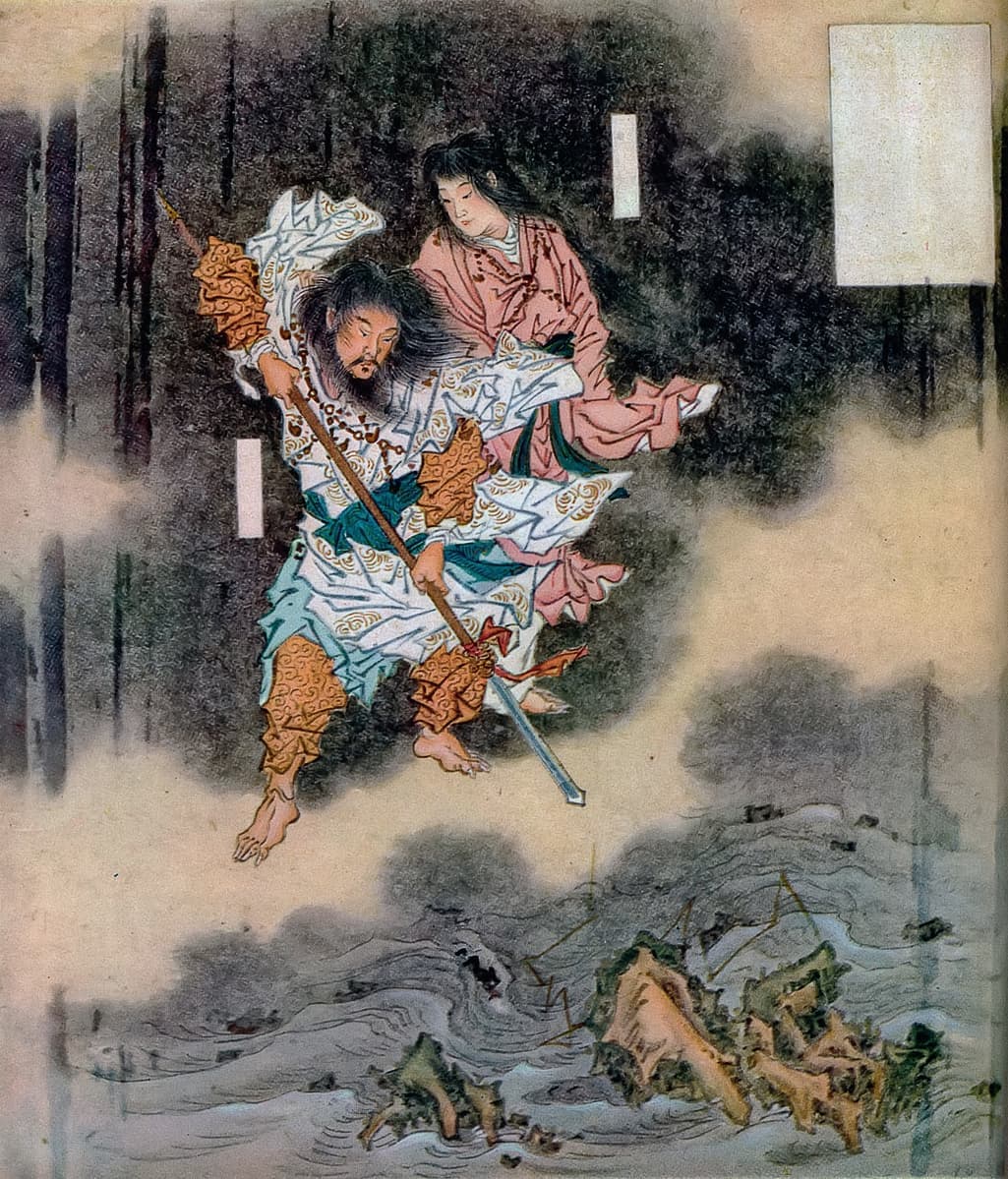
Izanagi, formally known as Izanagi-no-Mikoto, is a primordial creator deity in Japanese mythology whose name carries the meaning of "He-who-invites." Together with his sister-wife Izanami, he belongs to the last of the seven generations of primordial gods that came into being after heaven and earth first took shape. The pair are credited with bringing the Japanese archipelago into existence and are regarded as ancestors of the divine lineage that underpins the imperial family.
Izanagi and Izanami together gave birth to a vast number of deities, most notably the sun goddess Amaterasu, the moon deity Tsukuyomi, and the storm god Susanoo. These three children went on to become some of the most important figures in the Shinto pantheon. Izanagi is therefore revered as a foundational divine ancestor whose creative acts set the entire order of the Japanese cosmos in motion.
The myths surrounding Izanagi also encompass themes of death and purification. After descending into the underworld in search of Izanami, he underwent a ritual cleansing upon his return, an act that itself produced further deities. This episode highlights his role not only as a creator but as a figure whose deeds shaped the fundamental rites and structures of Shinto religious practice.