가마쿠라 데이
카마쿠라 처음 어장인을 위한 1일 코스로, 대표 사찰과 해안 분위기, 적당한 산책 구간을 연결한 루트입니다.
- 1일
- 6곳
- Kamakura, Kanagawa
이 여정 소개
가마쿠라를 처음 방문하는 수집가를 위한 해안 당일 여행으로, 주요 선종 사찰, 하치만구, 하세, 그리고 대불을 연결하는 코스입니다.
일자별 일정
가마쿠라 첫 방문
- 6곳
- 관람 포함 약 315분
Engaku-ji
KamakuraFounded in 1282, Engaku-ji is one of Kamakura's most important Zen Buddhist temples and ranks second among the Five Great Zen Temples. The temple complex features National Treasure buildings and serene gardens, offering visitors a profound experience of Rinzai Zen tradition.
예상 관람 시간 · 45분성인 입장료 · ¥200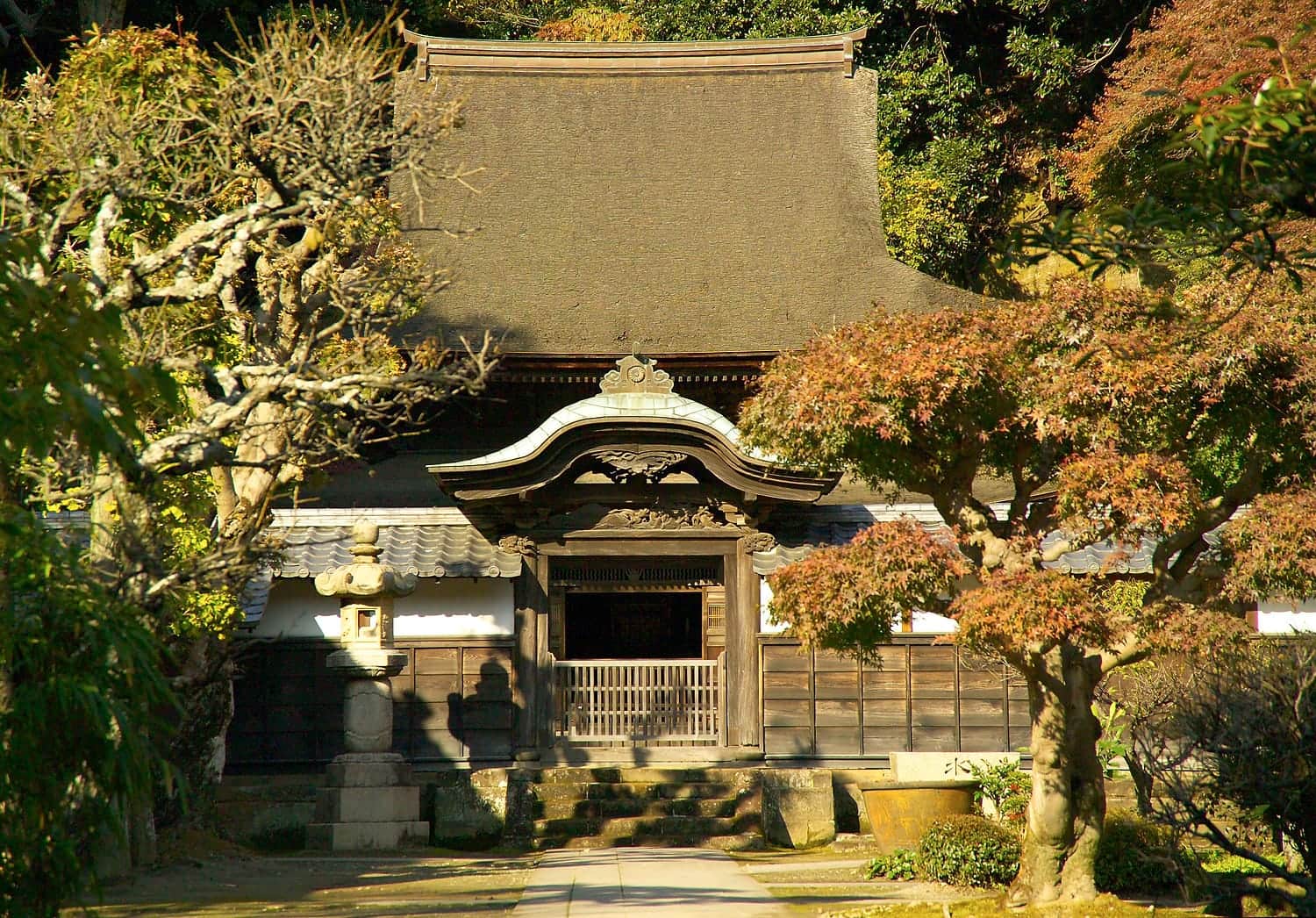
- 이동
약 20분
겐초지
Kamakura1253년에 창건된 건초지는 일본 최초의 선 수련 도량이며 가마쿠라 오대 선찰 중 으뜸으로 꼽힙니다. 이 역사적인 사찰은 웅장한 전각, 아름다운 정원을 갖추고 있으며 방문객들에게 정통 선불교 수행의 모습을 보여줍니다.
예상 관람 시간 · 45분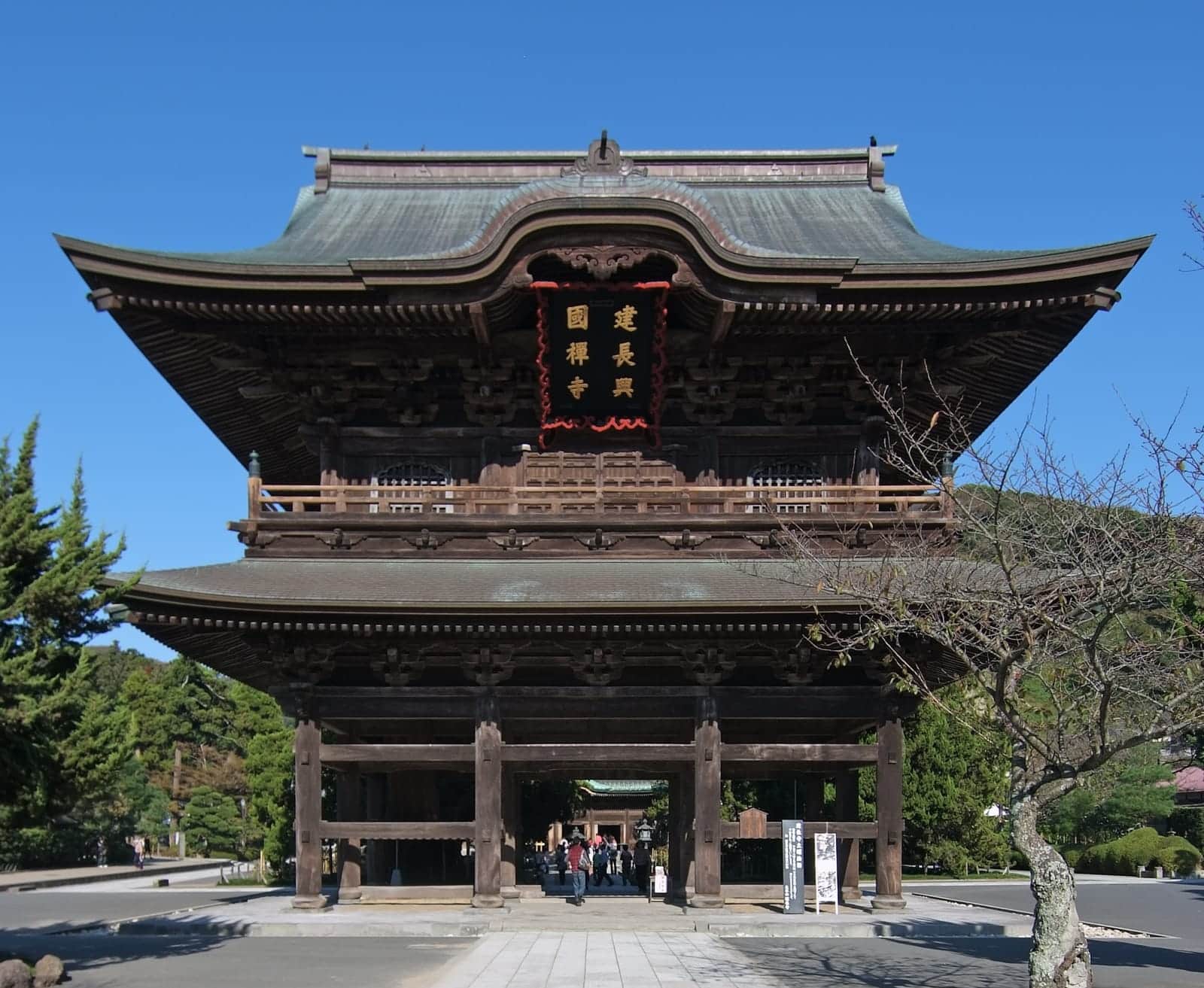
- 이동
약 20분
쓰루가오카 하치만구
KamakuraKamakura's most important Shinto shrine, founded in 1063. Dedicated to Hachiman, the patron deity of samurai. Features a dramatic approach through vermilion torii gates and a steep stairway leading to the main hall, offering panoramic views of the city.
예상 관람 시간 · 45분무료 입장9명이 방문함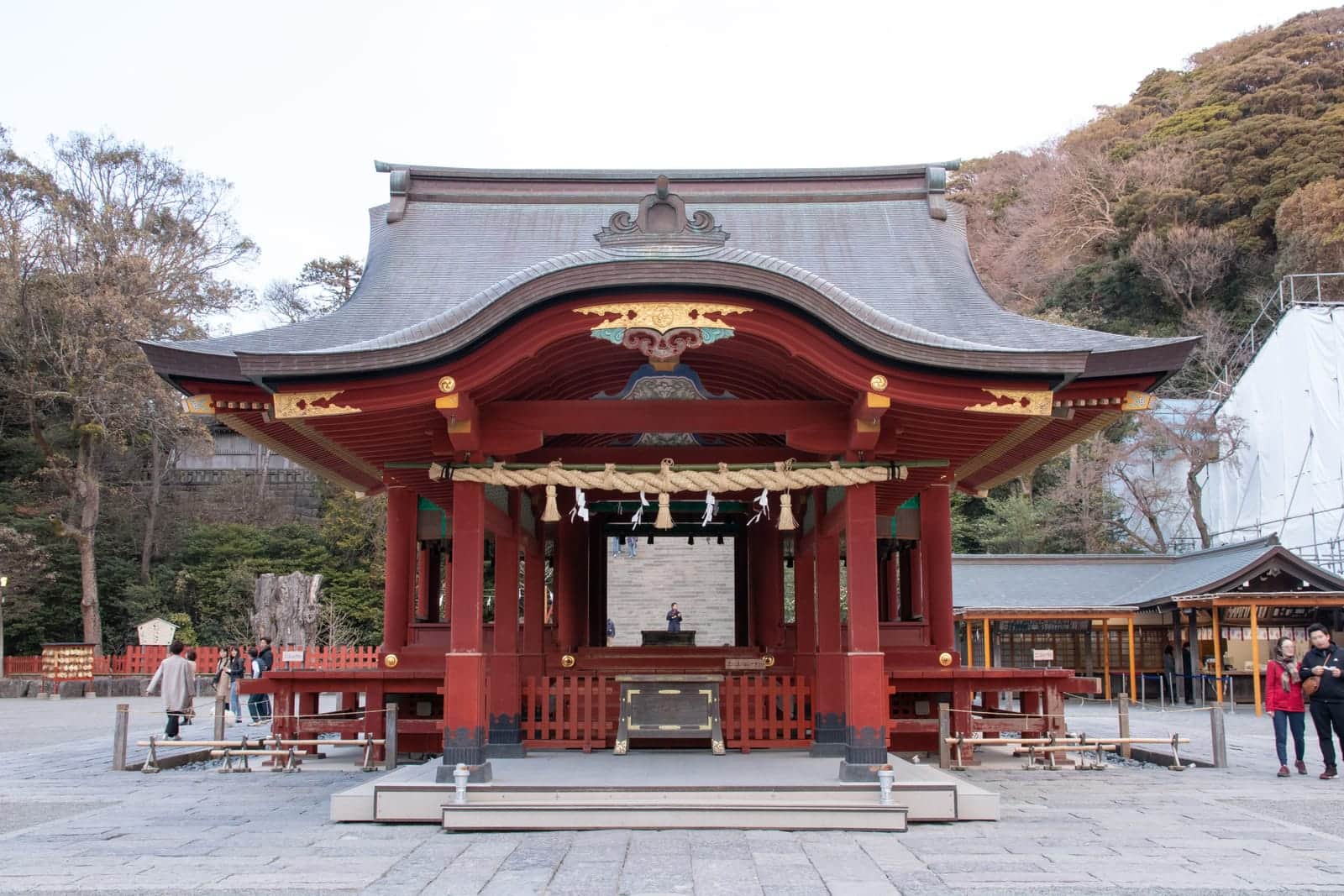
제니아라이 벤텐 우가후쿠 신사
KamakuraZeniarai Benten is a small but highly popular shrine in western Kamakura, known for the cave spring where visitors wash money in hopes of multiplying it. It blends Buddhist and Shinto traditions and draws many tourists year-round.
예상 관람 시간 · 45분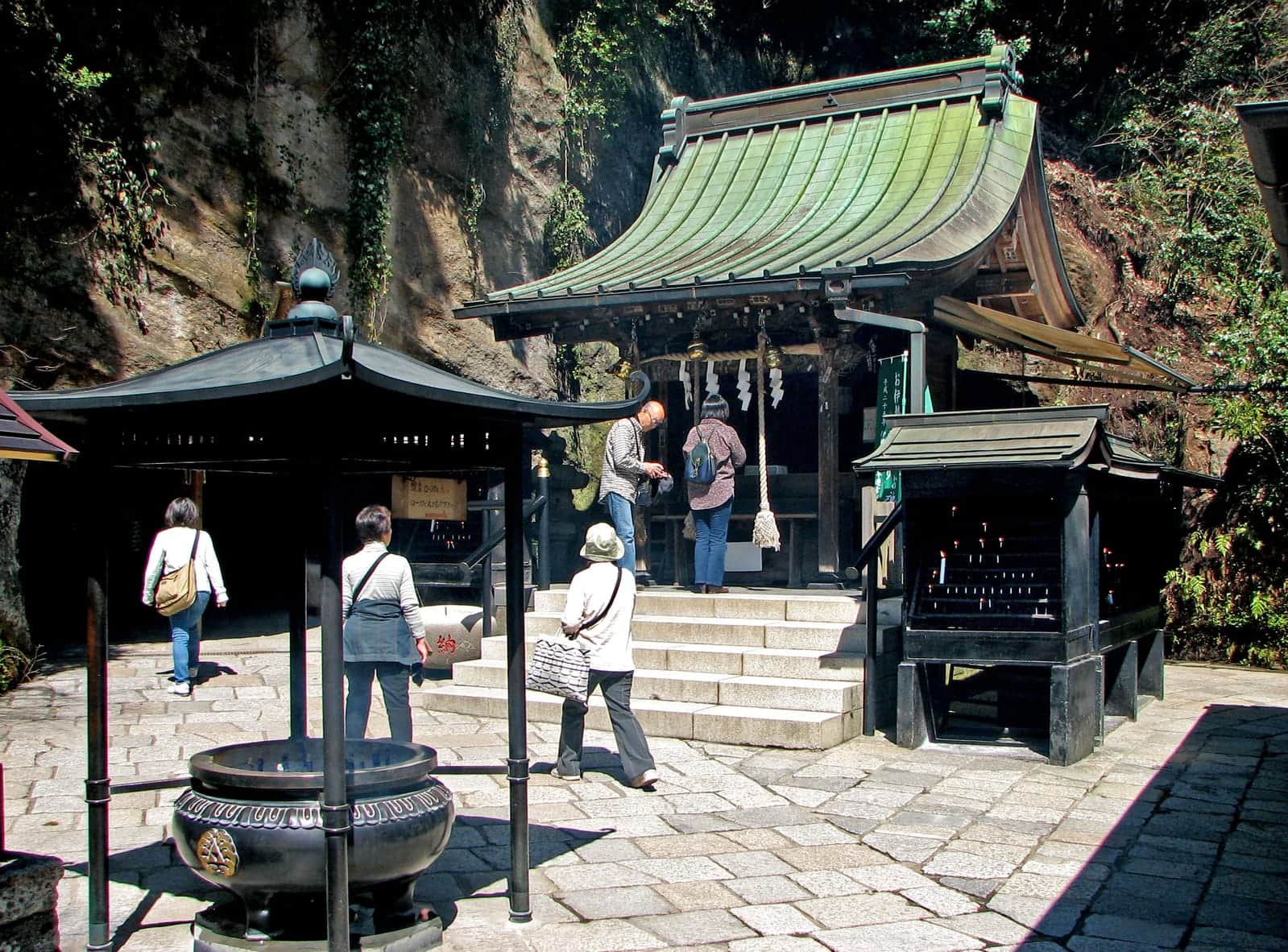
- 이동
약 20분
고토쿠인
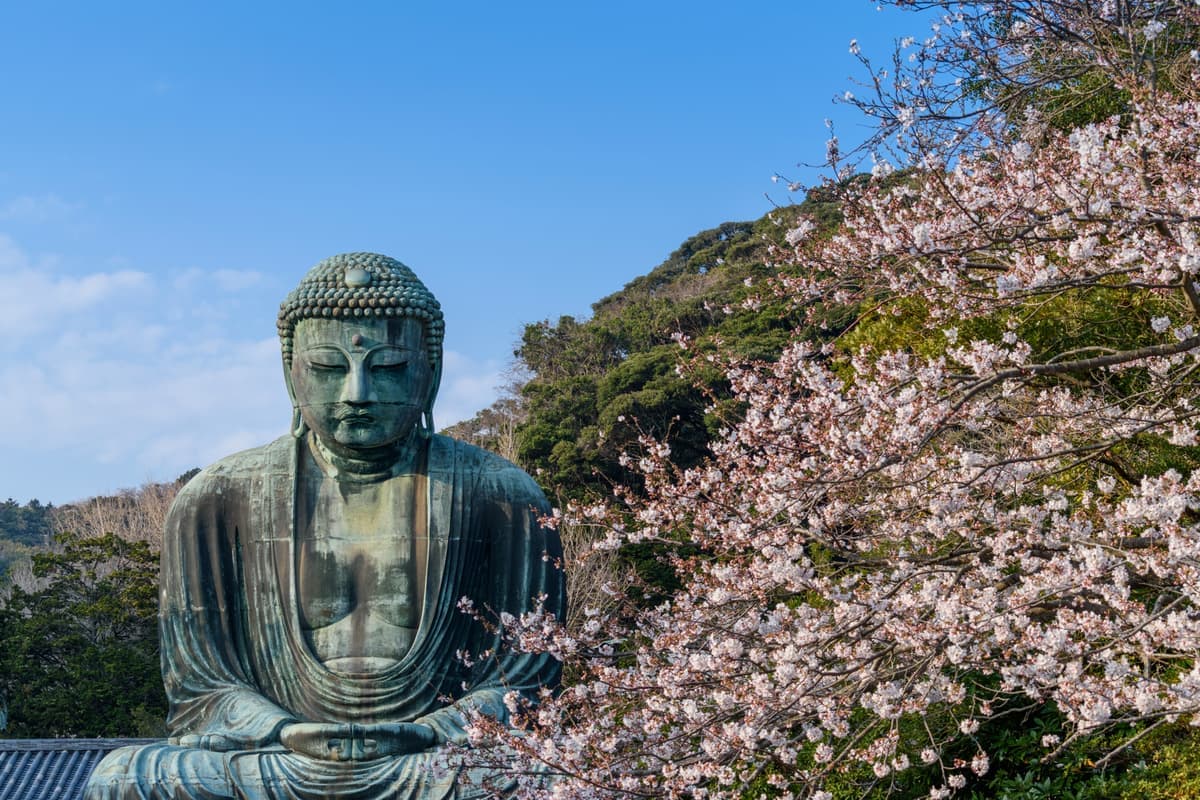
KamakuraYou step into a quiet courtyard and meet a gaze that has outlasted storms, tsunamis, and centuries. Before you rises the Great Buddha of Kamakura—the open-air bronze image of Amitābha (Amida) at Kōtoku-in in Kamakura, Kanagawa Prefecture—serene, vast, and impossibly calm. Cast in 1252, this statue is the heart of a Jōdo-shū temple formally known as Kōtoku-in (高徳院), or by its older name Shōjōsen-ji (清浄泉寺) of Daii-zan (大異山). It is a designated National Treasure and one of 22 properties proposed for UNESCO World Heritage listing in Kamakura. The statue stands about 11.3 meters tall, and after the temple’s great hall was repeatedly destroyed—by storms in 1334 and 1369, then a devastating 1498 tsunami—it has remained in the open air ever since: a meditation in bronze beneath the changing sky. Historical Foundations To understand Kōtoku-in, you must see it not just as a single monument but as the distilled spirit of medieval Kamakura Buddhism, a religious landscape shaped by the rise of the warrior government and the search for accessible salvation. The temple belongs to the Jōdo-shū—the Pure Land school founded in Japan by Hōnen—which centers devotion on Amida, the Buddha of Infinite Light, whose western paradise welcomes all who earnestly call his name. This is the meaning that animates the statue: a towering image of Amida that gives form to hope, remembrance, and vows. The key historical anchor is the casting of the bronze in 1252, during the Kamakura period, a time when new Buddhist movements took root among both elites and commoners. The statue’s sheer scale and refined stillness tell us this was no minor commission: it reflects the wealth, faith, and artistic ambition that defined the age when Kamakura—not Kyoto—was the beating heart of power and culture. The temple’s formal names—Kōtoku-in, and earlier Shōjōsen-ji with the mountain name Daii-zan—place it within the layered naming traditions of Japanese Buddhism, where a living temple may carry multiple titles reflecting its lineage, local geography, and historical identity. What makes the story of Kōtoku-in unforgettable is the cycle of loss and endurance that followed. The Great Buddha was originally sheltered inside a grand hall, as befits a venerated icon. But the hall succumbed to violent weather not once but multiple times: first destroyed by storms in 1334, rebuilt, and then again destroyed in 1369. Each reconstruction represented the community’s resolve to protect the image; each ruin marked the exposed, coastal realities of Kamakura. Finally, a tsunami in 1498 swept away the hall altogether. The bronze Amida remained, and since that day it has stood beneath the open sky. This transformation—from an indoor image to an open-air icon—has become central to how people experience the statue: as a living companion to wind, light, rain, and passing seasons. The 20th and 21st centuries brought a new kind of guardianship: scientific conservation and engineering efforts. Sensitive to the realities of earthquakes and coastal weathering, the temple implemented conservation and seismic reinforcement in the 20th century and again in the 21st century. These works, undertaken so the statue can withstand future tremors and continue safely welcoming visitors, are part of a modern stewardship that runs parallel to the centuries-old devotional care. During these initiatives, the statue remained the heart of the temple’s identity: a quiet giant whose preservation is understood as both a cultural duty and a religious offering. The site’s historical and cultural weight is recognized well beyond Kamakura. The Great Buddha of Kōtoku-in is a designated National Treasure of Japan, placing it among the most revered works in the country’s artistic patrimony. It also forms part of the ensemble of 22 properties proposed for UNESCO World Heritage listing in Kamakura—a reflection of how strongly the city’s medieval heritage continues to shape global understanding of Japanese religion, art, and history. Architectural Mastery Stand near the statue’s lotus pedestal, and you can feel the design logic at work. This is a bronze Amitābha rendered with disciplined restraint: downcast eyes, a mouth poised in the faintest smile, and the dhyāna mudrā, the meditation gesture, formed by hands folded in the lap. The effect is one of profound self-possession. Even if you know nothing of Buddhism, the sculpture draws you into its composure. The bronze figure—approximately 11.3 meters tall—would have been cast in multiple sections, a practical method for such a monumental work. The statue is hollow, an engineering choice that reduces weight and distributes stress. Medieval foundry techniques in Japan involved creating molds that could support large panels, which would then be joined, finished, and given their characteristic surface. Over time, the metal has acquired a soft green patina, a visible record of the centuries. Though the original hall is gone, the statue’s exterior reveals subtle traces of its long life outdoors—minute variations of tone, weathering patterns, and the gentle gloss that comes from countless seasons of wind and salt air. While the original timber hall is lost, the statue’s outdoor presence reveals an architectural intelligence of a different kind. The builders adapted to the open site through careful siting and base construction, anchoring the monument to a firm platform. In an earthquake-prone region, the combination of internal structure and base design is essential. Modern seismic reinforcement—installed in stages across the 20th and 21st centuries—quietly supports the statue today. Although these interventions are discreet, they represent major advances in heritage engineering: they are designed to dissipate seismic energy, stabilize the figure, and protect it from the horizontal motion that has toppled so many historical structures in Japan. Aesthetically, the statue exemplifies the sober elegance associated with high Kamakura-period sculpture: clear volumes, balanced proportions, and expressively restrained surfaces. Amida’s hair, rendered as tight curls, creates a rhythmic texture that frames the smooth planes of the face. The urna (the auspicious dot on the forehead) and the elongated earlobes signal the Buddha’s transcendent wisdom and renunciation. The robes fall in prescribed folds that read as both physical fabric and idealized geometry; they gather just enough shadow to articulate form without crowding it. From certain angles, the upper torso seems to subtly swell and soften, giving the impression that breath could move through the bronze. Because the statue was once indoors, its scale was calculated to fill a vast hall. Outdoors, that same scale interacts dynamically with sky and cloud. When seen against passing weather, the Great Buddha’s silhouette becomes architectural—an arch of shoulders and a dome of hair, a temple in itself. Religious & Cultural Significance This is first and foremost a Jōdo-shū temple, a community oriented around faith in Amida Buddha, the compassionate figure who vows to welcome beings into the Pure Land—a realm of awakening—through sincere recitation of his name: the nenbutsu. Many visitors will hear the simple chant—“Namu Amida Butsu” (“I take refuge in Amida Buddha”)—offered quietly at the base of the statue or within the precincts of the temple. The Great Buddha of Kamakura is not merely a tourist sight; it is a living focus of devotion, a spiritual companion for remembrance, gratitude, and hope. In the Kamakura period, new Buddhist movements like Jōdo-shū flourished, promising an inclusive path at a time of social change. The Great Buddha’s presence at Kōtoku-in made this temple a beacon of that transformation: a monumental image of Amida visible to all. Over the centuries, the statue’s survival through disasters took on symbolic meaning. The losses of 1334, 1369, and 1498 are remembered not only as historical events but as part of the temple’s spiritual biography. The hall’s destruction, followed by the statue’s persistence, is read by many as a parable of impermanence, resilience, and the abiding nature of compassion. Culturally, the Kamakura Daibutsu has become an emblem of Kamakura itself. Its image appears in art, literature, and photography; its quiet face has been a muse for poets and a touchstone for travelers. As a designated National Treasure, it stands among the most important works of Japanese art, recognized for both its aesthetic value and its historic importance. The proposal to include it among 22 properties in a UNESCO World Heritage nomination acknowledges not just the statue’s magnificence but the broader cultural landscape of Kamakura, where the memory of medieval Japan remains remarkably legible. The devotional life of Kōtoku-in is continuous. Festivals, memorial offerings, and daily prayers tie contemporary worship to an unbroken lineage of practice. While the temple welcomes global visitors, its heart remains local and religious—caretakers, priests, and community members maintain the grounds, present offerings, and guide preservation as an act of service to Amida and to generations yet to come. Natural Setting & Environment Kamakura is a city where mountains embrace the town and the sea breathes nearby. The air often carries a salt freshness, and the light shifts quickly with ocean weather. Kōtoku-in’s Great Buddha sits in a clearing that feels simultaneously sheltered and open—hills gather around the precincts, yet the sky above is uncluttered, a broad dome that changes with season and hour. This open-air condition is not a mere accident of history; it has become part of the statue’s spiritual atmosphere. In spring, soft light and blooming trees create a sense of renewal. Summer weather intensifies the bronze’s color and draws a rhythmic music from cicadas. Autumn brings cool clarity and the bronze glows under the tilt of the sun; winter gives a spare, crystalline calm, with the Great Buddha’s outline etched against crisp skies. The setting asks you to consider impermanence as more than an abstract concept: cloud shadows pass across the Buddha’s face, rain beads on bronze, and wind finds a voice in the surrounding trees. All of it—the weather, the seasons, the slow work of time—becomes part of the encounter. The temple’s layout guides visitors gently. Pathways approach the statue in a measured way so that your field of vision expands as you draw near. Low plantings and open paving encourage a circular movement around the figure; walking a full circuit makes the statue’s geometry more palpable. The pedestal’s lotus motif—symbol of purity and spiritual awakening—leans into the natural context: the idea that a perfect flower can rise from the muddiness of the world resonates in a site where the elements are vivid and immediate. Visitor Experience & Heritage Your visit begins with a moment of surprise: the statue reveals itself in full, immediately, without the mediation of a vast hall. That clarity is part of its magic. From a distance, the Great Buddha seems immense but still; up close, the surface comes alive: tiny textural variations, the soft transitions in the face, the deep grooves of the robe that catch sunlight. The scale is best appreciated by tracing the line from pedestal to shoulders, then to the curve of the hair and the crown of the ushnīsha—the cranial protuberance symbolizing the Buddha’s wisdom. Because the statue is outdoors, the experience is never the same twice; every visit is a new collaboration with the weather. As you approach, pause to notice the statue’s posture. The dhyāna mudrā—hands resting in the lap—focuses attention inward. The eyes lower slightly, neither shut off from the world nor fixed upon it. The lips carry a hint of a smile that seems to acknowledge your presence without soliciting it. Many visitors offer a quiet bow or a few moments of stillness. If you hear chanting, it will often be the nenbutsu: “Namu Amida Butsu.” Taking a moment of silence here connects you with a lineage stretching back to 1252, when the bronze was first cast. Interpretive panels or guides may note the statue’s status as a National Treasure and its inclusion among 22 properties proposed for UNESCO World Heritage listing in the Kamakura area. These recognitions are not just accolades; they are commitments to preservation. Kōtoku-in’s custodians have undertaken conservation and seismic reinforcement—notably in the 20th and 21st centuries—so that the Great Buddha can withstand future earthquakes and continue to be safely enjoyed by visitors and venerated by devotees. The engineering is largely invisible, but it adds a layer of comfort: what you are seeing is both ancient and carefully safeguarded. Because this is an active Jōdo-shū temple, it is appropriate to observe simple etiquette—quiet voices, respectful distance from offerings, and a willingness to share space with those who are praying. Photography is generally welcomed outdoors, but it’s worth remembering that for many people this is a sacred image first and a photo subject second. Take time to explore the precincts beyond the main statue. Even if the temple’s central identity is focused on the Great Buddha, smaller structures, paths, and plantings enrich the visit. Find a vantage point where the Buddha’s profile aligns with the tree line; the interplay of human and natural curves is particularly beautiful in soft morning light or late afternoon sun. Walk around to appreciate how the statue’s massing reads differently from each angle—broad and sheltering from the front, vertical and almost architectural from the side, and powerfully rooted from the rear. The statue’s outdoor condition invites one more reflection. When the Great Hall was destroyed by storms in 1334 and 1369, and finally by a tsunami in 1498, the community could have interpreted this as a sign to withdraw, to enclose and defend. Instead, the Buddha has remained open to the world. That openness is now inseparable from the site’s identity. The Great Buddha endures not because it is shielded from the elements, but because it lives with them. The bronze, the air, the shifting seasons—together they offer a lesson in resilience, humility, and presence. As you prepare to leave, look once more into the Great Buddha’s face. You are seeing a work of art that has anchored centuries of practice, a National Treasure that embodies the Kamakura spirit, and a potential UNESCO site that carries Japan’s cultural memory to the world. But you are also seeing something simpler: a gesture of welcome from Amida, the promise that compassion is vast, steady, and available to everyone. That is the deeper meaning of Kōtoku-in, also known as Shōjōsen-ji of Daii-zan—a Jōdo-shū temple whose open-air bronze Amida, cast in 1252, survived the losses of 1334, 1369, and 1498, and today continues to receive the prayers of those who come close enough to look, and to be looked at in return. Practical notes for thoughtful visitors: The statue stands about 11.3 meters tall. Perspective shifts dramatically as you move from the approach to the base; walk slowly to register the change in scale. Expect an outdoor experience. Weather will shape your visit. On rainy days, the bronze deepens in tone; on bright days, the contours sharpen. Remember you are at an active Jōdo-shū temple. Simple acts—a bow, a quiet “Namu Amida Butsu”—are appropriate ways to share the space respectfully. Leaving Kōtoku-in, many visitors feel a curious lightness. Perhaps it comes from the statue’s composure, the interplay of great weight and great calm. Or perhaps it is the knowledge that, here in Kamakura, a community has kept faith across centuries—through storms in 1334 and 1369, through a 1498 tsunami, and into the 20th and 21st centuries of careful conservation—so that the bronze Amida might keep watching the changing sky, and keep welcoming those who seek a moment of stillness within it.
예상 관람 시간 · 45분성인 입장료 · ¥3009명이 방문함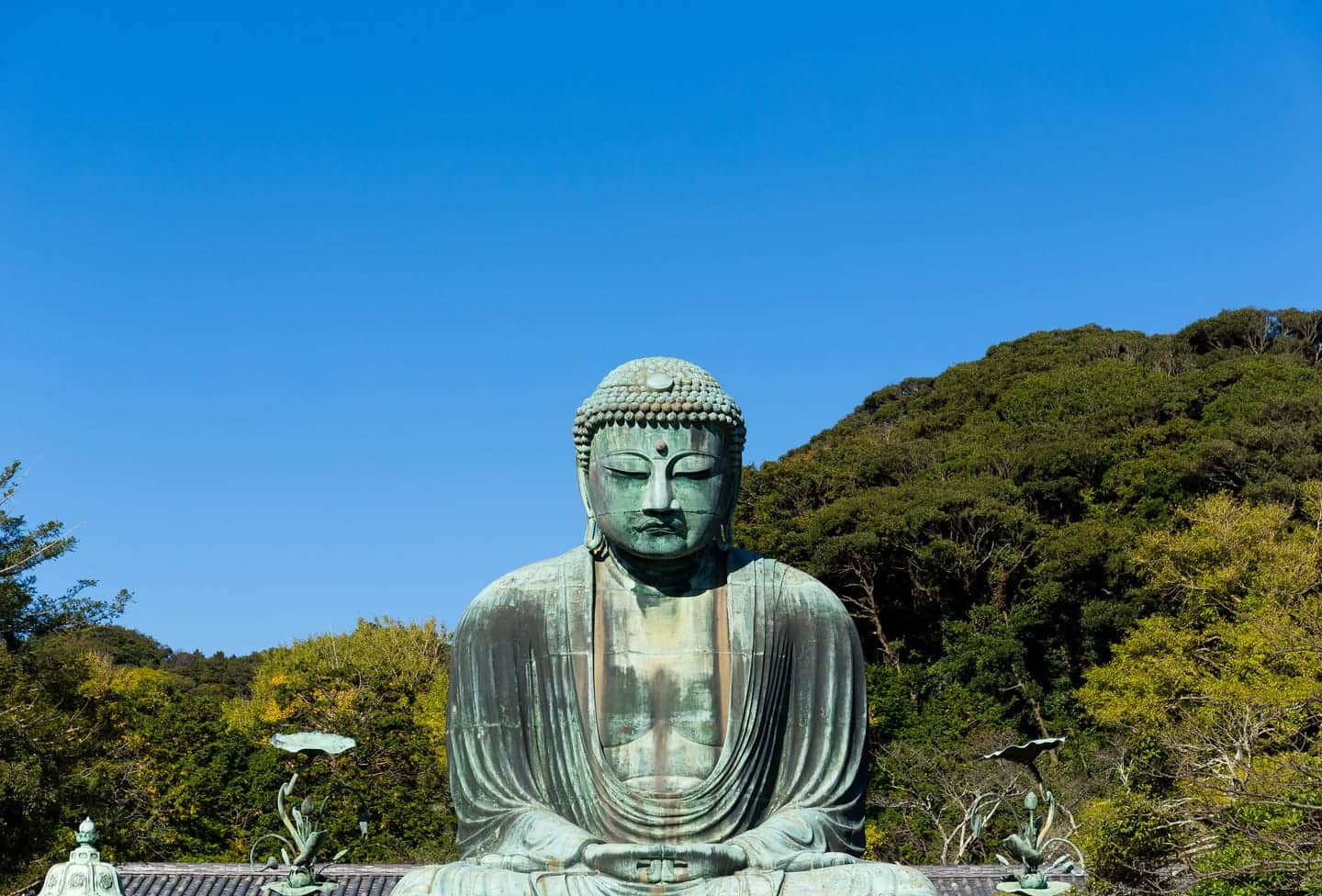
- 이동
약 20분
하세데라
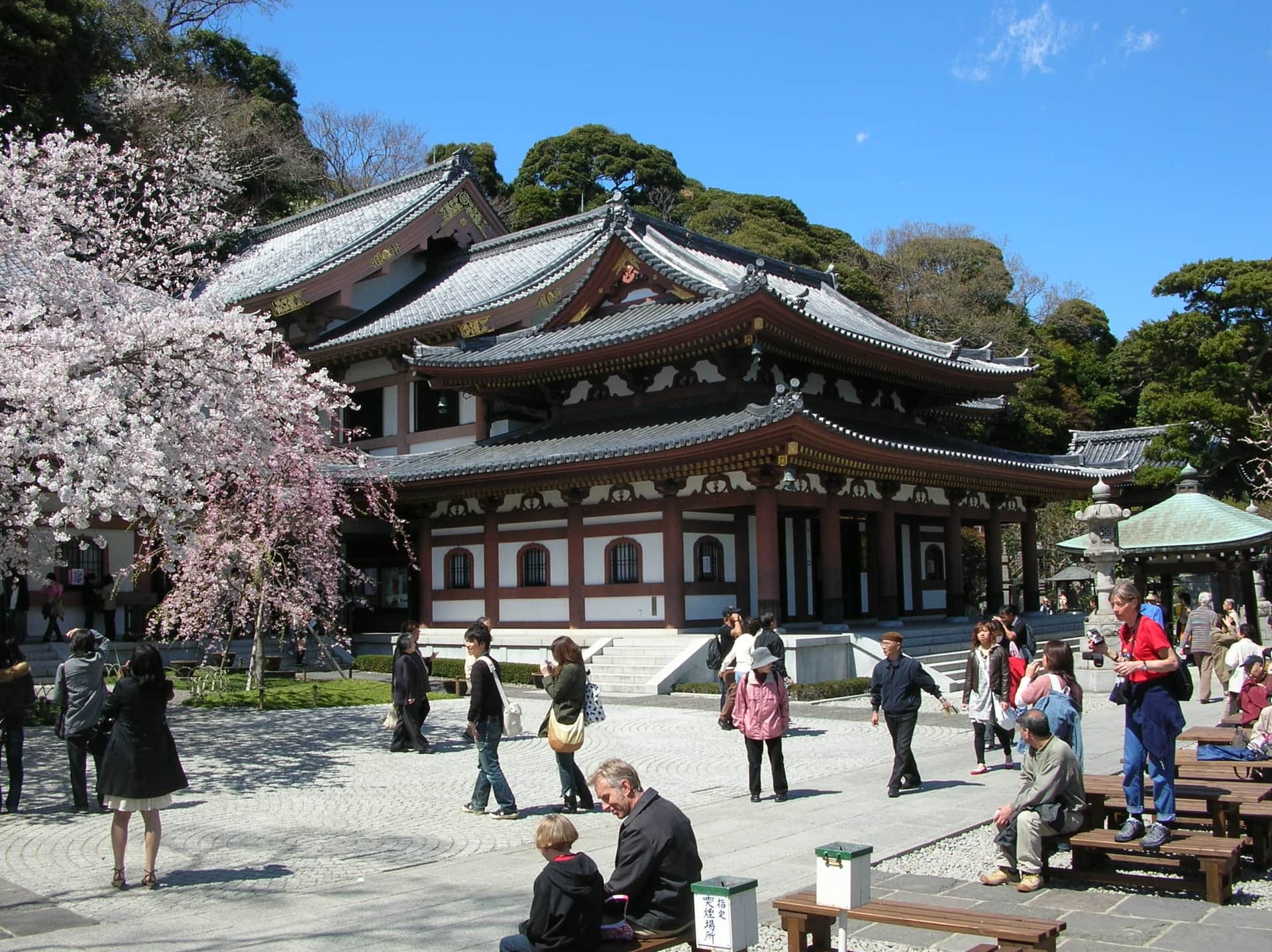
KamakuraIn the dim, gold-washed hush of the main hall, a single figure towers above you: a standing statue of the Eleven-Headed Kannon—the bodhisattva of mercy—rising a full 9.18 meters (about 30 feet) in height, carved from camphor wood and entirely gilded so that it seems to glow from within. This is the heart of Hase-dera, also called Hase-Kannon, a hillside temple in Kamakura belonging today to the Jōdo-shū (Pure Land) tradition. Tradition credits its origin to 721, when the monk Tokudō commissioned a pair of Kannon images; documentary records appear in 736, and the temple later shifted from Tendai teaching to the Jōdo-shū school. Its vast Kannon-dō hall, peaceful gardens, and mysterious Benten-kutsu cave make it a place where art, story, and sea air meet in one unforgettable setting. Historical Foundations The tale that gives Hase-dera its soul begins in the early 8th century. According to tradition, the monk Tokudō—a figure associated in legend with the spread of Kannon devotion across eastern Japan—commissioned two images of Jūichimen Kannon (the Eleven-Headed Kannon) from a single, massive camphor tree in 721. One statue became the principal figure at Hasedera in Yamato (today’s Nara Prefecture); the other, the story goes, was set adrift to follow the will of the bodhisattva and eventually found its destined shore in eastern Japan. Whatever the precise truth behind the legend, a temple at Kamakura dedicated to Kannon is historically recorded by 736, placing Hase-dera deep into the fabric of early Buddhist expansion into the Kantō region. In its earliest centuries, Hase-dera stood within the philosophical orbit of Tendai, the inclusive and scholastic school dominant in medieval Japan. The later transition to Jōdo-shū—the Pure Land school that focuses on the compassionate vow of Amida Buddha—reflects the evolving religious landscape of Kamakura, which rose to prominence as the seat of warrior government in the late 12th and 13th centuries. As the city developed under powerful clans, the devotional currents that ran through Kamakura’s society—reliance on Kannon’s mercy, aspirations for rebirth in Amida’s Pure Land, and the protection of local deities—took material shape in temples like Hase-dera. Over time, Hase-dera emerged as a recognized center of Kannon worship and a station on the Bandō Sanjūsansho—the Bandō 33 Kannon pilgrimage, a regional devotional circuit honoring Kannon at thirty-three sacred sites across eastern Japan. Hase-dera is Temple No. 4 on this route, a status that underscores its enduring importance as a place where supplicants come to seek relief from suffering and a share in Kannon’s boundless compassion. Although wildfires, storms, and political upheavals punctuated the temple’s long life—as they did for many Kamakura monuments—Hase-dera’s main identity remained steady: a sanctuary where Kannon is enshrined, Amida is venerated, and the compassionate gaze of Jizō watches over travelers and children. The shift from Tendai to Jōdo-shū did not displace Kannon’s central role; it rather enfolded Kannon devotion within a broader Pure Land devotional practice that continues today. Architectural Mastery Hase-dera occupies a steep hillside above the sea, and its buildings unfold across terraces that climb the slope. This layered composition is part of its architectural charm: each ascent reveals a new hall or overlook, a garden or a grotto, all connected by pathways that choreograph your experience between earth, sky, and sea. The Kannon-dō, or main hall, enshrines the colossal Jūichimen Kannon. The statue’s height—9.18 meters—places it among the largest wooden Buddhist images in the country. Carved from camphor wood and lavishly gilt, it stands in an attitude of poised benevolence. Eleven small faces are arranged along the crown of the head, each registering different aspects of compassion: serene, fierce, laughing, instructing—Kannon’s gaze that sees all forms of suffering. The sculpture’s gold leaf skin amplifies ambient light, producing a quiet radiance, while the wood beneath gives it palpable warmth. Architecturally, the hall is a sanctuary for light and mass: columns and beams frame a space scaled to the statue, and the elevated platform, canopy, and altar furnishings create a vertical hierarchy that leads the eye up to Kannon’s face. Nearby stands the Amida-dō, a more intimate pavilion dedicated to Amida Nyorai, the Buddha of Infinite Light, whose nembutsu invocation anchors Jōdo-shū practice. The spatial dialogue between the Kannon-dō and the Amida-dō expresses a theological partnership: the salvific promise of Amida and the active compassion of Kannon together guide devotees toward liberation. The Jizō-dō honors Jizō Bosatsu, the guardian of travelers, children, and those in transition. Around it you will often see ranks of small Jizō statues, placed as memorials and prayers, tenderly individual yet collectively powerful. The repetition of figures forms a visual mantra, a compassionate field that holds both grief and hope. The Kannon Museum offers a curated look at the temple’s treasures and context. Here, explanatory displays help translate the symbolic language you encounter in the halls: iconographic attributes, historic dedications, votive offerings, and the craft processes behind wooden sculpture and gilding. While the main hall engages you emotionally and ritually, the museum engages you intellectually and historically, giving depth to what you’ve just seen. Below the halls, under the slope, runs the Benten-kutsu—the Benzaiten cave. This low, winding grotto is dedicated to Benzaiten, the deity of flowing things—water, music, eloquence—whose cult traveled from India through China to Japan and took on a deep association with coasts and commerce. The cave walls bear carved images of Benzaiten and related attendants, creating a dreamlike corridor of deities. The atmosphere is tactile: niches flicker with votive lights, the air is damp and cool, and the sound is close; you carry your prayers along the tight passages like a stream carries fallen leaves. The built environment of Hase-dera places equal weight on architecture and terrain. Timber halls adapt to the contours of the mountain, porches open to terraced views, and stairways frame glimpses of the sea. The entire complex reads as a case study in how religious architecture in Japan often performs as landscape architecture: buildings and slopes co-author the experience. Religious & Cultural Significance At Hase-dera, the devotional heart is Kannon, here embodied as Jūichimen Kannon—the Eleven-Headed Kannon. In Buddhist cosmology, Kannon (Avalokiteśvara) is the bodhisattva who hears the cries of the world. The eleven heads symbolize a compassionate awareness that multiplies in all directions; the bodhisattva’s attentiveness is not just wide, but deep, encompassing sufferings both obvious and intimate. The temple’s alignment with Jōdo-shū situates its practice in the embrace of Amida Buddha, whose vow opens the path to rebirth in the Pure Land. Visitors encounter this through the nembutsu—the mindful recitation of Amida’s name—and through the visual presence of Amida-dō alongside the Kannon-dō. In this theological ecology, Kannon often appears as Amida’s compassionate agent—guiding beings toward salvation, answering prayers for protection, and offering solace in hardship. Hase-dera’s role as Temple No. 4 on the Bandō Sanjūsansho pilgrimage places it in a sacred itinerary that has shaped religious life in the region for centuries. Pilgrims circulate through thirty-three Kannon temples, reciting sutras, offering incense, and receiving goshuin—calligraphic seals that mark the journey’s spiritual ledger. The number thirty-three itself echoes Kannon’s vow to manifest in thirty-three forms as needed to help sentient beings. Hase-dera’s giant Kannon, standing like a lighthouse above the coast, embodies the pilgrimage’s promise: guidance in a perilous world. The presence of Jizō at Hase-dera signals the temple’s pastoral care for liminal lives—those just beginning, just ending, or caught in transit. Jizō’s childlike aspect makes him especially beloved; people place small statues, bibs, and caps as acts of remembrance and protection, particularly for children lost before or shortly after birth. This practice is not merely decorative; it is a ritual language—a way for grief to speak and find community. The Benten-kutsu connects Hase-dera to the watery world beyond the hill. Benzaiten, the deity of music, wealth, and eloquence, is also a guardian of waterways and the sea. In coastal Kamakura, where tides and trade have long shaped life, Benzaiten’s cave forms a devotional link between maritime fortune and spiritual flow. The cave’s carvings, with their rhythmic repetition, echo Benzaiten’s musical dimensions and invite the visitor into a meditative cadence of light, sound, and motion. Because of all this, Hase-dera functions as both temple and microcosm: a site where multiple Buddhist figures—the compassionate Kannon, the salvific Amida, the protective Jizō, and the flowing Benzaiten—address different human needs within a coherent spiritual estate. Ritual practices here range from quiet sutra recitation to incense offerings and seasonal visitations, and the temple’s calendar follows the rhythm of blooms, pilgrimages, and local observances. Yet even outside formal rites, stepping before the 9.18-meter Kannon is itself a ritual of scale and humility—a silent acknowledgment of the immeasurable compassion the figure represents. Natural Setting & Environment Hase-dera’s topography is part of its identity. The temple climbs a hill in Hase, a district of Kamakura, and presides over views of the Sagami Bay coastline. This meeting of mountain and sea is more than picturesque; in Japanese religious thought, such thresholds are potent. Mountains suggest ascent and clarity; the sea suggests flux and boundlessness. Hase-dera’s terraces let you feel both—the groundedness of stone steps beneath your feet and the sweep of horizon threading through the pines. At the base, ponds and bridges gather water into reflective planes, doubling the scene and quieting the mind. As you ascend, the paths narrow and open in turn, offering framed vignettes: a cluster of Jizō among mossy stones, a sakura bough arching over eaves, a glimpse of blue water between cedar trunks. The temple’s famed hydrangea path—lining the hillside with a mosaic of blue, purple, and pink during the early summer rains—has become one of Kamakura’s seasonal emblems, drawing visitors who seek that rare alchemy of mist and color. In autumn, the maples flare crimson; in winter, the architectural bones stand crisp against a pale sky; in spring, plum and cherry break the quiet with fragrance and fluttering petals. This seasonal choreography amplifies the temple’s teachings. As you watch koi ripple the pond or leaves drift down a stair, impermanence—the Buddhist axiom of change—ceases to be a concept and becomes a sensation. At the upper terrace, near the Kannon-dō, the long view returns: the curve of the coast, boats like brushstrokes on the water, wind folding through treetops. For many visitors, that vista is a breath that returns the world to scale. Visitor Experience & Heritage Hase-dera welcomes you in layers, much like its hillside. The lower precincts orient you gently: gardens, ponds, and the approach to the Kannon Museum, where an hour’s unhurried visit can anchor your understanding before you climb. Exhibits guide you through the temple’s stories: the 721 tradition of Tokudō and the 736 historical record; the craft behind a 9.18-meter wooden statue, from timber selection and joinery to lacquering and gold leaf application; and the role of Hase-dera as Temple No. 4 on the Bandō 33 Kannon pilgrimage. Labels and diagrams give you a language for what you’ll see: what distinguishes Jūichimen Kannon from other Kannon forms, why Amida appears with specific hand gestures, how Jizō’s iconography developed in Japan. From there, the ascent to the upper terrace becomes a ritual in its own right. The steps, worn smooth from centuries of feet, carry you past small shrines and devotional stones. When you enter the Kannon-dō, take time to adjust to the hall’s microclimate of quiet. The statue’s scale rewards slow looking: notice the relationship between the main face and the ring of smaller faces above; the way the gilding softly reflects light onto the surrounding beams; the offering tables, where prayers accumulate in bouquets of incense and flowers. Even if you know the numbers—9.18 meters of height, a tradition reaching to 721—the encounter is visceral first, factual second. Outside, the balcony near the hall offers a prospect over the roofs of Kamakura and the Sagami Bay coastline. The city’s layers—shrine groves, tiled eaves, modern streets—collapse into a single plane, a living palimpsest. It is easy to see why Hase-dera has long served as a place to gather strength before reentering life’s currents. Continue to the Amida-dō to experience the difference in scale and tone: where the main hall surges upward, the Amida Hall gathers inward, supporting a more intimate engagement with the nembutsu and the idea of Amida’s Pure Land. The Jizō-dō then wraps that spiritual arc with a community dimension. The small Jizō figures that populate the precinct—some new, some weathered—manifest the temple’s role in remembrance and healing. Each one is a story; together they read like a communal sutra. Descending, you enter the Benten-kutsu. The transition from sunlit terrace to shadowed grotto is immediate and sensory: cool air, stone underfoot, the scent of wax, and the tactile presence of the carvings. Here Benzaiten’s realm feels literally carved from the earth; the line between natural cave and human intervention blurs. The goddess’s association with water and music resonates with the cave’s acoustics and the temple’s maritime horizon. It is a place to make a wish that requires flow—eloquence in speech, ease in livelihood, grace in art—and to leave it where the rock can keep it for you. Throughout your visit, the temple’s custodians maintain a balance between accessibility and conservation. Pathways are clearly marked, interpretive materials are thoughtfully presented, and devotional spaces retain their sanctity for prayer as well as viewing. As a living temple in the Jōdo-shū tradition, Hase-dera is not a museum frozen in time, but a working community of practice. The Kannon Museum and the halls simply make that practice legible to all. Hase-dera’s cultural significance stems from how comprehensively it weaves together essential threads of Japanese religious life: It holds a monumental image of Kannon—at 9.18 meters, one of the most commanding wooden Kannon statues in Japan—enshrined in a hall that translates devotion into architectural form. It integrates Jōdo-shū Pure Land devotion through the Amida-dō, aligning personal prayer with the tradition’s hope for rebirth in Amida’s Pure Land. It serves communities of memory through the Jizō-dō, where small statues become touchstones for families and a visual chorus of care. It honors the coastal lifeworld via the Benten-kutsu, connecting spiritual practice to the sea’s rhythms and the arts’ flowing energies. It participates in a regional sacred network as Temple No. 4 on the Bandō Sanjūsansho pilgrimage, anchoring it within centuries of devotional travel and story. For the modern visitor, this means that a day at Hase-dera can be many things at once: an aesthetic encounter with masterful wood sculpture and gold leaf; a walk through hillside gardens that shift character with the seasons; a contemplative interlude in the shadow of a giant bodhisattva; a lesson in how religious traditions in Japan overlap and reinforce one another. The temple’s atmosphere—never merely quiet, but actively calming—derives from that integration. Nothing feels extraneous; everything seems to return to the core proposition that compassion not only uplifts, but also organizes a space and a life. As you conclude your visit, consider the many layers of time present here. The 721 tradition and the 736 record restore to the mind’s eye a world of early monks and mountain paths; the later Jōdo-shū identity situates you among medieval devotees who sought reliable practices in tumultuous times; the Bandō 33 Kannon circuit wraps Hase-dera into a map of prayer that is still walked today. And in the present moment, under the gaze of the Eleven-Headed Kannon, you add your own brief chapter—another voice in the chorus of needs and thanks that has sounded here for more than a millennium. Practical advice for absorbing Hase-dera’s essence is simple: Give the Kannon-dō time. The statue’s scale takes a few quiet minutes to register fully. Pair the hall with the Kannon Museum. Understanding the materials and symbolism enriches the emotional impact. Visit the Benten-kutsu after the halls. The shift to subterranean sacred space is a powerful counterpoint to the mountain-and-sea vistas above. If you can, come in a season of change—early summer hydrangeas, autumn maples—to let the landscape amplify the teachings of impermanence and compassion. And when you step back out onto the terrace, take one last look over Sagami Bay. The horizon is a line, but it is also a threshold—the same kind of threshold Hase-dera occupies between past and present, mountain and sea, art and devotion. The golden Jūichimen Kannon behind you and the waters ahead make a final, silent promise: that compassion, like light on the ocean, finds its way to every shore.
예상 관람 시간 · 90분성인 입장료 · ¥40010명이 방문함