
Arrive at opening time around 9:00 AM to enjoy the morning light on the shrine buildings before the midday tourist groups arrive from the nearby bus stops.
Auf einen Blick
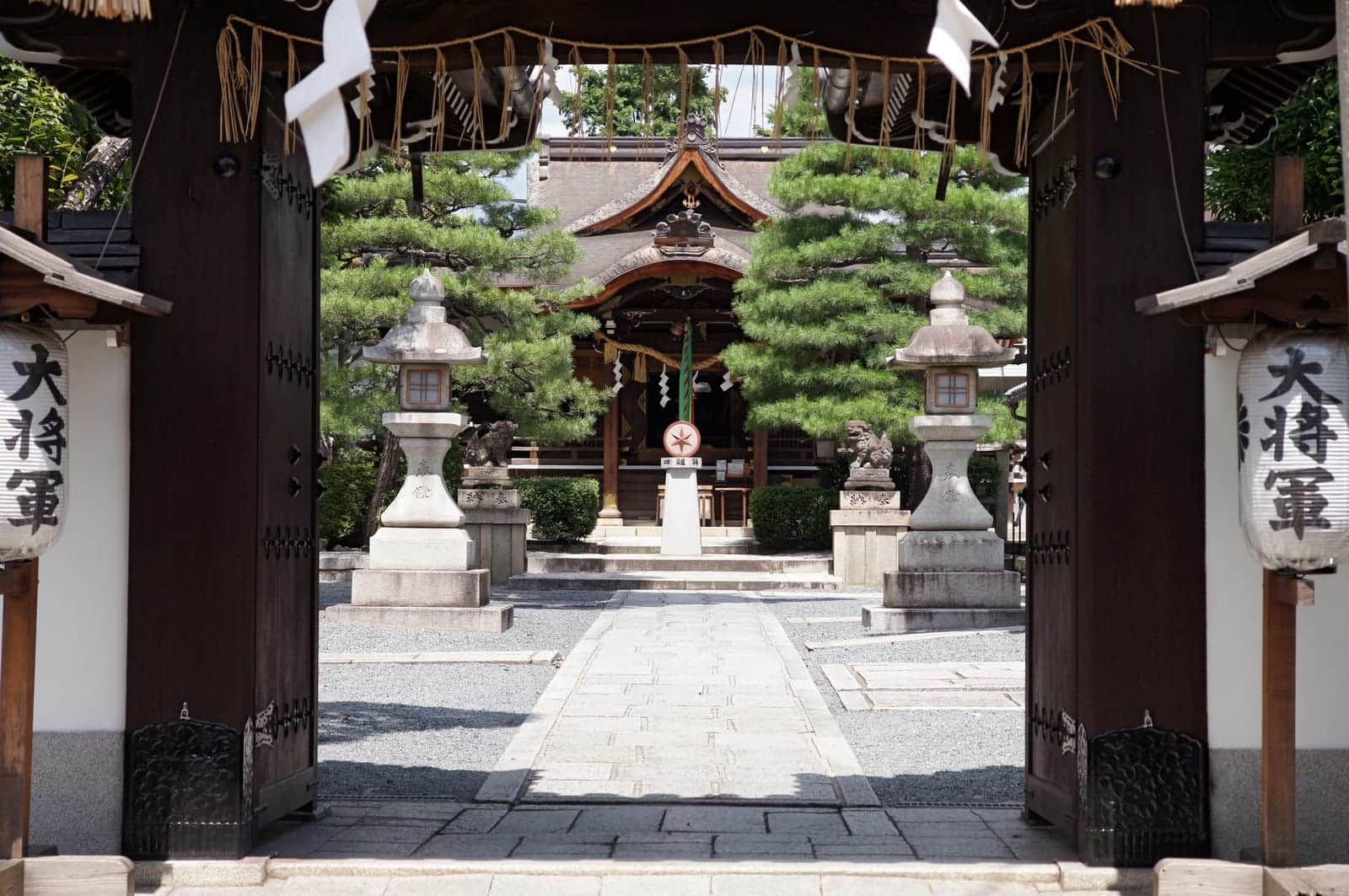
Kenkun Shrine was ordered by Emperor Meiji in 1869 to honor Oda Nobunaga, the warlord who helped unify Japan. It was later moved from Tokyo to Mount Funaoka, reaching its current hilltop spot in 1910.
A stone along the approach marks the lines of Atsumori, the play Nobunaga is said to have recited before battle. The shrine still performs part of that dance each year at Funaoka Taisai on October 19.
Das schrein Angebote 1 verschiedene Goshuin-Designs
Wie die Öffnungszeiten
Regulär
Ausstattung
Arrive at opening time around 9:00 AM to enjoy the morning light on the shrine buildings before the midday tourist groups arrive from the nearby bus stops.
The western slope offers the widest panoramic view of Kyoto city; stand near the torii gate at the top of the stairs to capture the rooftops and cityscape in a single frame.
The shrine's approach passes through a quiet bamboo grove that many guidebooks skip; follow the moss-covered stone lanterns to find a secluded resting bench halfway up.
Purify your hands and mouth at the chozuya basin near the entrance before passing through the torii; avoid pointing your camera directly at the main altar during services.
Admission is free; the shrine grounds close at 5:00 PM. Wear sturdy walking shoes as the gravel path up the mountain can be slippery after rain.
The main shrine area is reachable via a paved road for those who cannot climb the stone steps; a small ramp is installed at the side gate for wheelchair users.
Try to time your visit around October 19 if you are interested in Nobunaga-related traditions. The shrine's Funaoka Taisai includes a performance connected to the Atsumori chant, which gives the place a very different feel from a standard shrine stop.
If you are coming from central Kyoto, this works well as a half-hour side trip rather than a full-day outing. The shrine sits on a hill in Funaokayama Park, so you can pair it with a walk in the park and still be back in the city quickly.
If you want the best city view, keep walking past the shrine area to the benches and lookout spots behind it. Visitors mention that the view over Kyoto is even better there, especially on a clear day.
Plan a little extra time for the climb up Mt. Funaoka. The walk to Kenkun Shrine is short, but it is still an uphill approach with stairs and slopes, so comfortable shoes make the visit much easier.
Bring your camera for the large unpainted torii and the view toward Mount Daimonji and Mount Hiei. The shrine grounds sit high enough that the scenery is a big part of the visit, especially in autumn when the trees add color.
11 Strukturen auf dem Gelände
Saisonale Feste und besondere Anlässe
Nicht bestätigt
Kita, Kyoto Präfektur
Weitere passende Seiten zu diesem Ort.
Unter 300 m Unter 600 m
Für die Ausleihe sind die Anbieter-App und eine japanische Telefonnummer erforderlich. docomo-Tagespässe gibt es in Convenience Stores. Datenquellen
1 aktuelle Beiträge
5.0
1 Bewertung
Planen Sie einen kurzen Besuch bergauf, höchstens etwa einen halben Tag von zentralem Kyoto aus. Das Gelände ist kostenlos und normalerweise bis 17:00 Uhr geöffnet, und wenn Sie gegen 9:00 Uhr ankommen, haben Sie ruhigere Wege und besseres Licht, bevor die Reisegruppen eintreffen. Tragen Sie festes Schuhwerk, da der Zugang Treppen und Steigungen umfasst und der Kies nach Regen rutschig sein kann. Falls nötig, gibt es auch einen gepflasterten Weg und eine Rampe am Seitentor.
Folgen Sie dem von Bambus gesäumten Zugang und den moosbewachsenen Steinlaternen für einen ruhigeren Aufstieg.
 JKPro member
Jarno KnPro hat eingecheckt
Schönes Grün. Ein ruhiges lokales Juwel. Ruhig und beruhigend. Freundliches Personal
Kenkun Jinja
Kita, Kyoto