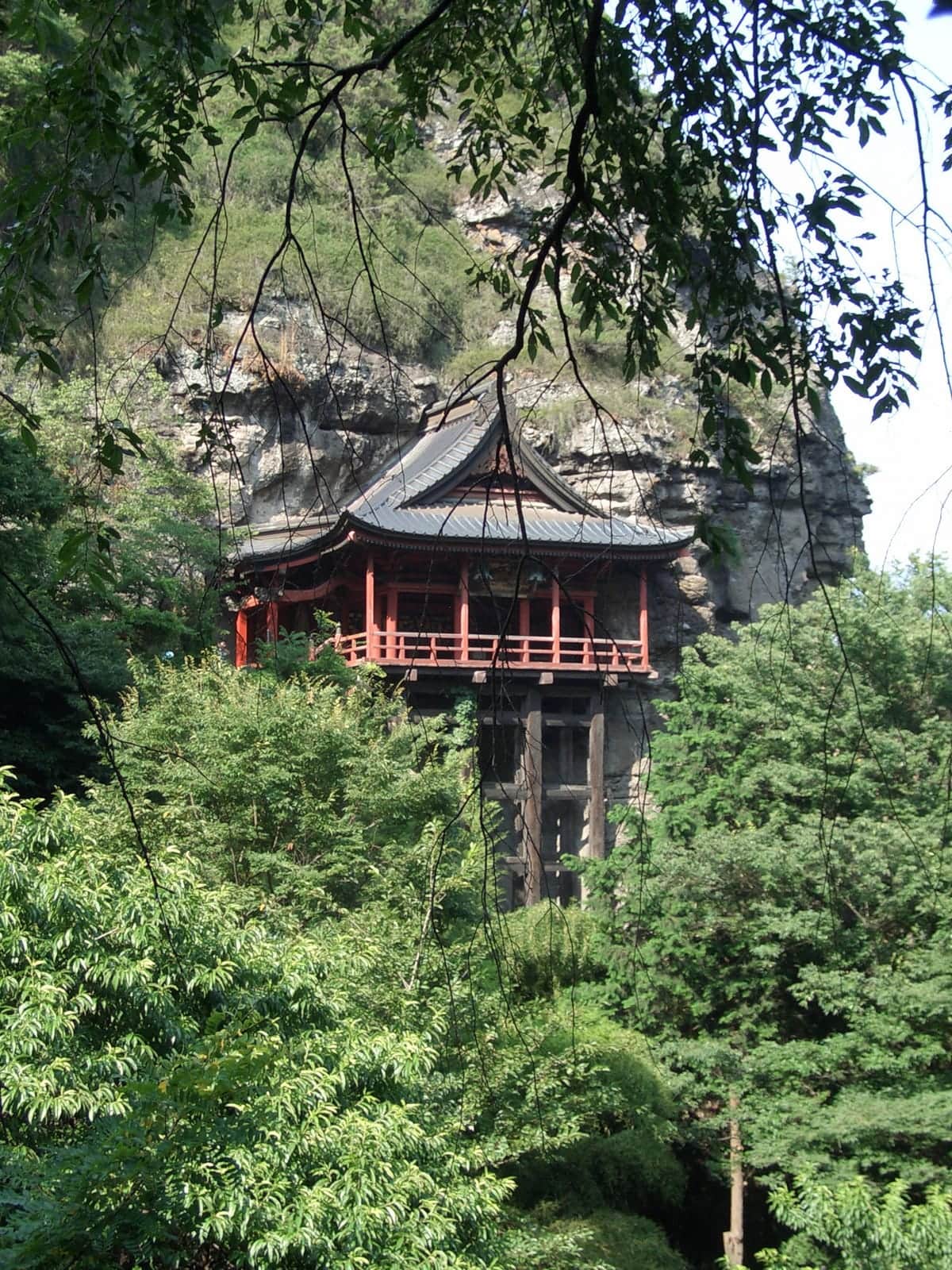
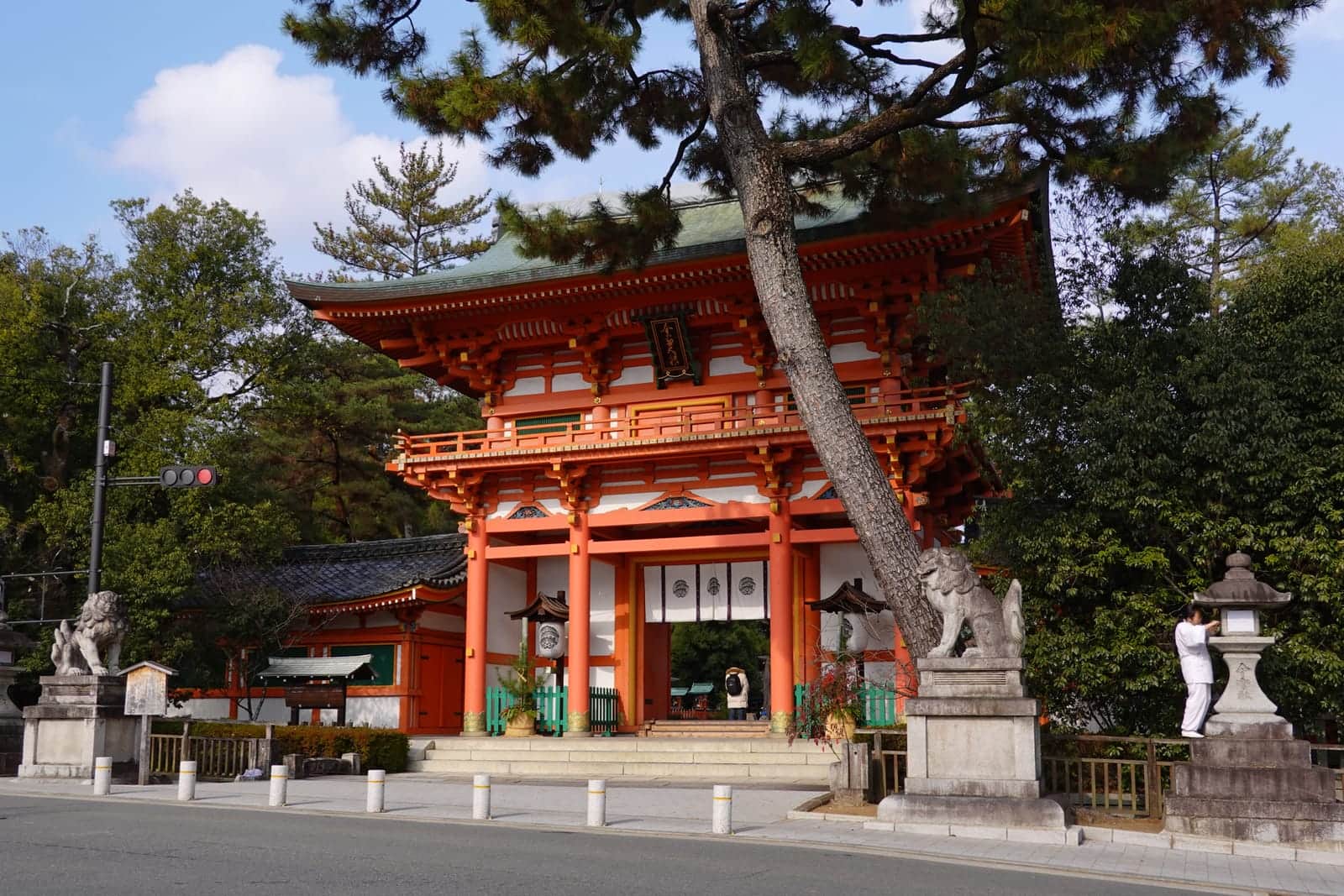
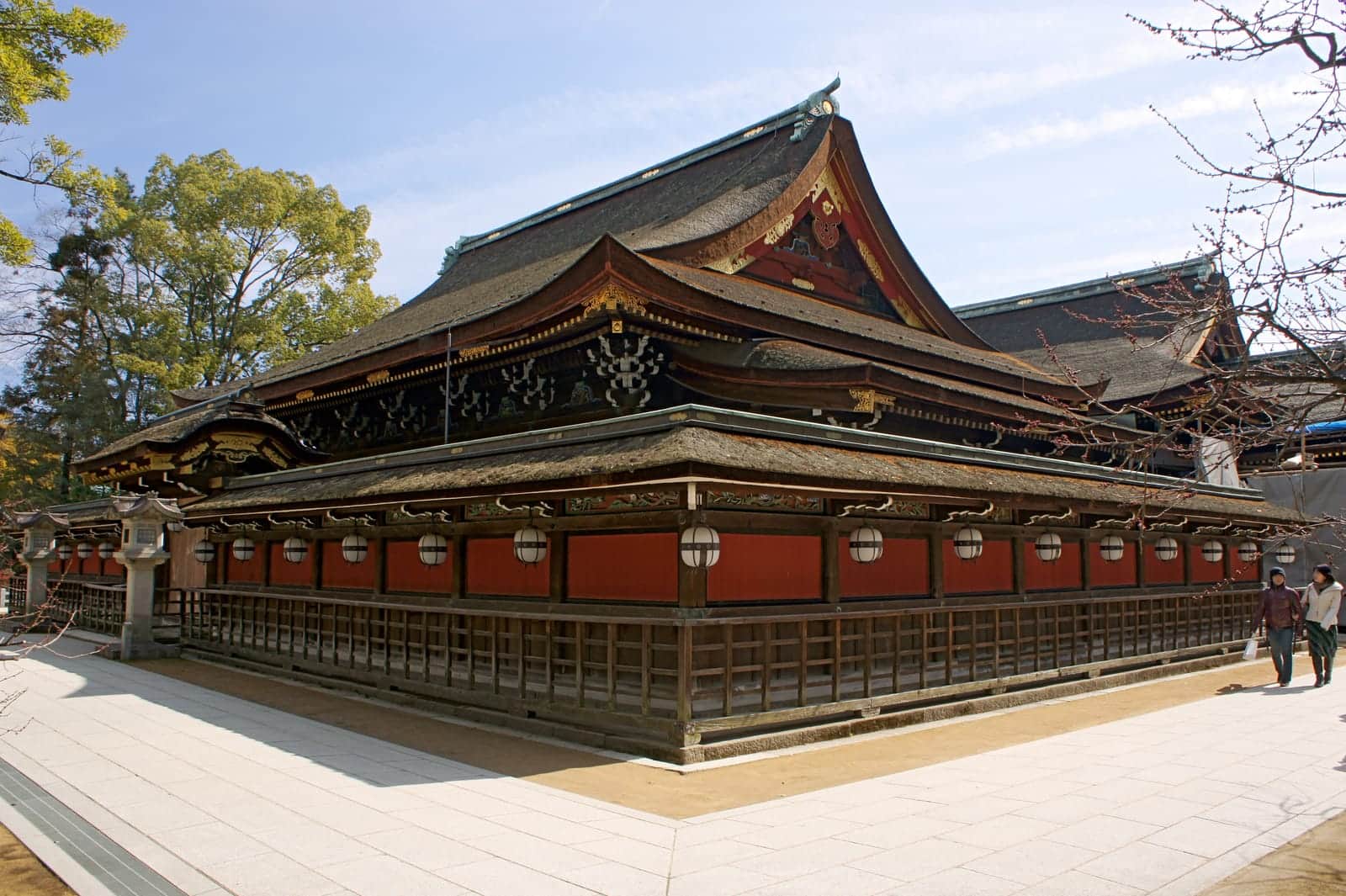
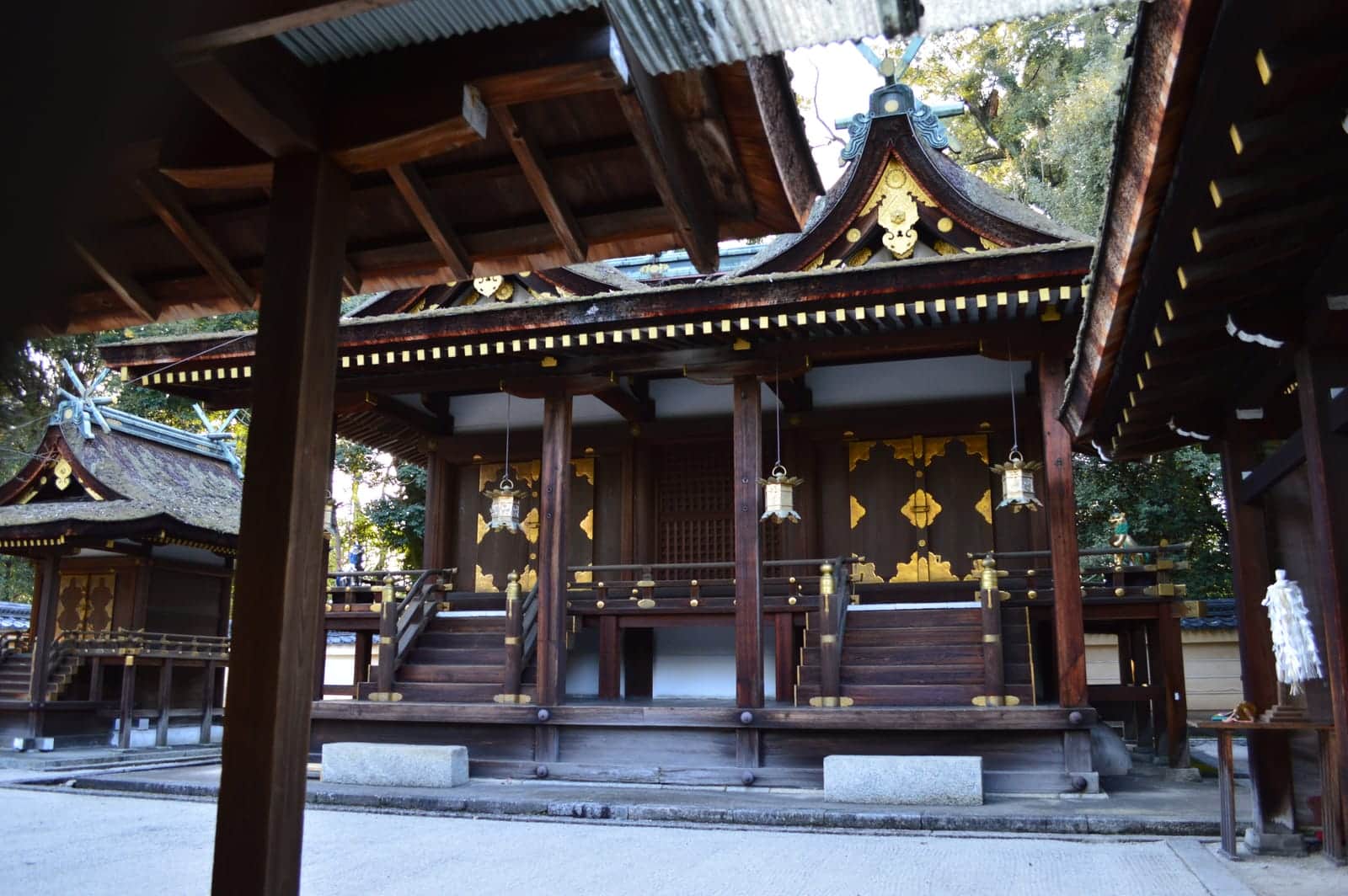
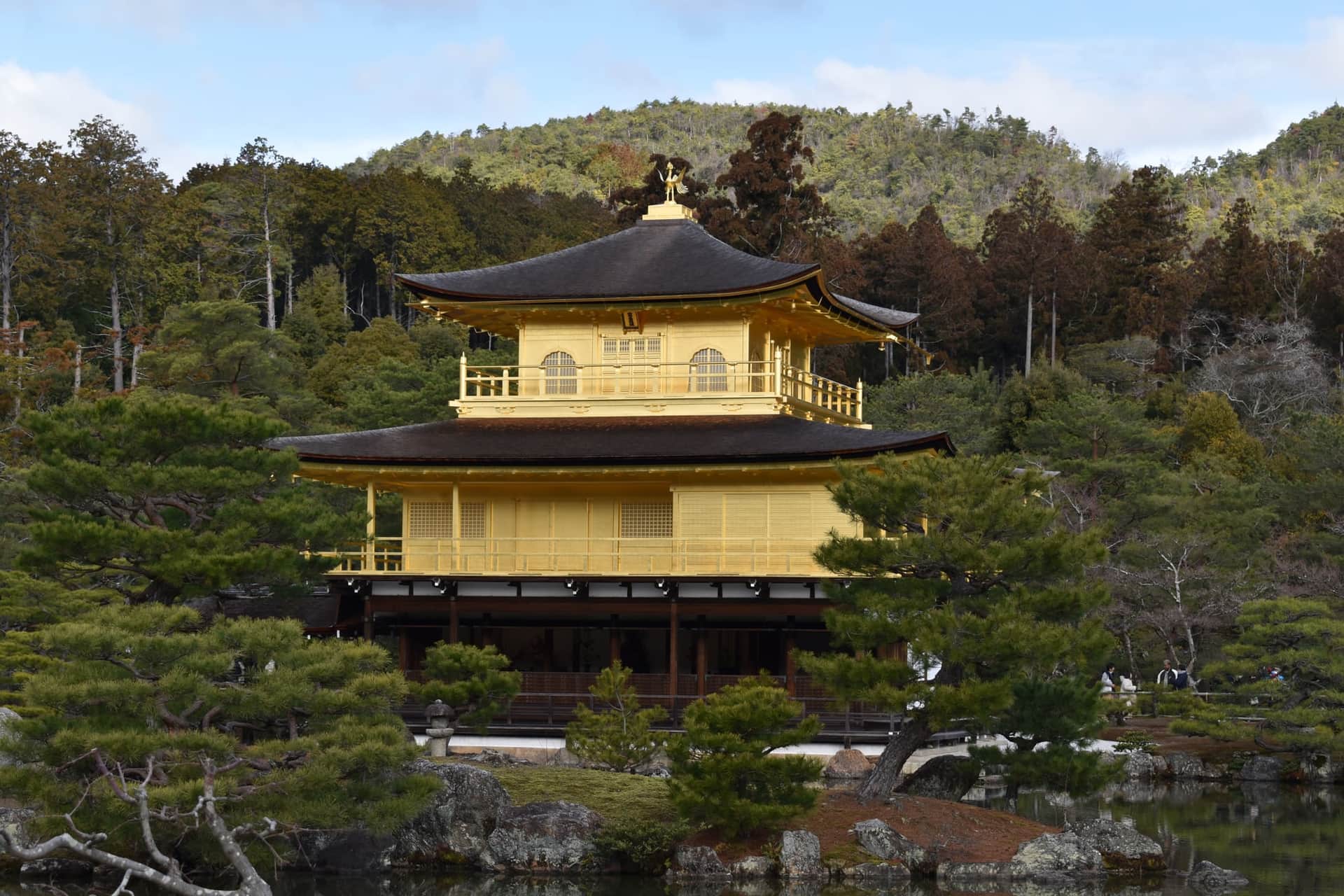
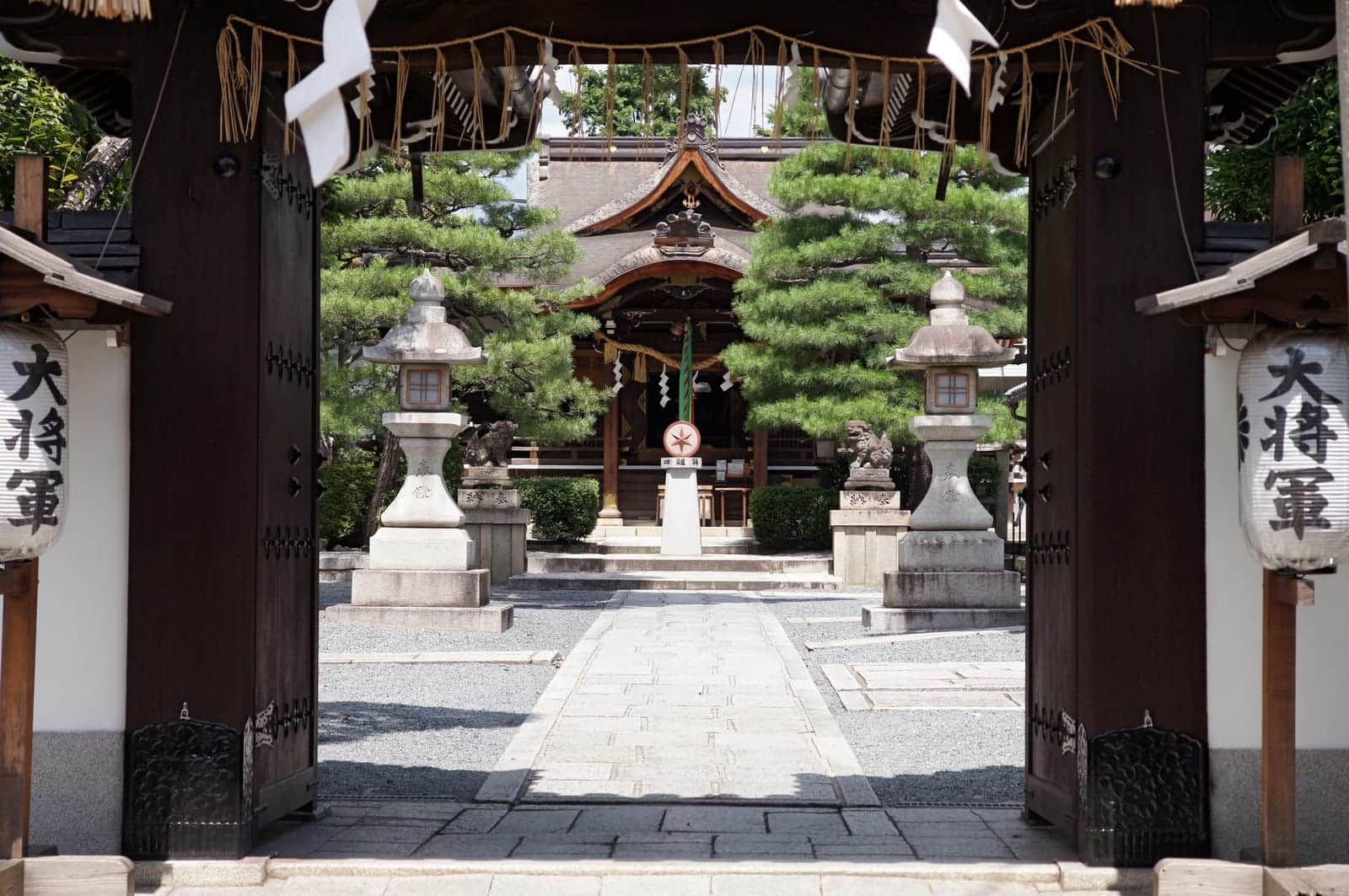
Arrive at opening time around 9:00 AM to enjoy the morning light on the shrine buildings before the midday tourist groups arrive from the nearby bus stops.
概览
Kenkun Shrine was ordered by Emperor Meiji in 1869 to honor Oda Nobunaga, the warlord who helped unify Japan. It was later moved from Tokyo to Mount Funaoka, reaching its current hilltop spot in 1910.
A stone along the approach marks the lines of Atsumori, the play Nobunaga is said to have recited before battle. The shrine still performs part of that dance each year at Funaoka Taisai on October 19.
此 神社 提供 1 款不同的御朱印设计
与开放时间相同
通常
设施与服务
Arrive at opening time around 9:00 AM to enjoy the morning light on the shrine buildings before the midday tourist groups arrive from the nearby bus stops.
The western slope offers the widest panoramic view of Kyoto city; stand near the torii gate at the top of the stairs to capture the rooftops and cityscape in a single frame.
The shrine's approach passes through a quiet bamboo grove that many guidebooks skip; follow the moss-covered stone lanterns to find a secluded resting bench halfway up.
Purify your hands and mouth at the chozuya basin near the entrance before passing through the torii; avoid pointing your camera directly at the main altar during services.
Admission is free; the shrine grounds close at 5:00 PM. Wear sturdy walking shoes as the gravel path up the mountain can be slippery after rain.
The main shrine area is reachable via a paved road for those who cannot climb the stone steps; a small ramp is installed at the side gate for wheelchair users.
Try to time your visit around October 19 if you are interested in Nobunaga-related traditions. The shrine's Funaoka Taisai includes a performance connected to the Atsumori chant, which gives the place a very different feel from a standard shrine stop.
If you are coming from central Kyoto, this works well as a half-hour side trip rather than a full-day outing. The shrine sits on a hill in Funaokayama Park, so you can pair it with a walk in the park and still be back in the city quickly.
If you want the best city view, keep walking past the shrine area to the benches and lookout spots behind it. Visitors mention that the view over Kyoto is even better there, especially on a clear day.
Plan a little extra time for the climb up Mt. Funaoka. The walk to Kenkun Shrine is short, but it is still an uphill approach with stairs and slopes, so comfortable shoes make the visit much easier.
Bring your camera for the large unpainted torii and the view toward Mount Daimonji and Mount Hiei. The shrine grounds sit high enough that the scenery is a big part of the visit, especially in autumn when the trees add color.
11 个境内建筑
尚未确认
与此地点相关的更多页面。
1 条最新帖子
5.0
1 条评价
从京都市中心出发,安排一次短途上山参拜,最多半天即可。境内免费开放,通常开放至下午5:00,若在上午9:00左右到达,可以在旅行团到来前享受更安静的路径和更好的光线。请穿结实的鞋子,因为前往途中有台阶和坡道,而且雨后碎石路面可能会很滑。如有需要,也有铺装路线和侧门坡道可走。
沿着竹林环绕的参道和长满青苔的石灯笼前行,步行上山会更加宁静。
 JKPro member
Jarno KnPro 签到了
Schönes Grün. Ein ruhiges lokales Juwel. Ruhig und beruhigend. Freundliches Personal
Kenkun Jinja
Kita, Kyoto
300米以内 600米以内
租借需要运营商的应用程序和日本手机号码。docomo 单日券可在便利店购买。 数据来源