
Sur cette page
Sort out your documents, first hotel, airport transfer, phone data and payment backup before you fly. You can work out most other details later. Keep arrival day light: reach the hotel, eat nearby and leave the big sightseeing plans for tomorrow.
Before booking
Work through these five decisions before paying for the trip.
- Check entry rules. Check your nationality, passport type, permitted stay and footnotes on MOFA's visa-exemption list. If required, follow MOFA's visa guidance before departure. Visit Japan Web does not grant entry permission.
- Choose your dates. Count nights, not calendar days. Late arrivals and early departures leave little sightseeing time. Check regional weather and holidays in Best Time to Visit Japan, a Pro guide.
- Sketch a simple route. Choose a few bases and allow time between them. One base with day trips can suit a short stay. For Tokyo–Kyoto–Osaka, compare flying home from Kansai with returning to Tokyo.
- Compare transport costs. Price your actual journeys before choosing a rail pass, using worked examples. A multi-city trip does not automatically need one.
- Book your stay. Check the station exit, walk to the hotel, check-in deadline and cancellation terms.
Entry guidance checked against MOFA on 16 October 2026. Recheck for your passport before booking and departure.
Six things to arrange at home
Get these ready so your first evening can stay simple.
- Arrival forms. Use the free Visit Japan Web service and check that your completed arrival code opens. Paper procedures remain available.
- Phone data. Choose an eSIM, roaming or pocket Wi-Fi. Check that your phone is unlocked and supports your SIM or eSIM. If renting pocket Wi-Fi, confirm pickup. Save your hotel's address and route offline.
- Payment backup. Bring a second way to pay and some yen. Check Seven Bank's overseas-card ATM guide before relying on cash withdrawals.
- Medication. Check ingredients and quantities with MHLW. A home prescription is not automatic import permission.
- Insurance. Save your policy and insurer's assistance number somewhere accessible without your main phone.
- Airport route. Search from your actual terminal to the hotel entrance. Check the last service and hotel check-in deadline; allow time for immigration, baggage and customs before reserving an onward train.
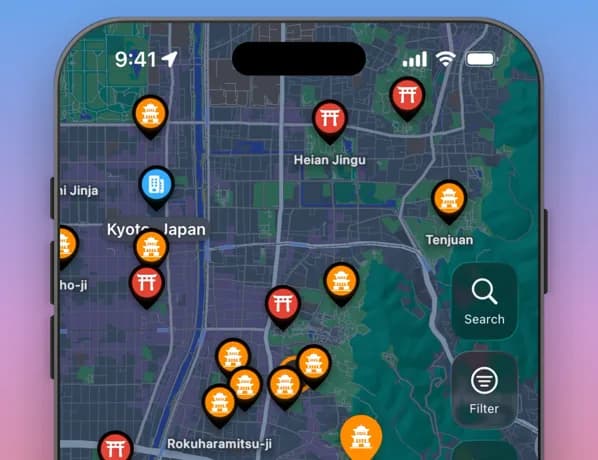
In the app: On iPhone or iPad, open this guide in Goshuin Atlas and choose More → Add to Reminders for the passport, medicine, data and payment preparation checklist. Add deadlines in Apple Reminders before departure.
On iPhone or iPad, use the menu at the top of the guide.
- 1. Open More (•••). Tap the button at the top right of the guide, beside the bookmark.
- 2. Choose Add to Reminders. Review the tasks before saving; set deadlines in Apple Reminders.
Understand the first train ride
An IC card, such as Suica, PASMO or ICOCA, is a prepaid card for many local journeys and small purchases. It is not an unlimited pass. Tap the same card at entry and exit, and top it up when needed. Use one card per traveller; ask staff about children's fares.
PASMO is one of Japan’s prepaid IC cards. Add balance, then tap the reader at entry and exit.
A Shinkansen, or bullet train, and some airport or limited-express services need a separate ticket or reservation. If the gate rejects your card, step aside and show it to staff rather than trying another card.
Keep the line name, destination, departure time and station exit in your route notes. For an unfamiliar transfer, allow extra walking time.
Pack for the next night
Keep your passport, medication, money, phone charger and a change of clothes with you. Bring a suitcase you can manage through stations and into a small room.
Luggage forwarding can help when changing hotels; follow the hotel-to-hotel steps before sending a case. Confirm that the destination accepts deliveries and ask the operator for the arrival date before handing over your bag. Same-day delivery is a specific service, not the default. See Yamato's airport delivery guidance.
Your first evening
Check in or ask the hotel to store your bags. Find a nearby meal and buy water or breakfast if useful. A convenience-store meal is fine; you do not need a famous restaurant on your first night.
Wait to be seated in restaurants, follow queue markings, keep calls off trains, and remove shoes where signs or staff ask you to. You can ask for help without knowing all the customs. Sumimasen means “excuse me” and is a useful way to get someone's attention.
If you have food allergies, carry a clear Japanese allergy card and confirm ingredients and cross-contact directly with the venue. A translation app alone cannot establish that a meal is safe.
If plans change
| Problem | Next step |
|---|---|
| Airport connection missed | Check the next official service and tell the hotel if you will arrive late. Consider an airport hotel if onward travel no longer works. |
| Payment or phone fails | Use your backup payment method and saved hotel details; ask airport or station staff for help. |
| Severe weather | Check the operator and Japan Meteorological Agency warnings before travelling. |
| Urgent help needed | Call 119 for an ambulance or fire, 110 for police. Save JNTO's emergency guidance. |
Pro tip: Put your first hotel's Japanese address, check-in deadline and phone number in one offline note. These are the details you are most likely to need while tired.
Related guides: First Trip to Japan: Common Mistakes to Avoid; Japan Travel FAQ: Answers for First-Time Visitors.