
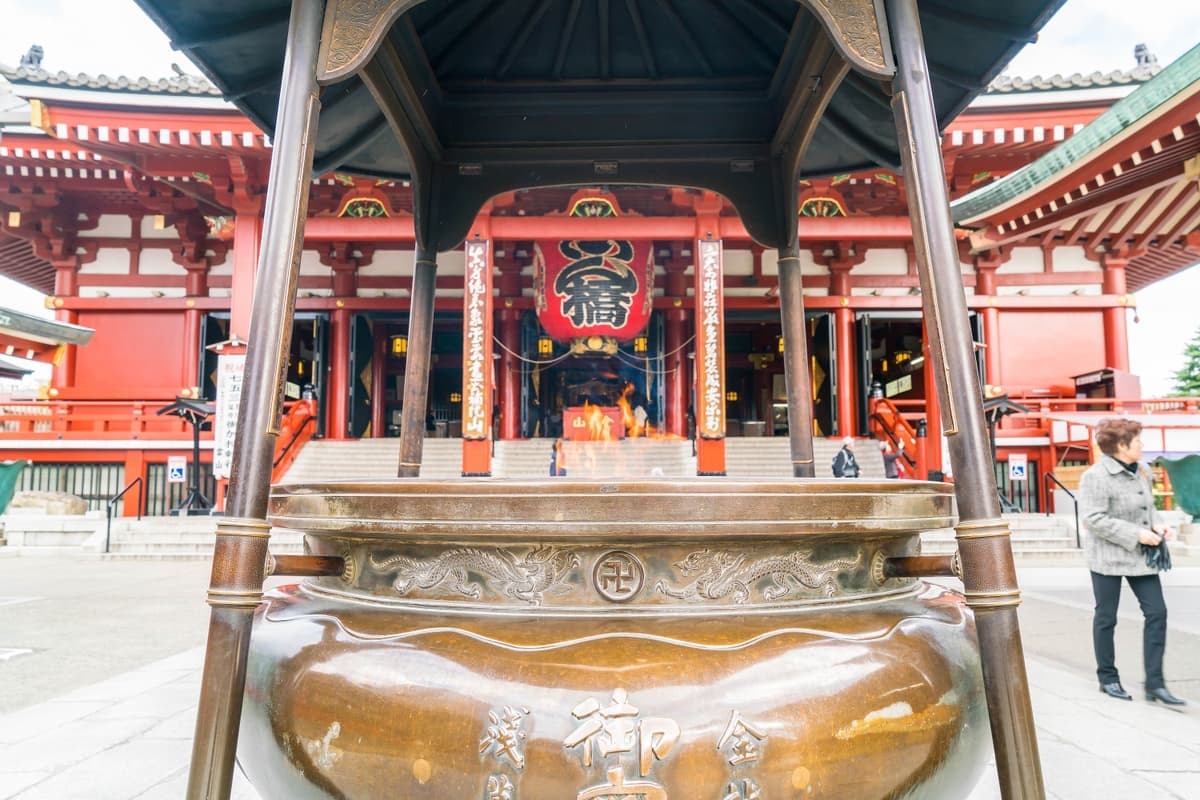
Temples and shrines welcome many visitors, but they are also places of worship. Follow the site’s signs, keep space around people praying and check photography rules. You can watch quietly without joining a ritual.
| Moment | Shrine and temple customs |
|---|---|
| Entrance | Shrine (Shinto): Bow once at the torii edge; avoid the centre line. Temple (Buddhist): Bow at the gate if the site requests it. |
| Purification | Shrine (Shinto): Follow the posted purification steps; never put your mouth on a ladle. Temple (Buddhist): Same if a temizuya is provided. |
| Prayer | Shrine (Shinto): Two bows, two claps, one bow. Temple (Buddhist): Usually one bow and hands together; no clapping. |
| Money | Shrine (Shinto): Place offering gently in the box. Temple (Buddhist): Place offering gently; follow signs for incense. |
What to do on arrival
Walk, do not run. Keep voices low around worshippers. Use only visitor facilities intended for the public. A bell rope may be part of a shrine’s prayer sequence; follow its signs and leave restricted areas alone. Ask before photographing people, ceremonies or a priest’s work. Some sites prohibit tripods, drones or photography inside halls.
At a shrine, the centre of the approach is traditionally for the kami; walk slightly to one side. At a temple, the exact layout varies. If the site posts a different procedure, that sign wins.
When in doubt: Follow the site’s signs or ask staff. You can observe quietly without taking part in prayer or purification.
In the app: Open the temple or shrine in Goshuin Atlas on iPhone or iPad to read its visiting information. Tap highlighted cultural terms for glossary explanations before you arrive.
Goshuin, omikuji and donations
A goshuin is a seal and calligraphy recording a temple or shrine visit. Bring a dedicated book (goshuinchō) or ask whether a loose-sheet goshuin (kakioki) is available. Queue, keep the book open to the requested page, and pay the posted amount. Do not ask for goshuin during a ceremony or after the desk closes. Read Goshuin etiquette for the process.
Omikuji are fortunes. If the result is poor, tie it where the site indicates; do not leave paper on random branches. Ema plaques and amulets should be purchased and returned according to the site’s instructions.
JNTO shrines and temples · Agency for Cultural Affairs · Kyoto tourism etiquette
Related guides: Shrines and Temples in Japan: Your First Visit (Pro); Japan Etiquette: Everyday Customs for Visitors (Pro).